Understanding SciShield: How SciSure Health & Safety Keeps Up With Lab Safety Data
SciShield is now SciSure Health & Safety. See how it keeps people, labs, hazards, chemicals, and training records current as your research grows.

Download Whitepaper
TL;DR
SciShield is now SciSure Health & Safety, the lab safety and compliance software that keeps your people, labs, spaces, hazards, chemicals, and training records connected and current as your research organization grows.
- Same product, new name.
SciShield became part of SciSure when it merged with eLabNext. The lab safety software you knew as SciShield, including ChemTracker, now runs as SciSure Health & Safety and follow the same principle: safety data should follow the people, labs, and spaces it belongs to.
- People records stay current.
When your HR directory or single sign-on (SSO) is connected, SciSure Health & Safety keeps user accounts in step as people join, move, or leave. Chemical inventory belongs to the lab group rather than one person, so records stay with the lab when a researcher moves on.
- One structure for everything.
Users, labs, spaces, buildings, and campuses sit in one hierarchy. Job activities, meaning the hazards and tasks each person works with, decide which safety training they're assigned. EHS teams can start from a person, a lab, or a building and reach the same training, inspection, and chemical records.
- Chemicals and reports from live data.
This update adds what that structure powers today: container-level chemical inventory, SDS Auto-Match, ChemSnap AI photo intake, Peer Search across lab groups, and Tier II, NFPA, CFATS, and fire code reports. Which reports you see depends on how your instance is configured.
- Proof from shared labs.
SmartLabs runs SciSure Health & Safety across 729 lab spaces. Its EHS team cut chemical inventory searches from 15 minutes to 1 to 2 minutes, and reconciling a whole research center went from an all-day job to as little as 20 minutes.
Ready to see SciSure in action?
No commitment · Free consultation
What happened to SciShield?
SciShield's lab safety and compliance software, including ChemTracker for chemical inventory, is now called SciSure Health & Safety. Some longtime users also remember it as BioRAFT, its name before SciShield. As of 2025, SciShield and eLabNext have merged to form SciSure. The product is the same one, and it has grown a lot since 2020. Chemical inventory, SDS management, regulatory reporting, and biosafety have all seen major updates.
Today, SciSure Health & Safety covers chemical inventory and SDS management, safety training, inspections, incident reporting, biosafety, radioisotopes, hazardous waste, equipment, and medical surveillance. Not every organization uses every module. What you see depends on what your team has turned on.
What hasn't changed is the problem it was built to solve.
Why lab safety data gets out of hand so fast
Walk through a research building on any given day and you'll see people handling cell lines, pouring solvents, working with animals, and aligning lasers. Each of those activities brings its own safety rules, and each rule leaves a trail of records someone has to keep.
Take a research program with 50 lab groups and 8 researchers in each. That's 400 people. Each person works with several hazards: chemicals, sharps, biological agents, radiation, lasers. Each hazard creates compliance touchpoints. A laser, for example, needs servicing and inspection, its users need laser safety training, and someone has to supply the right eyewear. Each touchpoint then creates data points: dates, names, findings, corrective actions, expiry dates.
The numbers multiply quickly. The figures below are illustrative, so swap in your own:
Now one researcher moves to a different lab, which happens all the time. Their training needs change, their hazards change, and their old lab's records need updating. Multiply that by every hire, departure, and move in a year.
This matters most when something goes wrong. After an incident, your EHS team has to answer specific questions fast: who was there, what they were trained on, what was stored in the room, and whether it has happened before. Spreadsheets, shared drives, and homegrown databases make that slow. Software built around how labs actually work makes it a lookup.
Keeping people records current without the busywork
Connect your HR directory
With SciSure Health & Safety, teams can connect their HR directory so user accounts follow real life. When someone joins, changes details, or leaves, their account follows, and departed users lose access automatically. This is usually set up during implementation.
Let people sign in with the login they already have
Single sign-on (SSO) means researchers use their institutional credentials instead of yet another password. It sounds small, but it changes behavior. When updating a safety record takes one click to get in, people do it now instead of "later."
Keep records with the lab, not the person
In ChemTracker, chemical containers belong to a lab group rather than the person who added them. When a researcher leaves, the inventory stays with the lab and its group leader.
Show each person what they need
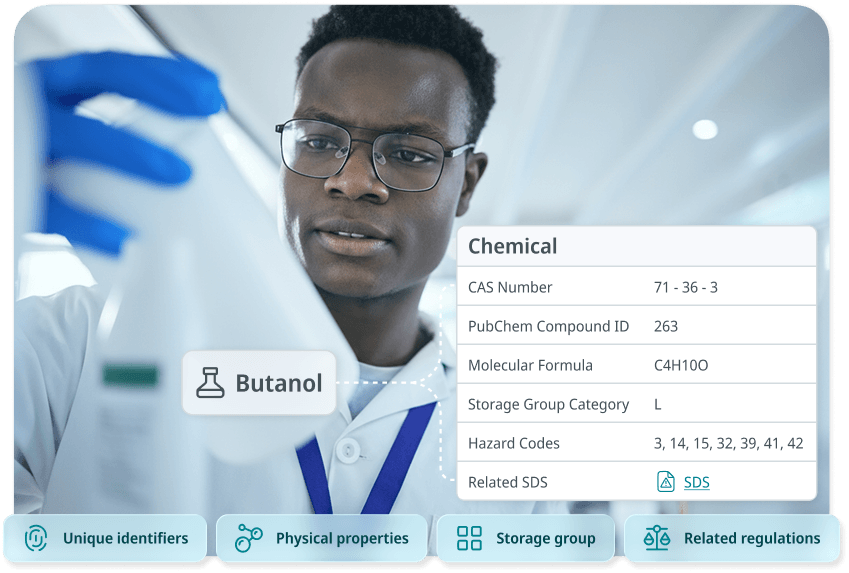
Role-based permissions decide who can view, add, or change which records. At SmartLabs, lab managers get a broader view than researchers who mostly need SDSs and chemical inventory, according to Natalie Kosmandakis on their EHS and lab operations team.
One structure for people, labs, spaces, and buildings
SciSure Health & Safety organizes safety data the way a research organization is actually laid out: users belong to labs, labs work in spaces, spaces sit in buildings, and buildings sit on campuses. A spreadsheet gives you flat rows. This structure lets you see how the pieces relate.
Start at any level and you reach the same records. A lab's chemicals can be totaled by room, building, or campus.
In practice, you can start anywhere and reach the same records. Want training compliance for one lab? Go to the lab. Want to know what's stored on the third floor before a fire inspection? Start from the building. Need everyone exposed to a specific hazard? Start from the hazard and get a list of people.
Job activities connect people to hazards and training
A job activity is a hazard or task someone works with, like handling radioactive material or operating a laser. Once it's assigned, SciSure Health & Safety can assign the matching safety training, send reminders, and flag renewals. Labs can set default job activities, so new members get the right training from day one.
This is where the time savings show up. Across an ROI study of 44 SciSure customer organizations, the average time to identify everyone with a specific hazard exposure dropped from 2 days to 14 minutes.
The structure also keeps data secure. Permissions are set by role and level, so people see and change only what's relevant to their job.
What that structure powers today
Because every chemical, hazard, and training record is tied to a person, a lab, and a place, SciSure Health & Safety can answer questions that used to take a day of spreadsheet work. Here's what that looks like in 2026, depending on which modules your organization uses.
Chemical inventory by container
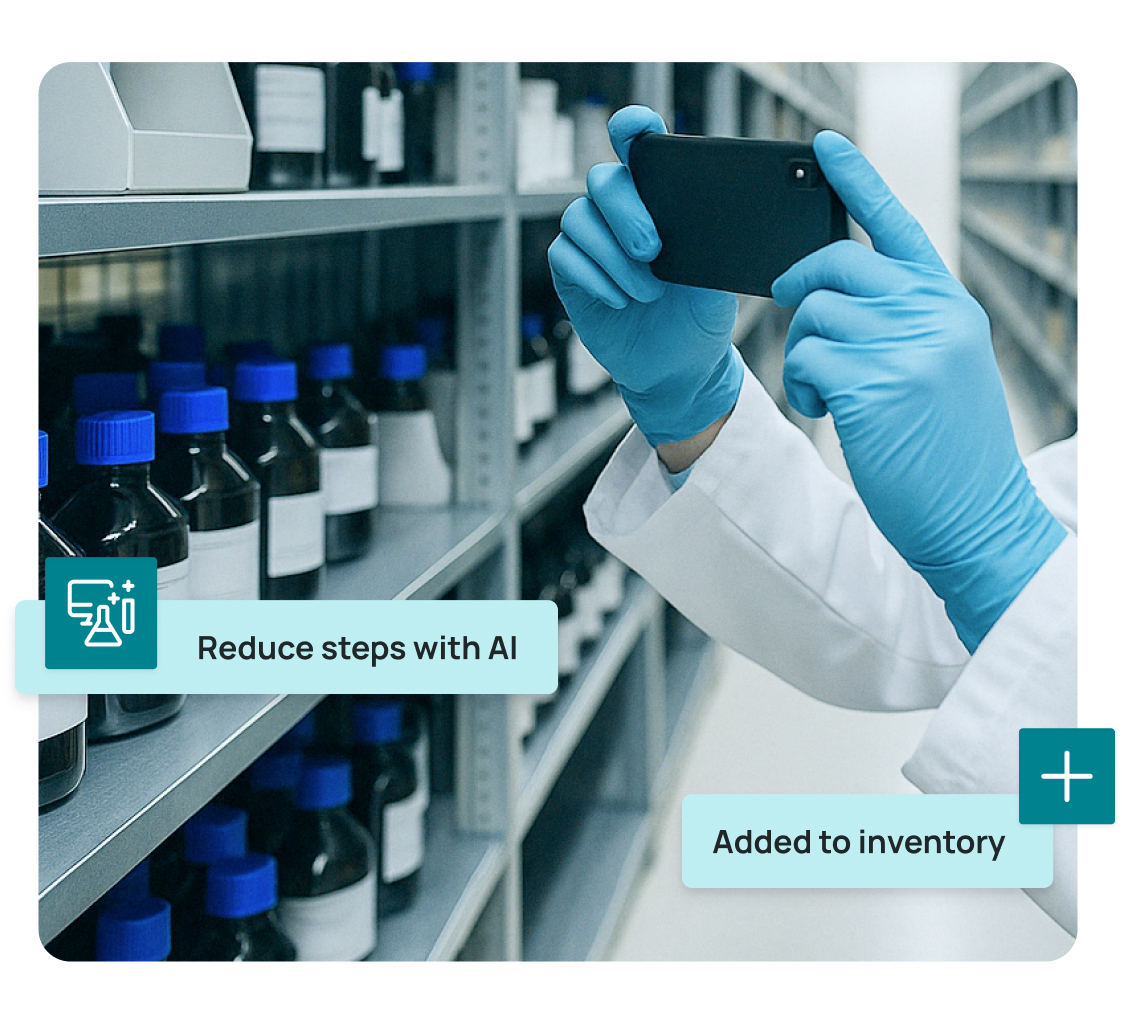
ChemTracker gives each container its own record with its lab group, storage location, amount, and product details. Barcodes and RFID tags make scanning faster but aren't required. ChemSnap AI lets you add a container by photographing its label on your phone; you review the details it fills in before saving. Existing inventories can come in by spreadsheet, up to 9,999 containers per import.
The right SDS, matched automatically
When SDS Auto-Match is turned on, ChemTracker looks for a Safety Data Sheet (SDS) for each new container, usually within about 20 minutes. Filters show which containers are still missing one, and you can attach your own.
Borrow before you buy
When your safety team enables Peer Search, researchers can see which other lab groups already have a chemical before ordering more. Check out 5 lab problems that SciSure ChemTracker solves right from the start for more details.
Totals at any level
Because containers sit in spaces and buildings, you can pull totals for a lab, a room, or a whole building, and convert units for reporting.
Regulatory reports from live inventory
Depending on configuration, ChemTracker supports Tier II, right-to-know, NFPA, and CFATS screening reports, plus fire code reports by control area to support maximum allowable quantity (MAQ) reviews. Your EHS team still confirms the right code edition and local requirements with the authority having jurisdiction, usually the fire marshal. Our guide to fire code compliance and MAQs goes deeper.
Beyond chemicals
The same structure feeds door signs that reflect each room's current hazards, inspections scheduled by building, department, or hazard, and regulatory reporting across sites, where configured.
How SmartLabs uses it
SmartLabs runs shared lab space for many different companies across 729 lab spaces. It has used SciSure Health & Safety since December 2019 for chemical inventory, SDS, inspections, equipment, biosafety, and medical surveillance. Every week, its Boston team pulls chemical data by hazard class to track MAQs for the Boston Fire Department, straight from ChemTracker.
Frequently asked questions
Is SciShield still available?
Yes, under a new name. SciShield's lab safety and compliance software is now SciSure Health & Safety, following the merger of SciShield and eLabNext into SciSure.
What's the difference between SciShield and ChemTracker?
ChemTracker is the chemical inventory and SDS management module. It was part of SciShield and is now part of SciSure Health & Safety, alongside training, inspections, biosafety, and other modules.
Can SciSure Health & Safety connect to our HR directory and single sign-on?
Yes. SciSure Health & Safety can connect to your HR directory or SSO so user accounts stay current and people who leave lose access automatically. This is usually set up during implementation.
Can ChemTracker track biological samples too?
No. ChemTracker is built for chemicals. For samples and cell lines, SciSure's LIMS handles tracking and storage, and biosafety registration in Health & Safety covers oversight.
Do we need every module?
No. Organizations turn on the modules they need, so many start with chemical inventory and SDS and add training, inspections, or biosafety later. SmartLabs, for example, added biosafety two years after starting with ChemTracker.
If this sounds like the kind of support you need, get in touch with us. We'll walk you through how SciSure Health & Safety fits your lab workflows and keeps you audit-ready at all times.
Keep reading
- The 5 Top Rated EHS Software Solutions for Enterprise Labs in 2026
- Chemical Compliance Management Software: A Buyer’s Guide
- Chemical Inventory Best Practices for Multi-Site Labs
- Why Lab Safety Inspections Matter More as Your Lab Scales
- Chemical Inventory Management Tracking Tools
- 7 Features to Look for in Enterprise Chemical Inventory Software
- How to Keep Your Chemical Inventory Up to Date with SciSure ChemTracker

Read more of our blogs about modern lab management
Discover the latest in lab operations, from sample management to AI innovations, designed to enhance efficiency and drive scientific breakthroughs.