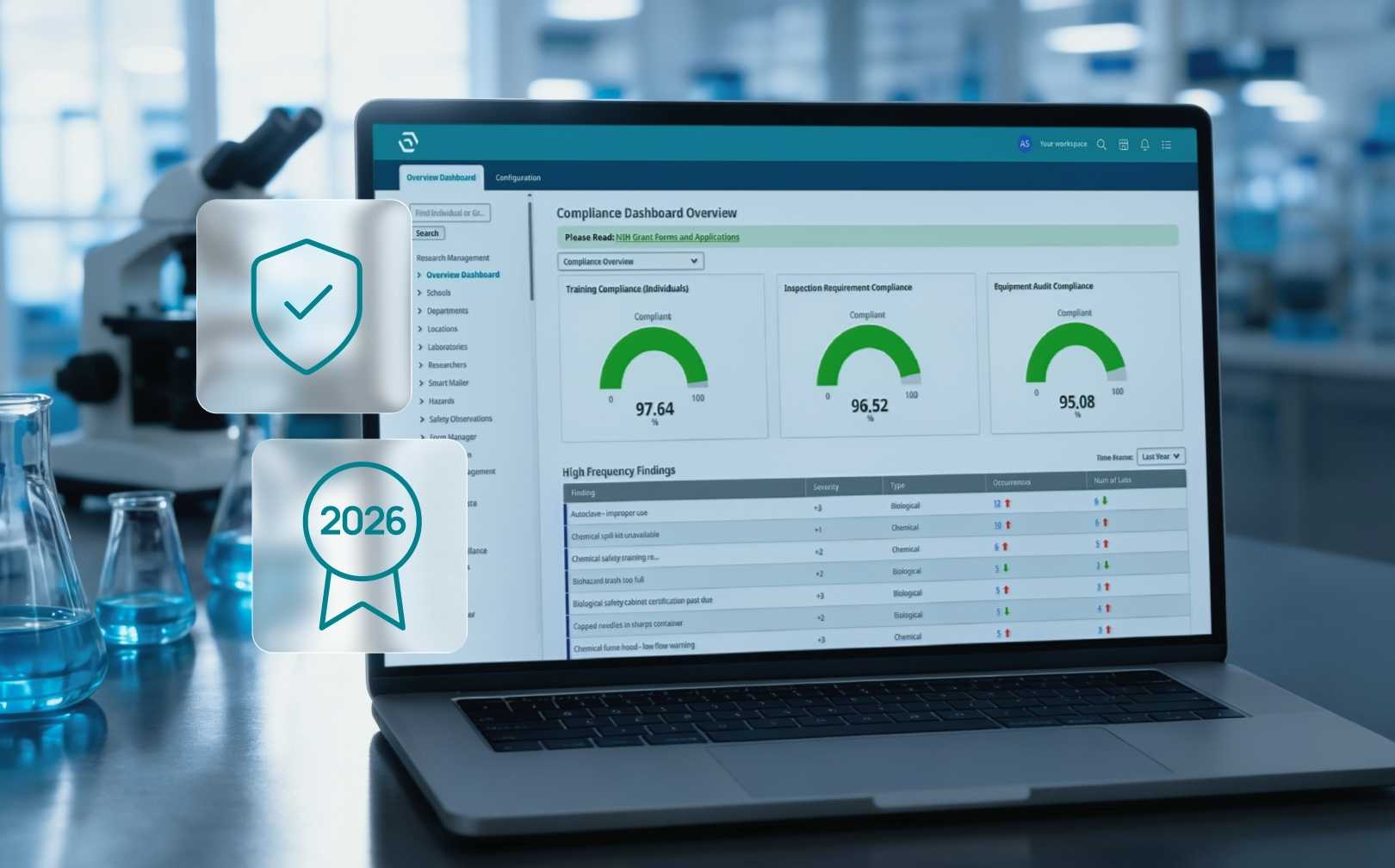
Chemical Inventory Management Tracking Tools: Best Options for Large Facilities
Compare spreadsheets, barcode/QR systems, RFID, SDS databases, and dedicated chemical inventory software for labs and large facilities.

Download Whitepaper
TL;DR
For large facilities, the best chemical tracking setup is dedicated chemical inventory software as the system of record, supported by barcode or QR workflows, RFID reconciliation, and integrated SDS management.
- Dedicated chemical inventory software is the strongest foundation for multi-room, multi-site, regulated, or high-volume labs.
This is because it connects container IDs to chemical identity, CAS data, location, owner, quantity, SDS records, audit history, disposal status, and reporting requirements in one governed facility-wide record.
- Barcodes and QR codes work best for everyday inventory work.
They help teams add, move, update, remove, and look up individual chemical containers during everyday inventory work. Barcodes are usually more portable for long-term system migration, while QR codes can be useful when they open a live container record or location-specific workflow.
- RFID can help teams reconcile containers faster than manual barcode checks.
They work well for large stockrooms, shared research facilities, high-hazard storage areas, and sites with frequent audits. RFID tags do not require line-of-sight scanning.
- SDS databases are most valuable when linked to live chemical inventory records.
Large facilities should connect SDS management, hazard classifications, storage locations, EPCRA Tier II reporting, Fire Code MAQ visibility, and disposal status to container-level data.
- SciSure brings a fully unified chemical software platform.
Our Safety features include ChemTracker chemical inventory, barcode and RFID workflows, ChemSnap AI intake, SDS auto-match, reconciliation tools, hazard and regulatory data, and compliance reporting. This layered model helps large facilities keep chemical records current from receipt through use, transfer, archival, or disposal.
This post was originally published in 2023 and has since been updated with SciSure's updated chemical inventory and SDS features and updated customer proof from SmartLabs.
Ready to see SciSure in action?
No commitment · Free consultation
Chemical inventory tracking tools include spreadsheets, barcode and QR systems, RFID tags, SDS databases, camera-based intake tools, and dedicated chemical inventory software. These aren't interchangeable: each tool captures, identifies, or manages chemical information in a different way, and the right choice depends on your lab's scale, risk profile, reconciliation process, and compliance obligations.
For a small lab, a durable barcode and a searchable inventory database may be enough. For a large research facility, shared startup space, university campus, or high-hazard storage area, RFID and automated reconciliation may save hours of manual scanning. And as chemical inventory systems become more connected, the label on the bottle is only one part of the workflow. Labs also need accurate SDS records, hazard data, storage locations, ownership, quantity tracking, disposal status, and compliance reporting.
This guide compares the most common chemical inventory tracking tools and explains how they fit into a modern chemical inventory management system.
Read More: The 5 Best EHS Software Platforms for Labs in 2026
Best tools to track chemicals in a large facility
If you've landed here from Googling, "What are the best tools to track chemicals in a large facility?" the short answer is: use dedicated chemical inventory software as the system of record. Barcodes or QR codes are better off for routine container actions, RFID works best for high-volume reconciliation and locating containers, and integrated SDS management works best for hazard communication and audit readiness.
Spreadsheets and standalone SDS databases can still play supporting roles, but they're usually not enough for a large facility on their own. At scale, scanning is only one part of the problem. The system also needs to show what is present, where it is stored, who owns it, which SDS applies, whether the container is active or disposed, and whether quantities affect reporting or fire code limits.
The best fit also depends on the type of lab or facility. This does not mean every container needs the most expensive label or tag. Many large facilities use a hybrid model: barcodes for ordinary day-to-day work, RFID in high-volume or high-risk areas, and dedicated software to keep the inventory, SDS, reporting, and reconciliation workflows connected.
Why chemical inventory tracking matters
A single laboratory can hold hundreds or thousands of bottles, vials, drums, gas cylinders, and reagent kits. For each container, teams may need to know:
- What chemical or mixture it contains
- Where it is stored
- Who owns or manages it
- How much is present
- Whether it is expired, active, empty, missing, or disposed
- What hazards, storage groups, and regulatory categories apply
- Whether the correct Safety Data Sheet (SDS) is attached
- Whether its quantity affects reporting or fire code limits
That information is useful for day-to-day science, but it is also part of a larger safety and compliance picture.
OSHA's Hazard Communication Standard requires employers with hazardous chemicals in the workplace to maintain labels and safety data sheets and train workers to handle those chemicals appropriately. OSHA also issued a 2024 update to the Hazard Communication Standard, primarily aligning it with GHS Revision 7 and changing certain label, SDS, and classification requirements. On January 15, 2026, OSHA extended the compliance dates by four months, moving the first substance-related deadline to May 19, 2026 and extending the remaining phase-in dates as well.
For many facilities, chemical inventory data is also needed for annual EPCRA reporting. EPA's hazardous chemical inventory reporting guidance explains that facilities subject to EPCRA Section 312 must submit annual inventory reports by March 1, and Tier II forms include chemical identity, maximum and average daily amounts, storage information, and location. EPA's Tier II forms and instructions also note that state, tribal, and local reporting requirements may vary.
For labs that generate hazardous waste, inventory accuracy can support disposal workflows too. EPA's hazardous waste generator categories are based on monthly hazardous waste quantities, and chemical inventory systems can help teams understand what has been consumed, archived, transferred, or sent for disposal.
What a chemical inventory label should actually do
The label or tag on a chemical container usually does not need to store every detail about the chemical. In most modern systems, the label stores or transmits a unique container ID. The inventory platform then connects that ID to a container record with richer data, such as chemical identity, CAS number, manufacturer, product number, amount, owner, location, hazards, SDS attachment, and status.
That distinction matters. A good tracking system should make the physical label durable and easy to scan, while keeping the underlying inventory record flexible enough to update as the container moves, quantities change, SDSs are refreshed, or regulatory data changes.
Where spreadsheets and SDS databases fit
Spreadsheets can be useful for a very small lab, a one-time cleanup project, or a bulk import/export workflow. They're familiar, flexible, and easy to share. But as the number of rooms, owners, containers, and compliance obligations grows, spreadsheets become harder to trust. Teams can end up with duplicate files, untracked edits, missing SDS links, inconsistent units, and containers that remain listed as active after they have been consumed or discarded.
SDS databases solve a different problem. They help teams more easily find safety data sheets and hazard information, which is essential for HazCom readiness and everyday lab safety. But an SDS database is not the same as a live chemical inventory unless each SDS is connected to the right container records, locations, quantities, owners, and disposal statuses.
For that reason, spreadsheets and SDS databases are best treated as supporting tools in larger facilities. The system of record should connect container-level tracking with SDS management, hazard data, reconciliation, reporting, and audit history.
Barcodes for chemical inventory tracking
Barcodes are one of the simplest and most widely used chemical inventory tracking tools. A barcode is a visual representation of a string of characters. When scanned, the barcode reader sends that string to the inventory system, which looks up the matching container record.
Barcodes are inexpensive, familiar, and easy to use. Many barcode scanners act like keyboards, translating the visual label into the container ID field. Some teams also use mobile phones, tablets, or Bluetooth scanners for routine inventory tasks.
Barcodes are especially useful when:
- Your lab needs a low-cost labeling method
- Containers are easy to access individually
- Researchers need a familiar scanning workflow
- You want labels that can move between inventory systems more easily
- You need routine add, move, update, or remove workflows
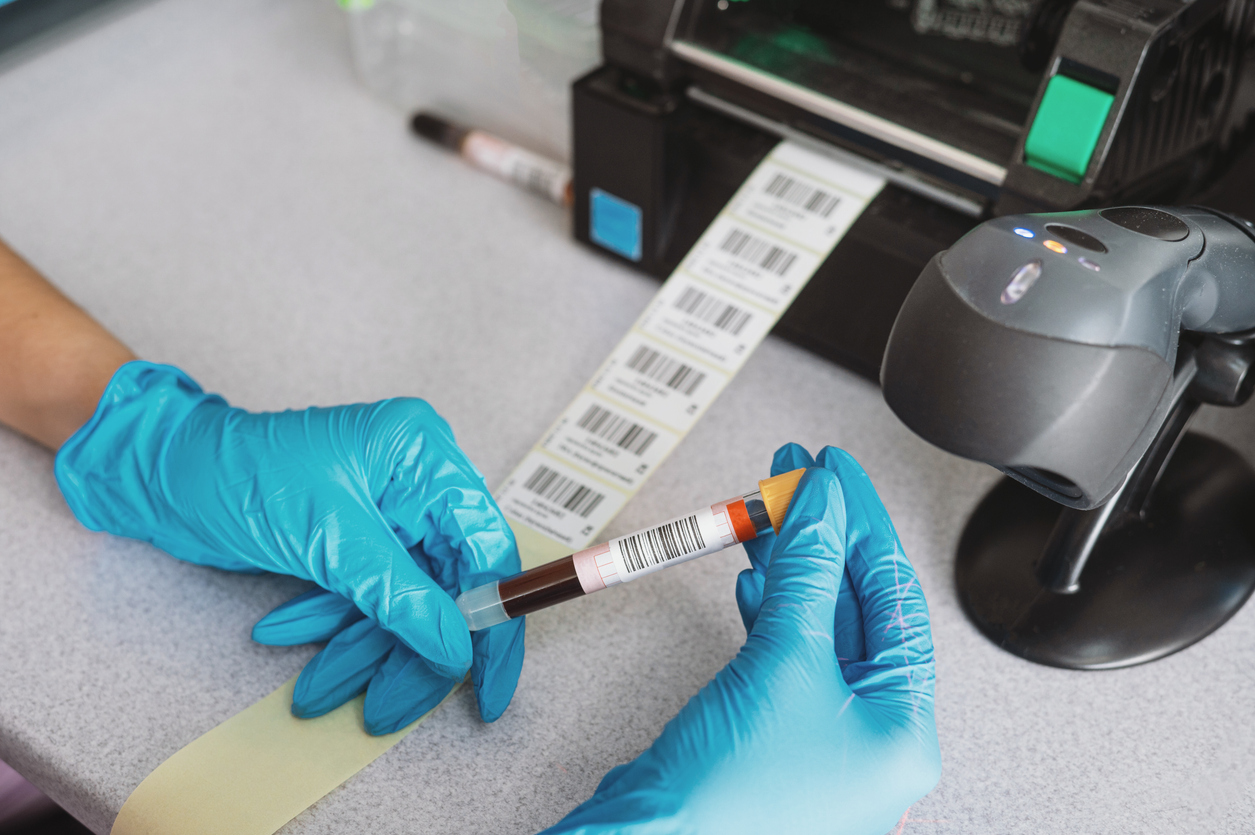
There are a few important best practices: Don't rely on a manufacturer's barcode as your internal container ID. If you receive four bottles of the same product from the same manufacturer, those bottles may carry the same manufacturer barcode. Your lab needs its own unique ID for each physical container.
It is also worth thinking ahead about label format. When we implement chemical inventory tools at SciSue, we avoid most special characters in container IDs and, when possible, start IDs with a letter or a non-zero number because spreadsheet tools can strip leading zeros.
Piggyback labels can also be useful: when a container is empty, users can remove the label, place it on a collection sheet, and later scan those labels in bulk to remove or archive empty containers.
Pros and cons of barcodes
SciSure supports barcode-based chemical inventory workflows for logging, retrieval, reconciliation, and removal, with container-level records connected to location, quantity, owner, SDS, and compliance data.
QR codes for chemical inventory tracking
QR codes are two-dimensional codes that can store more characters than a traditional barcode. In many systems, a QR code stores a URL that opens a specific page or record when scanned with a phone or tablet. It can be convenient, especially if a lab wants users to scan a container and immediately open the relevant inventory page.
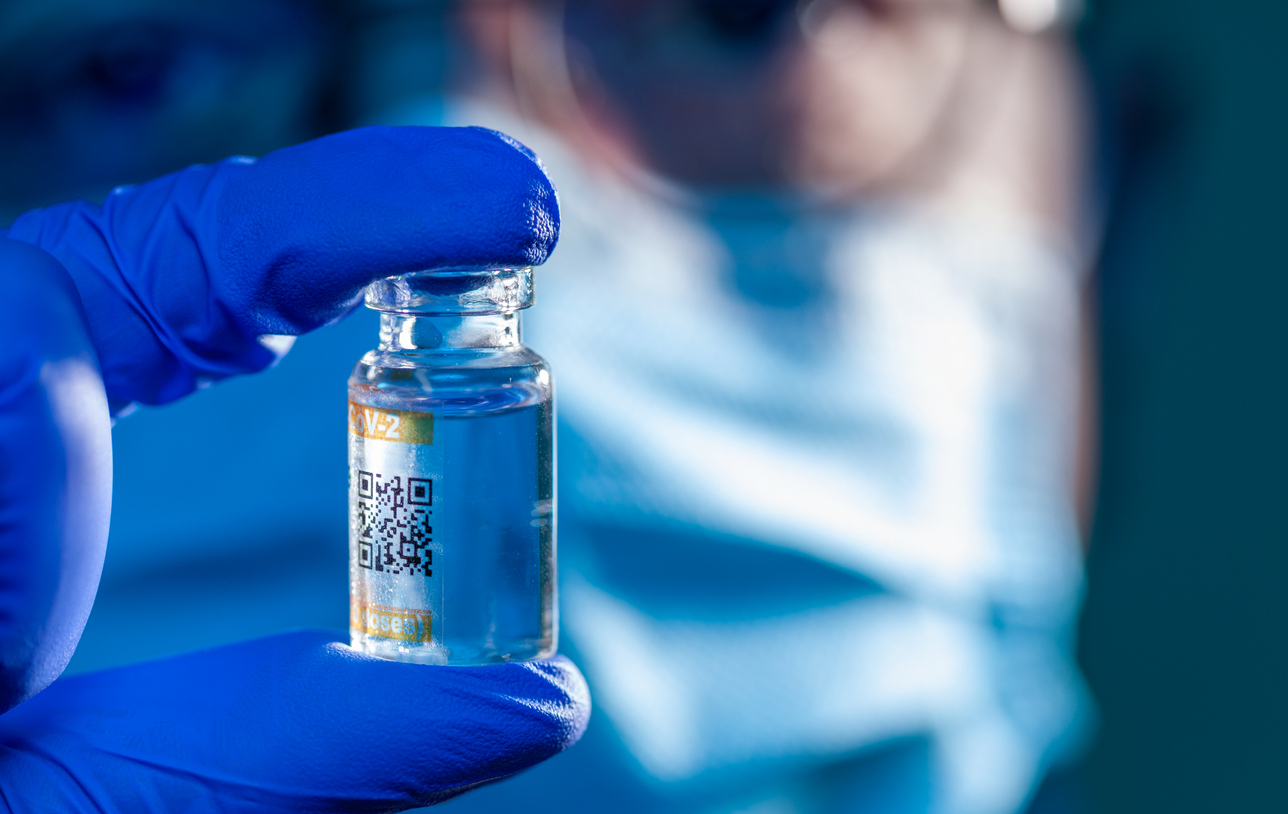
The downside is that QR codes are often less portable than simple container IDs. If the QR code points to a static URL and the lab later changes platforms, domains, or record structures, the printed label may still point to the old location.
This is why QR codes can create migration risk. A barcode or RFID tag that contains a durable unique ID can usually be mapped into a new database. A QR code that points to an old URL may require relabeling if redirects or system-level mapping cannot be maintained.
For most chemical inventory programs, barcodes or RFID tags are the safer default. QR codes may still be useful in specific workflows, but they should be designed carefully so the physical label is not tightly coupled to a fragile URL.
Pros and cons of QR codes
RFID for chemical inventory tracking
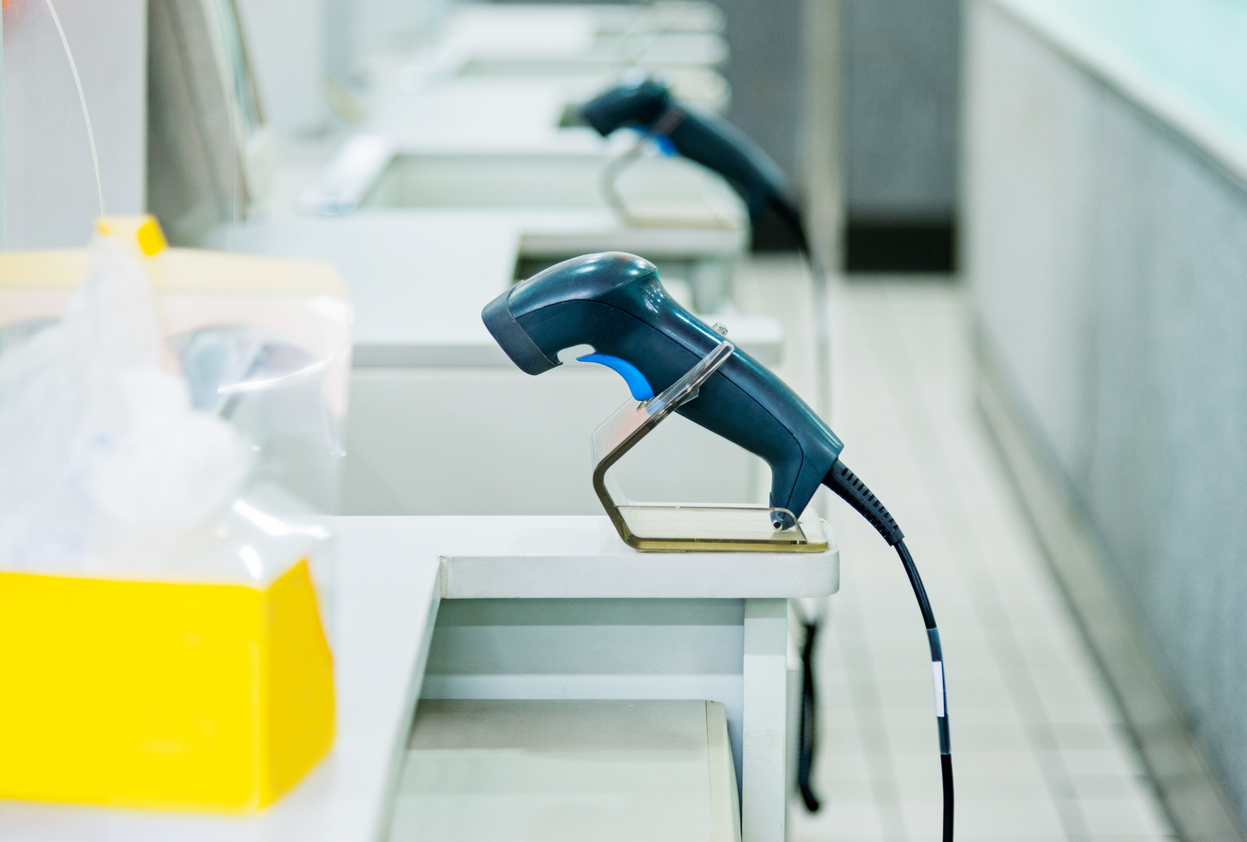
RFID stands for radio frequency identification. Unlike barcodes and QR codes, which are read visually, RFID tags use radio waves to transmit an identifier to a paired reader. RFID tags can be read by handheld scanners or by fixed readers placed in strategic areas.
For chemical inventory, RFID's biggest advantage is speed. RFID tags do not need to be scanned one by one, and they do not need to be directly visible to the reader. If tagged containers are within range, a reader can identify many containers much faster than a manual barcode audit.
That makes RFID especially relevant in large facilities with thousands of containers, frequent moves between rooms, shared stockrooms, high-hazard storage areas, or recurring reconciliation requirements.
RFID is especially useful when:
- You need to reconcile a large stockroom or shared facility
- Containers are stored in cabinets, secondary containment, or crowded shelves
- High-hazard areas require frequent checks
- Inventory changes frequently
- Lab operations or EHS teams need to locate specific containers quickly
- You want fixed readers near transition points such as disposal areas
In practice, RFID can support several chemical inventory workflows.
For reconciliation, you can walk through a storage area with a handheld reader and quickly compare what's physically present against what the inventory system expects to find in that location. That helps reduce missed containers and stale records.
For locating a specific container, some handheld RFID readers can work like a proximity finder. Here, you can enter the target tag ID and the reader helps identify when they are close to the container. This can help you save time in rooms with hundreds or thousands of similar bottles.
For disposal or status changes, place a fixed reader near a defined transition point. When tagged containers pass that reader on their way to disposal, the system can help flag them for status updates from active to disposed or archived, depending on the lab's workflow.
RFID does cost more than barcode labeling, so many labs use it selectively. A hybrid approach often works well: use RFID tags with printed tag IDs and optical barcodes, then use lower-cost barcode scanners for routine actions and shared RFID readers for reconciliation, locating containers, or high-risk areas.
In a nutshell: RFID is not automatically the best choice for every container. It is strongest where speed, accuracy, and reconciliation frequency justify the added cost.
Pros and cons of RFID
Camera-based inventory entry and ChemSnap AI
With SciSure's ChemSnap AI, you can add chemical inventory from a smartphone photo of a container label. This helps you automatically populate fields such as chemical identity, CAS number, container size, manufacturer, lot number, product name, and product number where available.
This helps if your lab just needs a faster way to add new containers when they arrive. Manual entry can be slow, especially when users need to copy manufacturer names, product numbers, lot numbers, CAS numbers, and container sizes from supplier labels.
ChemSnap doesn't replace durable container IDs. Instead, it supports the intake step: getting a container into the inventory system faster and with less manual typing. Once a record exists, the container can still be tracked with a barcode, RFID tag, or other unique identifier.
This is especially useful because inventory systems usually decay when intake is too hard. If adding a chemical takes too many steps, users work around the system. Assisted capture makes the correct workflow easier to follow.
Why label durability matters in labs
Chemical labels live in harsh environments. They may encounter cold storage, freezers, solvents, water, abrasion, curved bottles, secondary containers, corrosive vapors, or routine handling with gloves.
Before rolling out a label program, you should test:
- Adhesive performance on common container materials
- Resistance to expected solvents and cleaning agents
- Readability after cold storage or condensation
- Label size on small vials and curved bottles
- Whether labels interfere with manufacturer hazard labels
- Whether the label remains readable after normal handling
The tracking method can be technically sound and still fail if the physical label does not survive the lab environment.
What modern chemical inventory software should add
A modern system should connect container identification to the broader information labs need for safety, operations, and compliance. The tracking label is only one part of chemical inventory management.
This is where dedicated chemical inventory software becomes most important for large facilities. Barcodes, QR codes, and RFID tags identify containers, but the software has to maintain the live record behind each ID: location, quantity, owner, SDS, hazard data, status, audit history, and reporting context. Without that connected record, even a well-labeled facility can still struggle with stale inventory, missing SDSs, manual reconciliation, or unreliable compliance reports.
SciSure's Chemical Inventory & SDS capabilities are built around ChemTracker, combining container-level chemical tracking with SDS management, regulatory data, and reporting. Here's a non-exhaustive list of its features:
Your choice of chemical inventory tracking directly affects your compliance reporting, because this in turn depends on the quality of your data. A Tier II report, fire code review, or SDS audit is only as reliable as the container records behind it.
Compliance considerations for chemical inventory tools
When evaluating tracking tools, make sure to keep in mind regulatory and operational responsibilities, not just scanning speed.
Hazard communication and SDS readiness
With OSHA's 2024 HazCom update now in its extended phase-in period, your lab should expect updated SDSs and labels to keep arriving from suppliers. Chemical inventory systems should make it easy to attach, update, search, and audit SDS records by chemical name, CAS number, manufacturer, product number, or container.
For SciSure users, SDS auto-match and SDS attachment workflows help reduce the gap between "We have an SDS somewhere" and "The right SDS is connected to the right chemical record."
EPCRA Tier II and Right-to-Know reporting
EPCRA reporting is highly dependent on accurate maximum amount, average daily amount, storage, and location data. That means inventory tracking should support both container-level accuracy and reporting-level aggregation.
SciSure's ChemTracker reporting can support federal Tier II and select state or local RTK-style reports, depending on configuration. This is where barcode and RFID accuracy becomes more than an operational convenience. Missed containers, duplicate records, or stale active records can change your reported totals.
Fire code and MAQ visibility
Your lab needs to understand what's present by building, floor, control area, physical state, hazard class, and storage condition. SciSure supports Fire Code and MAQ reporting by control area. Product documentation also notes that oversight users can edit control-area MAQs where appropriate, so the report can reflect customer-specific configuration and local review needs.
Disposal status and hazardous waste workflows
A container may be empty, consumed, transferred, or discarded, but still listed as active because no one removed it from the inventory. This can inflate quantities, confuse purchasing, and make a storage area appear less compliant than it is.
RFID, barcode removal workflows, piggyback labels, and fixed transition-point readers can all help. The goal is to make disposal or archival as easy to record as intake.
Practical recommendations to stay compliant with your chemical inventory
- Use a durable unique container ID for every container.
- Use barcodes or RFID tags over QR codes when portability and long-term migration matter.
- Use barcodes for routine, low-cost individual scanning.
- Use RFID where reconciliation speed, locating containers, or high-risk visibility justify the investment.
- Use assisted intake tools such as ChemSnap AI to reduce manual data entry.
- Keep SDSs, hazard data, owner, location, quantity, and status connected to each container.
- Reconcile regularly so the system reflects what is physically present.
- Archive or remove empty containers promptly so reports do not include chemicals that are no longer on hand.
- Check federal, state, local, and institutional requirements before relying on any report for submission.
How SciSure supports chemical inventory tracking
SciSure brings chemical inventory, SDS management, and lab safety workflows into one unified platform for scientists, EHS, and lab operations teams. For chemical inventory, SciSure helps teams move beyond static spreadsheets by connecting physical tracking methods to the data needed for daily work and compliance:
- Barcodes and RFID tags help identify containers.
- ChemSnap AI helps with intake.
- SDS auto-match helps keep hazard documents connected.
- ChemTracker's regulatory and hazard database helps teams understand what they have and what obligations may apply.
- And finally, reporting tools help EHS and lab operations teams prepare for audits, Tier II/RTK workflows, fire code reviews, and internal reconciliation.
For large facilities, this connected approach matters because the inventory is usually spread across many people, rooms, storage types, and reporting needs. A barcode, QR code, or RFID tag can identify a container, but the platform behind it has to keep the inventory usable after the container moves, expires, changes owner, loses an SDS link, or leaves the facility.
Here's an example in practice: SmartLabs uses SciSure's Health & Safety features across chemical inventory, SDS access, inspections, safety training, and MAQ tracking. Upon implementing ChemTracker, they reported that inventory search went from 15 minutes to 1-2 minutes, inventory reconciliation for an entire research center went from an all-day task to as little as 20 minutes, and chemical inventory reporting went from about 30 minutes to about 1 minute.
The result is a more reliable chemical inventory process: containers are easier to add, easier to find, easier to reconcile, and easier to report on. Learn more about how 30+ labs have implemented SciSure's chemical safety features to improve their adoption, efficiency, and engagement metrics.
Choosing a chemical inventory tracking tool is a workflow decision
For a large facility, the best tool is rarely a spreadsheet, SDS database, barcode, QR code, or RFID tag by itself. The strongest approach is dedicated chemical inventory software that can use barcodes or QR codes for routine actions, RFID for faster reconciliation where it is worth the investment, and integrated SDS management to keep safety documentation connected to live container records.
- Barcodes are practical and cost-effective for many labs.
- QR codes can be useful but should be used carefully.
- RFID can dramatically improve reconciliation and location workflows in larger or higher-risk environments.
- ChemSnap AI can make intake faster and reduce manual entry.
- The strongest chemical inventory programs combine the right physical tracking method with a system that keeps SDSs, hazards, quantities, locations, and compliance reports current.
For labs facing updated HazCom timelines, annual EPCRA reporting, fire code reviews, hazardous waste tracking, and day-to-day research pressure, that connected approach is what turns chemical inventory from an administrative burden into a reliable source of operational confidence.
If this sounds like an approach that would benefit your lab, get in touch with us. Let's explore how SciSure's Health & Safety features can help you create a safer lab that's audit-ready at all times.

Read more of our blogs about modern lab management
Discover the latest in lab operations, from sample management to AI innovations, designed to enhance efficiency and drive scientific breakthroughs.