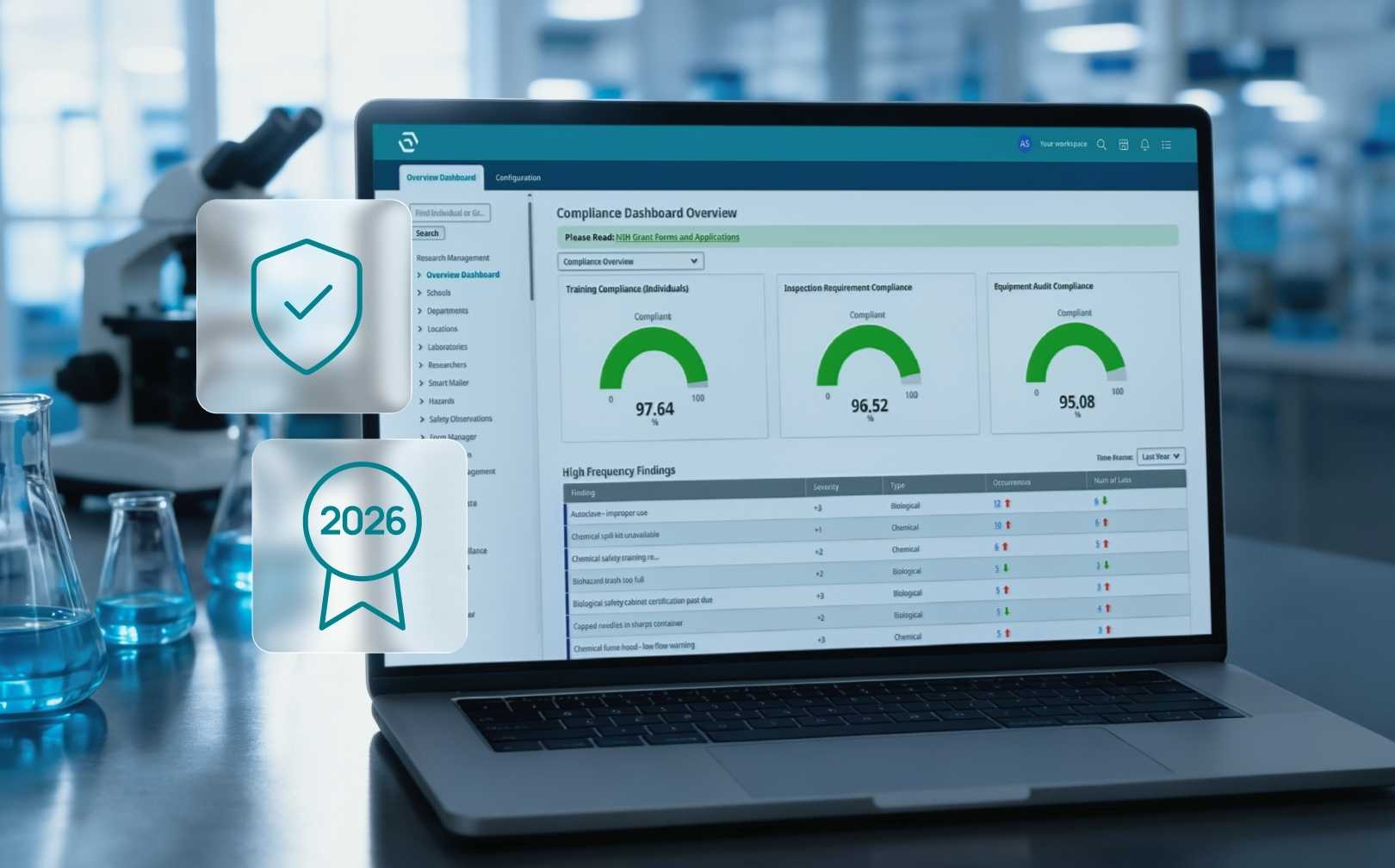
Best Practices for Chemical Storage in Research Labs

Practical best practices for chemical storage in research labs: segregation, cabinets, labels, SDS access, inventory, MAQ limits & where SciSure steps in.

•
October 8, 2026
•
()
min read
A laboratory

Download Whitepaper

By submitting this form, you agree with our Privacy Policy.
Thank you! Download the file by clicking below:
Download
Oops! Something went wrong while submitting the form.

Table of Contents

Thank you! Your submission has been received!
Oops! Something went wrong while submitting the form.

TL;DR

The best practices for chemical storage are to separate chemicals by hazard class and compatibility, use rated cabinets and refrigerators, keep every label intact and every SDS within reach, hold only what you need, and track each container in an accurate inventory.
‍

  • Segregate by compatibility.
    Store chemicals by hazard class and keep incompatible groups apart: oxidizers away from flammables and reducing agents, acids away from bases, and water-reactive materials out of rooms that hold flammable liquids. Guidance under the Occupational Safety and Health Administration (OSHA) Laboratory Standard and Prudent Practices in the Laboratory set this baseline, and each chemical's safety data sheet (SDS) has the final word.
    ‍
  • Use rated storage equipment.
    Flammable liquids belong in approved cabinets, which OSHA caps at 60 gallons of Category 1 to 3 liquids each, and in flammable-rated refrigerators. Toxic or corrosive chemicals that need ventilation go in vented cabinets. Fume hoods, benchtops, floors, and exit routes are never storage, and local fire codes may set tighter limits.
    ‍
  • Keep quantities low.
    Order the minimum, date containers on receipt, rotate stock, and date peroxide formers again when opened. Fire codes cap each hazard class per control area through maximum allowable quantities (MAQs), so surplus bottles use up headroom your lab may need for new projects or renovations.
    ‍
  • Track every container.
    A container-level chemical inventory shows what you hold, where it sits, and how much is left. SciSure Health & Safety supports this with ChemTracker barcode or radio-frequency identification (RFID) tracking, SDS Auto-Match, reconciliation, and fire code and MAQ reports, where configured. SmartLabs and The Engine use it to cut search, hazard lookup, and reporting time from hours to minutes.
    ‍
  • Keep chemical and lab inventory separate.
    Chemical containers, hazards, and SDS belong in a chemical inventory built for safety and regulatory reporting. Biological samples, virus stocks, and experiment materials belong in a sample management or laboratory information management system (LIMS), with biosafety registration covering the approval side. Treating them as one inventory leaves gaps in hazard data and reports.

‍
This post was originally published in 2023 and updated in 2026 to include more detailed guidance on lab and chemical inventory, more recently updated regulatory guidelines, and new customer proof from SmartLabs and The Engine.

Most chemical storage problems in research labs start small. A new solvent goes on the nearest shelf with space. A bottle of ether sits unopened for three years. Someone relabels a container with a marker and the original hazard warnings disappear. None of it feels urgent on a Tuesday afternoon, but each one shows up later, during a spill, a fire inspection, or an audit.

This guide covers the chemical storage best practices that hold up in working labs. It draws on OSHA's Laboratory Standard and the National Research Council's Prudent Practices in the Laboratory, which OSHA summarizes in Appendix A of that standard. Along the way, you'll see where SciSure Health & Safety helps environmental health and safety (EHS) and lab operations teams keep storage under control as labs grow, with examples from SmartLabs and The Engine Accelerator.

Why chemical storage matters for compliance

Poor storage turns ordinary chemicals into fire, reaction, and exposure risks. OSHA's Laboratory Standard (Code of Federal Regulations, 29 CFR 1910.1450) applies to employers using hazardous chemicals on a laboratory scale. It requires a written chemical hygiene plan (CHP) that sets out procedures and control measures for the chemicals in that lab, reviewed at least once a year.

The same standard requires employers to keep labels on incoming containers intact and to keep SDS readily accessible to lab employees. Training must cover where to find reference material on safe handling, storage, and disposal, including SDS.

Storage is where those requirements meet daily habits. The practices below break that work into steps you can check against your own lab.

1. Read the SDS before the chemical arrives, and keep labels intact

Everyone who handles a chemical should know how to store it before the box is opened. Section 7 of a safety data sheet covers handling and storage, including incompatibilities, under the 16-section format required by OSHA's Hazard Communication Standard. Prudent Practices also recommends having handling, storage, and disposal information in place before a substance is received.

In practice:

  • Keep manufacturer labels intact.
    OSHA requires that labels on incoming containers are not removed or defaced.
  • Label secondary containers.
    Beakers, flasks, and transfer vessels should show the chemical identity and hazard warnings. Repackaged chemicals should carry the essential information from the original label.
  • Date containers on arrival.
    Dated shipments make stock rotation possible.
  • Keep SDS reachable.
    People need them during a spill, not in a binder in a locked office.

OSHA updated the Hazard Communication Standard in 2024 to align with Revision 7 of the Globally Harmonized System (GHS), with phased compliance dates for chemical manufacturers and employers (OSHA final rule). If your labs decant chemicals or use in-house labels, ask your EHS office whether those labels and your training need an update.

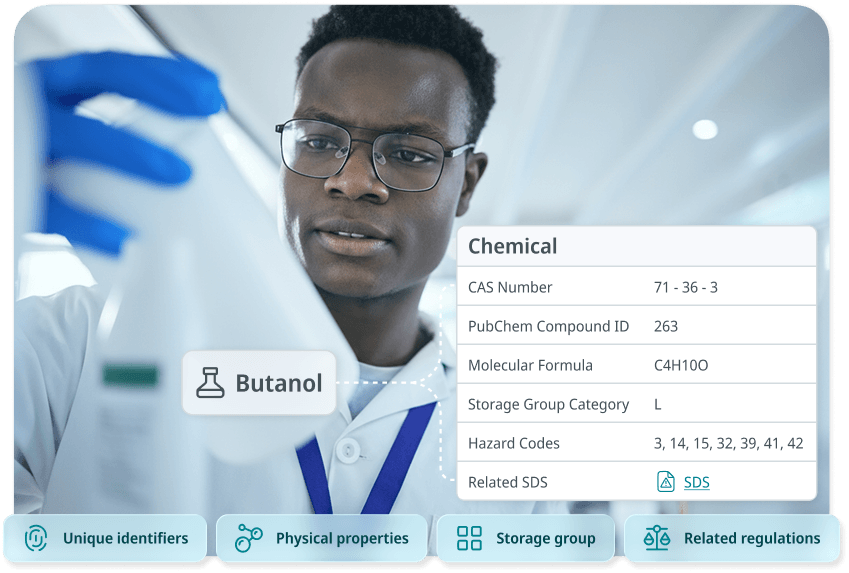
With SciSure Health & Safety, SDS Auto-Match attaches a recent SDS to each container record by matching details such as chemical name, CAS (Chemical Abstracts Service) number, product number, and manufacturer. When no match exists, teams can attach their own SDS. At The Engine, resident researchers now find digital SDS in ChemTracker instead of relying on paper binders.
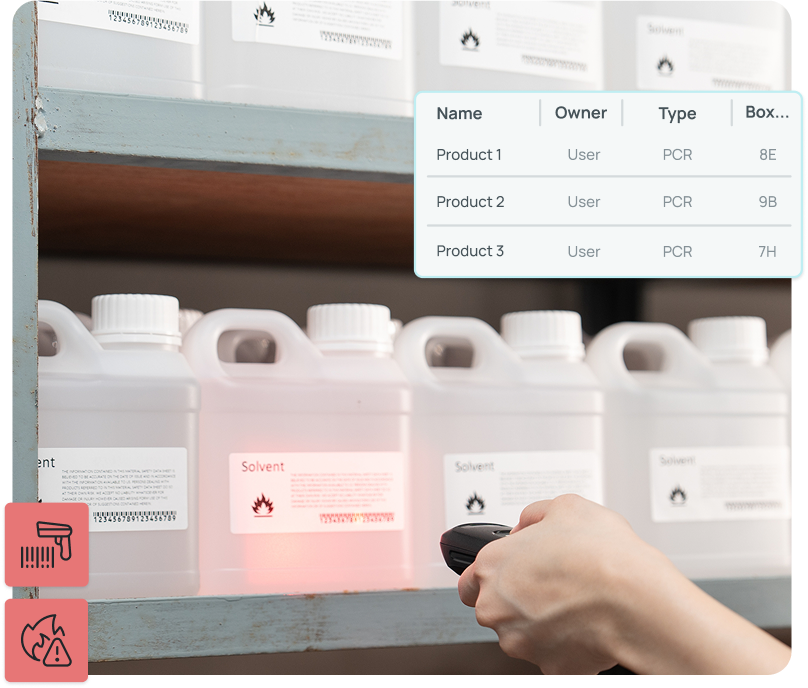
SDS Auto-Match on the SciSure Health & Safety platform

2. Segregate chemicals by hazard class and compatibility

Shelving chemicals alphabetically is convenient, but it can put incompatible chemicals side by side. Appendix A of the Laboratory Standard recommends separating chemicals by hazard category and compatibility, and keeping incompatibles apart during transport, storage, use, and disposal. The table below covers common groups to plan for. The SDS decides for each chemical.

Chemical storage: Key groups, concerns, and practices

Chemical group Main concern Storage practice
Flammable liquids Vapors can ignite near heat, sparks, or flames Approved flammable storage cabinets; flammable-rated refrigerators for cold storage; away from heat and direct sunlight
Oxidizers Can start or intensify a fire on contact with fuels Store apart from flammables, fuels, and reducing agents
Acids and bases Can react violently with each other Separate corrosive storage with secondary containment trays
Water-reactive materials Can release flammable or toxic gas on contact with water Never in the same room as flammable liquids (29 CFR 1910.106)
Peroxide formers, such as some ethers Peroxides can build up over time Date on receipt and on opening; away from heat and light; tight, nonmetal lids
Highly toxic chemicals Exposure, theft, or misuse Ventilated, secure, access-controlled area with a detailed inventory
Compressed gases Leaks plus physical hazards Check for leaks, keep labeled, return cylinders you no longer need

ChemTracker container records linked to SciSure's central chemical database carry hazard and regulatory data automatically, so EHS teams can filter inventory by hazard class and see which flammables or corrosives sit in which room. Chemicals outside the database can still be tracked as local entries, with regulatory data added by oversight users.

At SmartLabs, separating out flammable and corrosive hazard classes was one of the biggest time savers. As Natalie Kosmandakis, who works in EHS and lab operations at SmartLabs, put it:
‍

"I have cut my time in half by using ChemTracker for pulling up reports and conducting inspections."

‍

SciSure Health & Safety
Keep chemical storage accurate as your labs grow
Track every container by barcode or RFID, match SDS automatically, and pull fire code and MAQ reports in minutes with ChemTracker.
Talk to a specialist

3. Use storage equipment rated for the hazard

The right shelf matters as much as the right neighbor. Appendix A and OSHA's flammable liquids standard point to a consistent set of rules:

  • Flammable storage cabinets.
    OSHA limits each cabinet to 60 gallons of Category 1, 2, or 3 flammable liquids, or 120 gallons of Category 4. Local fire codes can be stricter.
  • Flammable-rated refrigerators and freezers
    Especially for sealed flammable liquids that need cold storage. No food or drinks in lab refrigerators.
  • Vented cabinets
    Especially for toxic or corrosive chemicals that need ventilation, rather than a fume hood.
  • Secured shelving.
    Open shelves should be fixed to the wall and have a 3/4-inch lip, with secondary containment where needed.
  • Clear zones.
    No chemical storage in fume hoods, on the floor, on benchtops, in exit routes, near heat, or in direct sunlight.
  • Storage rooms
    Especially those with controlled access, ventilation, signage, diked floors, and fire suppression.

Where the Door Sign module is enabled, SciSure Health & Safety generates printable door signs from current space data, including contacts, hazards, personal protective equipment (PPE), and NFPA 704 (National Fire Protection Association) values that ChemTracker totals can inform. SmartLabs uses hazard data broken down by suite to decide signage and spill kits across 729 lab spaces.

4. Keep quantities low and know your MAQs

Every extra bottle adds risk and takes up room your lab may need later. Appendix A recommends ordering only the minimum needed, dating shipments on receipt, rotating stock, and discarding or returning items you no longer use.

Fire codes add a hard ceiling. Building and fire codes cap how much of each hazard class can be stored or used within a control area, called the maximum allowable quantity (MAQ). Approved cabinets and sprinklers can raise some limits, so MAQ math depends on how each space is built and equipped. Our guide to fire code compliance and MAQs covers control areas in more depth, and our chemical inventory reporting guide covers Tier II and right-to-know thresholds.

ChemTracker can generate fire code and MAQ reports by control area or floor, with hazard class assignments built in, plus Tier II and right-to-know reports, where configured. Default fire code calculations use International Building Code (IBC) 2015 tables and can account for configured sprinklers, cabinets, and adjusted control-area MAQs. The reports support your decisions; your authority having jurisdiction (AHJ), such as the local fire marshal, still makes the call.
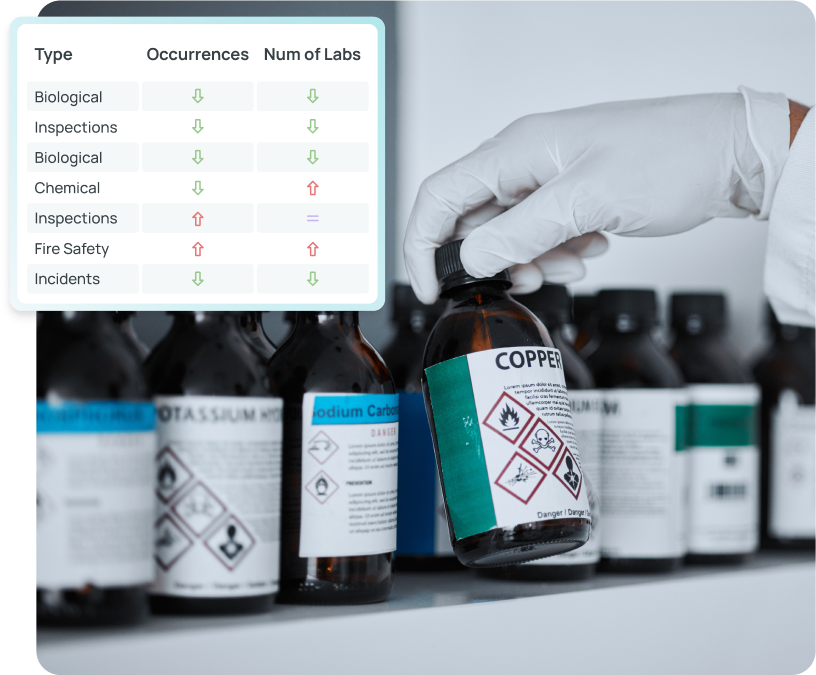
Incident reporting with SciSure ChemTracker

At SmartLabs, senior EHS lab operations manager Julianna Skelton tracks MAQs every week to meet a Boston Fire Department requirement, and ChemTracker separates out the data she needs. "Just being able to pull that from SciSure makes a big difference," she said.

5. Keep a container-level chemical inventory

You can't store chemicals well without knowing what you have. Appendix A calls an accurate inventory central to managing chemicals and recommends detailed records for highly toxic and explosive or reactive materials: date received, amount, location, and the person responsible.

A useful container record includes:

  • Chemical name and CAS number
  • Quantity and unit
  • Location down to building, room, and cabinet or shelf
  • Owning lab or group, and a responsible person
  • Hazard class
  • Date received and date opened
  • A linked SDS

ChemTracker tracks each container from receipt to disposal. Your team can:

  • Tag containers with barcodes or RFID for scanning.
  • Add containers by photo with ChemSnap AI, which reads details such as chemical name, container size, manufacturer, and lot number for a person to review.
  • Import or update inventory in bulk by spreadsheet.
  • Archive empty containers so their history stays available without counting toward reporting totals.
  • Bring purchasing data in earlier with Procurement Connect, which turns orders from your existing procurement platform into structured chemical records and flags anything it can't process confidently for review.

Before ChemTracker, The Engine's Lab Operations team coordinated up to 50 resident companies with Excel, paper, and Access databases. After the switch, the time to identify hazard information for resident companies, locations, and individuals dropped from several hours to under five minutes, and the accelerator has grown from 10 to 50 resident lab companies. Knowing where compressed gases sit also helps the team decide where to place new residents.

On database coverage, the team puts it plainly:

‍

"We get really weird chemicals and mixtures, and you can find them in ChemTracker most times."

‍

SciSure Health & Safety
Know what's on every shelf in minutes, not hours
Add containers by scan or photo, find any chemical by hazard class, room, or lab group, and keep an SDS linked to every container.
Request a demo

6. Reconcile, inspect, and train on a schedule

Inventories drift. Containers get emptied, moved between rooms, or shared across groups without anyone updating the record. Appendix A recommends a physical inventory at least once a year for highly toxic and explosive or reactive chemicals, and OSHA requires a CHP review at least annually. Your CHP can set a shorter cycle for high-turnover spaces.

Inspections close the loop. Appendix A describes a mix of routine inspections, self-audits, and EHS inspections, with checklists, photos of issues, a written report, and follow-up until each correction is made. Training matters too: OSHA requires information and training when someone first starts work where hazardous chemicals are present, and before new exposure situations.

ChemTracker's reconciliation tool lets teams scan a space and confirm, relocate, transfer, remove, or reactivate containers in one pass. SciSure inspections tie findings to exact spaces, with photos, corrective actions, and self-inspections where configured, and training assignments can follow each person's job activities. Here's what that looked like at SmartLabs:

Customer outcomes

SmartLabs: Chemical Inventory at Scale

Less manual reporting, faster hazard visibility, and lab operations that can scale across more people, spaces, and workflows.

After implementing SciSure's ChemTracker:

87%-99% of time saved

  • Search: 15 min to 1-2 min.
  • Reconciliation: all day to 20 min.
  • Reporting: 30 min to 1 min.

Sources

SciSure customer story: SmartLabs, "SmartLabs Elevates Lab Management to Artistry." Metrics and before/after claims are condensed from that story.

‍

For a reconciliation cadence that works year-round, check out our guide on how to keep your chemical inventory up to date with ChemTracker.

7. Plan for disposal before you need it

Expired and unneeded chemicals stay a storage problem until they leave the building. Appendix A recommends a waste plan before work starts. Waste should collect at or near where it's generated, in compatible, sealed containers labeled with the accumulation start date and hazard warnings, with incompatible wastes kept apart. Federal rules for hazardous waste generators sit in 40 CFR part 262, and some states add stricter requirements.

Where the Hazardous Waste module is enabled, EHS teams can build reusable waste stream profiles, and lab members can submit pickup requests that land in an EHS queue. When a container is used up or disposed of, ChemTracker archives the record rather than deleting it. For the wider risk picture, check out our loss control guide to hazardous chemical management.

Chemical inventory and lab inventory do different jobs

Many research organizations run two inventories, sometimes without noticing. One tracks chemical containers for safety and compliance: hazards, SDS, room locations, and regulatory quantities. The other tracks research materials for the science: samples, aliquots, cell lines, virus stocks, and reagents used in experiments, plus their positions in freezers and racks.

SciSure covers these with two separate products, each with its own records and purpose:

SciSure Health & Safety vs. SciSure Research: What each product tracks and who it's built for

Product What it tracks Built for
SciSure Health & Safety (ChemTracker) Chemical containers measured by mass, volume, unit, or gas cylinder, with hazard and regulatory data and SDS EHS and lab operations: storage compliance, fire code and MAQ reports, Tier II, inspections
SciSure Research (electronic lab notebook and LIMS) Samples, sample series, lineage, storage positions, and the experiments that use them Scientists and lab managers: traceability and reproducibility

ChemTracker is designed for chemicals and is not a biological sample inventory. Biological materials such as viral vectors and pathogen stocks are tracked as samples in a sample management system, while biosafety registration and committee review cover their safety approvals.

Keeping the jobs separate avoids two common gaps: chemical containers without hazard data or SDS, and biological materials missing from the approvals that govern them.

Chemical storage checklist

Use this list for a quick walk-through of any lab or storage room:

  • Every container has an intact original label, and secondary containers show the chemical name and hazards
  • An SDS is available for every chemical and reachable during a spill
  • Chemicals are grouped by hazard class, with incompatibles physically separated
  • Flammable liquids sit in approved cabinets within capacity limits, and cold flammables only in flammable-rated refrigerators
  • Nothing is stored in fume hoods, on floors, on benchtops, or in exit routes
  • Open shelves are secured with lips, and secondary containment is in place where needed
  • Peroxide formers are dated on receipt and on opening
  • Quantities have been checked against each control area's MAQs
  • The container-level inventory was reconciled on schedule
  • Expired and unneeded chemicals are routed to waste
  • The CHP was reviewed in the last 12 months, and training covers storage

And if setting this up sounds like the kind of support you need, get in touch with us for a walkthrough of SciSure's chemical inventory software and how it can help you stay audit-ready all year round.

Frequently asked questions

What are the basic rules for storing chemicals in a lab?

Separate chemicals by hazard class and compatibility, follow the storage section of each SDS, and keep labels intact. Use rated cabinets and refrigerators, keep chemicals out of fume hoods, off floors and benchtops, and out of exit routes, order only what you need, and keep an accurate inventory. Your chemical hygiene plan sets the specific rules for your lab.

How much flammable liquid can a flammable storage cabinet hold?

Under OSHA's flammable liquids standard, one storage cabinet can hold no more than 60 gallons of Category 1, 2, or 3 flammable liquids, or 120 gallons of Category 4. Your local fire code may limit the total per control area further, so check with your EHS office or fire code official.

Can you store chemicals in a fume hood?

Appendix A of OSHA's Laboratory Standard recommends against it. Toxic or corrosive chemicals that need ventilated storage belong in vented storage cabinets instead.

How often should a lab reconcile its chemical inventory?

Appendix A recommends a physical inventory at least once a year for highly toxic and explosive or reactive chemicals, and your chemical hygiene plan can set a shorter cycle. With scanning and reconciliation tools, a full reconciliation can be short: SmartLabs reconciles an entire research center in as little as 20 minutes with SciSure.

Is chemical inventory the same as lab inventory?

No. Chemical inventory tracks containers, hazards, SDS, and regulatory quantities for safety and compliance. Lab or sample inventory tracks research materials, such as samples, biological stocks, and reagents tied to experiments. SciSure covers them with two separate products: SciSure Health & Safety and SciSure Research.

Keep reading

Ready to see SciSure in action?

Get a personalized demo and see how SciSure fits your lab's workflows.
Request demo

No commitment · Free consultation

Most chemical storage problems in research labs start small. A new solvent goes on the nearest shelf with space. A bottle of ether sits unopened for three years. Someone relabels a container with a marker and the original hazard warnings disappear. None of it feels urgent on a Tuesday afternoon, but each one shows up later, during a spill, a fire inspection, or an audit.

This guide covers the chemical storage best practices that hold up in working labs. It draws on OSHA's Laboratory Standard and the National Research Council's Prudent Practices in the Laboratory, which OSHA summarizes in Appendix A of that standard. Along the way, you'll see where SciSure Health & Safety helps environmental health and safety (EHS) and lab operations teams keep storage under control as labs grow, with examples from SmartLabs and The Engine Accelerator.

Why chemical storage matters for compliance

Poor storage turns ordinary chemicals into fire, reaction, and exposure risks. OSHA's Laboratory Standard (Code of Federal Regulations, 29 CFR 1910.1450) applies to employers using hazardous chemicals on a laboratory scale. It requires a written chemical hygiene plan (CHP) that sets out procedures and control measures for the chemicals in that lab, reviewed at least once a year.

The same standard requires employers to keep labels on incoming containers intact and to keep SDS readily accessible to lab employees. Training must cover where to find reference material on safe handling, storage, and disposal, including SDS.

Storage is where those requirements meet daily habits. The practices below break that work into steps you can check against your own lab.

1. Read the SDS before the chemical arrives, and keep labels intact

Everyone who handles a chemical should know how to store it before the box is opened. Section 7 of a safety data sheet covers handling and storage, including incompatibilities, under the 16-section format required by OSHA's Hazard Communication Standard. Prudent Practices also recommends having handling, storage, and disposal information in place before a substance is received.

In practice:

  • Keep manufacturer labels intact.
    OSHA requires that labels on incoming containers are not removed or defaced.
  • Label secondary containers.
    Beakers, flasks, and transfer vessels should show the chemical identity and hazard warnings. Repackaged chemicals should carry the essential information from the original label.
  • Date containers on arrival.
    Dated shipments make stock rotation possible.
  • Keep SDS reachable.
    People need them during a spill, not in a binder in a locked office.

OSHA updated the Hazard Communication Standard in 2024 to align with Revision 7 of the Globally Harmonized System (GHS), with phased compliance dates for chemical manufacturers and employers (OSHA final rule). If your labs decant chemicals or use in-house labels, ask your EHS office whether those labels and your training need an update.

With SciSure Health & Safety, SDS Auto-Match attaches a recent SDS to each container record by matching details such as chemical name, CAS (Chemical Abstracts Service) number, product number, and manufacturer. When no match exists, teams can attach their own SDS. At The Engine, resident researchers now find digital SDS in ChemTracker instead of relying on paper binders.

SDS Auto-Match on the SciSure Health & Safety platform

2. Segregate chemicals by hazard class and compatibility

Shelving chemicals alphabetically is convenient, but it can put incompatible chemicals side by side. Appendix A of the Laboratory Standard recommends separating chemicals by hazard category and compatibility, and keeping incompatibles apart during transport, storage, use, and disposal. The table below covers common groups to plan for. The SDS decides for each chemical.

Chemical storage: Key groups, concerns, and practices

Chemical group Main concern Storage practice
Flammable liquids Vapors can ignite near heat, sparks, or flames Approved flammable storage cabinets; flammable-rated refrigerators for cold storage; away from heat and direct sunlight
Oxidizers Can start or intensify a fire on contact with fuels Store apart from flammables, fuels, and reducing agents
Acids and bases Can react violently with each other Separate corrosive storage with secondary containment trays
Water-reactive materials Can release flammable or toxic gas on contact with water Never in the same room as flammable liquids (29 CFR 1910.106)
Peroxide formers, such as some ethers Peroxides can build up over time Date on receipt and on opening; away from heat and light; tight, nonmetal lids
Highly toxic chemicals Exposure, theft, or misuse Ventilated, secure, access-controlled area with a detailed inventory
Compressed gases Leaks plus physical hazards Check for leaks, keep labeled, return cylinders you no longer need

ChemTracker container records linked to SciSure's central chemical database carry hazard and regulatory data automatically, so EHS teams can filter inventory by hazard class and see which flammables or corrosives sit in which room. Chemicals outside the database can still be tracked as local entries, with regulatory data added by oversight users.

At SmartLabs, separating out flammable and corrosive hazard classes was one of the biggest time savers. As Natalie Kosmandakis, who works in EHS and lab operations at SmartLabs, put it:
‍

"I have cut my time in half by using ChemTracker for pulling up reports and conducting inspections."

‍

SciSure Health & Safety
Keep chemical storage accurate as your labs grow
Track every container by barcode or RFID, match SDS automatically, and pull fire code and MAQ reports in minutes with ChemTracker.
Talk to a specialist

3. Use storage equipment rated for the hazard

The right shelf matters as much as the right neighbor. Appendix A and OSHA's flammable liquids standard point to a consistent set of rules:

  • Flammable storage cabinets.
    OSHA limits each cabinet to 60 gallons of Category 1, 2, or 3 flammable liquids, or 120 gallons of Category 4. Local fire codes can be stricter.
  • Flammable-rated refrigerators and freezers
    Especially for sealed flammable liquids that need cold storage. No food or drinks in lab refrigerators.
  • Vented cabinets
    Especially for toxic or corrosive chemicals that need ventilation, rather than a fume hood.
  • Secured shelving.
    Open shelves should be fixed to the wall and have a 3/4-inch lip, with secondary containment where needed.
  • Clear zones.
    No chemical storage in fume hoods, on the floor, on benchtops, in exit routes, near heat, or in direct sunlight.
  • Storage rooms
    Especially those with controlled access, ventilation, signage, diked floors, and fire suppression.

Where the Door Sign module is enabled, SciSure Health & Safety generates printable door signs from current space data, including contacts, hazards, personal protective equipment (PPE), and NFPA 704 (National Fire Protection Association) values that ChemTracker totals can inform. SmartLabs uses hazard data broken down by suite to decide signage and spill kits across 729 lab spaces.

4. Keep quantities low and know your MAQs

Every extra bottle adds risk and takes up room your lab may need later. Appendix A recommends ordering only the minimum needed, dating shipments on receipt, rotating stock, and discarding or returning items you no longer use.

Fire codes add a hard ceiling. Building and fire codes cap how much of each hazard class can be stored or used within a control area, called the maximum allowable quantity (MAQ). Approved cabinets and sprinklers can raise some limits, so MAQ math depends on how each space is built and equipped. Our guide to fire code compliance and MAQs covers control areas in more depth, and our chemical inventory reporting guide covers Tier II and right-to-know thresholds.

ChemTracker can generate fire code and MAQ reports by control area or floor, with hazard class assignments built in, plus Tier II and right-to-know reports, where configured. Default fire code calculations use International Building Code (IBC) 2015 tables and can account for configured sprinklers, cabinets, and adjusted control-area MAQs. The reports support your decisions; your authority having jurisdiction (AHJ), such as the local fire marshal, still makes the call.

Incident reporting with SciSure ChemTracker

At SmartLabs, senior EHS lab operations manager Julianna Skelton tracks MAQs every week to meet a Boston Fire Department requirement, and ChemTracker separates out the data she needs. "Just being able to pull that from SciSure makes a big difference," she said.

5. Keep a container-level chemical inventory

You can't store chemicals well without knowing what you have. Appendix A calls an accurate inventory central to managing chemicals and recommends detailed records for highly toxic and explosive or reactive materials: date received, amount, location, and the person responsible.

A useful container record includes:

  • Chemical name and CAS number
  • Quantity and unit
  • Location down to building, room, and cabinet or shelf
  • Owning lab or group, and a responsible person
  • Hazard class
  • Date received and date opened
  • A linked SDS

ChemTracker tracks each container from receipt to disposal. Your team can:

  • Tag containers with barcodes or RFID for scanning.
  • Add containers by photo with ChemSnap AI, which reads details such as chemical name, container size, manufacturer, and lot number for a person to review.
  • Import or update inventory in bulk by spreadsheet.
  • Archive empty containers so their history stays available without counting toward reporting totals.
  • Bring purchasing data in earlier with Procurement Connect, which turns orders from your existing procurement platform into structured chemical records and flags anything it can't process confidently for review.

Before ChemTracker, The Engine's Lab Operations team coordinated up to 50 resident companies with Excel, paper, and Access databases. After the switch, the time to identify hazard information for resident companies, locations, and individuals dropped from several hours to under five minutes, and the accelerator has grown from 10 to 50 resident lab companies. Knowing where compressed gases sit also helps the team decide where to place new residents.

On database coverage, the team puts it plainly:

‍

"We get really weird chemicals and mixtures, and you can find them in ChemTracker most times."

‍

SciSure Health & Safety
Know what's on every shelf in minutes, not hours
Add containers by scan or photo, find any chemical by hazard class, room, or lab group, and keep an SDS linked to every container.
Request a demo

6. Reconcile, inspect, and train on a schedule

Inventories drift. Containers get emptied, moved between rooms, or shared across groups without anyone updating the record. Appendix A recommends a physical inventory at least once a year for highly toxic and explosive or reactive chemicals, and OSHA requires a CHP review at least annually. Your CHP can set a shorter cycle for high-turnover spaces.

Inspections close the loop. Appendix A describes a mix of routine inspections, self-audits, and EHS inspections, with checklists, photos of issues, a written report, and follow-up until each correction is made. Training matters too: OSHA requires information and training when someone first starts work where hazardous chemicals are present, and before new exposure situations.

ChemTracker's reconciliation tool lets teams scan a space and confirm, relocate, transfer, remove, or reactivate containers in one pass. SciSure inspections tie findings to exact spaces, with photos, corrective actions, and self-inspections where configured, and training assignments can follow each person's job activities. Here's what that looked like at SmartLabs:

Customer outcomes

SmartLabs: Chemical Inventory at Scale

Less manual reporting, faster hazard visibility, and lab operations that can scale across more people, spaces, and workflows.

After implementing SciSure's ChemTracker:

87%-99% of time saved

  • Search: 15 min to 1-2 min.
  • Reconciliation: all day to 20 min.
  • Reporting: 30 min to 1 min.

Sources

SciSure customer story: SmartLabs, "SmartLabs Elevates Lab Management to Artistry." Metrics and before/after claims are condensed from that story.

‍

For a reconciliation cadence that works year-round, check out our guide on how to keep your chemical inventory up to date with ChemTracker.

7. Plan for disposal before you need it

Expired and unneeded chemicals stay a storage problem until they leave the building. Appendix A recommends a waste plan before work starts. Waste should collect at or near where it's generated, in compatible, sealed containers labeled with the accumulation start date and hazard warnings, with incompatible wastes kept apart. Federal rules for hazardous waste generators sit in 40 CFR part 262, and some states add stricter requirements.

Where the Hazardous Waste module is enabled, EHS teams can build reusable waste stream profiles, and lab members can submit pickup requests that land in an EHS queue. When a container is used up or disposed of, ChemTracker archives the record rather than deleting it. For the wider risk picture, check out our loss control guide to hazardous chemical management.

Chemical inventory and lab inventory do different jobs

Many research organizations run two inventories, sometimes without noticing. One tracks chemical containers for safety and compliance: hazards, SDS, room locations, and regulatory quantities. The other tracks research materials for the science: samples, aliquots, cell lines, virus stocks, and reagents used in experiments, plus their positions in freezers and racks.

SciSure covers these with two separate products, each with its own records and purpose:

SciSure Health & Safety vs. SciSure Research: What each product tracks and who it's built for

Product What it tracks Built for
SciSure Health & Safety (ChemTracker) Chemical containers measured by mass, volume, unit, or gas cylinder, with hazard and regulatory data and SDS EHS and lab operations: storage compliance, fire code and MAQ reports, Tier II, inspections
SciSure Research (electronic lab notebook and LIMS) Samples, sample series, lineage, storage positions, and the experiments that use them Scientists and lab managers: traceability and reproducibility

ChemTracker is designed for chemicals and is not a biological sample inventory. Biological materials such as viral vectors and pathogen stocks are tracked as samples in a sample management system, while biosafety registration and committee review cover their safety approvals.

Keeping the jobs separate avoids two common gaps: chemical containers without hazard data or SDS, and biological materials missing from the approvals that govern them.

Chemical storage checklist

Use this list for a quick walk-through of any lab or storage room:

  • Every container has an intact original label, and secondary containers show the chemical name and hazards
  • An SDS is available for every chemical and reachable during a spill
  • Chemicals are grouped by hazard class, with incompatibles physically separated
  • Flammable liquids sit in approved cabinets within capacity limits, and cold flammables only in flammable-rated refrigerators
  • Nothing is stored in fume hoods, on floors, on benchtops, or in exit routes
  • Open shelves are secured with lips, and secondary containment is in place where needed
  • Peroxide formers are dated on receipt and on opening
  • Quantities have been checked against each control area's MAQs
  • The container-level inventory was reconciled on schedule
  • Expired and unneeded chemicals are routed to waste
  • The CHP was reviewed in the last 12 months, and training covers storage

And if setting this up sounds like the kind of support you need, get in touch with us for a walkthrough of SciSure's chemical inventory software and how it can help you stay audit-ready all year round.

Frequently asked questions

What are the basic rules for storing chemicals in a lab?

Separate chemicals by hazard class and compatibility, follow the storage section of each SDS, and keep labels intact. Use rated cabinets and refrigerators, keep chemicals out of fume hoods, off floors and benchtops, and out of exit routes, order only what you need, and keep an accurate inventory. Your chemical hygiene plan sets the specific rules for your lab.

How much flammable liquid can a flammable storage cabinet hold?

Under OSHA's flammable liquids standard, one storage cabinet can hold no more than 60 gallons of Category 1, 2, or 3 flammable liquids, or 120 gallons of Category 4. Your local fire code may limit the total per control area further, so check with your EHS office or fire code official.

Can you store chemicals in a fume hood?

Appendix A of OSHA's Laboratory Standard recommends against it. Toxic or corrosive chemicals that need ventilated storage belong in vented storage cabinets instead.

How often should a lab reconcile its chemical inventory?

Appendix A recommends a physical inventory at least once a year for highly toxic and explosive or reactive chemicals, and your chemical hygiene plan can set a shorter cycle. With scanning and reconciliation tools, a full reconciliation can be short: SmartLabs reconciles an entire research center in as little as 20 minutes with SciSure.

Is chemical inventory the same as lab inventory?

No. Chemical inventory tracks containers, hazards, SDS, and regulatory quantities for safety and compliance. Lab or sample inventory tracks research materials, such as samples, biological stocks, and reagents tied to experiments. SciSure covers them with two separate products: SciSure Health & Safety and SciSure Research.

Keep reading

About the author:

Mark Esposito

Mark Esposito is Sales Enablement Manager at SciSure, where he develops enablement programs, competitive positioning, and customer-facing content that help commercial teams engage buyers and communicate value. Prior to SciSure, he spent seven years at UL leading product marketing for its chemical safety and supply chain risk management unit. Before that, he spent over a decade in creative direction for clients across life sciences, chemical technologies, and higher education. He holds a BFA from Syracuse University.

See all posts from this author

Sign up for our newsletter

Get the latest tips, articles, and exclusive content on modern lab management delivered to your inbox.
Thank you for subscribing!
Please check your email to verify your submission.
Oops! Something went wrong while submitting the form.