What It Really Takes to Implement Scientific Management Platforms at Scale

Implementing lab management software at the enterprise level takes more than just selecting the right platform. Here's what else your success depends on.

August 10, 2026
()
min read
A laboratory

Download Whitepaper

By submitting this form, you agree with our Privacy Policy.
Thank you! Download the file by clicking below:
Download
Oops! Something went wrong while submitting the form.

Table of Contents

Thank you! Your submission has been received!
Oops! Something went wrong while submitting the form.

Table of Contents

I've been in labs. I know what it's like when systems don't talk to each other, when things break for no obvious reason, and when you spend half your afternoon repeating the same manual task you did yesterday. Over the past few years, I've implemented scientific management platforms (including SciSure) in environments ranging from cancer research institutes to university-wide deployments spanning thousands of users.

Having worked as a researcher, research support officer, software vendor and enterprise business analyst, I've learned that successful digital transformation is rarely limited by technology. It's limited by an organization's ability to translate technology into repeatable ways of working.

In this post, I’ll share what enterprise-level implementation really looks like: who needs to be in the room, what a realistic timeline actually means, and why a change management plan isn't optional. If you're a lab operations manager, a research IT lead, or a business analyst tasked with digitizing a complex scientific environment, this one's for you.

Why do enterprise lab software implementations fail?

Enterprise-level lab software rollouts often struggle because the scope of organizational change is underestimated from the start. I’ve yet to meet a project sponsor who enthusiastically volunteers their staff members’ time to spend the next six months migrating thirty years of spreadsheets and training thousands of users.

That gap between organizational ambition and organizational commitment is where implementation begins to fail. If you want to understand the full picture of why ELN and LIMS adoption fails at the enterprise level, it often comes back to this.

Moving from "we need this" to "we're going to make this work" requires something most enterprises are reluctant to budget for: a dedicated project team. Not just a project manager with ten other responsibilities, but a real team with clearly defined roles and the time to execute.

Who needs to be involved before you even install the software

Executive sponsors: The people who sign and stay

Executive sign-off sends a strong signal to the rest of the organization that this initiative has teeth. But too often, leadership signs the contract and disappears. Enterprise implementations need an executive sponsor who remains visible throughout the rollout, someone who communicates to research groups that participation isn't optional, or at the very least, highly recommended. That message carries considerably more weight when the sponsor can demonstrate that a dedicated project team is there to support users through the transition.

A business analyst who understands the lab

Before any vendor gets a demo slot, a business analyst needs to map out the current state: how samples are stored, how researchers find them, what regulations apply, and what a successful system would let you report on that you can't today. This current-state analysis is what produces the requirements document, and at an enterprise level, we're talking hundreds of requirements, classified by priority.

This role is often underestimated. Beyond simply documenting processes, it’s also about translating the researcher's need ("I want to find my DNA sample without searching three spreadsheets") into a governance structure ("sample type templates must be standardized across all groups and locked from uncontrolled edits"). Those two things are connected, but they require very different conversations with very different people.

With a platform like SciSure, that translation process has real technical stakes.

SciSure's Scientific Management Platform handles experiment documentation, sample management, and protocol standardization, covering research documentation through the Electronic Lab Notebook (ELN) and inventory through sample and storage management.
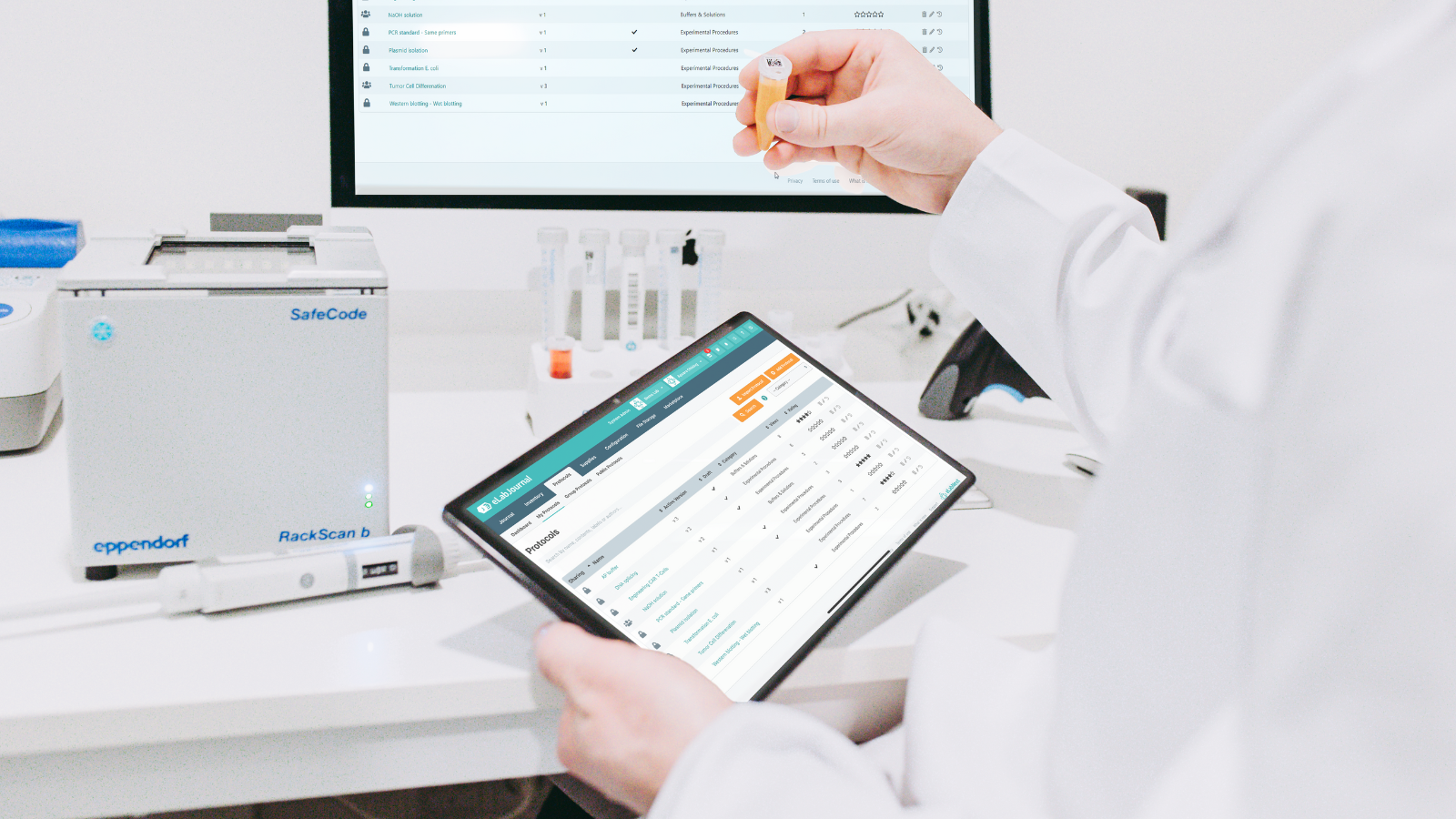
The SciSure Electronic Lab Notebook (ELN)

The business analyst needs to understand which of those modules are in scope, how they interact, and what data standardization is required before a single user goes live. Features and workflows vary depending on which modules are licensed and how the system is configured, so that scoping conversation has to happen early.

A key user group actually representing the organization

At one large university deployment I worked on, we assembled a key user group of 36 to 40 people: facility managers, researchers, research leaders, and staff from different schools and institutes. This group made configuration decisions, things like whether signatures would be required on every experiment, or how storage units would be named. Their decisions were documented and the system was configured accordingly.

Without a representative group making those calls, you end up with the system admin (often one person) making arbitrary decisions that 5,000 users will either follow or quietly ignore.

This is especially important in a platform like SciSure, where the system is deliberately designed to be configured by organization, group, and role. Access is governed through a permission model managed at the Group, Organization, or System administrator level. What one group sees and can edit is not the same as what another group sees. Those boundaries need to be decided intentionally, documented, and locked before rollout. The key user group is who makes those calls.

SciSure
See how the right access model prevents rollout confusion.
SciSure provides you clear visibility, editing rights, and admin boundaries to help your teams launch with less risk.
Talk to a specialist

IT support with the right skill set

Data migration at scale isn’t a one-person job, and it's not a task you can hand to a researcher with a free afternoon. Clean migration requires someone who can build tools. In our case, that meant a custom Excel macro that could take messy, mixed-format sample data and output it in the correct import structure. That capability needs to be scoped and resourced before the rollout begins, not discovered to be missing halfway through.

Beyond migration, you need IT expertise for single sign-on configuration, cybersecurity compliance, and integration decisions around overlapping systems. With SciSure, this also means thinking through deployment model choices. SciSure supports public cloud, private cloud, on-premises, and a hybrid storage pattern where the platform runs in the cloud but large file payloads are stored on a customer-managed local server, depending on deployment. Each option has different infrastructure and security implications that IT needs to evaluate before procurement closes.

Governance doesn't begin at go-live

One of the biggest misconceptions about enterprise software implementations is that governance begins once the system goes live. In reality, governance starts much earlier.

Before a single researcher logs in, organizations need to agree on naming conventions, organizational structures, sample type standards, user roles, ownership of templates, change control processes, and decision pathways. These decisions determine whether the platform remains consistent as adoption grows.

Without agreed digital system governance, organizations don't just end up with inconsistent data. They end up with inconsistent ways of working. 


Different groups create their own standards, reporting becomes unreliable, and every future change becomes harder to implement. Those inconsistencies rarely become visible immediately, but they compound over time, making reporting, collaboration and future system changes progressively more difficult.

The software provides the capability. Governance determines whether that capability remains consistent, trusted and scalable over time.

In my experience across research institutes, universities and enterprise scientific software implementations, governance consistently became the foundation for every subsequent activity, from sample type standardization and organizational structures to training, rollout sequencing and business-as-usual (BAU) transition. Once those governance decisions were established, the implementation became significantly easier to scale because each new research group, laboratory or organizational unit could be onboarded using the same agreed operating model.

SciSure
Get the governance right before you scale.
Our team works through your operating model with you, so every group after the first one is a repeat, not a rebuild.
Request a demo

What a realistic enterprise implementation timeline looks like

Phase 1: Requirements and procurement (typically 3–12 months)

The procurement process at an enterprise level is not a formality. At institutions with formal tender requirements, this phase involves producing a procurement pack (including requirements documents, cybersecurity questionnaires, and contract drafts) then sending it to multiple vendors in staged waves. You evaluate many, narrow to a few, and send the full pack to finalists.

This phase alone can take six months to a year at governance-heavy organizations. Build that into your planning.

Phase 2: User acceptance testing (2–3 months)

Before a single user goes live, you need to verify the system actually does what the requirements said it would. User acceptance testing means writing detailed test cases, step-by-step instructions for every core workflow, and recruiting volunteers from across the organization to run through them. The goal is to surface any gaps in the system and either resolve them or make an informed decision to proceed anyway.

If the system fails critical tests, you need a contractual off-ramp. Make sure that's in the agreement.

Phase 3: System design and configuration

With UAT passed, you move into design. This is where the key user group earns its keep. Configuration decisions get made, documented, and locked, at least as much as the system allows. The system gets set up with your organizational structure, your sample type templates, your storage hierarchy, and your user access model.

With SciSure, this phase is also when you work through module-specific configuration. 

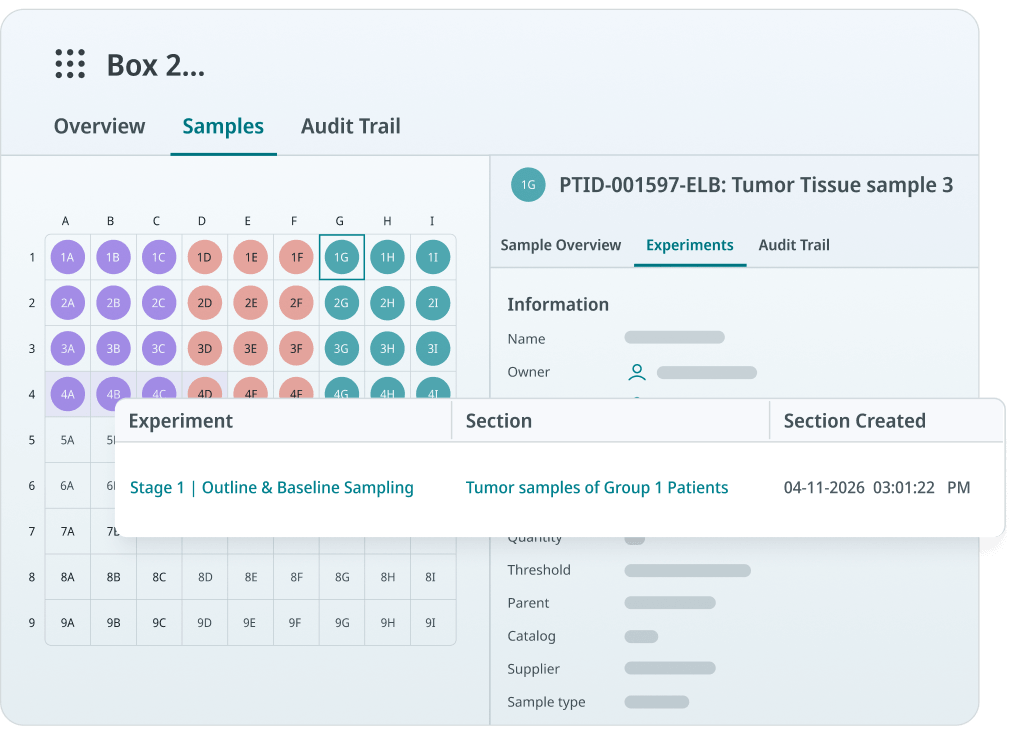
Inventory management with SciSure LIMS

Some of those capabilities vary by module and deployment, so it pays to confirm what's enabled in your instance before you write the training materials.

This is also the phase where you may discover that your organizational context requires certain workarounds or custom configurations. No enterprise deployment is plug-and-play. Knowing that going in, and using it as a prompt to align closely with your vendor’s implementation team, keeps those moments from becoming surprises at scale.

Phase 4: Phased group-by-group rollout

Rolling out to thousands of users all at once is rarely an effective strategy. A more sustainable approach is sequenced implementation: prioritize organizations, then prioritize groups within those organizations, then sequence the groups based on readiness criteria.

At one large enterprise deployment I led, we ranked organizations by the proportion of research groups that had regulated samples, since regulatory reporting was the primary driver for institutional adoption. Within each organization, groups were sequenced by whether their sample inventory was in reasonable shape for migration, and whether they were available within the rollout window.

For each group, the onboarding sequence followed a consistent structure: scope confirmation, storage unit setup, sample migration, user training, go-live, and a hypercare support period with close monitoring of adoption. Only then did groups transition to business-as-usual support.

This model meant rolling out roughly 60 users per month, which is what a team of two can sustainably support. If your team is larger, you can scale. But the structure stays the same.

SciSure
See what sustainable rollout capacity looks like.
SciSure's structured rollout model helps your teams train users in waves, protect admin capacity, and scale without losing consistency.
Talk to a specialist

What researchers need in place to adopt the system

At one deployment, we had 290 licenses issued but only 170 active users. We had trained 175 users over the same period. The correlation was not subtle.

Training needs to cover not just how the software works in general, but how your organization has configured it to work. With SciSure, the interface adjusts dynamically based on the modules your organization has licensed and the permissions your role carries. A researcher and a group administrator sitting in the same group will see the same modules but encounter entirely different menus, buttons and available actions. Both will see something different again from an organization administrator managing storage and access across multiple groups.

Training modules on SciSure's Training LMS

Generic vendor documentation won't cover those differences. That's internal documentation, and someone needs to write it, maintain it, and make it accessible.

If you implement a system with no internal training materials and the person who built it leaves, the knowledge walks out the door with them.

Training solves the first barrier to adoption. The second is what happens when something doesn't work as expected, i.e. researchers and administrators need a structured way to raise issues without everything landing in someone's inbox. Where IT infrastructure already supports it (a ServiceNow instance, Jira Service Management, or equivalent) standing up a service desk queue for the system is worth doing early.

A well-configured queue also does more than log tickets. It supports triage, routes issues to the right resolver, and creates a searchable record that reduces repeat handling. This becomes particularly valuable during vendor escalation, where a documented reproduction path and reference number can accelerate resolution and preserve traceability.

When researchers do adopt the system and find it genuinely useful, word spreads. Samples appear. Experiments get logged. Other groups ask when it's their turn. A well-implemented system sells itself internally, but only if the first cohorts have a good enough experience to talk about it.

For a closer look at what that adoption curve actually looks like in practice, our guide on implementing an ELN in an existing lab covers it in detail.

What executives need to understand before they sign

The business case for lab management software tends to focus on time savings and compliance readiness. Both are real. But the business case also needs to address implementation costs honestly, including not just licensing fees, but the full cost of a dedicated project team, IT resources, training development, and a sustained period of hypercare support.

Executives who approve the software without approving the implementation infrastructure are setting the project up to fail.


The system becomes another tool that researchers technically have access to but don't trust, don't use, and eventually route around with spreadsheets.

A well-implemented deployment gives you real-time visibility over your regulated sample inventory and your complete research operations documented through SciSure's ELN and protocol workflows. The difference between a deployment that delivers on that promise and one that doesn't is rarely the software itself. It's the organizational investment in making it work.

If you're starting this journey, midway through rollout and feeling the strain, or transitioning to BAU, the questions worth asking are about ownership: who decides, who supports, who escalates, who reports, and who keeps the standards from drifting when the implementation team moves on.

Get those answers documented before you go live. SciSure is built to scale, and with the right governance in place, so is your organization.

Ready to see SciSure in action?

Get a personalized demo and see how SciSure fits your lab's workflows.
Request demo

No commitment · Free consultation

I've been in labs. I know what it's like when systems don't talk to each other, when things break for no obvious reason, and when you spend half your afternoon repeating the same manual task you did yesterday. Over the past few years, I've implemented scientific management platforms (including SciSure) in environments ranging from cancer research institutes to university-wide deployments spanning thousands of users.

Having worked as a researcher, research support officer, software vendor and enterprise business analyst, I've learned that successful digital transformation is rarely limited by technology. It's limited by an organization's ability to translate technology into repeatable ways of working.

In this post, I’ll share what enterprise-level implementation really looks like: who needs to be in the room, what a realistic timeline actually means, and why a change management plan isn't optional. If you're a lab operations manager, a research IT lead, or a business analyst tasked with digitizing a complex scientific environment, this one's for you.

Why do enterprise lab software implementations fail?

Enterprise-level lab software rollouts often struggle because the scope of organizational change is underestimated from the start. I’ve yet to meet a project sponsor who enthusiastically volunteers their staff members’ time to spend the next six months migrating thirty years of spreadsheets and training thousands of users.

That gap between organizational ambition and organizational commitment is where implementation begins to fail. If you want to understand the full picture of why ELN and LIMS adoption fails at the enterprise level, it often comes back to this.

Moving from "we need this" to "we're going to make this work" requires something most enterprises are reluctant to budget for: a dedicated project team. Not just a project manager with ten other responsibilities, but a real team with clearly defined roles and the time to execute.

Who needs to be involved before you even install the software

Executive sponsors: The people who sign and stay

Executive sign-off sends a strong signal to the rest of the organization that this initiative has teeth. But too often, leadership signs the contract and disappears. Enterprise implementations need an executive sponsor who remains visible throughout the rollout, someone who communicates to research groups that participation isn't optional, or at the very least, highly recommended. That message carries considerably more weight when the sponsor can demonstrate that a dedicated project team is there to support users through the transition.

A business analyst who understands the lab

Before any vendor gets a demo slot, a business analyst needs to map out the current state: how samples are stored, how researchers find them, what regulations apply, and what a successful system would let you report on that you can't today. This current-state analysis is what produces the requirements document, and at an enterprise level, we're talking hundreds of requirements, classified by priority.

This role is often underestimated. Beyond simply documenting processes, it’s also about translating the researcher's need ("I want to find my DNA sample without searching three spreadsheets") into a governance structure ("sample type templates must be standardized across all groups and locked from uncontrolled edits"). Those two things are connected, but they require very different conversations with very different people.

With a platform like SciSure, that translation process has real technical stakes.

SciSure's Scientific Management Platform handles experiment documentation, sample management, and protocol standardization, covering research documentation through the Electronic Lab Notebook (ELN) and inventory through sample and storage management.

The SciSure Electronic Lab Notebook (ELN)

The business analyst needs to understand which of those modules are in scope, how they interact, and what data standardization is required before a single user goes live. Features and workflows vary depending on which modules are licensed and how the system is configured, so that scoping conversation has to happen early.

A key user group actually representing the organization

At one large university deployment I worked on, we assembled a key user group of 36 to 40 people: facility managers, researchers, research leaders, and staff from different schools and institutes. This group made configuration decisions, things like whether signatures would be required on every experiment, or how storage units would be named. Their decisions were documented and the system was configured accordingly.

Without a representative group making those calls, you end up with the system admin (often one person) making arbitrary decisions that 5,000 users will either follow or quietly ignore.

This is especially important in a platform like SciSure, where the system is deliberately designed to be configured by organization, group, and role. Access is governed through a permission model managed at the Group, Organization, or System administrator level. What one group sees and can edit is not the same as what another group sees. Those boundaries need to be decided intentionally, documented, and locked before rollout. The key user group is who makes those calls.

SciSure
See how the right access model prevents rollout confusion.
SciSure provides you clear visibility, editing rights, and admin boundaries to help your teams launch with less risk.
Talk to a specialist

IT support with the right skill set

Data migration at scale isn’t a one-person job, and it's not a task you can hand to a researcher with a free afternoon. Clean migration requires someone who can build tools. In our case, that meant a custom Excel macro that could take messy, mixed-format sample data and output it in the correct import structure. That capability needs to be scoped and resourced before the rollout begins, not discovered to be missing halfway through.

Beyond migration, you need IT expertise for single sign-on configuration, cybersecurity compliance, and integration decisions around overlapping systems. With SciSure, this also means thinking through deployment model choices. SciSure supports public cloud, private cloud, on-premises, and a hybrid storage pattern where the platform runs in the cloud but large file payloads are stored on a customer-managed local server, depending on deployment. Each option has different infrastructure and security implications that IT needs to evaluate before procurement closes.

Governance doesn't begin at go-live

One of the biggest misconceptions about enterprise software implementations is that governance begins once the system goes live. In reality, governance starts much earlier.

Before a single researcher logs in, organizations need to agree on naming conventions, organizational structures, sample type standards, user roles, ownership of templates, change control processes, and decision pathways. These decisions determine whether the platform remains consistent as adoption grows.

Without agreed digital system governance, organizations don't just end up with inconsistent data. They end up with inconsistent ways of working. 


Different groups create their own standards, reporting becomes unreliable, and every future change becomes harder to implement. Those inconsistencies rarely become visible immediately, but they compound over time, making reporting, collaboration and future system changes progressively more difficult.

The software provides the capability. Governance determines whether that capability remains consistent, trusted and scalable over time.

In my experience across research institutes, universities and enterprise scientific software implementations, governance consistently became the foundation for every subsequent activity, from sample type standardization and organizational structures to training, rollout sequencing and business-as-usual (BAU) transition. Once those governance decisions were established, the implementation became significantly easier to scale because each new research group, laboratory or organizational unit could be onboarded using the same agreed operating model.

SciSure
Get the governance right before you scale.
Our team works through your operating model with you, so every group after the first one is a repeat, not a rebuild.
Request a demo

What a realistic enterprise implementation timeline looks like

Phase 1: Requirements and procurement (typically 3–12 months)

The procurement process at an enterprise level is not a formality. At institutions with formal tender requirements, this phase involves producing a procurement pack (including requirements documents, cybersecurity questionnaires, and contract drafts) then sending it to multiple vendors in staged waves. You evaluate many, narrow to a few, and send the full pack to finalists.

This phase alone can take six months to a year at governance-heavy organizations. Build that into your planning.

Phase 2: User acceptance testing (2–3 months)

Before a single user goes live, you need to verify the system actually does what the requirements said it would. User acceptance testing means writing detailed test cases, step-by-step instructions for every core workflow, and recruiting volunteers from across the organization to run through them. The goal is to surface any gaps in the system and either resolve them or make an informed decision to proceed anyway.

If the system fails critical tests, you need a contractual off-ramp. Make sure that's in the agreement.

Phase 3: System design and configuration

With UAT passed, you move into design. This is where the key user group earns its keep. Configuration decisions get made, documented, and locked, at least as much as the system allows. The system gets set up with your organizational structure, your sample type templates, your storage hierarchy, and your user access model.

With SciSure, this phase is also when you work through module-specific configuration. 

Inventory management with SciSure LIMS

Some of those capabilities vary by module and deployment, so it pays to confirm what's enabled in your instance before you write the training materials.

This is also the phase where you may discover that your organizational context requires certain workarounds or custom configurations. No enterprise deployment is plug-and-play. Knowing that going in, and using it as a prompt to align closely with your vendor’s implementation team, keeps those moments from becoming surprises at scale.

Phase 4: Phased group-by-group rollout

Rolling out to thousands of users all at once is rarely an effective strategy. A more sustainable approach is sequenced implementation: prioritize organizations, then prioritize groups within those organizations, then sequence the groups based on readiness criteria.

At one large enterprise deployment I led, we ranked organizations by the proportion of research groups that had regulated samples, since regulatory reporting was the primary driver for institutional adoption. Within each organization, groups were sequenced by whether their sample inventory was in reasonable shape for migration, and whether they were available within the rollout window.

For each group, the onboarding sequence followed a consistent structure: scope confirmation, storage unit setup, sample migration, user training, go-live, and a hypercare support period with close monitoring of adoption. Only then did groups transition to business-as-usual support.

This model meant rolling out roughly 60 users per month, which is what a team of two can sustainably support. If your team is larger, you can scale. But the structure stays the same.

SciSure
See what sustainable rollout capacity looks like.
SciSure's structured rollout model helps your teams train users in waves, protect admin capacity, and scale without losing consistency.
Talk to a specialist

What researchers need in place to adopt the system

At one deployment, we had 290 licenses issued but only 170 active users. We had trained 175 users over the same period. The correlation was not subtle.

Training needs to cover not just how the software works in general, but how your organization has configured it to work. With SciSure, the interface adjusts dynamically based on the modules your organization has licensed and the permissions your role carries. A researcher and a group administrator sitting in the same group will see the same modules but encounter entirely different menus, buttons and available actions. Both will see something different again from an organization administrator managing storage and access across multiple groups.

Training modules on SciSure's Training LMS

Generic vendor documentation won't cover those differences. That's internal documentation, and someone needs to write it, maintain it, and make it accessible.

If you implement a system with no internal training materials and the person who built it leaves, the knowledge walks out the door with them.

Training solves the first barrier to adoption. The second is what happens when something doesn't work as expected, i.e. researchers and administrators need a structured way to raise issues without everything landing in someone's inbox. Where IT infrastructure already supports it (a ServiceNow instance, Jira Service Management, or equivalent) standing up a service desk queue for the system is worth doing early.

A well-configured queue also does more than log tickets. It supports triage, routes issues to the right resolver, and creates a searchable record that reduces repeat handling. This becomes particularly valuable during vendor escalation, where a documented reproduction path and reference number can accelerate resolution and preserve traceability.

When researchers do adopt the system and find it genuinely useful, word spreads. Samples appear. Experiments get logged. Other groups ask when it's their turn. A well-implemented system sells itself internally, but only if the first cohorts have a good enough experience to talk about it.

For a closer look at what that adoption curve actually looks like in practice, our guide on implementing an ELN in an existing lab covers it in detail.

What executives need to understand before they sign

The business case for lab management software tends to focus on time savings and compliance readiness. Both are real. But the business case also needs to address implementation costs honestly, including not just licensing fees, but the full cost of a dedicated project team, IT resources, training development, and a sustained period of hypercare support.

Executives who approve the software without approving the implementation infrastructure are setting the project up to fail.


The system becomes another tool that researchers technically have access to but don't trust, don't use, and eventually route around with spreadsheets.

A well-implemented deployment gives you real-time visibility over your regulated sample inventory and your complete research operations documented through SciSure's ELN and protocol workflows. The difference between a deployment that delivers on that promise and one that doesn't is rarely the software itself. It's the organizational investment in making it work.

If you're starting this journey, midway through rollout and feeling the strain, or transitioning to BAU, the questions worth asking are about ownership: who decides, who supports, who escalates, who reports, and who keeps the standards from drifting when the implementation team moves on.

Get those answers documented before you go live. SciSure is built to scale, and with the right governance in place, so is your organization.

About the author:

Ramzi Abbassi

Dr Ramzi Abbassi, BMedSc (Hons), PhD, CCBA, is a Principal Business Analyst specialising in enterprise scientific digital transformation. His work spans business analysis, governance, operating model design, data migration, rollout strategy and business-as-usual transition across research institutes, universities and regulated scientific environments. He has worked from both the vendor and customer perspectives, leading scientific management platform implementations from early discovery through enterprise adoption.

See all posts from this author

Sign up for our newsletter

Get the latest tips, articles, and exclusive content on modern lab management delivered to your inbox.
Thank you for subscribing!
Please check your email to verify your submission.
Oops! Something went wrong while submitting the form.