Change Management for Research Labs: How to Maximize Success in Your Digital Transformation
Effective change management helps research labs modernize confidently, minimize disruption, and make digital transformation stick. Here’s how to get started.

Download Whitepaper
TL;DR
Change management is the structured process of guiding scientists and lab managers through new digital systems, and it is the strongest predictor of whether a research lab's digital transformation succeeds, because most failed transformations break down over human factors rather than the technology itself.
- Why labs stall.
Most research labs run on hybrid systems: spreadsheets, paper notebooks, shared drives, and legacy databases stitched together over time. These create data silos, broken version control, and reproducibility gaps. Around 70% of transformation initiatives fail, usually because organizations underestimate the human side of change, not because the technology falls short.
- People over technology.
Successful change is a people strategy, not an IT rollout. McKinsey found organizations are 3.8 times likelier to succeed when they define clear roles and hold leaders accountable, and nearly four times likelier when influential employees join early and visibly. Communicate the "why," involve respected scientists, and adoption follows through ownership rather than mandate.
- Seven-step framework.
A change-ready research culture rests on seven habits: lead with a shared "why," put influential scientists at the center, treat adoption as a discipline, communicate clearly (3.5 times likelier success per McKinsey), design role-based training around real lab tasks, pilot before scaling, and track a small set of adoption metrics scientists care about.
- Three-phase rollout.
SciSure structures lab modernization into three phases: prepare and align (map workflows, set success metrics, pick champions), implement with confidence (a focused electronic lab notebook and inventory pilot with embedded training), and sustain and evolve (live dashboards, iterative updates, expansion). Each phase puts people first, then process, then technology.
- Change as experiment.
Treat digital transformation like a scientific experiment: prepare, observe, iterate, and refine until new workflows stick. Restraint on measurement matters, since McKinsey found fewer than 30% of the metrics organizations track actually get used. Labs that fold change into their scientific method gain fewer data silos, faster collaboration, and stronger reproducibility.
Ready to see SciSure in action?
No commitment · Free consultation
Around 70% of transformation initiatives fail to achieve their intended goals, often because organizations underestimate the human side of change.1
Modern research moves fast, but most lab systems haven’t kept up. Many teams still rely on a patchwork of spreadsheets, legacy databases, and paper records to manage experiments, samples, and results. These hybrid processes may feel familiar, but the truth is, they slow collaboration, obscure data, and make it hard to scale new discoveries.
Recognizing the need for change is one thing. Making that change successfully is another. For many scientists and lab managers, the idea of replacing long-established workflows feels daunting, especially when research can’t simply pause for a system rollout.
That’s why effective change management is now one of the most critical success factors in digital transformation. When organizations embrace change management, it builds alignment, trust, and readiness, so scientists feel supported, not disrupted. In practice, change management is the structured process of guiding people through new ways of working, helping them understand, adopt, and sustain change. It’s about aligning leadership, communication, and everyday workflows, so digital transformation actually sticks.
This post looks at how research labs can navigate change with confidence. Drawing on real-world lessons from years of experience supporting digital transformation across the life sciences, it provides a practical framework for preparing your people, processes, and platforms for success.
The hidden costs of hybrid research management
When “good enough” stops being good enough
The typical modern lab runs on a hybrid model: a mix of spreadsheets, paper notebooks, shared drives, and partial software solutions stitched together over time. Each tool might serve its purpose, but together they create a patchwork that’s fragile, inconsistent, and hard to maintain. Most research teams know their current systems could work better, but few realize just how much those small inefficiencies add up.
These hybrids often evolve organically, not strategically. A new spreadsheet here, a manual tracker there, each one solving an immediate need but introducing another point of failure. What starts as flexibility quickly turns into friction. Data becomes siloed. Version control breaks down. And scientists end up spending more time finding information than generating it.
The cost of manual workarounds
The more manual workarounds they invent, the more dependent the lab becomes on individual memory and goodwill. When staff change roles or leave, vital knowledge disappears with them. Over time, this dependency creates not just operational inefficiency but genuine institutional risk.
Every disconnected process leaves a blind spot: for example, training logs that are stored separately from protocols, inventory spreadsheets that don’t match what’s on the shelf, or results that live only on one researcher’s hard drive. None of these gaps seem serious in isolation, but together they quietly erode productivity and scientific confidence.
Reproducibility at risk
Besides wasting time, fragmented workflows also undermine data integrity and reproducibility. When experimental records are split across formats and systems, it’s nearly impossible to reconstruct a complete, verifiable picture of what happened. In regulated or collaborative environments, that lack of traceability can delay publications, compromise partnerships, or raise questions during audits.
It’s a problem hiding in plain sight: a lab might feel efficient day to day, yet still struggle to defend its work when it matters most.
A system problem, not a people problem
When scientists fall back on spreadsheets or paper, it’s rarely resistance to technology but rather a sign that the tools around them don’t match how they actually work. Hybrid systems put the burden of integration on people instead of infrastructure. Change management starts by reversing that equation: building systems that adapt to scientists, not the other way around.
That’s why modernization is about designing connected processes that make great science easier to do, record, and trust. Not necessarily by forcing new tools and technologies into a lab. These challenges are symptoms of systems built around tools, not people. To move forward, labs need to understand why change feels so difficult, and what it takes to make it last.
Why research labs resist digital change
Change is rational, until it’s personal
Change in research settings isn’t abstract; it touches every notebook, workflow, and habit that scientists depend on. For many, those habits have been built and refined over years of experience. Replacing them overnight can feel unsettling, even when everyone agrees it’s for the better.
Change becomes personal the moment it reaches the bench. Scientists worry about losing momentum. Lab managers worry about disruption and downtime. Leadership worries about cost and return on investment. When those concerns go unaddressed, progress stalls, not because the technology isn’t ready, but because people aren’t.
The comfort of the familiar
Hybrid systems persist because they work “well enough”. A shared drive might not be ideal, but everyone knows where things are. A spreadsheet might be fragile, but it’s familiar. For scientists working under time pressure, familiarity feels safer than transformation.
But comfort can be costly. Each manual process that saves time today compounds risk tomorrow. As new data types, regulatory expectations, and collaborators enter the picture, the cracks widen, until managing information becomes a project in itself.
The human factor in success
According to McKinsey, transformations are nearly four times more likely to succeed when organizations define clear roles and hold leaders accountable for managing the change.2 The difference lies in the people strategy: when leaders communicate the “why,” involve influential team members early, and celebrate small wins, adoption follows naturally.
Transformation succeeds when scientists feel ownership of it, not when it’s handed down to them. That’s where structured change management comes in. Whether supported by a partner like SciSure or led internally, the principles are the same and they begin with building a culture that’s ready for change.
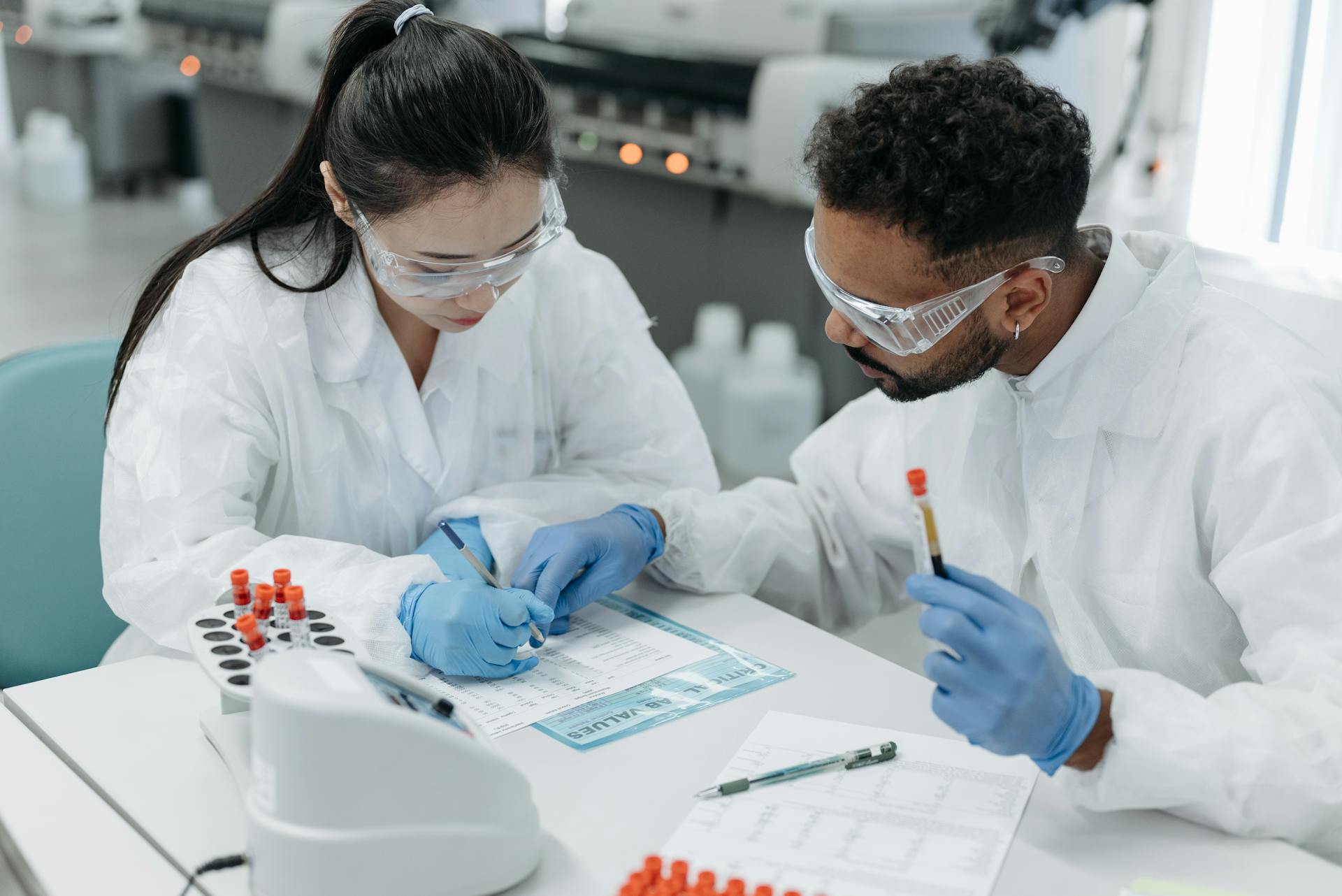
7 steps for building a change-ready research culture
Turning intention into adoption takes structure. These seven steps outline the habits and behaviors that make digital change stick in real research environments.
1. Lead with a shared “why”
Scientists change how they work when the reason is clear and owned by them. Frame the transformation in scientific terms: better traceability, faster collaboration, stronger reproducibility. Not as an IT project. McKinsey's research found that even transformations declared successful capture, on average, only about two-thirds (67%) of their potential financial value, while all other companies capture just 37%.3 Their work also points to the people side as decisive: workforce-led implementations proved five times more sustainable than those driven from the top.4
2. Put influential scientists at the center
Change moves fastest when respected peers help design and champion it. Research shows transformations are four times more likely to succeed when influential employees are involved early and visibly.5 Identify those voices, invite them into configuration and pilot design, and let them demo wins to their colleagues.
3. Treat adoption as a discipline, not an afterthought
Change management is a structured way to help people move from old habits to new systems with the same rigor as a scientific process. Define ownership, milestones, and feedback loops early, then measure and refine. McKinsey found that defining clear roles, so people at every level know what they are responsible for after the change, makes organizations 3.8 times more likely to succeed in a transformation.⁶
4. Communicate to build trust, not just awareness
Change fails when communication stops at announcements. Scientists need clarity on what is changing, why it matters, and how it affects their work. The data backs this up: McKinsey found that when an organization clearly communicates the desired outcome before a new solution launches, it is 3.5 times more likely to report a successful transformation. The same research found roughly half of organizations succeeded when the rollout timeline was communicated clearly, compared with only 16 percent when it was not.⁷
5. Design training around real work
Scientists learn best when training feels relevant to their daily routines. Replace generic tutorials with short, role-specific sessions built around actual lab tasks: creating a protocol, logging a sample, or updating inventory. Context builds confidence faster than theory. The payoff from doing this thoroughly is steep. In McKinsey's research on skill-building programs, organizations that applied all nine of the practices it identifies as critical reported a near-certain success rate, compared with about those that applied only two or three.⁸
6. Pilot, prove, then scale
Start with a scoped pilot (for example, an electronic lab notebook plus inventory in one team), capture measurable wins, and expand. McKinsey found that organizations are three times more likely to report a successful transformation when they use piloting and rapid prototyping to surface the new skills people will actually need, because real use reveals gaps that planning alone misses.⁹
7. Measure what matters, and review often
Define a small set of adoption metrics that scientists care about (for example, time to find data, percentage of protocols with full lineage, sample handoff time). Schedule frequent, lightweight reviews and act on the findings. Restraint matters here: McKinsey found that most transformation programs try to track too many metrics, and fewer than 30 percent of the ones organizations claim to follow are actually used during the project.¹⁰
Practical pathways: How SciSure eases the transition
Digital transformation is a progression. SciSure’s approach to change management breaks the journey into three connected phases that let laboratories modernize steadily, maintain momentum, and prove value at every step. Each phase builds confidence by focusing on people first, then process, then technology.
Phase 1: Prepare and align
Change starts long before a new system goes live. SciSure’s implementation team works alongside scientists, lab managers, and leadership to understand how work really gets done and what “success” means for that specific environment.
In this phase, SciSure helps labs:
- Map existing workflows and identify bottlenecks that slow collaboration or traceability.
- Define clear success metrics that matter to both scientists and leadership (e.g., data retrieval time, version-control accuracy).
- Build a shared vision of change and select “champions” from within the research team.
- Configure the platform around actual scientific processes and terminology, ensuring familiarity from day one.
Outcome: Early alignment and trust. People feel heard, and the roadmap reflects reality.
Phase 2: Implement with confidence
Rather than a disruptive “big-bang” rollout, SciSure uses a focused pilot to demonstrate value quickly and gather feedback before wider deployment. Training and configuration happen in parallel so users learn in context and progress feels incremental, not overwhelming.
During this phase, the SciSure team:
- Launches a contained pilot (e.g., ELN + inventory) with measurable performance indicators.
- Embeds training directly into workflows so scientists learn by doing, not by sitting through generic sessions.
- Integrates existing instruments, databases, and third-party tools to maintain continuity and reduce friction.
- Establishes short feedback cycles so adjustments are made in real time, not after adoption stalls.
Outcome: Quick, visible wins that build confidence and create internal advocates for change.
Phase 3: Sustain and evolve
Once the platform is in daily use, SciSure focuses on strengthening adoption, measuring outcomes, and extending capability through new modules and integrations. This phase emphasizes:
- Regular adoption and performance reviews using live dashboards and engagement analytics.
- Iterative updates informed by user feedback and evolving lab needs.
- Expansion into additional capabilities, such as workflow automation, compliance tracking, or deeper analytics once the foundational workflows are stable.
- Ongoing support from SciSure’s customer-success team to maintain digital maturity and share best practices across sites.
Outcome: Continuous improvement, measurable ROI, and a culture that views change as part of scientific progress, not an interruption to it.
By guiding labs through these phases, SciSure transforms digital adoption from a disruptive overhaul into a controlled evolution. Scientists stay focused on their work, leadership sees real-time progress, and the entire organization gains the visibility and confidence needed to keep science moving forward.
Learn More: Institut Pasteur: A digital transformation with SciSure
Treating change like a scientific process
Digital transformation is an experiment in how people work together. Like any experiment, success depends on preparation, observation, and iteration. Change management provides that framework. It gives teams a structured way to test new processes, learn from results, and refine them until they stick.
For research organizations, that mindset shift is everything. When scientists, lab managers, and leadership approach change with the same discipline they bring to their science, adoption stops feeling like a project and starts feeling like progress.
At SciSure, we’ve seen that transformation firsthand. The labs that succeed are the ones that make change part of their scientific method: measured, repeatable, and constantly improving.
Because in the end, managing change isn’t about replacing what works. It’s about creating the conditions where better science can happen every day.
FAQs: Common questions about change management
What does change management actually mean in a research setting?
In research, change management means helping scientists and lab teams adopt new digital ways of working without disrupting experiments. It’s about guiding people through the shift with clear goals, communication, and training so new systems enhance science rather than interrupt it.
Why do so many digital transformations in labs fail?
Most failures stem from human, not technical, issues. Labs underestimate the time and structure needed to help people adapt. Without a shared “why,” visible leadership support, and hands-on training, adoption falters, even if the technology works perfectly.
How can labs minimize disruption during digital transformation?
Start small and build confidence. Run a pilot on a single workflow, measure success, and expand gradually. Communicate frequently, act on feedback, and celebrate small wins. Incremental change builds momentum far faster than large, top-down rollouts.
What role do scientists play in successful change management?
Scientists are central to success. They’re the ones who understand how research really happens, so involving them in design, testing, and feedback ensures systems fit real lab life. When scientists see that digital tools reflect their needs, adoption happens naturally.
What’s the long-term benefit of structured change management?
Labs that treat change as a managed process, not a one-off project, see measurable gains: fewer data silos, faster collaboration, and stronger reproducibility. Over time, that consistency compounds, creating a lab culture that views change as a normal part of scientific progress.

Read more of our blogs about modern lab management
Discover the latest in lab operations, from sample management to AI innovations, designed to enhance efficiency and drive scientific breakthroughs.