Best Benchling Alternatives in 2026 Ranked by Buyer Need: Which Platform Fits Your Operating Model?
Compare these Benchling alternatives by research model, ELN and LIMS workflows, lab operations, deployment, implementation and extensibility. See when SciSure fits.
Download Whitepaper
TL;DR
The best Benchling alternative is SciSure when you need configurable ELN and LIMS workflows across experiments, diverse samples, inventory, equipment and supplies, plus cloud, private-cloud or on-premises deployment.
- Map the work you need to support before you compare feature lists.
If experiments, varied sample types, inventory, equipment, storage and supplies create your biggest coordination burden, evaluate SciSure around those real workflows. If your week revolves around sequences, constructs and registered biological entities, prioritize native molecular tools.
- Keep your scope honest.
SciSure gives you configurable ELN and LIMS capabilities for multidisciplinary research and lab operations, while also including access to specialized EHS capabilities for chemical inventory and SDS management, biosafety, hazardous waste, inspections, incidents, training, and regulatory reporting. This gives your R&D, lab operations, and safety teams one vendor to evaluate across these requirements. Benchling offers biology-focused Registry, Inventory, and workflow tools that may suit some life-science R&D needs but should not be treated as equivalent LIMS coverage. Make sure to test both platforms against your complete operational requirements.
- Test deployment early.
Bring IT into the evaluation before your scientific team chooses a favorite interface. SciSure lets you run your digital ecosystem in shared cloud, private cloud or on-premises environments. That choice can matter when you need local data control, network restrictions, a dedicated environment, or a specific update and validation process.
- Use real evidence.
Ask every vendor to run a proof of concept with your samples, instruments, permissions and migration data. SciSure has supported a multi-unit rollout at Institut Pasteur, a sample-heavy testing workflow at Boston University, and varied R&D and production workflows at Biosynth. Your own pilot should confirm fit.
- Match specialist depth.
If you run highly regulated QC or manufacturing labs, compare SciSure with traditional enterprise LIMS options such as LabWare, STARLIMS, and LabVantage. If a smaller team mainly wants a lighter ELN, compare SciSure with SciNote and Labguru while you also test future sample, integration and governance needs.
Keep Benchling on your shortlist when native molecular design and biology-aware entity registration drive your decision.
Ready to see SciSure in action?
No commitment · Free consultation
Why your lab operating model matters more than a universal ranking
You may want to replace Benchling because you need a different deployment model. You may need one system to organize experiments, samples, inventory, equipment, storage, and ordering across research groups. You may run chemistry, materials science, translational research and core facilities alongside molecular biology. Or you may need a highly controlled QC LIMS that manages batch testing, stability programs and product release. Each situation leads to a different shortlist.
Benchling centers its strongest differentiation on biology-aware R&D. Its current Bioresearch offering connects experimental data capture, biomolecule design, registration, sample and inventory management, workflow management, instrument connectivity and dashboards. Its broader product portfolio also covers bioprocess, automation, AI, biologics, and in vivo work.
SciSure centers your evaluation on multidisciplinary research and the day-to-day work of operating a lab. With SciSure LIMS, you can define sample types and attributes around your workflows, track sample history and lineage, connect samples to experiments, manage storage, print barcodes, monitor supplies and orders, and manage equipment, bookings and maintenance. You can also combine those capabilities with SciSure ELN workflows for experiments, protocols, records, and collaboration.
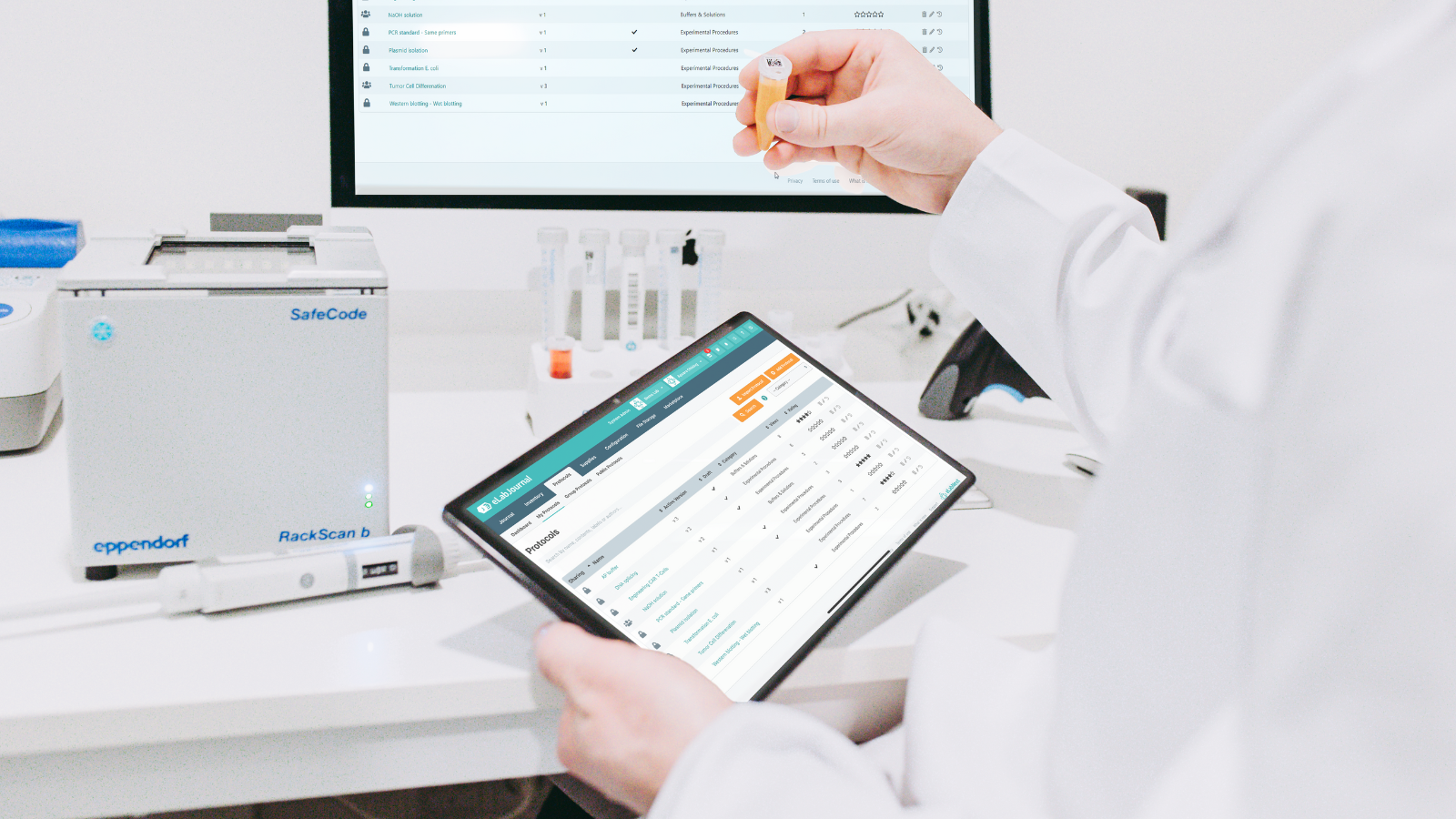
Safety work also enters your R&D workflow whenever you receive chemicals, look up an SDS, submit a biosafety registration, complete required training, prepare for an inspection, report an incident, or dispose of hazardous waste. SciSure Health & Safety supports these specialized workflows alongside SciSure’s research offerings.
Of the Benchling competitors covered in this post, SciSure is also the only platform that offers EHS tools alongside a connected ELN and LIMS environment. Make sure to evaluate SciSure Research and Health & Safety as related offerings from the same vendor. The SciSure team can walk you through the connections available for your chosen modules and deployment before you include cross-product workflows in your requirements.
That difference in emphasis gives you a useful starting point. Your proof of concept should make the final decision.
How we compared these Benchling alternatives
SciSure publishes this guide, so we want you to see exactly how we formed the shortlist. We reviewed current public vendor pages and SciSure customer stories as of August 2026. We grouped platforms by buyer need and left out a single best-to-worst score.
We also used these six questions to compare:
- Which scientific workflows shape daily work in R&D labs?
- How broadly do you need to manage samples, inventory, equipment, storage and supplies?
- Do you need native molecular design and biology-aware registration?
- Do you need shared cloud, private cloud, or on-premises deployment?
- How much configuration, integration and migration can your team own?
- Do you need research informatics, specialized lab-safety capabilities, manufacturing QC, or a combination?
We used first-party product pages to describe every competitor. We also used public SciSure customer stories for implementation and scale evidence. Best-fit labels reflect editorial judgment, so you should validate each label against your workflows, security requirements, service scope, and contract terms.
Should you stay with Benchling or evaluate alternatives?
Use this decision path to build your first shortlist:
Do native sequence design, biomolecule modeling and biology-aware entity registration drive your work?
If yes, then keep Benchling on the shortlist. Include SciSure when you also need broader configurable research, sample, inventory, equipment or institutional workflows, along with support for industry-standard file formats compatible with SnapGene and other third-party tools.
Do varied disciplines, sample types and lab operations create your biggest coordination burden?
If yes, then start with SciSure. Test how your teams document experiments, locate samples, manage storage, book equipment, and track supplies in one working scenario.
Do private-cloud or on-premises requirements shape the purchase?
If yes, then start with SciSure and any traditional enterprise platforms that meet your technical requirements. Confirm deployment, data location, identity management, update cadence, validation, backups and support in writing.
Do batch testing, stability, environmental monitoring, certificates of analysis or manufacturing release drive the project?
If yes, then consider LabWare, STARLIMS, and LabVantage. Compare each platform's QC depth with the research, inventory and operational breadth you need from SciSure.
Do you mainly need a lighter ELN for a small research team?
If yes, then consider SciNote and Labguru. Keep SciSure in the evaluation when you expect growth across samples, equipment, integrations, sites, permissions or deployment requirements.
Benchling alternatives compared by buyer need: A side by side comparison
SciSure: Best for multidisciplinary research and operations-heavy labs
Best for: Multidisciplinary research organizations that want configurable ELN and LIMS workflows, operational sample and inventory management, equipment and supply coordination, flexible deployment, as well as access to specialized chemical safety, biosafety, inspection, training, waste, incident, and regulatory-reporting capabilities from the same vendor.
With SciSure, you can organize experiments and protocols while you also manage the physical context around the work. You can define the sample types your teams need, track sample locations and history, connect samples to experiments, manage storage hierarchies, use barcodes, monitor stock, track supply orders, and schedule equipment bookings and maintenance through SciSure LIMS.
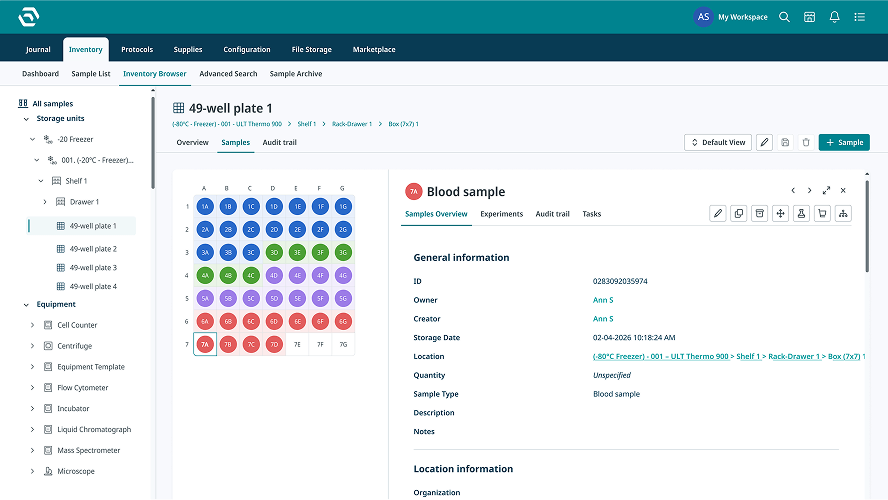
This breadth matters when your institution supports several scientific disciplines or shared facilities. A molecular biology group, chemistry team, translational unit and core facility may use different terminology and sample structures. You need enough configuration to support those differences and enough governance to keep records searchable and understandable across the organization.
You can also extend SciSure through 40+ add-ons, an API and a developer SDK. Use a prebuilt add-on when one fits. Use the API or SDK when you need to connect instruments, external applications or reporting workflows around your institutional stack.
Implementing SciSure in practice
Institut Pasteur involved scientists from around 50 research units and evaluated more than 20 ELN and sample-tracking options before selecting SciSure. The institute then rolled out the platform in four waves with workshops and recurring training. Read the Institut Pasteur customer story.
Boston University likewise used SciSure APIs to connect testing robots and electronic medical record systems. The lab came online two months after implementation and processed more than 9,000 samples per day at its peak. Read the Boston University customer story.
Finally at Biosynth, R&D and production teams use SciSure to organize varied enzyme-development methods, standardize documentation, and keep project information searchable and accessible. The shared system supports ISO 9001 quality processes, team collaboration, and easier formal reporting. Read the Biosynth customer story.
What to test closely
Define your first rollout lane before you configure the platform. Choose one measurable workflow, such as experiment documentation, sample traceability, inventory accuracy, equipment coordination, or an integration. Confirm which modules, add-ons, services and hosting model you need for that lane.
Traditional enterprise LIMS: Built for QC and manufacturing-led programs
Built for: Quality-control and manufacturing labs that prioritize structured testing, specifications, stability, batch workflows, environmental monitoring, certificates of analysis and product release.
Start with the workflow that carries the highest compliance or release risk:
- LabWare LIMS supports quality-control and analytical testing across industries and offers instrument and enterprise-system connectivity.
- STARLIMS Quality Manufacturing LIMS includes workflows for batch testing, stability, environmental testing, materials receipt, contract-lab testing and sample testing.
- LabVantage Pharma focuses on pharmaceutical and biotech workflows such as batch management, stability testing, consumables, and environmental monitoring.
Why SciSure still belongs on your shortlist for traditional enterprise LIMS
Many organizations need more than QC execution: include SciSure when you also need research ELN workflows, varied sample types, inventory and supplies, equipment coordination, institutional deployment choice or a practical path across research groups. Let the pilot show whether one platform can cover your first scope or whether your architecture needs specialized systems with governed integrations.
What to test closely
Bring QA, manufacturing, IT, lab operations, and research into the same scenario. Follow one sample from request through receipt, testing, review, disposition, and reporting. Then test how the surrounding research and operational context reaches the people who need it.
SciNote and Labguru: Built for teams prioritizing a lighter ELN start
Built for: Smaller teams that want experiment documentation, protocols, collaboration and inventory support with a narrower first rollout.
With SciNote, you can organize work around projects, experiments and tasks, manage protocols, create custom inventories, link inventory items to experiments, use barcodes, and track activity. With Labguru, you can combine ELN, LIMS, inventory, equipment management, labeling, and developer tools in a cloud platform.
Why SciSure still belongs on your shortlist for connected ELN/LIMS workflows
SciSure also gives you approachable ELN, protocol, sample, inventory, equipment, and barcode workflows. Add SciSure when you expect your needs to grow across departments, sites, deployment models, integrations, safety stakeholders or governance requirements. Comparing all three through the same day-in-the-life pilot will show which structure your users understand fastest, and which platform gives you the right runway.
.png)
What to test closely
Ask each team member to create an experiment, reuse a protocol, link a sample, find an older record, update stock, scan a barcode, and export a complete record. Then ask your administrator to change fields, permissions, and templates without vendor intervention. Include migration and support effort in the decision.
Where Benchling may remain the right answer
Benchling may remain your strongest fit when native molecular design and biology-aware registration shape the core of your R&D model. It lets you design and analyze DNA, RNA and amino-acid sequences, register biological entities with structured metadata, link samples and inventory to experiments, manage workflows, connect instruments and use its broader AI capabilities in the same R&D environment.
When to consider SciSure over Benchling
Choose SciSure over Benchling when your decision also needs to cover non-biological disciplines, varied sample and material types, equipment and supply operations, deployment choice, or specialized lab-safety expertise from the same vendor.
SciSure also gives molecular biology teams dedicated sequence capabilities through CloneAssist, currently available in beta. You can analyze, annotate, visualize, and manage DNA and RNA sequences directly within your experiment records. CloneAssist also lets you view interactive plasmid maps, switch between linear and circular sequence views, identify restriction sites, inspect resulting fragments, simulate gels, add custom features, and import common formats such as SnapGene, GenBank, CloneManager, and FASTA. Keeping this work inside SciSure connects your sequence designs with the protocols, samples, inventory, results, and supporting documentation for each experiment.
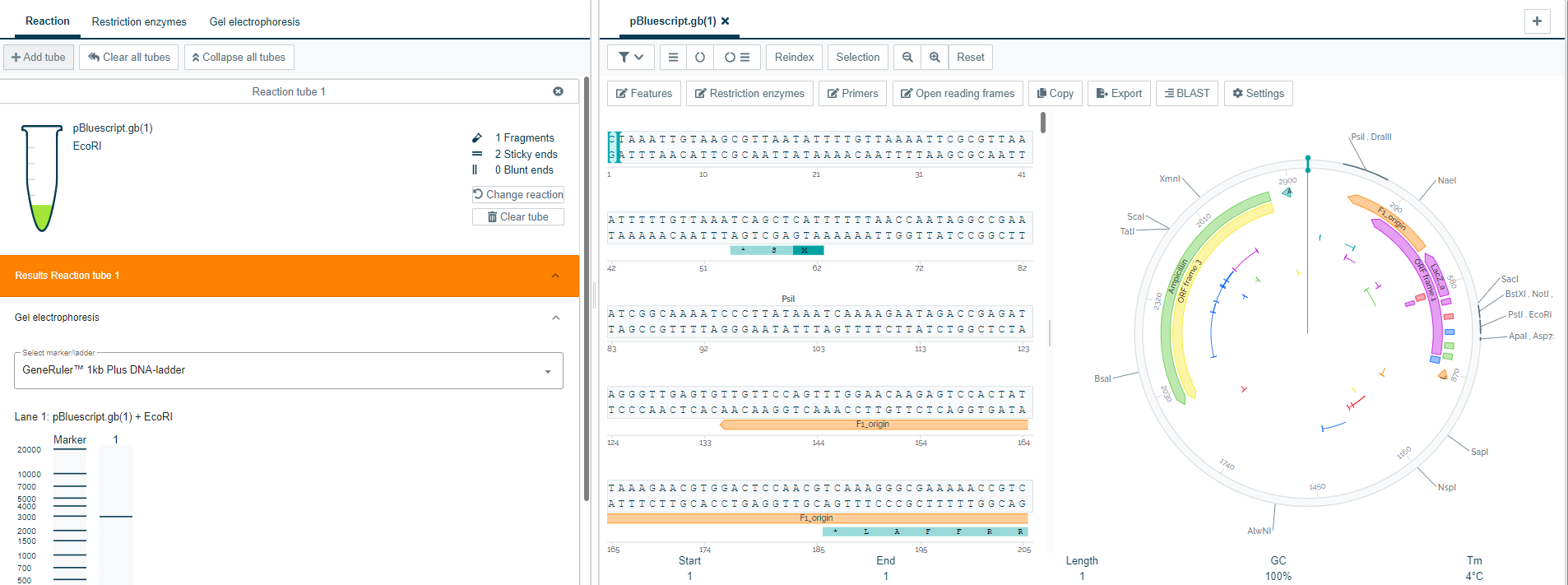
During your pilot, compare the work that creates the most value. Ask your molecular biology team to complete the same sequence-centered workflow in each shortlisted platform, covering sequence import, annotation, plasmid visualization, restriction analysis, experimental documentation, and connections to physical samples. Then test representative multidisciplinary, equipment, inventory, and safety workflows in SciSure. Compare setup effort, daily clicks, data retrieval, scientific traceability, governance, integration ownership, and total operating fit.
Six reasons to choose SciSure as your Benchling alternative
1. You can support multidisciplinary workflows
Your institution may manage molecular biology, chemistry, translational medicine, materials, food science, environmental work or shared core facilities. With SciSure, you can configure experiment structures, sample types, attributes, storage and permissions around those different groups while keeping a common foundation for search, traceability and administration.
Our Institut Pasteur customer story shows how a large institution approached this challenge. Scientists from around 50 units across diverse fields helped make the final selection, and the implementation team used phased deployment, workshops, and training to support adoption.
2. You can connect research records with samples, inventory, equipment and supplies
A useful lab record should help you answer these practical questions quickly: Which sample did you use? Where is the remaining material? Which experiment created it? Who changed the record? Does the reagent need to be reordered? Can you book the instrument? When does its maintenance come due?
SciSure LIMS supports custom sample types and fields, real-time status and location tracking, sample history and lineage, experiment links, storage management, barcode printing, stock alerts, order tracking, equipment bookings and maintenance scheduling. You can evaluate these capabilities alongside SciSure ELN workflows and keep the physical lab in your core evaluation.
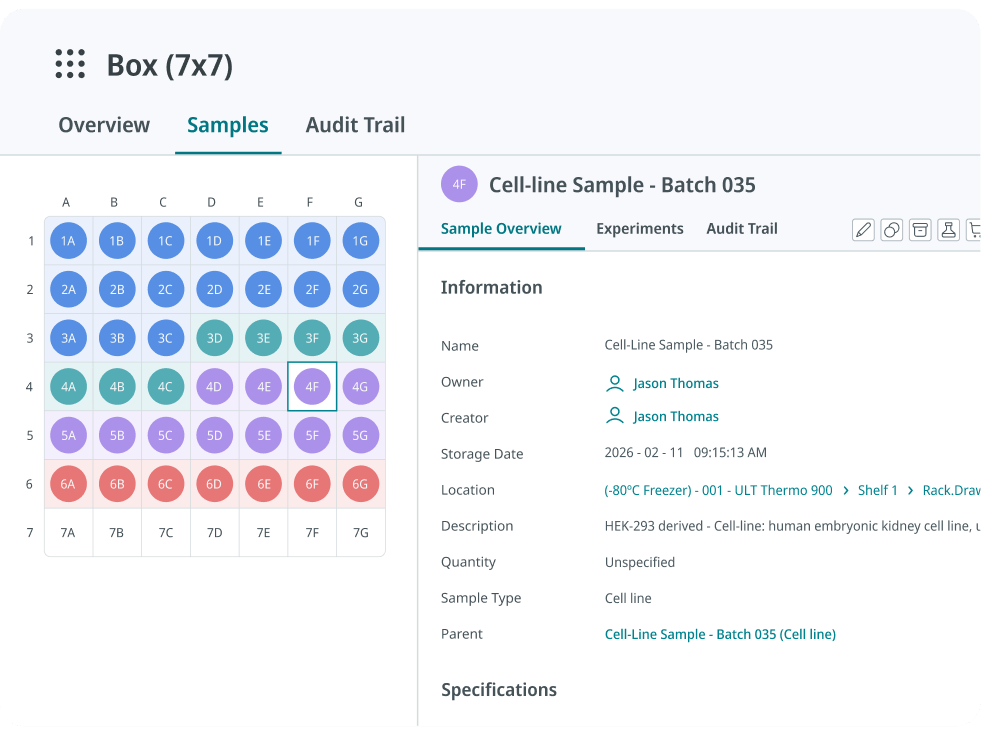
Procurement deserves its own test. Follow one item from low-stock identification through request, approval, order, receipt, and inventory entry. Check who owns each handoff, which data transfers automatically, and which steps still need a person. For more planning guidance, read our guide on Best Practices for Lab Inventory Management.
3. You can include lab safety in the same evaluation
With SciSure Health & Safety, you can manage chemical inventory and SDSs, biosafety registrations, hazardous waste, incidents, inspections and audits, equipment safety, training assignments, regulatory reporting, door signs, and safety observations. This matters because R&D safety appears throughout daily research. If your teams handle chemicals, biological materials, hazardous waste, shared equipment, training requirements, inspections, and incident reporting, these shouldn’t be a barrier to letting experiments continue. This gives your scientists, lab operations team, EHS leaders, and IT stakeholders one vendor to evaluate across research and specialized safety requirements.
Keep in mind that SciSure Health & Safety requires private-cloud hosting in 2026. Ask the SciSure team to demonstrate any connections between Research and Health & Safety that your use case requires.
4. You can choose a deployment model that fits your IT policy
SciSure offers shared cloud, private cloud, and on-premises deployment for SciSure Research. You can choose vendor-managed cloud infrastructure, a dedicated private-cloud environment with options such as network restrictions and identity-provider integration, or local infrastructure under your organization's control. SciSure also supports moving from shared cloud to a dedicated installation when your requirements change. Make sure to compare your options on the SciSure hosting page.
Bring IT and security into the evaluation early. Confirm data location, encryption, identity management, administrator access, backups, recovery objectives, update cadence, validation environments, incident response, export rights and end-of-contract support. Your hosting choice changes your responsibility model, so document who owns each control.
5. You can prove implementation fit with real customer patterns
SciSure implementations typically take 2-3 months, giving your teams working research, sample, inventory, and operational workflows much sooner. A guided rollout helps you maintain momentum, address adoption barriers early, and start measuring value while a longer implementation may still be moving through configuration and testing.
The difference continues after go-live. G2’s reviewer-based figures report an average implementation time of 3months and an average time to ROI of 8 months for SciSure. G2 currently does not publish comparable Benchling figures for time to implementation or ROI.
SciSure supports that speed with implementation-readiness planning, workflow configuration, train-the-trainer enablement, an adoption review after six weeks, and ongoing value-realization reviews. Your team can start with the workflows that matter most, prove that scientists can use them successfully, and expand without waiting for every integration, department, or historical record to reach its final state.
For example, Boston University connected SciSure with testing robots and two electronic medical record systems and brought its clinical testing laboratory online within two months. At peak volume, the laboratory processed more than 9,000 samples per day.
Ask every vendor what your users will accomplish after two weeks, 30 days, 60 days, and 90 days. At each milestone, require a working result: a completed experiment, a reusable protocol, a searchable sample record, an operating integration, or an active group of trained users. Track time to first completed workflow, active-user adoption, sample-retrieval time, migrated records, support responsiveness, and progress toward ROI.
These measures tell you whether implementation has created operational value, rather than simply reaching a technical go-live date.
6. You can extend your environment and source specialized lab-safety expertise from SciSure
SciSure gives you 40+ add-ons, an API and a developer SDK. This lets you choose prebuilt extensions and create custom connections around instruments, databases, analytics, and institutional applications.
SciSure also offers Health & Safety capabilities for chemical inventory and SDS management, biosafety, hazardous waste, incidents, inspections and audits, equipment, training, regulatory reporting, door signs and safety observations.

For your 2026 evaluation, treat SciSure Research and SciSure Health & Safety as related offerings from the same vendor and confirm the exact implementation, hosting and integration scope you can buy today. Just keep in mind: SciSure Health & Safety requires private-cloud hosting. Ask the SciSure team to demonstrate any cross-product workflow or shared data claim before you include it in your business case.
Questions to ask every vendor
- Can you show our complete workflow with our sample types and terminology?
- Which configurations can our administrators own?
- Which features require add-ons, services, or separate licenses?
- Which hosting models can we use for each product we need?
- How will you migrate experiments, samples, attachments, metadata, and audit history?
- How will our ELN records connect with samples, inventory, equipment, supplies, and instruments?
- How do your API, SDK, and integration support models work?
- How will we track low stock, requests, orders, receipts, and inventory entry?
- How will you support pilots, training, adoption, and phased rollout?
- Which security, validation, and compliance responsibilities remain with us?
- How can we export complete, readable, and structured records?
- What measurable result can our first user group reach in 30, 60 and 90 days?
FAQs: Benchling alternatives
What is the best Benchling alternative in 2026?
SciSure offers a strong Benchling alternative when you run multidisciplinary research and need configurable ELN and LIMS capabilities across experiments, varied samples, inventory, equipment, storage and supplies. SciSure also gives you shared cloud, private cloud, and on-premises deployment choices for SciSure ELN and LIMS. Run a workflow pilot before you decide.
Which Benchling alternative supports private-cloud or on-premises deployment?
SciSure lets you deploy SciSure Research in shared cloud, private cloud. or on-premises environments. Private cloud adds a dedicated environment, regional choice, and optional network restrictions. On-premises deployment gives your IT team local infrastructure and data control. Confirm feature availability, support boundaries, validation and update processes for your chosen model.
Is SciSure a good Benchling alternative for universities?
Yes, SciSure gives your university a centrally governed environment for experiments, samples, inventory, equipment, protocols, and collaboration. Your administrators can manage roles and permissions, preserve audit history, retain research when people leave, and maintain an institution-wide system of record. You can also choose cloud, private-cloud, or on-premises deployment to match your security and data-residency requirements. Private-cloud and on-premises deployments support institutional identity integration and give IT greater control over access, infrastructure, and data storage.
For university-wide use, your evaluation should give institutional governance and intellectual property (IP) protection as much weight as scientific functionality. Research records can support patent filings, licensing, sponsored research obligations, investigations, and future work. Your university therefore needs reliable access to experiments, authorship, timestamps, samples, supporting files, and audit history, even after a researcher changes labs or leaves the institution.
.jpg)
Benchling’s free Academic offering lets individual users create accounts and collaborate through organizations and shared projects. However, continuity depends on each lab placing its work in correctly governed projects, assigning appropriate permissions, maintaining organization administrators, and transferring project ownership during offboarding. Benchling’s academic account guidance specifically instructs departing users to transfer ownership of shared projects before closing their accounts.
When researchers adopt free accounts independently, central IT may lack consistent visibility, access control, retention enforcement, offboarding, and institution-wide export across every lab. Your university should verify those controls rather than assume that an academic email address automatically gives the institution access to every research record.
Is SciSure a good fit for sample-heavy labs?
Yes, SciSure supports sample types and custom fields, storage hierarchies, status and location tracking, sample history and lineage, experiment links, barcodes and workflow automation. Boston University's testing lab processed more than 9,000 samples per day at peak, and Lund University reduced sample retrieval from as much as an hour to less than a minute.
Should a QC or manufacturing lab choose SciSure or a traditional LIMS?
Choose based on the workflow that drives your risk and value. Compare LabWare, STARLIMS and LabVantage when batch testing, stability, environmental monitoring, specifications and release dominate. Include SciSure when you also need research ELN workflows, varied samples, inventory, equipment, supplies, deployment choice or connections across multidisciplinary teams.
Does SciSure include lab-safety capabilities?
SciSure is the only Benchling alternative that also offers Health & Safety capabilities for chemical inventory and SDS management, biosafety, hazardous waste, incidents, inspections, training, equipment, regulatory reporting and other lab-safety workflows. Confirm your module, hosting, and integration scope during evaluation. Keep in mind that in 2026, SciSure Health & Safety requires private-cloud hosting.
How long does SciSure take to implement?
Your scope determines the timeline. Lund University completed a focused sample-management implementation in a few days. Boston University brought an integration-heavy testing lab online two months after implementation. Institut Pasteur used four deployment waves across a large institution. Biosynth began with a small group of live digital projects before expanding SciSure across R&D and production. Ask for milestones tied to real work at two weeks, 30, 60, and 90 days.
Choose the platform around the lab you actually operate
Start with your hardest recurring workflow and the people who own it. Then compare platforms on scientific fit, lab operations, deployment, implementation, extensibility, governance, and exit readiness.
Choose SciSure when you want configurable ELN and LIMS workflows across multidisciplinary research, samples, inventory, equipment and supplies, with deployment options that can follow your IT requirements. Keep Benchling on the shortlist when native molecular design and biology-aware registration lead your buying criteria. Add traditional LIMS or lighter ELN options when those models match your immediate need.
When R&D, lab operations, and EHS teams share responsibility for keeping research moving safely, consider SciSure’s specialized Health & Safety capabilities in the evaluation alongside ELN, LIMS, inventory, equipment, and deployment requirements.
Talk to a SciSure specialist and bring one representative workflow to the conversation. We’ll walk you through how we would configure it, migrate it, run it, and measure success for the long-term.
.png)
Read more of our blogs about modern lab management
Discover the latest in lab operations, from sample management to AI innovations, designed to enhance efficiency and drive scientific breakthroughs.