
Customize SciSure to work your way
Your lab, your workflows, your way. SciSure gives you full control over how you connect your research tools, instruments, and databases. Create custom connections that fit exactly how your team works–now and in the future.
.avif)
Trusted by 550,000+ scientists, EHS, and LabOps worldwide in 55,000+ laboratories





 Customer story
"SciSure helps us save time by enabling us to share our protocols with colleagues easily. It also takes care of our sample management."

 Customer story
“Working with the SciSure team has been a collaborative and productive experience.”


Build a platform that works for you
Ready-to-use integrations
Instantly connect SciSure to 40+ prebuilt add-ons to streamline workflows without extra setup.
Related:

40+ integrations

Free and premium add-ons

Constantly growing library
.avif)
Custom integrations with our API & SDK
Build custom integrations with SciSure’s open API and SDK to connect lab instruments, automate reporting, and sync data.
Related:

Open API

Developer SDK

Full developer support
.avif)
Flexible & adaptable to your lab’s needs
Easily integrate new tools as your lab evolves without switching platforms or disrupting workflows.
Related:

Connect any research tool

Automate your workflows

Future-proof your setup
.avif)
Connect instantly with 40+ add-ons
Our Marketplace offers a range of integrations to streamline operations, data collection, and research workflows.

Astra Iris - AI Support Assistant
AI-powered support assistant built directly into SciSure Research.
DataChaperone - Analysis & AI Platform
Automated, audit-ready data analysis directly inside your ELN.
.png)
DYMO® LabelWriter™ 550 Series
Streamline your lab labeling workflow with precision and ease
.avif)
DMPTool.org
Streamline workflows and enhance collaboration by integrating and managing data management plans from DMPTool within SciSure
.avif)
Protocols.io
Bring trusted protocols directly into your ELN
.avif)
Nikon NIS-Elements
For seamless exchange of data and notes between Nikon NIS-Elements microscopy-based imaging platform and eLabNext
Empower your lab with custom integrations
SciSure’s API and SDK give labs complete flexibility to build integrations that fit their unique workflows.


.avif)
How labs are customizing SciSure to their needs
See how research teams are connecting their tools, automating workflows, and optimizing data flow with SciSure.













See SciSure in action
Every lab is different, and SciSure is built to adapt. Book a demo today to see how our Scientific Management Platform (SMP) can transform your team’s workflows, streamline compliance, and help your research move faster.
Frequently asked questions
Everything you need to know about the product and billing.
SciSure supports prebuilt add-ons from our Marketplace, direct API connections, and fully customizable integrations via our SDK.
No. Many integrations are plug-and-play. However, some integrations require a paid license.
Most add-ons are free, while some premium integrations require a subscription. Pricing details are available in the user interface Marketplace.
Yes! SciSure’s API allows you to connect lab instruments, automate data collection, and sync results with your workflows.
Visit our Developer Portal for API documentation, SDK downloads, and integration guides.
Can’t find the answer you’re looking for? Please chat to our friendly team.
Stay ahead in lab innovation
For decades, research organizations built their digital environments one tool at a time. Custom in-house systems solved specific operational challenges, and later waves of specialized software promised to streamline individual workflows – from sample tracking and instrument management to analysis and reporting. But while each solution delivered value on its own, together they often created fragmented technology landscapes where data, systems, and teams struggled to stay connected.
Today, that fragmentation is becoming a serious constraint. Modern research programs generate enormous volumes of data across instruments, experiments, and collaborators. At the same time, advances in AI and automation are transforming how organizations extract insights from that data. To fully capitalize on these opportunities, research teams need more than isolated tools. They need an integrated digital lab ecosystem that allows data to move seamlessly between systems while supporting coordinated workflows across the organization.
High-performing research organizations are already making this shift. Rather than layering new technologies onto existing processes, they are designing digital ecosystems that orchestrate data, systems, and people into a cohesive operational framework for modern science.
In this article, I’ll explore why systems-level thinking is becoming essential in modern research organizations, the architectural principles behind a successful digital lab ecosystem, and how connected platforms can help teams unlock greater efficiency, insight, and collaboration across the research lifecycle.
Why systems-level thinking is becoming essential for modern science
The need for a well-orchestrated digital lab ecosystem reflects a broader shift in how research organizations approach technology.
Two decades ago, many institutions relied heavily on internally developed tools to manage experiments, track samples, or analyze data. These systems were often highly customized and deeply embedded in local workflows. While effective for individual teams, they were difficult to maintain and rarely scaled well across larger organizations.
As the scientific software market matured, labs increasingly adopted specialized point solutions to address specific needs—from ELNs and sample tracking to instrument management and data analysis. Each tool delivered value within its own domain, but together they often created fragmented digital environments where systems struggled to communicate and data became difficult to integrate.
For a time, this complexity was tolerated. But as research programs generate ever-larger datasets and AI-driven workflows become more central to discovery, fragmentation has become a serious constraint. Organizations are now recognizing that the value of their data depends not only on how much they collect, but on how effectively it is structured, connected, and accessible across the research ecosystem.
The architecture of a successful digital lab ecosystem
Building a digital lab ecosystem requires more than simply connecting a collection of software tools. High-performing organizations approach digital infrastructure as a coordinated architecture designed to support data flow, operational consistency, and scientific collaboration across the entire research environment.
This architecture includes several interconnected layers:
- Scalable technical infrastructure
Cloud platforms, secure data environments, and scalable storage systems form the backbone of modern research computing. These foundations allow organizations to manage rapidly expanding volumes of experimental data while maintaining regulatory compliance, security, and operational reliability.
- Integration and API architecture
Application programming interfaces (APIs) enable systems to communicate with one another, allowing data to move between instruments, software platforms, and analytical tools. Without this integration layer, even advanced software remains siloed, forcing researchers to manually transfer files or rely on brittle custom integrations.
- Structured data models
As research workflows generate increasingly complex datasets—from instrument outputs to experimental metadata—the way data is structured becomes critical. Standardized data models ensure information is recorded consistently, making it easier to analyze, share, and reuse across teams and projects. Structured data also forms the foundation for advanced analytics and AI-driven insights.
- Workflow governance and operational alignment
Digital ecosystems depend on more than technology. Scientists must adopt consistent data practices, operational teams must define shared workflow standards, and leadership must establish governance frameworks that ensure systems scale effectively as organizations grow.
When these layers work together, research organizations gain something far more powerful than a collection of digital tools. They create a coordinated environment where data, systems, and people operate as part of a unified research platform – capable of supporting faster discovery, stronger collaboration, and more reliable scientific outcomes.
What good orchestration looks like in practice
When a digital lab ecosystem is designed effectively, its impact becomes visible across day-to-day research operations. Rather than managing disconnected tools and fragmented datasets, teams work within an environment where information flows naturally between experiments, instruments, and collaborators.
Here are the key signals that indicate that orchestration is working:
- Greater operational efficiency across workflows
When data flows seamlessly between systems, routine laboratory activities become far more streamlined. Experiment pipelines can move automatically from protocol design to execution, with instrument outputs attaching directly to the relevant sample or experiment record. Structured metadata captured during protocol execution ensures that experimental conditions, parameters, and results are consistently documented. Rather than manually transferring files between systems or reconciling disconnected records, researchers can follow an end-to-end workflow where sample data, protocol execution, instrument outputs, and analytical results remain linked throughout the research process.
- Faster experimentation and reduced redundancy
Well-structured data allows organizations to learn more from every experiment. By capturing results, parameters, and contextual metadata in consistent formats, teams can analyze patterns across multiple runs and avoid repeating work unnecessarily. In some cases, predictive insights drawn from historical data can dramatically reduce the number of experimental iterations required to reach meaningful conclusions.
- Improved data discoverability
Large research environments often manage vast collections of samples and associated metadata. When these datasets are properly structured and searchable, scientists can quickly locate the specific materials or information they need: for example, identifying particular biomarker combinations or patient characteristics within large biobank collections. This capability enables more targeted experiments and supports the discovery of patterns that might otherwise remain hidden.
- Greater confidence in data and processes
Perhaps most importantly, orchestration provides leadership teams with greater visibility into how research is conducted. Principal investigators and operational leaders gain confidence that experiments are being performed consistently, data is structured correctly, and workflows are being followed as intended. This transparency reduces uncertainty and helps organizations trust the insights generated from their research programs.
When data, systems, and teams operate within a coordinated digital environment, research organizations can move faster, generate stronger insights, and pursue new scientific questions with greater confidence.
Why digital ecosystems are critical for scaling research organizations
As research organizations grow, fragmented digital infrastructure quickly becomes a limiting factor. What begins as a manageable set of tools within a small team can evolve into a complex network of disconnected systems as companies expand across departments, research domains, and geographic locations.
This challenge is particularly visible in the biotech sector, where companies must scale rapidly while maintaining the integrity of their data and workflows. As new instruments, analytical tools, and collaborators are introduced, disconnected systems increase the risk of data silos, duplicated effort, and operational bottlenecks that slow scientific progress.
The issue becomes even more pronounced during mergers, acquisitions, or strategic partnerships. When organizations attempt to combine incompatible systems and data structures, integration can become costly and time-consuming, and valuable knowledge can be lost in the process.
For emerging biotech companies, investing early in a structured digital ecosystem is therefore not just an operational decision – it is a strategic one that enables organizations to scale, collaborate, and integrate more effectively as they grow.
How truly integrated platforms empower the digital lab ecosystem
While the architectural principles of a digital lab ecosystem are becoming clearer across the industry, implementing them in practice can be challenging. Many organizations still operate across fragmented systems that were never designed to work together.
Integrated research platforms help address this challenge by acting as an operational layer that connects infrastructure, scientific workflows, and data systems into a unified environment.
At SciSure, this philosophy is reflected in the design of the Scientific Management Platform (SMP), which brings together several foundational components that support ecosystem-level orchestration:
- Sample-centric data management
In most research environments, the sample sits at the center of scientific workflows. Each sample—whether a cell line, biological specimen, chemical compound, or engineered material—accumulates large volumes of associated metadata as it moves through experiments and instruments. Managing these relationships effectively allows organizations to maintain a clear, traceable record of scientific activity across the research lifecycle.
- Protocol-driven workflows
Standardized experimental protocols ensure that research processes are performed consistently while supporting regulatory compliance across multiple frameworks, including GMP, HIPAA, and 21 CFR Part 11. By embedding protocols directly into digital workflows, organizations can guide scientists through complex procedures while capturing structured data.
- Integrated reporting and documentation
Digital reporting frameworks combine experimental data, sample information, and workflow records into structured documentation that supports internal review, regulatory reporting, intellectual property protection, and grant submissions. This consolidated view provides organizations with a reliable record of how research activities were performed.
- Embedded EHS oversight
Environmental health and safety requirements are tightly interwoven with lab operations. Integrating EHS management directly into research workflows helps organizations maintain compliance while protecting staff, facilities, and the surrounding environment.
- API-driven connectivity and extensibility
The platform’s API and software development infrastructure empowers organizations to connect instruments, external software tools, automation systems, and analytical platforms. This integration layer allows the digital ecosystem to evolve as new technologies are introduced, ensuring that research environments remain flexible and future-ready.
The SciSure SMP helps organizations move beyond fragmented systems toward a truly connected research infrastructure, where data, systems, and people operate as part of a coordinated scientific platform.
The future of the digital lab ecosystem
As digital lab ecosystems mature, the next frontier will be their ability to evolve alongside scientific workflows. Research environments are becoming increasingly dynamic, with new analytical tools, automation platforms, and AI models emerging at a rapid pace. Supporting this level of innovation requires digital infrastructure that is not only connected, but inherently adaptable.
One of the most important enablers of this flexibility is strong API architecture. When research platforms expose well-structured APIs and development frameworks, organizations can integrate new instruments, analytical software, and automation systems without rebuilding their entire digital infrastructure. This extensibility allows the ecosystem to grow organically as scientific needs change.
At the same time, advances in AI are beginning to reshape how research platforms themselves evolve. Emerging approaches allow new capabilities to be generated dynamically within existing platforms, enabling organizations to create custom workflows, integrations, and analytical tools through AI-assisted development.
These trends point toward a new generation of research platforms: digital ecosystems that not only connect data, systems, and people, but also continuously adapt to the changing demands of modern science.
Digital research orchestration done right
As research organizations generate larger volumes of data and adopt increasingly sophisticated technologies, the limitations of fragmented digital environments are becoming impossible to ignore. High-performing organizations are responding by moving beyond isolated tools and toward integrated digital lab ecosystems that connect data, systems, and people across the research lifecycle.
When these ecosystems are built on strong architectural foundations—structured data, interoperable systems, and coordinated workflows—they do more than improve operational efficiency. They enable organizations to scale more effectively, collaborate more seamlessly, and unlock deeper insights from their scientific data.
In practice, this orchestration unlocks powerful new capabilities across research environments. Experiments can be tracked through complete digital lineages, ensuring every step of the workflow remains traceable. Datasets generated in one project can be discovered and reused across others, accelerating insight generation and reducing duplication of effort. Automated QC alerts can flag potential issues as data is generated, while structured documentation ensures experiments remain audit-ready for regulatory review, publications, or intellectual property filings.
In the next few years, the ability to orchestrate digital infrastructure will become a defining capability for research-driven organizations. Those that invest in connected, adaptable platforms today will be best positioned to support the next generation of data-driven discovery.
To learn how SciSure can help your research organization build scalable digital lab ecosystem, connect with our team today to start the conversation.
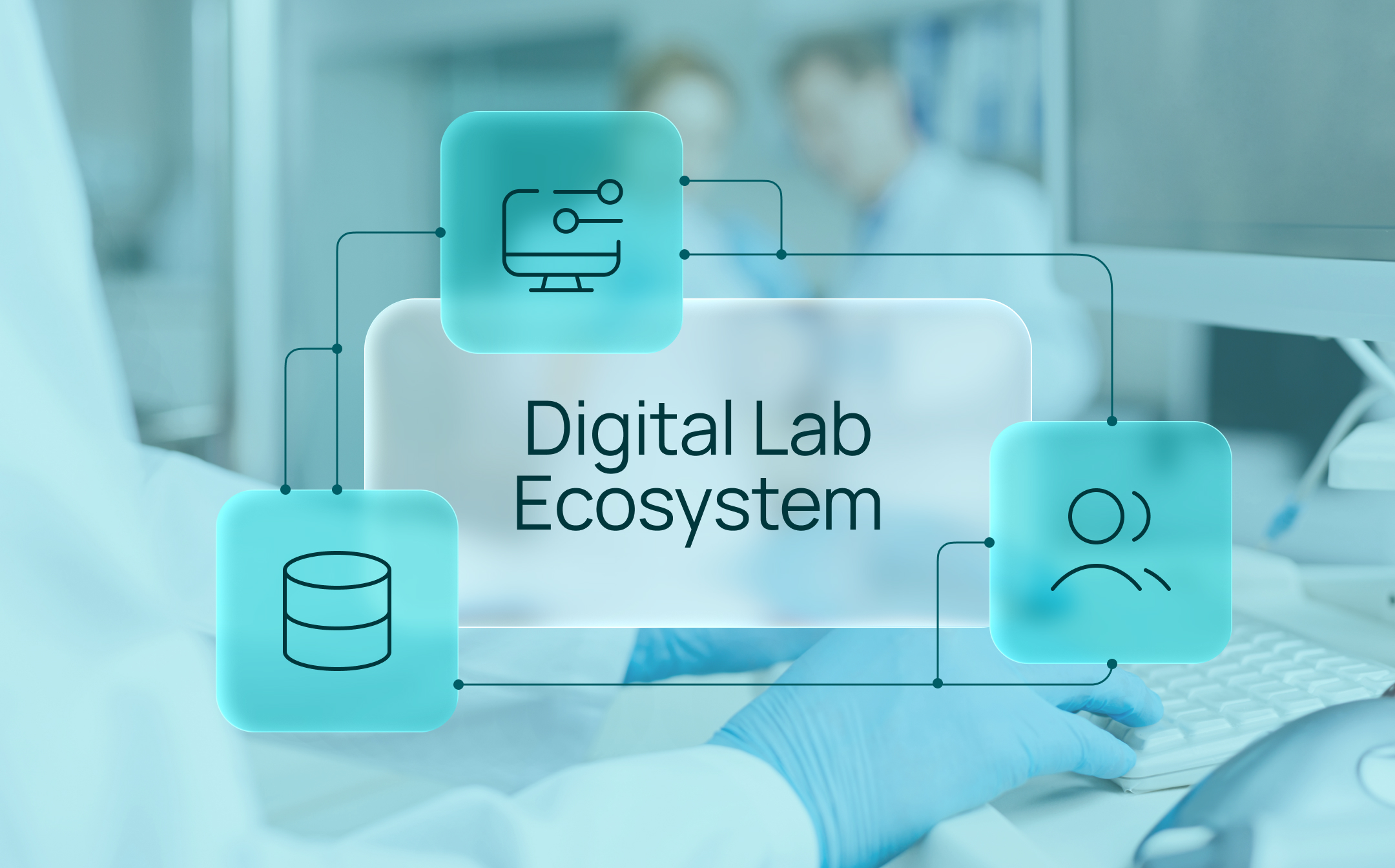
Orchestrating the Digital Lab Ecosystem: Data, Systems, and People
Discover how a digital lab ecosystem helps research organizations orchestrate data, systems, and workflows to improve efficiency, insight, and scalability.
Labs are under growing pressure to operate more sustainably. Across academia, biotech, and pharma, sustainability is no longer a “nice to have” but an operational expectation tied to cost, compliance, and credibility. In many cases, the biggest barrier is not a lack of commitment, but a lack of visibility.
In this collaborative piece between My Green Lab and SciSure, we’ll cover some ways how connected operational data and measured sustainability frameworks complement each other – to overcome the visibility gap.
Why resource-intensive labs need consistent data tracking
Some of the biggest drivers of lab sustainability - inventory use, energy demand, waste streams, procurement patterns, equipment utilization - are often tracked inconsistently. This could mean data spread across separate systems or simply not tracked in a way that is easy to act on. This data might sit in spreadsheets, manual logs, disconnected platforms, and team-specific processes. The result is a visibility gap that makes it more difficult to understand where impact is coming from and where meaningful improvements are possible.
Laboratories are among the most resource-intensive spaces in any organization. Some consume up to 10 times more energy than offices, producing up to 12 times more waste per square foot, and generating up to 5.5 million metric tons of plastic waste each year. This level of resource intensity means even small inefficiencies can have a significant environmental and financial impact – especially when multiplied across daily operations.
That gap matters. Without clear, connected data, much of that impact remains unmanaged - not because it is invisible, but because it is not actionable.
The cost of fragmented lab data
When sustainability-related data is fragmented or incomplete, labs can miss the patterns shaping their day-to-day impact. Materials are ordered but not fully used. Reagents expire before anyone realizes they were still on the shelf. Waste is recorded at the point of disposal but rarely traced back to the workflow decisions that generated it. Equipment continues running around the clock, even when only needed for a few hours.
Without a reliable system for inventory or storage, there is no way to ensure materials are used efficiently. Procurement teams question why consumables like pipette tips are being reordered so frequently, while researchers are repeating experiments due to equipment malfunctions, expired reagents, or simply the unpredictability of biology. Meanwhile, operational inefficiencies, like a thermostat placed directly beside an aging freezer, go unnoticed because no one has the data to connect these dots.
Large autoclaves can consume 84 kWh per day, and variable air volume fume hoods can consume around 110 kWh per day when left open. This means that inefficiencies at the operational level translate directly into increased environmental and financial costs. Teams are left trying to improve sustainability without a complete view of lab operations.
This is often where progress slows down. The challenge is not a lack of effort or intention. Rather, it is simply difficult to improve what is only visible in fragments.
How does a sustainable lab work in practice?
Sustainability in the lab is shaped by everyday operations. It shows up in how materials are purchased, stored, consumed, and discarded. It shows up in how equipment is used, how workflows are followed, and how information is recorded. When those activities are managed separately, the data behind them is separate as well. That makes it harder to move from good intentions to measurable change.
Measurable change is increasingly becoming an expectation. Across the industry, there is a shift away from general sustainability claims toward data-backed, verifiable outcomes that can stand up to internal reporting, external scrutiny, and evolving regulatory frameworks. The current program framework at My Green Lab reflects this shift through third-party verification, impact estimation, and product-level data that can support both ESG goals and compliant purchasing decisions.
Read more: Digital Tools for Safer and More Sustainable Life Science Labs
The role of operational visibility in labs
When labs have a clearer view of inventory, workflows, equipment use, compliance records, and related operational data, it becomes easier to spot inefficiencies that would otherwise stay hidden. Teams can begin asking more practical questions: Where are materials regularly going unused and why? Which processes are creating avoidable waste? Are there patterns in storage, ordering, or equipment use that could be improved? What is being measured well, and what is still missing?
These are not just sustainability questions. They are operational ones - with direct sustainability implications. In fact, many of the most persistent sustainability challenges in labs are also compliance and efficiency challenges. Overstocked chemicals increase both safety risk and waste. Poor inventory visibility drives duplicate purchasing. Inefficient equipment use increases both energy consumption and operating costs.
This is one reason the conversation around lab sustainability is shifting. Broad recommendations still have value, but many teams have already heard the standard advice. What is needed now are better insights into the systems and behaviors that drive impact over time.
Where a Scientific Management Platform closes the visibility gap
By bringing together operational data tied to inventory, storage, equipment, safety, and compliance, a Scientific Management Platform (SMP) like SciSure helps labs move from fragmented information to actionable insights that support a safe, sustainable lab. Plainly defined, an SMP is a unified system that connects digital lab platform tools like ELNs (Electronic Lab Notebooks), LIMS (Laboratory Information Management System), and EHS (Environment, Health, and Safety) workflows all in one place.
This is where connected operational data and measured sustainability frameworks can complement each other. One helps labs build a clearer view of what is happening day to day. The other helps translate that visibility into outcomes that can be assessed, benchmarked, and improved over time. Together, they enable a shift from reactive sustainability efforts to proactive, system-level improvement, eventually becoming embedded as an outcome of better operational decisions.
Here's an example of how it works in practice: Photanol, an Amsterdam-based biotech that uses cyanobacteria to convert CO2 into carbon-based chemicals as a sustainable alternative to fossil-derived feedstocks. Before implementing SciSure in 2021, the team relied on paper lab books and shared cloud folders - a setup that became harder to manage as the company expanded across multiple sites. Now, with SciSure implemented, every sample is traceable end-to-end – i.e., a finished product can be traced back to its initial cloning step in a few clicks.
In doing so, Photanol halved their administration time and eliminated version-control issues for protocols. For an organization whose entire commercial mission depends on validating dozens of biological production routes, this connected operational data enables sustainability claims to be backed by reproducible, auditable evidence. Turning fragmented documentation into something that can stand up for internal review, partner scrutiny, and regulatory frameworks.
A connected data ecosystem addresses the invisible impact head on
With clearer data and visibility into the operational realities shaping their environmental footprint, lab teams are better equipped to make informed decisions, reduce avoidable waste, and embed sustainable practices into research.
The hidden challenges are not always a lack of action; often, they are a lack of connected context. The waste is visible, but the cause - and therefore the solution - is not. The energy use is known, but the pattern behind it is not. The expired inventory is obvious, but the ordering and usage behavior that led to it is harder to see. These are small gaps on their own, but across a lab, they add up.
That is the invisible impact.
This is also why sustainability can feel difficult to improve, even when teams are trying hard to do the right thing. It is also why leading organizations are beginning to approach sustainability as a system-level outcome – driven by better data, better visibility, and better decision-making across the lab ecosystem. That broader systems view is especially important in biotech and pharma, where My Green Lab reports that most emissions come from the supply chain, including about 75% for public companies and 88% for private companies.
The impact you can improve is usually the impact you can see. And what you are not tracking may affect more than you think.

The Invisible Impact: How What You Aren’t Tracking Is Holding Back Sustainability in the Lab
Learn how connected lab data helps research teams close sustainability visibility gaps, reduce waste, and turn daily operations into measurable impact.
Learn what a laboratory information management system is, how it works, and how it supports modern laboratory operations. In modern laboratories, understanding what a LIMS is and how it supports lab operations has become essential. It improves data management, accuracy, and workflow efficiency across the lab.
Choosing the right LIMS is an important decision for any laboratory looking to optimize its operations. A LIMS can improve process speed, data accuracy, sample tracking, and reporting. This article outlines what a LIMS is, how it works, and what laboratories should consider when evaluating one.
What is a LIMS (laboratory information management systems)?
A LIMS, or Laboratory Information Management System, is software designed to support laboratory operations by managing data and automating workflows. By integrating various laboratory functions, a LIMS enables consistent data entry, storage, and retrieval, which significantly reduces the risk of errors and enhances data integrity. This makes LIMS software a core system for laboratories that need structured data and controlled workflows.
LIMS play a central role in modern labs by handling complex data management tasks and providing a structured approach to laboratory processes. In simple terms, the LIMS definition refers to software that manages laboratory data, samples, and workflows in one system. It also supports resource management, including inventory tracking and equipment maintenance, and can generate reports for decision-making and regulatory submissions. Overall, a LIMS helps laboratories improve productivity, accuracy, and compliance.
How does a LIMS work?
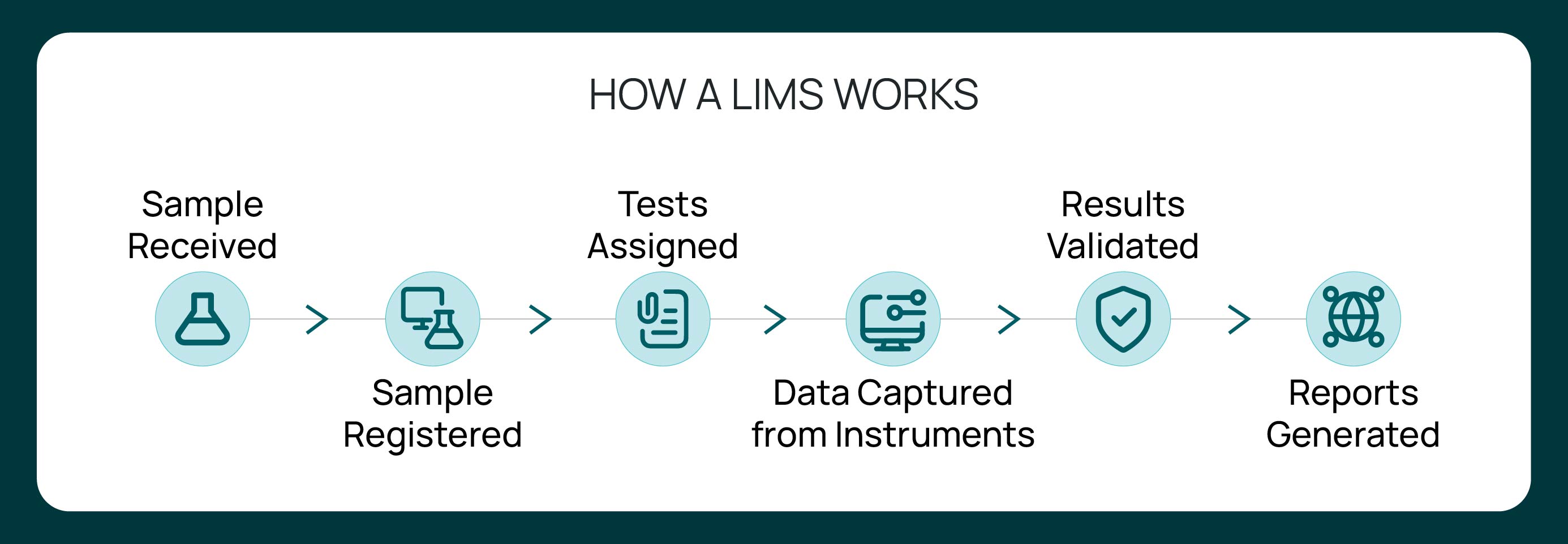
A Laboratory Information Management System (LIMS) works by centralizing laboratory data, workflows, and sample information in one structured platform. Instead of managing samples, results, and documentation across spreadsheets, paper records, or disconnected systems, a LIMS brings these processes into one environment.
In practice, LIMS software captures and tracks laboratory data throughout the entire sample lifecycle, from the moment a sample is received to the generation of reports and regulatory documentation. By automating routine processes such as sample registration, data entry, workflow routing, and reporting, a LIMS improves accuracy, supports traceability, and helps laboratories maintain consistent, reproducible procedures.
Modern LIMS software also integrates with laboratory instruments, databases, and other digital tools, allowing data to move automatically between systems. This integration reduces manual handling, improves data integrity, and ensures that laboratory teams always have access to up-to-date information needed for research, quality control, and compliance.
What are the core components of a LIMS?
A LIMS system is built around several core components that support laboratory operations and data management. Together, these elements create the digital infrastructure that allows laboratories to manage samples, workflows, and analytical data efficiently.
Sample management
One of the most important components of a LIMS is sample tracking. The system records detailed information about each sample, including origin, storage location, test history, and status throughout the analysis process. This ensures full traceability and helps laboratories avoid sample loss or misidentification.
Workflow automation
LIMS platforms automate laboratory workflows by guiding samples through predefined processes. Tasks such as test assignment, data validation, and report generation can be automatically triggered based on laboratory protocols, reducing manual steps and improving operational efficiency.
Data management and storage
Centralized data management is a key part of the LIMS definition. The system securely stores experimental data, test results, metadata, and documentation, making it easy for laboratory staff to retrieve and analyze information when needed.
Instrument integration
Many LIMS solutions connect directly with laboratory instruments and analytical devices. This allows test results to be automatically imported into the system, minimizing transcription errors and improving the reliability of scientific data.
Reporting and analytics
A LIMS can generate reports, dashboards, and analytics that help laboratories monitor performance, track sample throughput, and support regulatory submissions. These insights help laboratories make more informed operational and scientific decisions.
Purposes of a LIMS
The primary purpose of a Laboratory Information Management System is to improve how laboratories organize, manage, and analyze their data. As data volume grows, relying on manual processes becomes inefficient and prone to errors.
A LIMS helps laboratories achieve several operational goals:
- Improve data accuracy and integrity by centralizing laboratory information and reducing manual data entry.
- Enhance sample traceability by tracking samples across every stage of the laboratory workflow.
- Standardize laboratory processes through predefined workflows and protocols that ensure consistent procedures.
- Increase laboratory productivity by automating repetitive administrative tasks.
- Support regulatory compliance by maintaining detailed audit trails and documentation required for regulated industries.
In essence, a LIMS serves as the digital backbone of laboratory operations — keeping data, samples, and workflows organized, traceable, and accessible throughout the research or testing process.
How is LIMS used in a laboratory?
In everyday laboratory operations, a LIMS serves as the central platform for managing samples, data, and workflows. When a sample arrives at the lab, it is registered in the system and assigned a unique identifier, allowing it to be tracked throughout the entire testing process.
Lab staff use the system to assign tests, capture results from instruments, review data, and generate reports. Because all information is stored in one place, teams can easily monitor sample status, verify data accuracy, and ensure consistent procedures.
By organizing sample tracking, sample management, and data processing in one system, a LIMS helps laboratories operate more efficiently while maintaining traceability and reliable scientific results.
Benefits of implementing a LIMS
Implementing a LIMS improves several areas of laboratory operations:
- Improved data management: A LIMS ensures the integrity and accessibility of data, which is crucial for reducing errors and improving the accuracy of decision-making processes. Centralizing data storage makes retrieval and analysis easier, supporting more informed scientific conclusions and business strategies.
- Streamlined workflows: By automating routine and repetitive tasks, LIMS frees up valuable time for research and development activities. This automation can include sample handling, data entry, and report generation, leading to increased efficiency and productivity within the laboratory.
- Enhanced sample tracking: A LIMS provides precise tracking of samples within the lab, from collection to final analysis. This improved traceability ensures accountability and reduces the risk of sample loss or contamination, which is vital for maintaining the quality and reliability of lab results.
- Inventory management: By keeping track of lab inventory in real-time, LIMS aids in resource planning and budgeting. This feature helps labs manage their supplies more effectively, avoiding shortages and minimising waste, which can result in cost savings and more efficient operations.
LIMS can be beneficial for a wide range of laboratories, including those involved in research and development, quality control, and biobanks. In research and development labs, it supports innovation by streamlining data management and sample tracking, allowing scientists to focus on their core scientific activities. Quality control labs benefit from enhanced data integrity and regulatory compliance, while biobanks can manage large volumes of biological samples with greater accuracy and reliability.
Overall, the implementation of a LIMS can lead to significant improvements in lab efficiency, accuracy, and productivity.
Who can use a LIMS?
A LIMS can be used by a wide range of laboratories that need to manage samples, data, and workflows efficiently. Because LIMS software centralizes laboratory information and standardizes processes, it is particularly valuable in environments where accuracy, traceability, and regulatory compliance are essential.
Research and development laboratories commonly use LIMS to organize experimental data and track research samples throughout complex studies. Food Brewer AG, for example, reported a 60% increase in R&D productivity after implementing LIMS. Clinical and diagnostic laboratories rely on LIMS systems to manage patient samples, test results, and reporting workflows. Environmental testing labs use LIMS to monitor samples from field collection through analysis and regulatory reporting.
Industrial and quality control laboratories in sectors such as pharmaceuticals, biotechnology, food safety, and manufacturing also benefit from LIMS software. These labs use LIMS to maintain consistent testing procedures, manage high sample volumes, and ensure data integrity across their operations. The University of Pittsburgh achieved a 50% improvement in sample tracking efficiency after implementing LIMS.
By supporting different laboratory workflows and scientific disciplines, a LIMS provides a digital infrastructure that helps laboratories manage their data, improve efficiency, and maintain reliable laboratory operations.
How does a LIMS for research work?
Not all LIMS platforms are designed the same way. Traditional LIMS platforms — such as LabVantage, LabWare, and STARLIMS — were built on legacy architectures that prioritize standardization over flexibility. They enforce rigid, predefined workflows because they were designed for environments where strict process control and repeatable outcomes are the goal.
Research labs, biobanks, and biotech R&D teams operate differently. Experiments evolve, sample types change, and teams need flexibility alongside traceability. A LIMS for research is built for that reality — adaptable by design, without sacrificing the rigor scientific work demands.
Configurable sample tracking
Rather than locking labs into pre-built lifecycle pipelines, a research LIMS allows laboratories to define their own sample types with custom metadata fields. Sample lineage — including multi-parent relationships — provides full traceability from origin to downstream use. Check-out/check-in logging tracks when samples leave and return to storage, and sample dispatch between groups provides a clear custody record with accept/deny workflows, all without rigid stage-gating that slows research down.
Flexible automation
Instead of a workflow engine that routes tasks through enforced sequences, a research LIMS uses event-based and scheduled triggers that fire specific actions when conditions are met. For example:
- Event-based triggers: sample created, archived, or a field value changed
- Scheduled triggers: before or after expiration, at custom intervals
- Automated actions: email notifications with smart values, webhook alerts to Slack or Microsoft Teams, or auto-task creation
Barcode Automation extends this further, allowing single-sample, multi-sample, and chained actions in a single scan — including rack scanning via VisionMate, RackScan, and BioMicroLab — without requiring a predefined workflow pipeline.
Equipment and inventory as core capabilities
In a research LIMS, equipment and inventory aren't bolted-on modules — they're woven into how scientists actually work day to day. That means equipment validation tracking with expiration alerts, booking and planner functionality so teams can coordinate shared instruments, a full procurement pipeline for supplies (Pending → Ordered → Received → Completed), and automated stock-level alerts that flag low reagents before they block an experiment.
The difference isn't whether traditional LIMS handle these areas — most do. It's how they're designed. Research teams need equipment and inventory tools that fit the rhythm of exploratory work: easy to update, fast to access, and integrated with the experiments and samples they support.
ELN integration in one platform
Traditional LIMS and ELN are typically separate systems that require middleware to exchange data. A modern research LIMS connects sample and inventory management with experiment documentation in the same platform — samples link directly to ELN experiments, and equipment records connect to ELN entries, with no manual data transfer or middleware overhead.
Open extensibility
Rather than relying on vendor-configured customization that requires professional services engagements, a research LIMS offers open API and SDK access, a marketplace of pre-built add-ons and instrument integrations, and webhook support for tools like Slack and Microsoft Teams. The result: laboratories extend the platform to fit their workflows, instead of fitting their workflows to the platform.
When to consider implementing a LIMS
As laboratories grow and generate larger volumes of data, managing samples and workflows manually becomes increasingly difficult. Implementing LIMS software can help laboratories transition from fragmented systems and spreadsheets to a centralized platform that improves efficiency, traceability, and data management.
Many laboratories begin considering a LIMS when their existing processes no longer support operational demands. A LIMS becomes especially valuable when labs need better visibility into sample workflows, improved collaboration between teams, and stronger data integrity.
Some common situations where implementing a LIMS becomes beneficial include:
- Increasing sample volumes that make manual tracking inefficient or error-prone
- Complex laboratory workflows that require better coordination and automation
- Regulatory requirements that demand accurate documentation and audit trails
- Data management challenges, such as storing and retrieving large volumes of experimental or analytical data
- Integration needs with laboratory instruments, databases, or systems such as an electronic lab notebook
By introducing structured workflows and centralized data management, a LIMS helps laboratories operate more efficiently while reducing operational risks and improving scientific reliability.

Can a LIMS help me achieve industry compliance?
For many laboratories, regulatory compliance is a major factor when evaluating a LIMS. Labs operating in regulated industries — such as pharmaceuticals, biotechnology, clinical diagnostics, and environmental testing — must maintain strict documentation, traceability, and quality standards.
A LIMS supports compliance by creating detailed audit trails that record every action taken within the system, including sample handling, data modifications, and user activities. This transparency makes it easier for laboratories to demonstrate adherence to regulatory frameworks such as GLP (Good Laboratory Practice), GMP (Good Manufacturing Practice), and ISO laboratory standards.
It also helps enforce standardized procedures where regulations require them, through configurable validation rules and controlled workflows. By ensuring data is captured consistently and stored securely, the system reduces the risk of errors and helps laboratories maintain the reliable records needed for inspections, audits, and regulatory submissions.
The impact is tangible: Arctic Therapeutics achieved ISO 15189 accreditation and saved 2 hours per week on compliance documentation after implementing SciSure.
Differentiating between LIMS and ELN
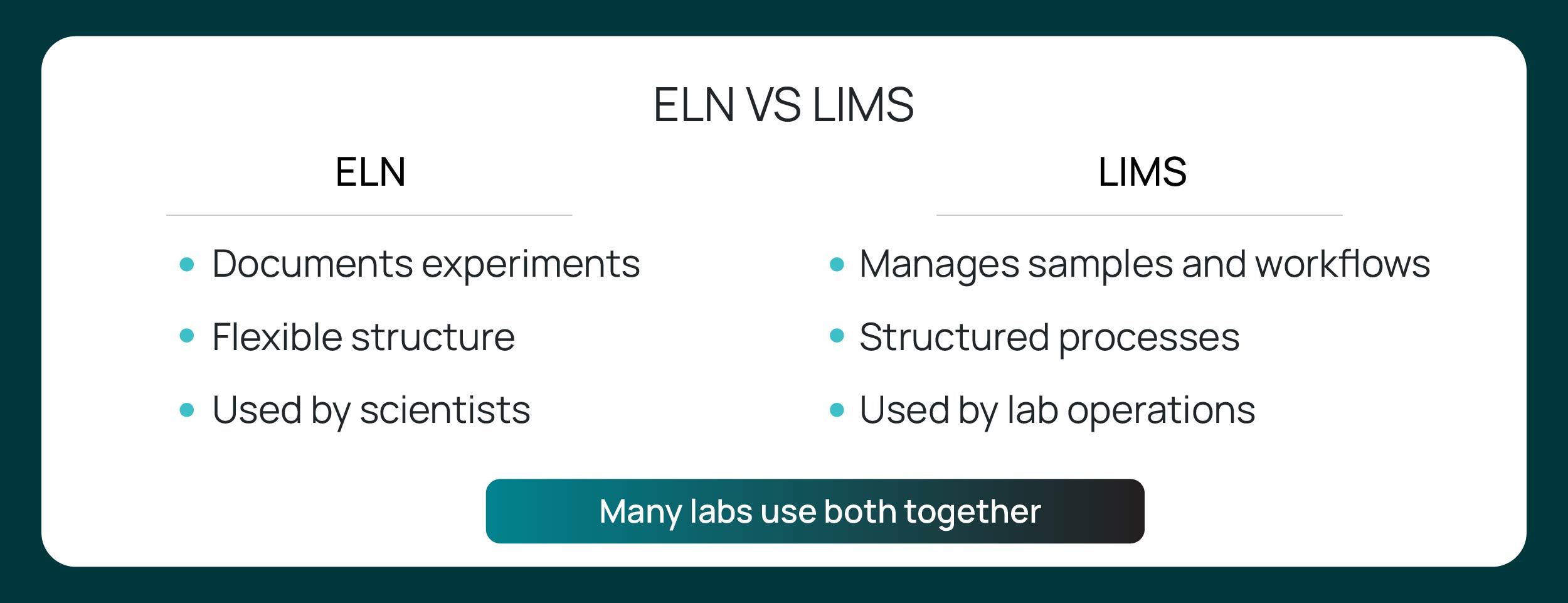
In addition to LIMS, another popular digital lab solution is the Electronic Lab Notebook (ELN). An electronic lab notebook bridges the gap between documentation and data management, giving labs a flexible tool that complements or integrates with LIMS functionality. These solutions serve distinct purposes — understanding the difference is important when deciding on a digital platform for your lab. For a deeper comparison, see ELN vs. LIMS for life science research.
LIMS (laboratory information management system)
- Primary focus: Managing samples, associated data, and laboratory workflows. Tracks the lifecycle of samples from receipt to disposal and supports various laboratory processes.
- Key features: Sample tracking, inventory management, quality control, reporting and analytics, workflow automation.
- Use cases: Managing high-throughput laboratories, clinical diagnostics, environmental testing, and any lab requiring rigorous sample management, tracking, and reporting capabilities. Common in clinical labs, environmental labs, and industrial testing facilities.
- User interaction: Used by lab managers, technicians, and analysts to track and manage samples, workflows, and lab resources.
- Flexibility: Traditional LIMS platforms enforce strict protocols and SOPs to ensure consistency and regulatory compliance. Modern research-focused LIMS platforms offer configurable tracking and event-based automation, giving R&D labs and biobanks more flexibility without sacrificing traceability.
ELN (electronic lab notebook)
- Primary focus: Documenting experiments, research notes, observations, and procedures. Serves as a digital replacement for traditional paper lab notebooks.
- Key features: Templates for experimental protocols, electronic documentation and signatures, search functionality, and version control.
- Use cases: Documenting detailed experimental procedures, capturing research data in real-time, and supporting collaborative research projects. Common in academic research, pharmaceutical R&D, and biotech labs.
- User interaction: Scientists and researchers use ELN interactively to document their daily work and experimental details.
- Flexibility: ELNs are designed to be more flexible and user-friendly, allowing scientists to document experiments and observations in a way that suits their individual needs.
The best of both worlds
SciSure (formerly eLabNext) is a modern LIMS built for R&D that connects sample and inventory management with experiment documentation in one platform — no middleware required.
Unlike traditional LIMS built for manufacturing or QA/QC pipelines, SciSure is designed for research labs, biobanks, and biotech teams where flexibility, traceability, and fast configuration matter.
- Configurable sample tracking: Custom sample types, metadata fields, sample series, lineage trees with multi-parent support, check-out/check-in, and dispatch between groups with full audit trail.
- Triggers & Automations: Event-based and scheduled automations that fire email notifications, webhook alerts to Slack/Teams, or auto-task creation, with pre-built templates to get started quickly.
- Barcode Automation: Single-sample, multi-sample, and chained actions in one scan, including rack scanning via VisionMate, RackScan, and BioMicroLab.
- Equipment management: Validation tracking with expiration alerts, booking and planner, status management, and exportable audit trails.
- Supplies & Ordering: Built-in product catalog and procurement pipeline (Pending → Ordered → Received → Completed).
- ELN integration in one platform: Samples link directly to ELN experiments. Equipment connects to ELN entries. No separate integration layer needed.
- API, SDK & Marketplace: Open extensibility with pre-built add-ons, instrument integrations, and webhook support for external tools.
Features of a good LIMS
Not all Laboratory Information Management Systems offer the same capabilities. When evaluating LIMS software designed for the R&D sector, laboratories should look for features that support efficient workflows, reliable data management, and long-term scalability. A well-designed LIMS should not only organize laboratory data but also improve how teams manage samples, collaborate, and maintain regulatory standards.
- Comprehensive sample management: A strong LIMS tracks samples throughout their entire lifecycle — from collection and registration to testing, storage, and disposal — with configurable sample types, custom metadata fields, lineage trees with multi-parent support, and check-out/check-in logging. This ensures traceability and helps prevent sample misidentification or loss.
- Workflow automation: A good LIMS automates routine processes through event-based and scheduled Triggers & Automations, Barcode Automation for single, multi-sample, and chained scan actions, and open API/SDK access for instrument and system integrations. This reduces manual work and improves laboratory efficiency.
- Integration capabilities: Modern laboratories rely on multiple digital systems and analytical instruments. A good LIMS connects directly with laboratory instruments, databases, and an integrated electronic lab notebook in the same platform, plus webhook support for tools like Slack and Microsoft Teams — enabling seamless data exchange without middleware.
- Data integrity and security: Laboratories must ensure their data is accurate, traceable, and protected. A reliable LIMS includes GLP-compliant audit trails, role-based access control, and secure data storage to maintain data integrity and support compliance requirements such as ISO 15189, GLP, and GMP.
- Reporting and analytics: Effective reporting tools allow laboratories to generate reports, dashboards, and performance insights quickly. These capabilities help laboratory managers monitor sample throughput, identify workflow bottlenecks, and make data-driven operational decisions.
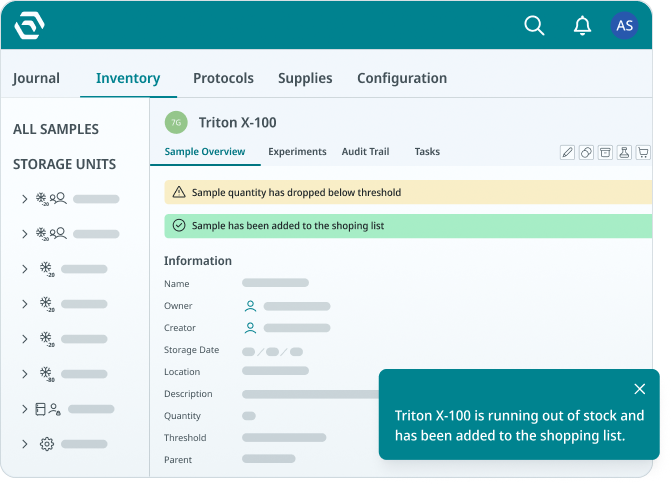
By offering these features, a well-designed LIMS supports laboratories in managing complex data environments while improving efficiency, transparency, and overall laboratory productivity.
Factors to consider when choosing a laboratory information management system
When selecting a LIMS for your lab, several key factors must be carefully considered to ensure the system supports your unique workflows and research demands.
- Flexibility: The ability to adapt the LIMS to your lab’s unique processes is important for operational success. SciSure offers unparalleled flexibility, allowing labs to tailor the system to their specific workflow requirements — including custom data fields, configurable sample tracking, and unique lab protocols.
- API and integration capabilities: A robust API facilitates integration with other systems and instruments, enhancing data flow and operational efficiency. SciSure’s open API, SDK, and Marketplace allow extensive customization and integration to meet the unique needs of your lab.
- User-friendliness: An intuitive interface is key to ensuring all team members can effectively use the LIMS. SciSure’s interface is designed specifically for life science R&D, minimizing the learning curve so researchers can focus on science.
- Automation capabilities: Automation significantly reduces manual data entry and boosts productivity. SciSure’s Triggers & Automations and Barcode Automation streamline sample tracking, alert management, and data workflows — reducing human error and freeing time for critical research.
- Implementation timeline: A swift, smooth implementation minimizes disruption. SciSure provides end-to-end implementation support, including onboarding, training, configuration, and ongoing guidance, helping your team transition quickly and confidently.
Practical tips for selecting the best LIMS for your lab
Selecting the right LIMS can be a daunting task. These practical tips will guide you through the process:
- Assess your lab’s specific needs: Understand your lab’s current requirements — sample tracking, data management, compliance standards — and future growth plans to ensure the LIMS can scale with you.
- Evaluate multiple vendors: Request demos and trials. Look for reviews or case studies from labs similar to yours. Seek feedback from existing users to understand real-world reliability and usability.
- Consider the total cost of ownership: Look beyond initial costs. Factor in ongoing maintenance, customer support, training, and software upgrades — and ask vendors about any fees that may arise over the product’s lifespan.
- Plan for the future: Ensure the LIMS can scale with your lab — handling increased data loads, supporting additional users, and integrating with new technologies as they become available.
How can I get started implementing a LIMS?
Implementing a LIMS is a strategic step toward improving laboratory efficiency, data organization, and workflow automation. A structured approach helps laboratories successfully transition from manual processes or disconnected systems to a centralized platform.
The first step is evaluating the laboratory’s current workflows, data management practices, and operational challenges. Understanding how samples move through the lab, how data is recorded, and where inefficiencies occur helps determine what features the LIMS should support. This assessment also identifies integration needs with instruments, databases, or systems such as an electronic lab notebook.
Next, define your implementation goals: improving sample management, automating routine processes, strengthening data traceability, or supporting regulatory compliance. Clear objectives make it easier to evaluate LIMS vendors and select a system aligned with the lab’s operational needs.
Once selected, implementation typically involves system configuration, data migration, and user training. Many LIMS providers work closely with laboratories during this stage to customize workflows, set up integrations, and ensure the system reflects the lab’s specific processes.
With proper planning and training, implementing a LIMS can help laboratories build a more structured and scalable digital infrastructure that supports long-term scientific and operational success.
What’s the ROI of implementing a LIMS?
Implementing a LIMS often requires an initial investment in software, implementation, and training. However, many laboratories quickly see measurable returns as the system improves operational efficiency, data reliability, and workflow visibility.
The ROI of LIMS software typically comes from several key areas:
- Reduced manual work: Automating routine tasks such as sample registration, test assignment, and report generation cuts administrative workload and frees staff to focus on scientific work. Food Brewer AG reported a 60% increase in R&D productivity after implementing SciSure.
- Improved data accuracy: By minimizing manual data entry and integrating directly with instruments, a LIMS reduces transcription errors and strengthens data integrity.
- Faster sample processing: Streamlined workflows and centralized sample management improve turnaround times for testing and analysis. The University of Pittsburgh achieved a 50% improvement in sample tracking.
- Better resource utilization: A LIMS gives full visibility into laboratory operations, making it easier to track inventory, monitor workloads, and allocate resources effectively.
- Lower compliance risks: Built-in audit trails and standardized workflows support regulatory compliance, helping labs avoid costly errors or delays during audits. Arctic Therapeutics saved 2 hours per week on compliance documentation after achieving ISO 15189 accreditation.
Over time, these improvements translate into higher productivity, more reliable data, and better decision-making. For many laboratories, these gains compound — and the long-term operational return significantly outweighs the initial cost of implementation. See more customer stories →
How is artificial intelligence (AI) being integrated into LIMS?
Artificial intelligence is beginning to appear in LIMS software, and SciSure has already shipped real AI capabilities that go beyond trend-watching.
AI Protocol Generator
SciSure’s AI Protocol Generator add-on turns short prompts into full standard operating procedures (SOPs), reducing the time researchers spend on documentation and helping teams maintain consistent, well-structured protocols. This is a live, shipped product feature available in SciSure today.
Astra Iris
Astra Iris is SciSure’s AI support chatbot, designed to help users navigate the platform easily without accessing customer data or intellectual property. It reduces onboarding friction and helps lab teams find answers faster without raising a support ticket.
SciSure’s approach to AI is led by Erwin Seinen, Co-founder and Chief Innovation Officer. His thinking on how AI should be applied responsibly in laboratory environments is outlined in two resources:
- Smart AI, real value: Innovation without compromise
- Connecting AI to scientific data: The next step for AI in labs
More broadly, AI in LIMS is evolving across the industry with a focus on data organization, workflow efficiency, and operational visibility. Current applications include organizing large volumes of laboratory data, improving searchability, and surfacing patterns or anomalies for scientific review. As AI adoption matures, its role within LIMS platforms is expected to remain focused on supporting structured data, improving visibility, and assisting human decision-making while preserving the transparency and control required in regulated research environments.
How to evaluate your LIMS options
Choosing the right LIMS is a critical decision that can significantly impact the efficiency and effectiveness of your laboratory operations. By considering the specific needs of your lab, evaluating the options available, and focusing on long-term value, you can choose a LIMS that will support your lab’s success well into the future.
SciSure combines ELN and LIMS capabilities in one connected platform designed for the R&D sector, giving laboratories a unified digital infrastructure that supports structured workflows, stronger traceability, and better long-term operational control.
FAQ
Which types of laboratories can gain from LIMS?
Many different laboratory environments can benefit from implementing a LIMS. Research and development laboratories use LIMS to organize experimental data and manage samples across complex studies. Clinical and diagnostic labs rely on LIMS to track patient samples and test results. Environmental, food safety, pharmaceutical, and biotechnology labs also use LIMS to improve sample management, maintain data integrity, and support regulatory compliance.
Do LIMS support integration with other systems?
Yes, most modern LIMS software platforms are designed to integrate with a wide range of laboratory systems and instruments. These may include analytical instruments, enterprise systems, and tools such as an electronic lab notebook. Integration helps laboratories automate data transfer, reduce manual data entry, and maintain consistent records across different platforms, improving both efficiency and data reliability.
How do I select the appropriate LIMS for my laboratory?
Selecting the right LIMS depends on your laboratory’s workflows, sample volume, and compliance requirements. Laboratories should evaluate factors such as system flexibility, integration capabilities, ease of use, and scalability. It is also helpful to request demonstrations or trials to see how the system performs in real workflows. Choosing a LIMS that aligns with your lab’s long-term operational and data management needs will support sustainable laboratory growth.

What Is a LIMS? (Definition, Meaning, and How It Works)
Learn what a LIMS is, how it manages lab data, samples, and workflows, and how it improves efficiency, traceability, and compliance in modern labs.