


Passen Sie SciSure an Ihre Bedürfnisse an
Ihr Labor, Ihre Arbeitsabläufe, Ihr Weg. Mit SciSure haben Sie die volle Kontrolle darüber, wie Sie Ihre Recherchetools, Instrumente und Datenbanken verbinden. Erstellen Sie benutzerdefinierte Verbindungen, die genau zu der Arbeitsweise Ihres Teams passen — jetzt und in Zukunft.
.avif)
Trusted by 550,000+ scientists, EHS, and LabOps worldwide in 55,000+ laboratories










 Customer story
„Die Zusammenarbeit mit dem SciSure-Team war eine kollaborative und produktive Erfahrung.“
 Customer story
"SciSure helps us save time by enabling us to share our protocols with colleagues easily. It also takes care of our sample management."
 Customer story
„Ich bin zutiefst beeindruckt, wie SciSure unseren täglichen Betrieb verändert hat.“
 Customer story
„SciSure reduziert den Zeit- und Energieaufwand für Aufgaben. Ich habe es geliebt, damit zu arbeiten.“
 Customer story
„Wir haben Excel-, Paper- und Access-Datenbanken durch Effizienz ersetzt und manuelle Aufgaben von Stunden in Minuten verwandelt.“
Customer story„Die Zusammenarbeit mit dem SciSure-Team war eine kollaborative und produktive Erfahrung.“
Customer story"SciSure helps us save time by enabling us to share our protocols with colleagues easily. It also takes care of our sample management."
Customer story„Ich bin zutiefst beeindruckt, wie SciSure unseren täglichen Betrieb verändert hat.“
Customer story„SciSure reduziert den Zeit- und Energieaufwand für Aufgaben. Ich habe es geliebt, damit zu arbeiten.“
Customer story„Wir haben Excel-, Paper- und Access-Datenbanken durch Effizienz ersetzt und manuelle Aufgaben von Stunden in Minuten verwandelt.“
Entwickeln Sie eine Plattform, die für Sie funktioniert
Einsatzbereite Integrationen
Verbinden Sie SciSure sofort mit über 40 vorgefertigten Add-Ons, um Arbeitsabläufe ohne zusätzliche Einrichtung zu optimieren.
Verwandt:

Über 40 Integrationen

Kostenlose und Premium-Add-Ons

Ständig wachsende Bibliothek
.avif)
Benutzerdefinierte Integrationen mit unserer API und unserem SDK
Erstellen Sie benutzerdefinierte Integrationen mit der offenen API und dem SDK von SciSure, um Laborgeräte zu verbinden, Berichte zu automatisieren und Daten zu synchronisieren.
Verwandt:

API öffnen

SDK für Entwickler

Volle Entwicklerunterstützung
.avif)
Flexibel und anpassbar an die Bedürfnisse Ihres Labors
Integrieren Sie einfach neue Tools, wenn sich Ihr Labor weiterentwickelt, ohne die Plattform wechseln oder Arbeitsabläufe unterbrechen zu müssen.
Verwandt:

Verbinde jedes Recherchetool

Automatisieren Sie Ihre Arbeitsabläufe

Machen Sie Ihr Setup zukunftssicher
.avif)
Stellen Sie sofort eine Verbindung mit über 40 Add-Ons her
Unser Marketplace bietet eine Reihe von Integrationen zur Optimierung von Abläufen, Datenerfassung und Forschungsabläufen.

Amass
Connect your experiments to the wider scientific evidence and decide what to test next
SciSure MCP
Connect the AI environment your organization chooses with permitted scientific information in SciSure.
BioSkepsis
Every experiment ends with one question: what to run next. BioSkepsis answers it inside SciSure, from what the published evidence actually shows, so your next move rests on the literature, not a hunch.

Astra Iris - AI Support Assistant
AI-powered support assistant built directly into SciSure Research.
.png)
DYMO® LabelWriter™ 550 Series
Optimieren Sie Ihren Labor-Etikettierungs-Workflow mit Präzision und Leichtigkeit
.avif)
DMPTool.org
Optimieren Sie Arbeitsabläufe und verbessern Sie die Zusammenarbeit durch die Integration und Verwaltung von Datenmanagementplänen von DMPTool in SciSure
Stärken Sie Ihr Labor mit maßgeschneiderten Integrationen
Die API und das SDK von SciSure bieten Laboren die volle Flexibilität, Integrationen zu erstellen, die zu ihren individuellen Workflows passen.

API öffnen
Synchronisieren Sie SciSure mit Laborgeräten, Datenquellen und externen Anwendungen.

SDK für Entwickler
Passen Sie Workflows an, erstellen Sie neue Apps und erweitern Sie die Funktionalität von SciSure.

Unterstützung durch die Gemeinschaft
Greifen Sie auf unsere Wissensdatenbank, Dokumentation und Community für Entwickler zu.
.avif)
Wie Labore SciSure an ihre Bedürfnisse anpassen
Erfahren Sie, wie Forschungsteams ihre Tools verbinden, Workflows automatisieren und den Datenfluss mit SciSure optimieren.


Mariano Martínez
Forschungsingenieur und Laborleiter, Abteilung für bakterielle Zellzyklusmechanismen, Institut Pasteur











Sehen Sie SciSure in Aktion
Jedes Labor ist anders und SciSure ist darauf ausgelegt, sich anzupassen. Buchen Sie noch heute eine Demo, um zu erfahren, wie unsere Scientific Management Platform (SMP) die Arbeitsabläufe Ihres Teams verändern, die Einhaltung von Vorschriften optimieren und Ihre Forschung beschleunigen kann.
Häufig gestellte Fragen
Alles, was Sie über das Produkt und die Abrechnung wissen müssen.
SciSure unterstützt vorgefertigte Add-Ons aus unserem Marketplace, direkte API-Verbindungen und vollständig anpassbare Integrationen über unser SDK.
Nein. Viele Integrationen sind Plug-and-Play. Für einige Integrationen ist jedoch eine kostenpflichtige Lizenz erforderlich.
Die meisten Add-Ons sind kostenlos, während für einige Premium-Integrationen ein Abonnement erforderlich ist. Preisdetails sind auf der Benutzeroberfläche Marketplace verfügbar.
Ja! Die API von SciSure ermöglicht es Ihnen, Laborgeräte zu verbinden, die Datenerfassung zu automatisieren und Ergebnisse mit Ihren Arbeitsabläufen zu synchronisieren.
Besuchen Sie unser Entwicklerportal für API-Dokumentation, SDK-Downloads und Integrationsleitfäden.
Sie können die Antwort, nach der Sie suchen, nicht finden? Bitte chatten Sie mit unserem freundlichen Team.
Bleiben Sie bei Laborinnovationen an der Spitze
[Boston, MA, USA, October 13, 2026]--SciSure, the Scientific Management Platform (SMP) for safer, more efficient research environments, today announced the availability of BioSkepsis in the SciSure Marketplace. Developed by EFEVRE TECH LTD, BioSkepsis is an AI-powered research assistant for the life sciences that brings literature review and evidence synthesis directly into researchers’ existing workflows.
For scientists, deciding what to test next often means searching across papers, comparing conflicting findings, and determining how published evidence relates to their own results. BioSkepsis brings that process closer to the experiment itself, allowing researchers to investigate scientific questions and evaluate their results against published literature from within SciSure.
“Researchers shouldn’t have to separate the work of running an experiment from the evidence that informs it. Partnering with BioSkepsis allows scientists in Scisure a way to explore the literature, evaluate their findings, and make more informed decisions within the same environment where their research is documented. It’s a strong example of how we want to expand SciSure through tools that fit naturally into the way scientists work."
- Andrew Martin, Director of Marketplace Development
From research question to evidence-backed next step
Researchers can ask BioSkepsis a scientific question or describe an experiment directly within SciSure. The AI research assistant searches the relevant literature, evaluates findings, and produces a cited research brief showing where evidence aligns, conflicts, or remains limited.
Researchers can also use BioSkepsis to benchmark their own experimental findings against published research and identify potential mechanisms and follow-up experiments.
Each research brief includes verified citations and a Trust Index designed to make the strength and limitations of the underlying evidence easier to assess. The Trust Index evaluates evidence across six factors, helping researchers identify areas where findings may be well-supported, conflicting, or require closer review.
The need for greater confidence in published research is significant. A widely cited 2015 analysis estimated that more than half of preclinical research may be irreproducible, representing approximately $28 billion in annual research spending in the United States alone.*
Keeping research decisions connected to a changing evidence base
BioSkepsis also helps researchers continue following the evidence after an initial review.
With Evidence Watch, researchers can monitor the claims behind a research brief as new literature becomes available, including retractions, corrections, and newer evidence that may change the scientific picture.
The Research Feed helps researchers follow new publications around topics relevant to their work, while the Literature Landscape provides a visual view of a research field through citation networks, clusters, and timelines. Researchers can also organize relevant papers and briefs into Collections for future reference.
“Every research decision is only as strong as the evidence behind it. We built BioSkepsis AI to give life-science researchers a rigorous and transparent way to analyze the literature: it searches more than 40 million biomedical papers in full text, grounds every finding in a verifiable citation, and makes it clear where the evidence converges, conflicts or falls short. Joining the SciSure Marketplace brings that capability directly into the environment where experiments are planned and documented, so researchers can benchmark their results against the published record and choose their next step with greater confidence.”
- Dimitris Kyriakou, Co-founder and CEO, EFEVRE TECH LTD
Bringing AI into the research workflow
Through its integration with SciSure, BioSkepsis brings evidence-based research support into the environment where scientists plan and document their experiments. Files and experimental results remain within the SciSure workspace when the add-on is used through the integration.
BioSkepsis is also available through the Claude connector directory, giving researchers another way to access its research capabilities.
Availability
BioSkepsis is available now through the SciSure Marketplace. A free plan is available with no credit card required, with additional plans available for researchers, teams, and organizations.
To learn more about BioSkepsis and its integration with SciSure, visit our Marketplace.
About EFEVRE TECH LTD
EFEVRE TECH LTD is a biotechnology company based in Larnaca, Cyprus, developing hardware and software for the working laboratory. Its products include AMGEL, VITALE, and BioSkepsis, an AI research assistant purpose-built for the life sciences.
Learn more at bioskepsis.ai.
About SciSure
SciSure is a Scientific Management Platform for safer, more efficient research environments. Supporting scientists, LabOps, and EHS teams, SciSure helps organizations improve reproducibility, strengthen safety and compliance, and gain greater visibility across laboratory operations.
Learn more at scisure.com.
Media contacts
SciSure: Olivia Hulst, o.hulst@scisure.com
EFEVRE TECH LTD / Skepsis AI: Dimitris Kyriakou, dkyriakou@efevretech.com
* Freedman LP, Cockburn IM, Simcoe TS. “The Economics of Reproducibility in Preclinical Research.” PLOS Biology. 2015;13(6).
BioSkepsis joins the SciSure Marketplace, bringing evidence-based research decisions into the lab workspace
New AI research assistant helps scientists evaluate published evidence, compare findings, and plan next steps without leaving SciSure
Ein LIMS kann in einer Demo des Anbieters mühelos wirken – doch sobald ein Wissenschaftler versucht, eine echte Probe vom Experiment über die Lagerung bis zur Analyse nachzuverfolgen, zeigen sich die Schwachstellen: drei Logins, zwei manuelle Copy-and-Paste-Schritte, ein Barcode-Etikett, das eine separate Anwendung erfordert, und keine offensichtliche Möglichkeit, die vollständige Historie abzurufen.
Fast jeder LIMS-Anbieter behauptet, sein Produkt sei intuitiv, doch Käufer benötigen etwas, das sich besser überprüfen lässt als eine bloße Behauptung. Dieser Beitrag liefert Ihnen eine praxisnahe Definition von Benutzerfreundlichkeit auf Basis anerkannter Frameworks, 10 messbare Kriterien sowie ein Workflow-Szenario, das Sie in jeder Anbieter-Demo durchspielen können.
Was ist ein benutzerfreundliches LIMS?
Ein benutzerfreundliches LIMS ermöglicht es Wissenschaftlern, LabOps-Managern und Administratoren, ihre rollenspezifischen Aufgaben präzise, in angemessener Zeit und mit der nötigen Sicherheit zu erledigen, um Aufzeichnungen aktuell und vollständig zu halten. Benutzerfreundlichkeit ist eine Eigenschaft des Gesamtsystems im jeweiligen Kontext, nicht nur eine Liste von Funktionen.
Die NIST-Zusammenfassung der ISO 9241-11 definiert Benutzerfreundlichkeit über vier Dimensionen: Effektivität, Effizienz, Zufriedenheit und Nutzungskontext. Dies sind keine abstrakten Kategorien. Jede einzelne lässt sich direkt in Bewertungskriterien für ein F&E-LIMS übersetzen.
Ein LIMS, das wichtige Kontrollfunktionen entfernt, um aufgeräumt zu wirken, geht einen Kompromiss ein, der nicht unbedingt besser ist. Das Ziel ist progressive Einfachheit: Nutzer sehen das, was für ihre Rolle und Aufgabe relevant ist, und das System führt sie ohne unnötige Hürden zu vollständigen und präzisen Aufzeichnungen.
Warum Konnektivität in der Forschung zur Benutzerfreundlichkeit gehört
In der Forschung erzeugt nicht vernetzte Software eine „Usability-Steuer“. Jeder zusätzliche Login, jede manuelle Übertragung, jede fehlende Verknüpfung und jede externe Tabelle wird Teil der Nutzererfahrung – selbst wenn die einzelnen Anwendungen für sich genommen eine ansprechende Oberfläche haben.
Stellen Sie sich ein realistisches End-to-End-Szenario vor: Ein Wissenschaftler registriert eine biologische Probe aus einem Experiment, teilt sie in drei Aliquots auf, etikettiert jedes mit einem Barcode, lagert sie ein, protokolliert den Reagenzienverbrauch, aktualisiert zwei Datensätze gleichzeitig, fügt ein Analyseergebnis hinzu, teilt die Erkenntnisse mit einem Kollegen und ruft für einen Prüfer die vollständige Probenhistorie ab.
In einer nicht vernetzten Umgebung erstreckt sich dieser Arbeitsablauf über mehrere Anwendungen. Das Experiment liegt in einem System. Die Probe wird in einem anderen registriert. Das Barcode-Etikett erfordert ein drittes Tool. Die Analyseergebnisse liegen irgendwo in einem Ordner. Der Prüfer rekonstruiert die Historie, indem er – sofern überhaupt möglich – alle Systeme einzeln durchsucht.
In einer vernetzten Umgebung baut jedoch jeder Schritt auf dem vorherigen auf. Das Experiment ist mit der Probe verknüpft. Die Probe ist mit der Lagerung und dem Reagenzienverbrauch verbunden. Das Ergebnis des Analysegeräts wird demselben Datensatz zugeordnet. Die Historie ist vollständig und an einem zentralen Ort abrufbar.
Genau dieses Problem SciSures ELN und LIMS wurden entwickelt, um dies zu beseitigen. Ein Probenbereich in einem SciSure-Experiment verknüpft sich direkt mit dem registrierten Probendatensatz, anstatt auf einen manuell eingegebenen Probennamen angewiesen zu sein – genau dort, wo meist Übertragungsfehler entstehen.
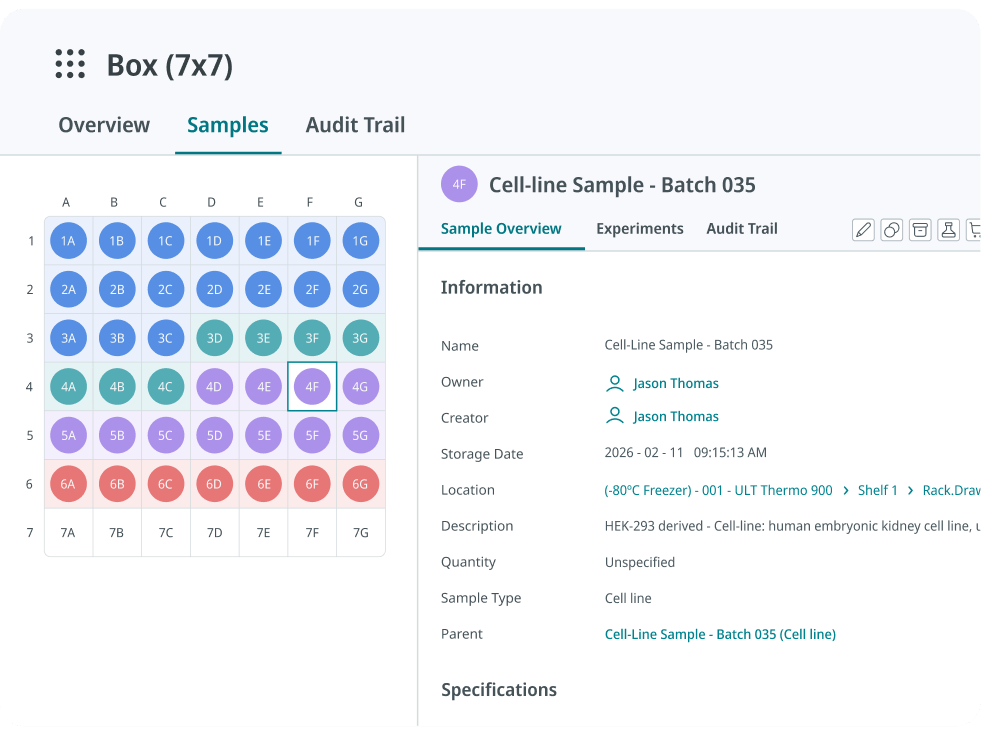
Ehrlicherweise geht dieses Argument über einen einzelnen Anbieter hinaus: Ein gut integrierter Stack aus spezialisierten Lösungen kann ebenfalls benutzerfreundlich sein, sofern die Verbindungen zwischen den Systemen zuverlässig und geregelt sind und sich für die Wissenschaftler natürlich anfühlen. Die entscheidende Frage ist nicht „Ist das ein einziges System?“, sondern „Bewahrt die Verbindung zwischen den Systemen den wissenschaftlichen Kontext und die Audit-Historie, ohne manuelle Arbeit zu erzwingen?“
Weitere praktische Ansätze, um den Erfolg Ihres Labors zu messen, finden Sie in unserem Leitfaden zu 12 praktischen Labor-KPIs.
Benutzerfreundliche Optik vs. benutzerfreundliche Funktion
Machen Flexibilität und Compliance-Kontrollen ein LIMS schwerfälliger?
Bei schlechtem Design: ja. Doch der Kompromiss zwischen Benutzerfreundlichkeit und Kontrolle ist nicht zwangsläufig.
Pflichtfelder, kontrollierte Vokabulare, rollenbasierte Berechtigungen, elektronische Signaturen und Audit-Historien können Nutzer tatsächlich zu vollständigen und präzisen Datensätzen führen. Ein Pflichtfeld verhindert, dass ein Wissenschaftler einen unvollständigen Eintrag speichert. Ein kontrolliertes Vokabular stellt sicher, dass eine „Zelllinie“ immer einheitlich erfasst wird. Ein Audit-Trail zeigt einem Prüfer genau, was wann geändert wurde, ohne dass dies mühsam manuell rekonstruiert werden muss.
Reibungsverluste entstehen dann, wenn Kontrollen zu breit gefächert angewendet werden. Irrelevante Pflichtfelder verlangsamen jeden Eintrag. Pauschale Genehmigungsworkflows unterbrechen Aufgaben, die kein nennenswertes Risiko bergen. Felder, die aus einer QA/QC-Vorlage übernommen wurden und nicht zur F&E-Praxis passen, frustrieren Wissenschaftler, ohne die Datenqualität zu verbessern.
Deshalb sind konfigurierbare Probentypen wichtiger, als es zunächst scheint. Mit SciSure können verschiedene wissenschaftliche Gruppen die Materialien und Metadaten modellieren, die ihre Arbeit erfordert, während sie weiterhin innerhalb einer gemeinsamen Organisationsstruktur agieren. So muss eine Chemiegruppe keine Felder ausfüllen, die für eine Zelllinie konzipiert wurden.
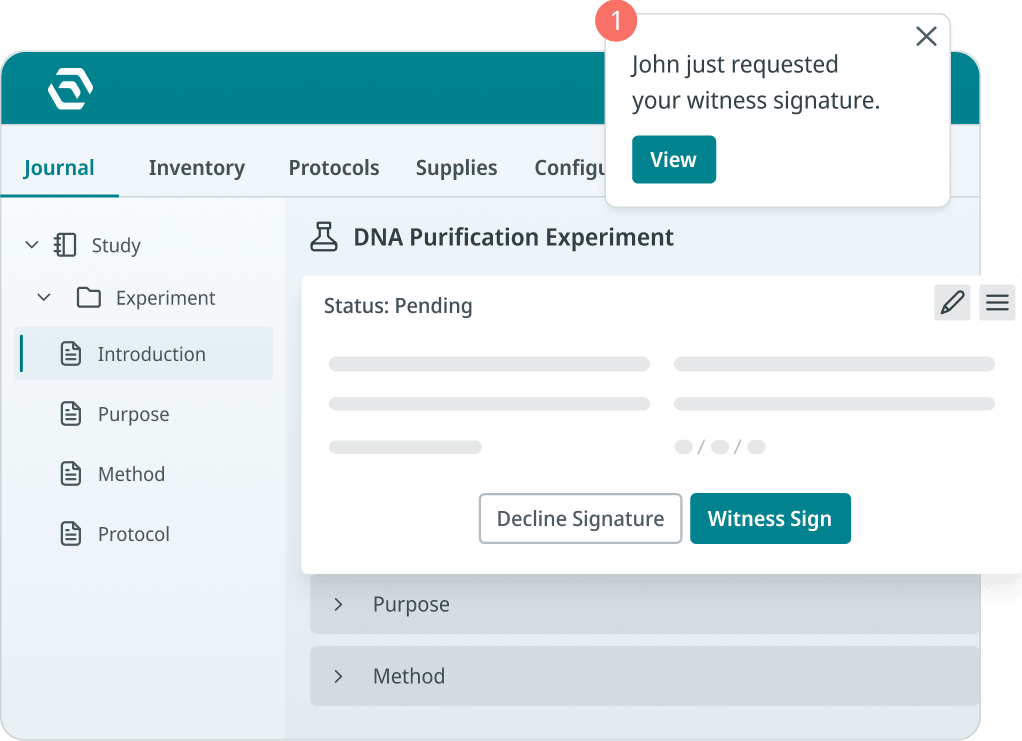
F&E-Teams benötigen ein Gleichgewicht: eine gemeinsame Struktur für geteilte Daten, Raum für die Weiterentwicklung von Methoden sowie Kontrollen, die die für Reproduzierbarkeit und Compliance entscheidenden Datensätze schützen.
Compliance hängt von mehr als nur der Software ab. Konfiguration, Validierungsverfahren, Schulung, Governance und Änderungsmanagement spielen alle eine Rolle. Ein LIMS, das GLP- oder 21 CFR Part 11-Workflows unterstützt, liefert die notwendigen Kontrollen; die Verantwortung für die Implementierung liegt jedoch bei der Organisation.
Wenn Sie ein LIMS bewerten, bedenken Sie: Ein System, das sich für Wissenschaftler zwar reibungslos anfühlt, aber nicht prüfbar ist, ist kein Erfolg in Sachen Benutzerfreundlichkeit.
Was sollten F&E-Teams LIMS-Anbieter fragen?
Diese zwölf Fragen helfen Ihnen, hinter die glatte Fassade von Demo-Versionen zu blicken und die Informationen zu erhalten, die Sie für die Bewertung der Benutzerfreundlichkeit in Ihrer tatsächlichen Arbeitsumgebung benötigen.
- Können Sie uns einen Usability-Test zeigen, der mit echten Anwendern durchgeführt wurde und nicht mit Demo-Spezialisten?
- Wie verknüpft das System ein Experiment im ELN mit den Proben, die während dieses Experiments erstellt wurden?
- Wie funktioniert die erweiterte Suche? Können wir gleichzeitig nach benutzerdefinierten Feldern, übergeordneten Probenbeziehungen und Datumsbereichen filtern?
- Welche Funktionen für Chargen und Barcodes sind ohne zusätzliche Add-ons oder benutzerdefinierten Code verfügbar?
- Wer in unserem Labor kann einen neuen Probentyp konfigurieren oder ein benutzerdefiniertes Feld hinzufügen? Erfordert dies ein Support-Ticket?
- Welche Änderungen erfordern benutzerdefinierten Code oder professionelle Dienstleistungen für die Implementierung?
- Wie geht das System mit Fehlerkorrekturen um, während die Audit-Historie gewahrt bleibt?
- Wie sieht das Onboarding typischerweise aus und wie lange dauert es, bis ein Wissenschaftler das System selbstständig nutzen kann?
- Bleibt bei der Integration zweier Systeme der wissenschaftliche Kontext (Experiment-Ursprung, übergeordnete Probenbeziehung) erhalten? Was passiert mit dem Audit-Trail?
- Haben Sie Daten zur Akzeptanz aus ähnlichen F&E-Laboren, die wir einsehen können?
- Was sind die häufigsten Beschwerden von wissenschaftlichen Anwendern in Ihren G2- oder Peer-Bewertungen?
- Können wir vor einer Entscheidung einen unskriptierten Testlauf mit unseren eigenen Daten durchführen?
Was Anwender tatsächlich sagen
Auf G2 erreicht SciSure 4,2 von 5 Punkten bei 206 Bewertungen, mit einem Wert von 7,9 für die Benutzerfreundlichkeit basierend auf 190 Bewertungen.
- Die Benutzerfreundlichkeit ist zudem die am häufigsten genannte Stärke in diesen Bewertungen (43 Erwähnungen).
- Die Qualität des Supports erreicht 8,9 Punkte bei 146 Bewertungen.
- Das Probenmanagement für SciSure liegt bei 8,9
- Die Bestandsverwaltung für SciSure erreicht einen Wert von 8,8.
Wo SciSure für F&E-Labore passt
SciSure Research kombiniert ELN- und LIMS-Funktionen in einer strukturierten Umgebung. Sie wurde für Forschungs- und F&E-Labore entwickelt, in denen Flexibilität, sich entwickelnde Probentypen und schnelle Iterationen ebenso wichtig sind wie Rückverfolgbarkeit und Governance.
Innerhalb von SciSure Research kann Ihr Team:
- Proben mit konfigurierbaren Probentypen und benutzerdefinierten Feldern registrieren
- Herkunft, Eltern-Kind-Beziehungen und die Lebenszyklushistorie nachverfolgen
- Lagerorte, Fächer und physische Positionen verwalten
- Die erweiterte Suche nutzen, um nach Probentyp, Standort, Metadaten, Experimentverknüpfung oder Datum zu filtern
- Barcode-Etiketten erstellen und Batch-Updates für mehrere Datensätze durchführen
- Proben direkt mit Experimenten im SciSure ELN verknüpfen
- Rollen und Berechtigungen auf Gruppen- und Organisationsebene zuweisen
- Audit-Logs, elektronische Signaturen und Workflow-Automatisierungen erfassen, sofern konfiguriert
- Funktionalitäten über APIs, ein SDK und Marketplace-Add-ons erweitern
- Onboarding-Unterstützung und Schulungen durch den SciSure Customer Success in Anspruch nehmen
Was Kunden berichten
Das Diel Lab an der Cornell University benötigte ein System, das Wissenschaftler und Doktoranden in ihre tägliche Arbeit integrieren konnten. Das Labor implementierte die Bestands-, Proben- und Spezimenverfolgung von SciSure zusammen mit dem elektronischen Laborbuch und ersetzte damit Papieraufzeichnungen sowie den Zeitaufwand für die manuelle Suche nach Proben und experimentellen Informationen.
Nach dem Onboarding und der Migration berichtete das Team von einem präziseren Bestand und einer besseren Rückverfolgbarkeit von Proben, Reagenzien, Experimenten, SOPs und Forschungsdaten. Durch die Such- und Abruffunktion konnten die Nutzer Probenstandorte innerhalb von Sekunden lokalisieren und experimentelle Details einfacher mit internen und externen Partnern teilen.
Terminus Bio musste zudem Zelllinien verwalten und deren Abstammung nachverfolgen können, ohne spezialisierte Arbeitsabläufe in ein zu allgemeines oder starres System zwängen zu müssen. Vor SciSure verließ sich das Team auf Tabellenkalkulationen und manuelle Markierungen, wobei die Erfassung einzelner Proben etwa zwei Minuten in Anspruch nahm.
Durch die Klon-Funktionen von SciSure, anpassbare QR-Codes und das Barcode-Automatisierungs-Add-on konnte Terminus Bio die Dateneingabe für subkultivierte Zelllinien auf etwa zehn Sekunden reduzieren und gleichzeitig die Rückverfolgbarkeit über den gesamten Lebenszyklus der Zelllinien hinweg gewährleisten. Das Unternehmen berichtete zudem von einer Reduzierung des Zeitaufwands für die Datenverwaltung um mehr als 90 % durch API-Zugriff und benutzerdefinierte Berichtsskripte.
Andere Systeme sind entweder zu breit gefächert oder in ihrer Einrichtung zu starr. SciSure bietet ein gesundes Gleichgewicht zwischen flexibler Funktionalität und der Möglichkeit, bestimmte Aspekte unseres Workflows anzupassen, ohne sich in zu vielen Funktionen zu verlieren.
Da wir einen einzigartigen Workflow haben, war die Möglichkeit, bestimmte Aspekte unserer Datenerfassungsmethoden anzupassen, der Schlüssel für die erfolgreiche Einführung eines LIMS.
Joshua Paster, Gründer, Terminus Bio
Der einfachste Weg, ein benutzerfreundliches LIMS zu bewerten, ist, es zu testen
Jeder LIMS-Anbieter kann sein Produkt als intuitiv bezeichnen. Was Sie wissen müssen, ist, ob Ihre Wissenschaftler eine Probe registrieren, ihre Historie nachverfolgen und einen vollständigen Datensatz mit einem Prüfer teilen können – ohne zusätzliche Logins, manuelle Übertragungen oder Informationsverlust.
Bringen Sie uns den Workflow der Ihrem Team die meisten Probleme bereitet, und wir führen ihn aus – nicht mit einem Demo-Datensatz.
Häufig gestellte Fragen zur LIMS-Benutzerfreundlichkeit
Was macht ein LIMS benutzerfreundlich?
Ein benutzerfreundliches LIMS ermöglicht es Wissenschaftlern, LabOps-Managern und Administratoren, ihre täglichen Aufgaben präzise, effizient und sicher zu erledigen. Basierend auf der NIST-Zusammenfassung der ISO 9241-11 umfasst Benutzerfreundlichkeit Effektivität (können Benutzer Aufgaben korrekt erledigen?), Effizienz (wie lange dauert es?), Zufriedenheit (fühlen sich die Benutzer sicher?) und Nutzungskontext (passt das System zu realen F&E-Workflows?). Eine saubere Benutzeroberfläche ist notwendig, aber allein nicht ausreichend.
Ist SciSure einfach zu bedienen?
Auf G2 hält SciSure einen Wert von 7,9 für Benutzerfreundlichkeit bei 190 Bewertungen, und die Benutzerfreundlichkeit ist die am häufigsten genannte Stärke in den 206 Rezensionen. Rezensenten heben die Probenprotokollierung, die Echtzeit-Transparenz für das Team und das Auffinden von Dokumenten als gut funktionierende Bereiche hervor, während einige Verbesserungen an der Benutzeroberfläche wünschen. Kunden wie das Diel Lab an der Cornell University und Terminus Bio berichten von einer schnelleren Probenabfrage und einer erheblich reduzierten Zeit für die Dateneingabe. Der zuverlässigste Test bleibt jedoch Ihr eigener: Führen Sie Ihren Workflow mit Ihren Daten aus, bevor Sie sich entscheiden.
Wie können Sie testen, ob ein LIMS einfach zu bedienen ist?
Führen Sie während der Anbieter-Demo ein standardisiertes Workflow-Szenario mit einem repräsentativen Benutzer durch. Das Szenario sollte Probenregistrierung, Aliquot-Erstellung, Barcode-Etikettierung, Lagerplatzzuweisung, Reagenz-Erfassung, Batch-Updates, Ergebnisanhänge und Historienabfrage abdecken. Erfassen Sie Aufgabenerledigung, Zeitaufwand, Wiedereinstiegspunkte, Anwendungswechsel, Fehler und das Vertrauen der Benutzer. Bewerten Sie jeden Anbieter anhand derselben Kriterien.
Kann ein LIMS flexibel sein und dennoch die Compliance unterstützen?
Ja. Pflichtfelder, kontrollierte Vokabulare, Berechtigungen, elektronische Signaturen und Audit-Trails können Benutzer zu vollständigen, genauen Aufzeichnungen führen und gleichzeitig die Weiterentwicklung von Methoden und Probenstrukturen ermöglichen. Der Kompromiss wird dann kritisch, wenn Kontrollen zu breit angewendet werden, wie etwa durch Pflichtfelder, die für den aktuellen Workflow irrelevant sind, oder durch Genehmigungsschritte, die Reibungsverluste ohne nennenswerten Governance-Nutzen erzeugen. Das Ziel sind Kontrollen, die dem tatsächlichen Risikoniveau jedes Workflows entsprechen.
Warum sollte ein F&E-LIMS mit einem ELN verbunden sein?
In der F&E sind Proben und Experimente untrennbar miteinander verbunden. Eine Probe wird während eines Experiments erstellt, in nachfolgenden Experimenten verwendet, und ihre Historie ergibt nur im Kontext des Experiments Sinn. Wenn ELN und LIMS getrennt sind, müssen Wissenschaftler manuell nachverfolgen, welches Experiment welche Probe hervorgebracht hat, was zu manuellem Aufwand, Kontextverlust und Lücken in der Dokumentation führt. Eine ELN-LIMS-Verbindung, ob innerhalb einer Plattform oder durch eine gesteuerte Integration, bewahrt diesen Kontext automatisch.
Wie viel LIMS-Schulung benötigen Benutzer?
Es gibt keine allgemeingültige Antwort, aber weniger ist im Allgemeinen besser, sofern dies nicht zu Lasten der Vollständigkeit der Aufzeichnungen oder der Compliance geht. Ein gut konzipiertes LIMS sollte es einem Wissenschaftler ermöglichen, grundlegende Workflows innerhalb der ersten Sitzungen mit strukturiertem Onboarding zu erledigen. Komplexe administrative Aufgaben und Konfigurationen erfordern möglicherweise mehr Vorbereitung. Wenn häufige tägliche Workflows wiederholte Supportanfragen erfordern, ist das ein Indikator für mangelnde Benutzerfreundlichkeit, der untersucht werden sollte.
Was macht ein LIMS benutzerfreundlich für F&E-Labore?
Erfahren Sie, was ein LIMS für Forschung und Entwicklung benutzerfreundlich macht – von der Geschwindigkeit bei alltäglichen Aufgaben und der Suchbarkeit bis hin zu flexiblen Arbeitsabläufen, ELN-Anbindungen und der Akzeptanz durch die Anwender.
Am 17. September versammelte sich die Labor-Community im Amsterdam Science Park zur zweiten niederländischen Ausgabe der SciSure Talks, die sich auf nachhaltige Laborpraktikenkonzentrierten, in Zusammenarbeit mit My Green Lab und unterstützt durch das Amsterdam Chemistry Network (ACN).
Der Abend drehte sich um eine praktische Frage: Wie lassen sich Nachhaltigkeitsziele in Maßnahmen umsetzen, die fester Bestandteil des Laboralltags werden?
Gezielte Maßnahmen, größere Wirkung
Manon Bezemer, Head of Purpose & Impact Management bei Winclove Probiotics, eröffnete das Programm mit einer Diskussion darüber, wie die My Green Lab-Zertifizierung implementiert und Nachhaltigkeitsambitionen in tägliche Routinen überführt werden können, die von Teams dauerhaft gelebt werden.
Joep Sprangers, Koordinator für nachhaltige Labore am UMC Utrecht, gefolgt von Der verborgene ökologische Fußabdruck von Laboren und was Sie dagegen tun können, das aufzeigt, wie gezielte operative Entscheidungen einen bedeutenden Beitrag zum Umweltschutz leisten können.
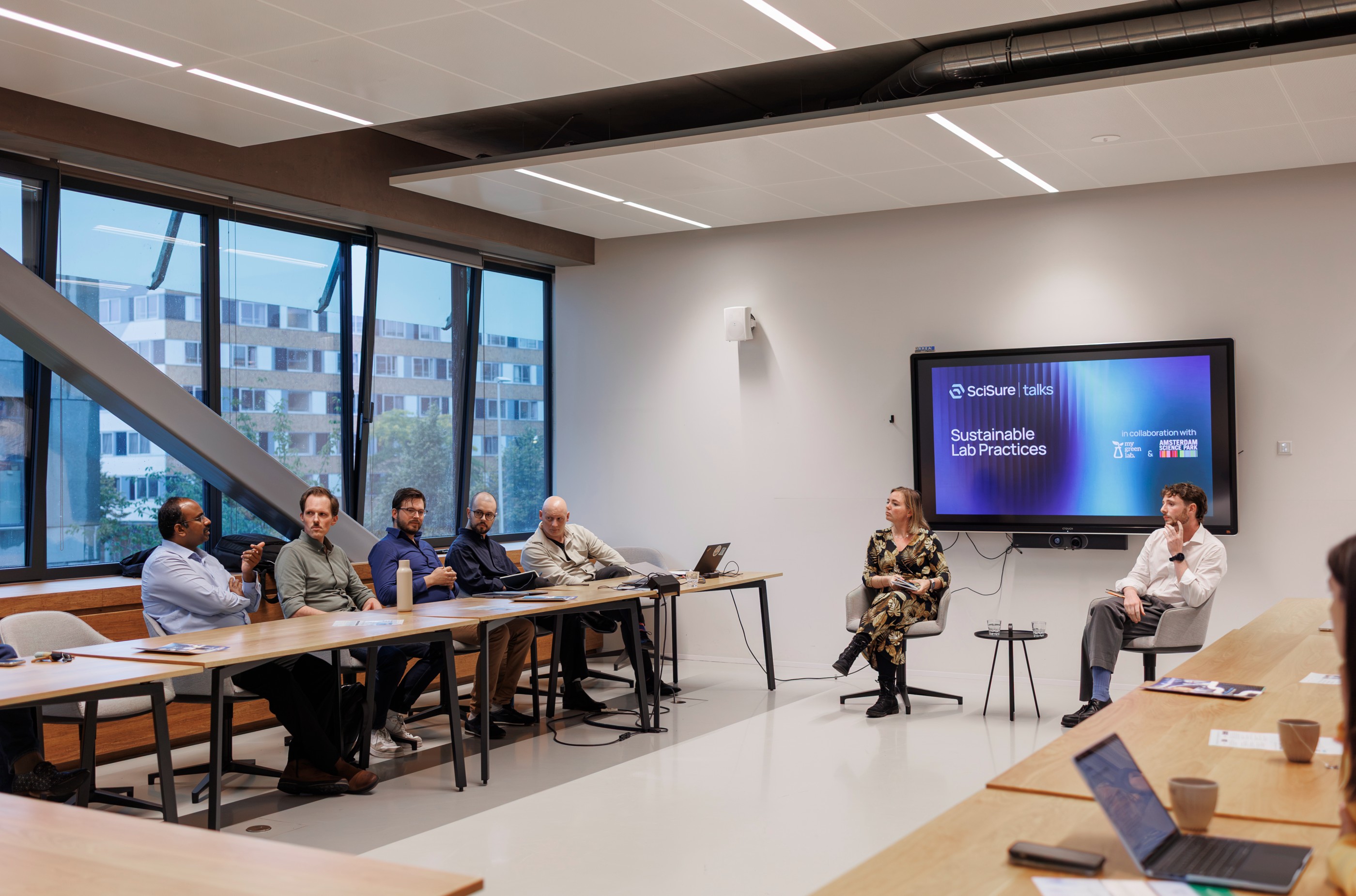
Zu den diskutierten Praxisbeispielen gehörten unter anderem:
- Das Einstellen von ULT-Gefrierschränken auf -70 °C statt auf -80 °C kann den durchschnittlichen Energieverbrauch um etwa 25 % senken. Ein einzelner -80 °C-Gefrierschrank verbraucht so viel Energie wie zwei niederländische Haushalte. Allein am UMC Utrecht gibt es rund 200 dieser Geräte, sodass sich die Wirkung einer vergleichsweise kleinen Änderung schnell summiert.
- Die regelmäßige Reinigung der Filter und Kondensatorschlangen von ULT-Gefrierschränken trägt zu einem effizienteren Betrieb bei. Ein verstopfter Filter allein kann den Energieverbrauch bereits um etwa 14 % erhöhen; in Kombination mit Staubablagerungen auf den Kondensatorschlangen ist der Effekt sogar noch größer.
- Initiativen wie die My Green Lab Freezer Challenge und Green Labs NL zeigen, wie individuelle Maßnahmen auf Team-, Labor- und Organisationsebene skaliert werden können und aus relativ kleinen operativen Änderungen eine messbare kollektive Wirkung entsteht.
„Wenn wir direkt von Organisationen erfahren, vor welchen Herausforderungen sie stehen und welche Schritte sie in Richtung nachhaltigerer Praktiken unternehmen, hilft das dabei, diese Gespräche in konkrete Taten umzusetzen.
Veranstaltungen wie diese sind die perfekte Gelegenheit, Menschen zusammenzubringen, Ideen auszutauschen und zu erkunden, wie Nachhaltigkeit in Laboren des gesamten wissenschaftlichen Sektors in die Praxis umgesetzt werden kann.“
- Aaron Desmond, Market Development Representative bei My Green Lab
Von der Diskussion zur Tat
Während eines von SciSure geleiteten Praxis-Workshops untersuchten die Teilnehmer Möglichkeiten in ihrem eigenen Laborumfeld, identifizierten Verbesserungspotenziale und entwickelten konkrete Ideen, die sie direkt in ihre Teams einbringen konnten.
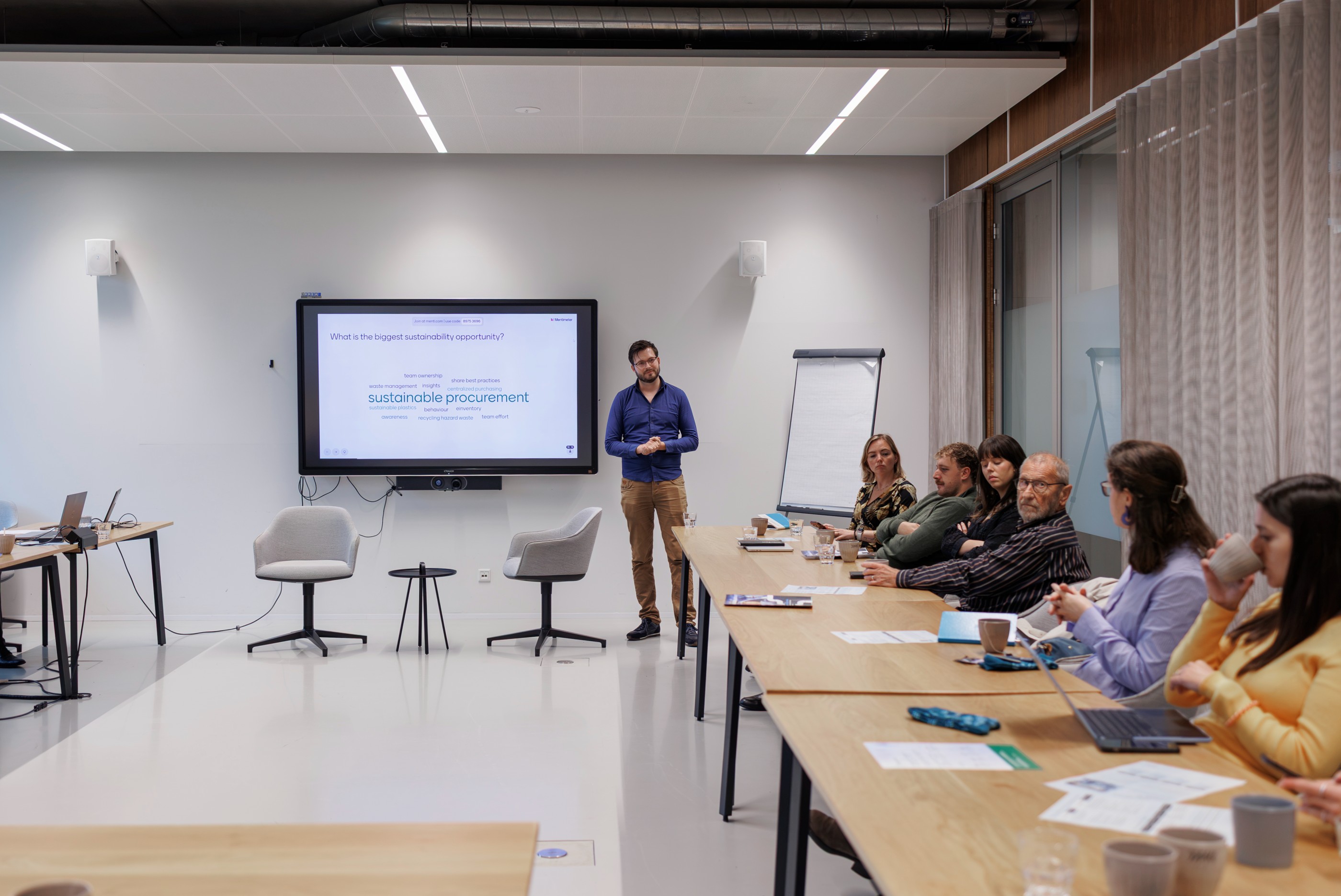
Ein Bereich, der während des Workshops angesprochen wurde, war die Rolle der Labordigitalisierung bei fundierteren Entscheidungen über Ressourcen. Wenn Bestandsdaten strukturiert und aktuell sind, können Teams doppelte Bestände identifizieren, Verbrauchsmuster und Verfallsrisiken überwachen sowie Einkaufsentscheidungen auf Basis des tatsächlichen Bedarfs statt auf Vermutungen treffen. Dies kann unnötige Beschaffungen und Materialverschwendung reduzieren und Laboren gleichzeitig eine solidere Grundlage bieten, um effizientere Ressourcennutzung zu ermöglichen.
Nachhaltigkeit ist Teil des Arbeitsablaufs
Nachhaltige Wissenschaft findet dort statt, wo Wissenschaftler Geräte, Chemikalien und Bestände verwalten, Materialien einkaufen, Forschung dokumentieren und tägliche operative Entscheidungen treffen.
Hier ergänzen sich My Green Lab und SciSure: My Green Lab bietet anerkannte Nachhaltigkeitsstandards, Zertifizierungen und Schulungen, während SciSure diese Praktiken mit der digitalen Umgebung verknüpft, in der die Laborarbeit verwaltet wird.
Orientierung → Arbeitsablauf → Verhalten → Wirkung
Nachhaltigkeitsrichtlinien werden Teil der bestehenden Laborabläufe und helfen Teams dabei, konsistente Praktiken zu etablieren sowie Fortschritte zu erzielen, die im Laufe der Zeit gemessen und dokumentiert werden können.
Voneinander lernen
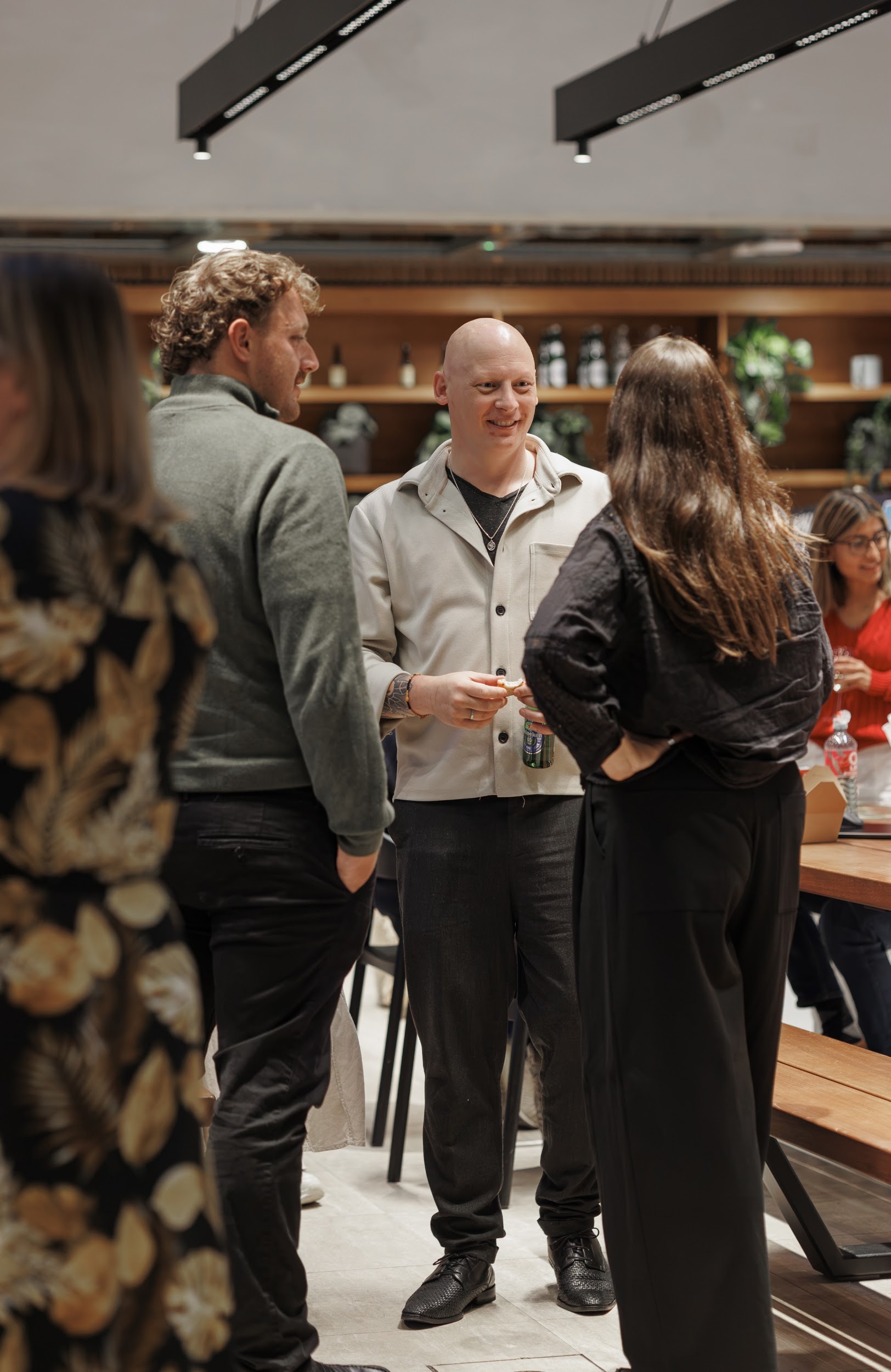
Der Abend klang mit Networking aus, wobei die Diskussionen aus den Vorträgen und dem Workshop im ganzen Raum fortgesetzt wurden. Die Teilnehmenden tauschten Erfahrungen aus ihren eigenen Laboren aus, verglichen Herausforderungen und gaben praktische Ideen weiter.
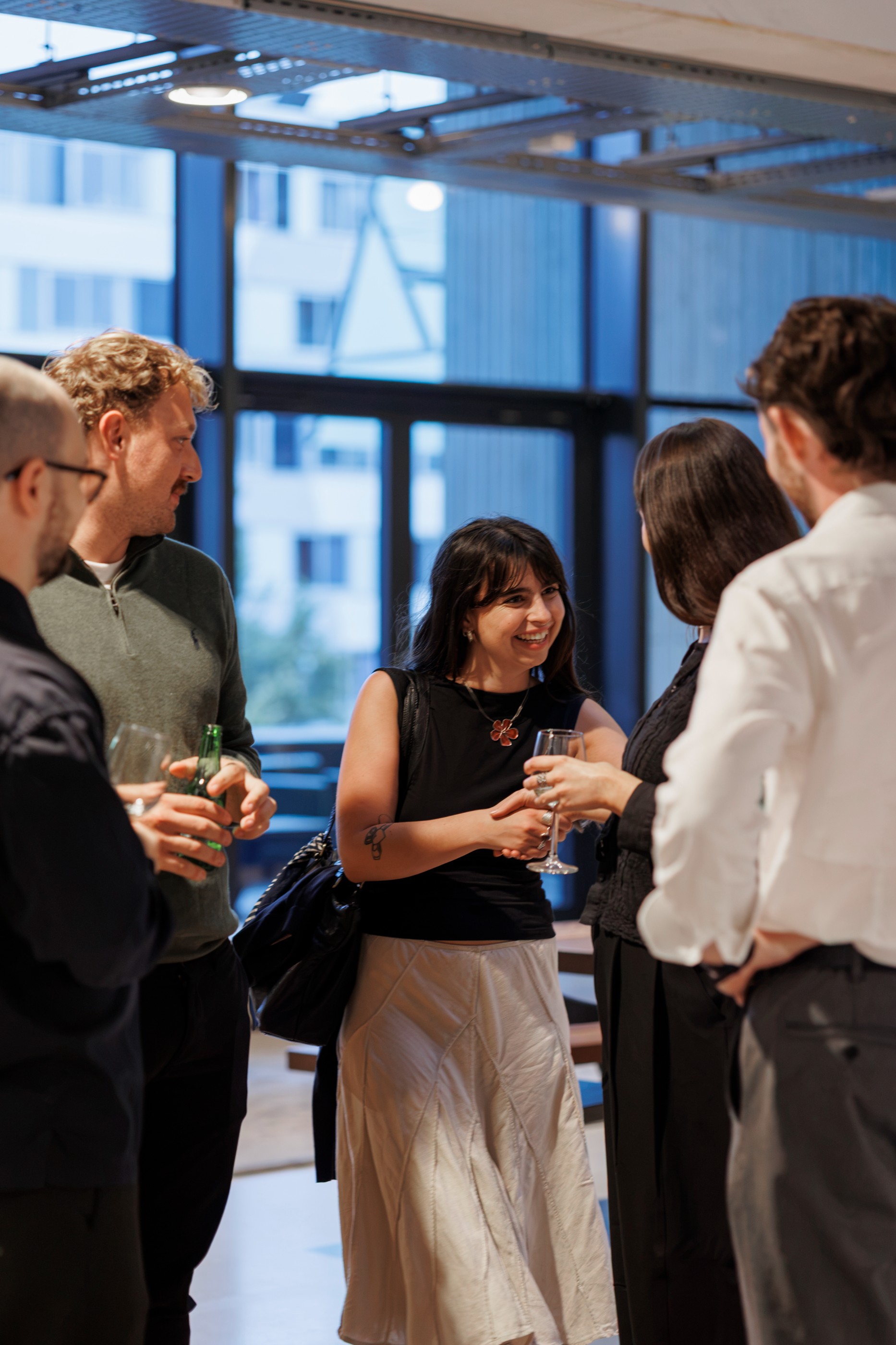
„Die Wissenschaft kommt schneller voran, wenn die Menschen dahinter vernetzt sind. Ein Labor nachhaltiger oder effizienter zu gestalten, schafft man selten allein. Abende wie dieser ermöglichen es, sich darüber auszutauschen, was in den eigenen Laboren tatsächlich funktioniert hat, aus den Fehlern anderer zu lernen und mit Ideen nach Hause zu gehen, die man direkt umsetzen kann.
Eine starke Gemeinschaft rund um das Labor und den wissenschaftlichen Bereich aufzubauen, ist der Weg, wie sich gute Praktiken verbreiten – ein ehrliches Gespräch nach dem anderen.“
– Jawahar Kopparam, LifeSciences Business Developer beim Amsterdam Chemistry Network.
SciSure Talks schafft einen Raum, in dem die Community nicht nur darüber diskutieren kann, wohin sich die Wissenschaft entwickeln muss, sondern auch von denjenigen lernen kann, die bereits Veränderungen vorantreiben. So lässt sich verstehen, was in der Praxis funktioniert, und dieses Wissen über ein einzelnes Labor, Team oder Event hinaus nutzbar machen.
Möchten Sie Teil der Community werden? Folgen Sie unserem Veranstaltungskalender , um kommende SciSure Talks, Meetups und weitere Gelegenheiten zu entdecken, bei denen Sie dabei sein können.
.jpg)
SciSure Talks Amsterdam: Nachhaltigkeit als festen Bestandteil des Laboralltags etablieren
Ein Rückblick auf unser SciSure Talks-Event in Amsterdam, veranstaltet in Partnerschaft mit My Green Lab und dem Amsterdam Chemistry Network (ACN).