Procurement and the Lab Are Already Connected. Your Software Just Doesn't Know It Yet.
Most labs know what they ordered. Far fewer know where it is or when it expires. That's why procurement, lab ops and safety belong in the room together.

Download Whitepaper
Ready to see SciSure in action?
No commitment · Free consultation
I was on a site visit in New York City not long ago when a customer walked me over to their chemical storage area. The room was in the wrong place. Not slightly inconvenient, but genuinely incompatible with how the lab runs. The architect had made the call; the build had started, and by the time anyone from EHS or lab operations saw it, the walls were already up.
A ten-minute conversation with the right people in the room would have caught it. Instead, they're stuck with it.
This story isn't really about architecture, but about what happens when the people who most need to weigh in on a decision are the last ones consulted or never consulted at all.
And in lab environments, it plays out constantly, not in concrete and drywall, but in purchase orders, inventory discrepancies, compliance gaps, and materials that expired in a cabinet before anyone knew they'd arrived.
Every lab order that a procurement team places lands in a scientist's hands. Every material that doesn't meet the needs of the researcher is a procurement decision that failed the organization, regardless of how well it performed on paper.
The question is whether the systems and culture around them acknowledge that these teams are connected. Most of the time, they don't.
We built the silos. That's on us.
For years, platforms were built to solve the loudest, most immediate pain point in front of them.
One company focused on becoming the best procurement engine on the market. Another built the most capable ELN. A third became a best-in-class EHS compliance tool. Each of those individual decisions was reasonable.
The cumulative result was a landscape of isolated solutions that didn't talk to each other, serving teams that increasingly needed them to.
We focused on the squeaky wheel. And in doing so, we set our customers up for exactly the kind of fragmentation they're now trying to undo.
This mindset has to shift, and it already is shifting. The question buyers should be asking today is, "Is this the best fit-for-purpose tool that can also connect to the other best-in-class solutions I rely on?"
If you are not asking the second half of that question, you are buying today's problem at tomorrow's price.
ZAGENO makes a version of this argument from the procurement side. Their piece on what LIMS and ELNs don't solve for lab inventory arrives at the same place we did from a different direction: most labs don't need one system that does everything, they need systems that actually talk to each other.
"I've had the opportunity to work with research organizations of all sizes, and one challenge comes up repeatedly: the systems that support science often don't communicate with one another.
Procurement, inventory, and laboratory workflows each solve an important piece of the puzzle, but researchers feel the friction when those pieces aren't connected.
The more organizations can unify these workflows, the more they enable scientists to focus on discovery instead of administration."
- Jim Spang, Director, Business Development & Strategic Partnerships, ZAGENO
What procurement doesn't know about the lab (and vice versa)
The best procurement teams I work with share one trait: they are acutely aware of what happens downstream from the decisions they make.
A classic example is when procurement sees a bulk purchasing option and runs the math on cost per unit. Buying ten looks better than buying two. What they often don't know is that the material has an 18-month shelf life, or the lab won't go through more than three of them before they expire, and the cost to dispose of the remaining seven will exceed what was saved on the bulk discount.
Meanwhile, those seven units need somewhere to live, and the shelving space in the lab is already spoken for. Cost aside, there is also an environmental impact of buying too much and moving it from storage to waste.
All this time, the lab has the data procurement needed to make a smarter decision.
Procurement has the sourcing power the lab needs to get the right materials at the best terms and shipping speed. When those two groups share information openly, and when inventory management connects to procurement in real time, these decisions stop being guesswork.
The same dynamic runs in the other direction. Lab operations teams that work best with procurement are those that clearly articulate the problem they're trying to solve, explain the business outcome they're working toward, and let procurement do what procurement does well: find the best solution at the best price.
The labs that communicate this way consistently get better materials, better pricing, and faster delivery.
The three teams that should always be in the room
When I work with customers on projects that touch procurement, inventory, safety, or compliance, one of the first things I look for is who has a seat at the table. As a genuine risk assessment, not just a courtesy check.
If health and safety teams aren’t present in a project that has a safety component, that's a red flag significant enough that we'll sometimes decline to move forward. You don't bring EHS in after the problem has occurred. You bring them in before the problem occurs because they have the knowledge to prevent it. Same with lab operations. Same with risk management.
There's a triangle that, when it's working properly, produces some of the most efficient and compliant lab environments I've seen:
- Procurement
Sourcing the right materials at the right price with the right shipping timeline
- Lab operations and research
Defining what "right" actually means for the science
- EHS and risk management
Ensuring those materials are safe, compliant, properly stored, properly disposed of, and logged correctly in regulatory reports
When all three points of that triangle are engaged, the organization gets materials that work, are safe, cost-effective, and don’t create downstream compliance liability.
When one or two points are missing, the triangle collapses. You end up with products that don't meet the scientific need, materials that create safety or compliance exposure, or bulk purchases that cost more to dispose of than they did to acquire.
Getting all three groups into the same conversation is how you stop paying twice for the same problem.
The real role of leadership here
I've seen two failure modes in leadership when it comes to lab and procurement integration.
The first is the hands-off approach: here are your tools, figure it out, come to us when something breaks. The second is the opposite: leadership decides on a direction without involving the teams who will actually live with the consequences. Both produce bad outcomes by different routes.
The role of good leadership in this context is narrower and more specific than most people make it: put the right people in the room before the decision is made and give those people the authority to meaningfully weigh in without fear of consequence.
That sounds simpler than it tends to be. Procurement may believe they own the process. LabOps may assume procurement will handle it. EHS may not be looped in until there's a compliance issue. Leadership's job is to set the expectation, early and clearly, that these groups share a common outcome and that the organization's goals are better served by collaboration than by any individual team's internal scorecard.
The way to get leadership buy-in for that kind of cultural shift is to connect it to what leadership is focused on.
If the organization is in growth mode, show how better procurement-to-inventory alignment accelerates the speed at which materials reach scientists, which accelerates the science itself. If the focus is on cost efficiency, show the true cost of duplicate orders, expired stock, non-compliant materials, and audit preparation time when systems aren't integrated. If the focus is on risk, show what a fragmented, manually managed chemical inventory looks like from an audit readiness standpoint.
The leadership argument is about risk, scale, and whether the organization can grow without building new problems into its foundation.
From sourcing to disposal: Why the gap in the middle is so expensive
Fragmented procurement-to-inventory management costs a tremendous amount in practice.
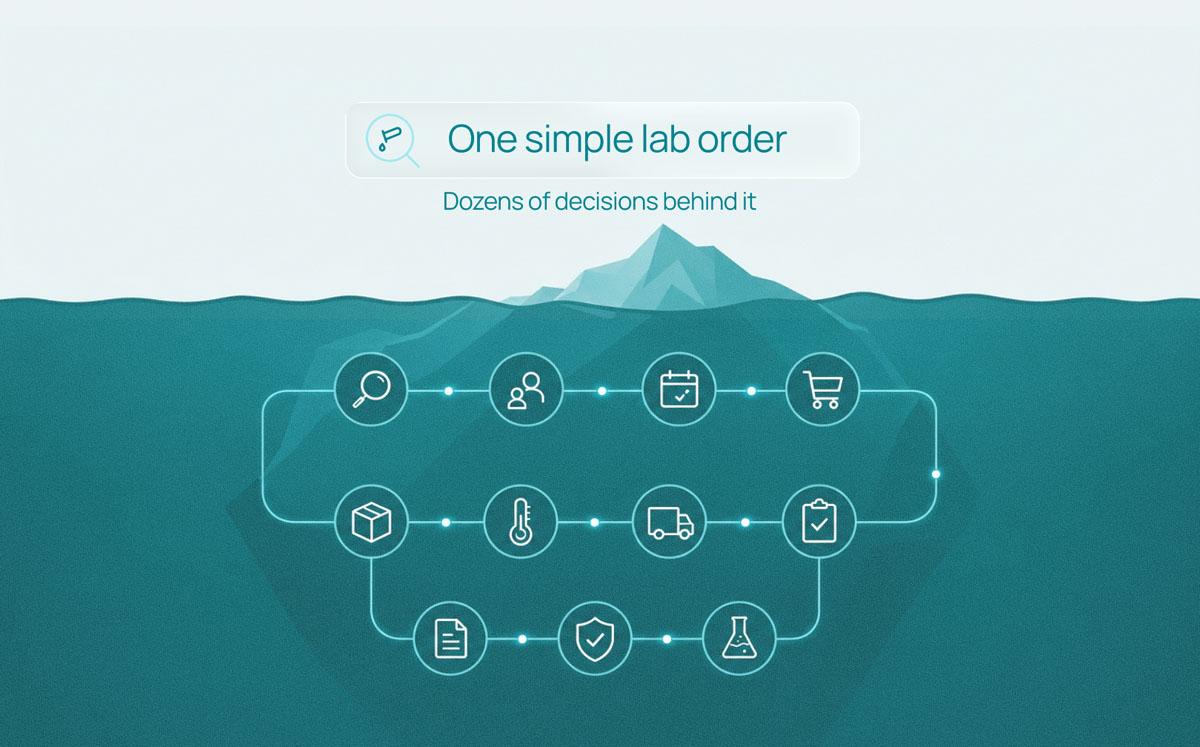
Most organizations I work with have visibility into what was ordered. They have significantly less visibility into where it is, what condition it's in, when it expires, and what happens to it at the end of life. That gap between "ordered" and "disposed of" is where the risk lives: compliance risk, safety risk, financial risk, and operational risk.
What connected procurement-to-inventory management does is to close that gap. Not by adding another tool to the stack, but by building the bridge between the tools that already exist.
When a material is sourced and ordered through a procurement platform like ZAGENO, that information flows directly into inventory management, with all the relevant data attached: what it is, where it's going, what the hazards are, what the storage requirements are, what the regulatory status is, and when it needs to be reviewed or disposed of.
No manual transcription. No hoping someone finds the box and puts it in the right place. A clear, auditable chain of custody from the point of sourcing through disposal with all responsible parties having access to the information in real time.
That's not a future state. It's attainable now.
What used to be a genuinely daunting integration challenge, connecting procurement engines to inventory platforms to EHS compliance tools to waste management, has become significantly more accessible, in large part because of what AI makes possible at the integration layer. The activation energy required to stand this up is materially lower than it was five years ago. Lowering that activation energy is the same principle that makes implementation the real starting line for return on investment. The fewer decisions and handoffs you push onto the customer, the sooner the system does anything useful.
The organizations that recognize this now will be operating on connected, audit-ready workflows while others are still maintaining the manual process and paying the price for it.
The business justification is not optional
If you're going to push for change, whether that's a new procurement integration, a connected inventory platform, or simply a commitment to getting procurement, lab ops, and EHS in the same room, don't skip the business justification. Go to leadership with a business case, not a project proposal or a wish list.
It's the same discipline that separates a real software evaluation from a price comparison. What a system actually costs only becomes visible once you add implementation, support, and the internal hours a stalled rollout consumes to the license fee. That's why implementing scientific management platforms at scale need an engaged team from the executive level to the end user.
The case should connect what you're proposing to what the organization is actually trying to achieve. Tie it to the organization's specific goals:
- How does this help science move faster?
- How does this reduce audit risk?
- How does this cut the cost of duplicate orders, expired materials, and excessive waste fees?
- How does this protect the organization from a compliance event that doesn't show up until it's already expensive?
Leadership is always asking the same fundamental question: is this worth our time, our money, and our attention right now? The business justification is your defensible answer to that question in writing. Without it, even a genuinely good idea tends to fizzle out, not because leadership doesn't care, but because they have no clear line of sight from your proposal to their priorities.
Build that line. Make it explicit. And get the right people in the room before the walls go up.
If you're putting that case together and want a second pair of eyes on it, talk to a SciSure specialist. We're happy to walk through what connected procurement-to-inventory looks like in practice, and what it takes to stand up.

Read more of our blogs about modern lab management
Discover the latest in lab operations, from sample management to AI innovations, designed to enhance efficiency and drive scientific breakthroughs.