Lab Sample Management: A Complete Guide for Enterprise & Smaller Labs
Learn how to improve lab sample management with best practices for tracking, storage, and traceability. See how a LIMS brings structure to your workflows.

Download Whitepaper
TL;DR
- Lab sample management spans the full lifecycle, from accessioning and barcoding through storage, tracking, and disposal.
- Poor sample management causes lost or degraded samples, weaker reproducibility, and audit exposure, costing labs like Euroimmun US and the University of Pittsburgh real time and reliability.
- Best practices include standardized intake, barcoded tracking, environmental monitoring, and linking samples to experiments, supported by SciSure capabilities such as configurable metadata and sample lineage, along with optional Barcode Automation and, for selected cloud groups in the current beta, Triggers & Automations.
- Different sample types, from biological to material samples, carry distinct storage needs, and common mistakes like mislabeling and manual tracking create outsized risk as sample volumes grow.
- SciSure, Benchling, and LabArchives are among the top LIMS and ELN platforms for R&D-focused sample management, each with different strengths in configurability, integration, and collaboration.
Ready to see SciSure in action?
No commitment · Free consultation
Research and regulated labs routinely manage hundreds or thousands of samples across multiple studies, storage locations, and team members. Keeping that volume of material accurately tracked, properly stored, and retrievable on demand is one of the more operationally demanding aspects of running a lab.
When lab sample management breaks down, the consequences are concrete: samples are lost or degraded, experiments have to be repeated, traceability gaps create compliance exposure, and research timelines slip. In regulated environments, the stakes are higher still. Incomplete or inconsistent records can compromise audit readiness and call the integrity of entire datasets into question.
This guide covers the full scope of laboratory sample management: what it includes, why it matters, and how labs can build more reliable, structured processes around it.
What is lab sample management?
Lab sample management is the structured process of handling, organizing, tracking, and retrieving samples across their full lifecycle. It covers the process from initial collection and accessioning through storage, active use, and final disposal. It also encompasses the procedures, records, and systems that ensure every sample can be located, identified, and traced at any point in that lifecycle.
Lab sampling refers to the collection stage, while sample management covers the broader lifecycle after a sample enters the lab system. This can include biological samples such as blood, tissue, and cell lines, as well as chemical samples, reagents, patient biopsies, and diagnostic material. Each sample type carries distinct storage, labeling, and documentation requirements.
In practice, sample management spans both physical processes and data management. Laboratory sample management software helps connect those processes by structuring records, supporting real-time tracking, and maintaining the documentation that regulated research environments require.
Key components of lab sample management
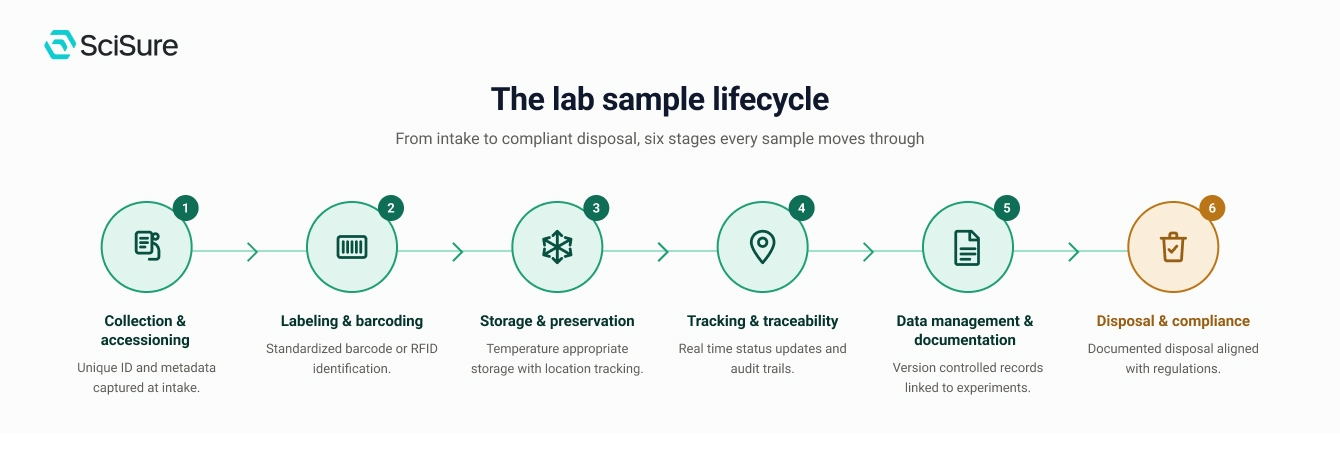
Sample collection and accessioning
Every sample enters the system at intake. At this stage, each sample receives a unique identifier and is documented with relevant metadata: source, collection date, sample type, and any conditions relevant to downstream use. Accurate accessioning at intake is the foundation for everything that follows.
Labeling and barcoding
Standardized labels ensure samples are consistently identified throughout their lifecycle. Barcode and RFID systems reduce the risk of manual labeling errors, support faster retrieval, and allow status updates to be recorded at the point of handling rather than after the fact.
Storage and preservation
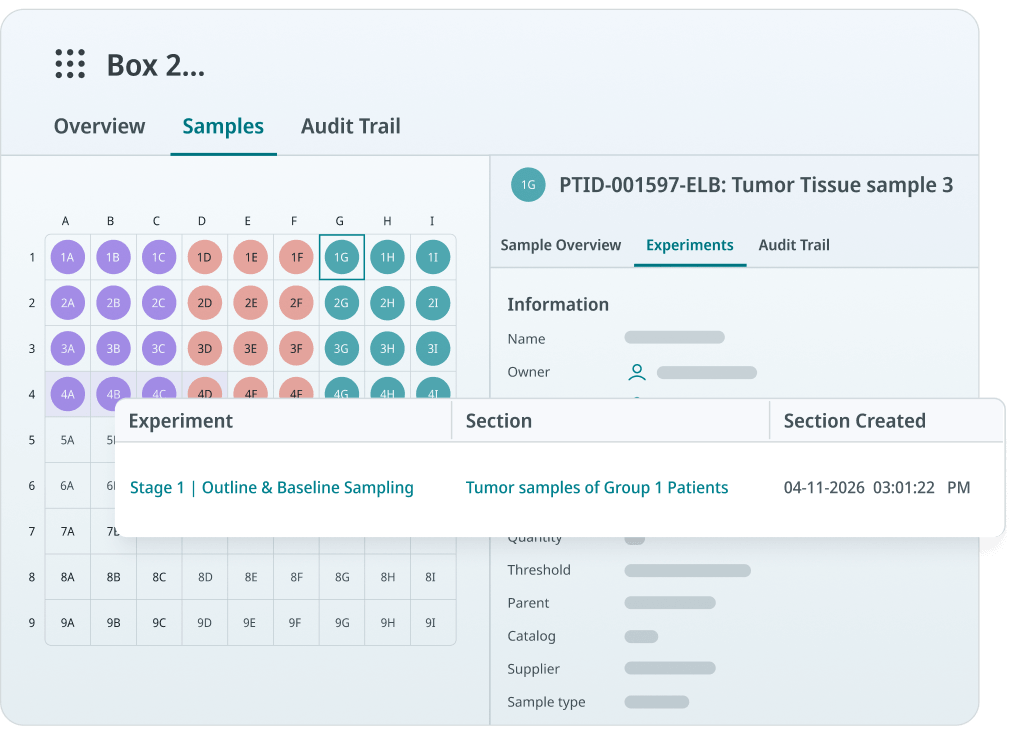
Samples must be stored under conditions appropriate to their type, whether ambient, refrigerated, or cryogenic. Storage hierarchies (freezer, shelf, rack, box, position) allow precise location tracking. Condition monitoring, including temperature logging and expiration alerts, reduces the risk of undetected degradation.
Tracking and traceability
Real-time location tracking and status updates give labs visibility into where each sample is, who has accessed it, and what has been done with it. Sample dispatch with accept/deny, check-out/check-in, and audit trails supports accountability across teams and sites without relying on informal communication.
Data management and documentation
Sample records should be structured, version-controlled, and linked to the experiments and protocols they support. This makes data retrievable across studies, supports reproducibility, and ensures that records remain accurate as samples are aliquoted, transferred, or updated over time.
Disposal and compliance
Disposal must be documented in line with applicable regulations, whether that involves biological waste protocols, chemical disposal requirements, or patient sample retention policies. A clear disposal record closes the sample's lifecycle and supports regulatory alignment during audits or inspections.
Why proper sample management matters
Poor sample management has measurable consequences across research quality, operational efficiency, and regulatory standing.
Sample loss and degradation are the most immediate risks. Without accurate location tracking and condition monitoring, samples are misplaced, subjected to unnecessary freeze-thaw cycles, or stored outside required parameters until they are no longer viable. Replacing lost or compromised samples costs time, reagents, and in some cases is not possible at all.
Reproducibility suffers when sample records are incomplete or inconsistent. If the history of a sample cannot be reconstructed, the validity of results derived from it’s difficult to defend, internally or in a regulatory context.
Audit and compliance exposure follows directly from documentation gaps. Inspectors expect complete, traceable records. Incomplete sample histories or undocumented disposals create risk that is difficult to remediate after the fact.
Before implementing structured sample management, the team at Euroimmun US relied on spreadsheets and staff memory to track samples, resulting in inconsistent sample status across departments and significant time spent reconciling data across document versions.
Keys to effective lab sample management
Reliable sample management depends on consistent processes applied across the full sample lifecycle. The following practices form the operational foundation.
Standardized intake and metadata capture.
Every sample should enter the system with a complete, consistent record: unique identifier, sample type, source, collection date, and any conditions relevant to storage or use. Gaps at intake compound downstream.
Barcoded identification and real-time location tracking.
Barcode labels assigned at accessioning allow samples to be scanned at each handling step, updating location and status without manual data entry. This reduces transcription errors and keeps records current.
Structured storage with environmental monitoring.
Storage should be organized in defined hierarchies and monitored for temperature, humidity, and other conditions relevant to sample stability. Automated alerts for out-of-range conditions allow issues to be caught before samples are compromised.
Linking samples directly to experiments and protocols.
Sample records become more useful when they are connected to the experiments and protocols that consume them. This supports reproducibility and makes it easier to trace which samples contributed to a given result.
Automated alerts for expiration, thresholds, and status changes.
Configurable alerts reduce reliance on manual checks. Your team can use Sample Threshold alerts for low stock and, where Triggers & Automations is enabled, configure notifications for approaching expiration dates or relevant field and status changes.
Staff training and access controls.
Consistent sample handling depends on staff understanding the system and their role within it. Role-based access controls limit the risk of unauthorized changes and maintain a clear record of who acted on a sample and when.
The difference these practices make is measurable. The University of Pittsburgh Behavioral Immunology Lab previously tracked sample locations on paper and transferred data manually to spreadsheets, making it difficult to locate specific samples or confirm how many remained available for a given study. After moving to structured sample tracking with SciSure, the lab reported a 50% improvement in the time spent tracking and managing samples. Barcode Automation also helped the team manage its ELISA kit inventory more efficiently.
How a LIMS helps with sample management
Many traditional LIMS platforms are built around manufacturing, clinical, or QA/QC environments, with structured intake processes, fixed testing workflows, and standardized outputs. A LIMS designed for R&D operates differently. Research labs need configurable sample tracking, flexible metadata, and the ability to connect sample records directly to experimental data as studies evolve.
In practice, this means samples can be registered with custom metadata fields, assigned parent-child relationships to track lineage across aliquots and derivatives, and linked directly to the electronic lab notebook records they relate to. That connection between sample data and experiment data is what makes records traceable and reproducible across a study's full duration.
For day-to-day operations, the Barcode Automation add-on supports scan-based updates to sample information and quantities, while the separate Sample Check-out add-on supports check-out/check-in. Sample Dispatch allows samples to be transferred to another group within the same organization and assigned to a user in the receiving group.
For larger operations, SciSure Cloud now supports native bulk updates for selected sample fields, while the free Sample Batch Import Marketplace add-on supports high-volume sample imports. Availability of the latest bulk-update functionality may depend on the organization’s hosting environment and release schedule.
Best platforms for lab sample management
Choosing the right lab sample management software depends on your lab's sample volumes, research complexity, and compliance requirements. The following three options are worth considering for R&D-focused sample management.
1. SciSure
SciSure is a highly configurable LIMS designed for the enterprise R&D sector. It supports configurable sample tracking with custom metadata, sample lineage and parent-child relationships, and real-time location and status tracking.
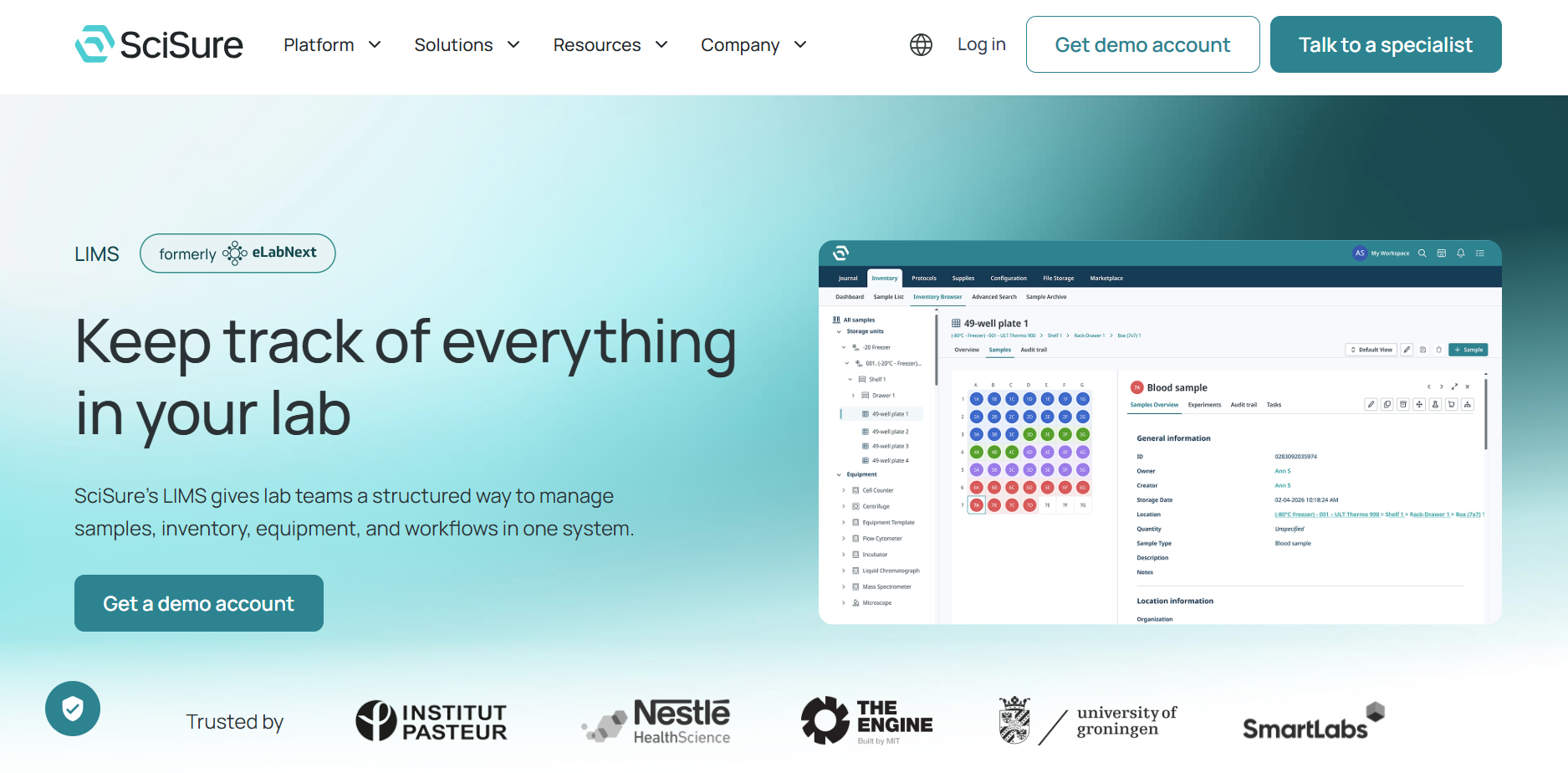
The optional Barcode Automation add-on enables scan-based updates to sample information and quantities. Where enabled, the beta Triggers & Automations feature can configure notifications, webhooks, or tasks based on sample events, field changes, and expiration dates, while low-stock alerts are managed through Sample Thresholds. Low-stock notifications are configured separately through Sample Thresholds, helping reduce manual monitoring across large sample sets. Samples connect directly to experiment records in the linked ELN, keeping research data and sample data easier to trace.
Trusted by 550,000+ scientists, EHS, and LabOps worldwide in 55,000+ laboratories, SciSure supports structured laboratory sample management for R&D teams with complex sample-handling needs.
2. Benchling
Benchling is a cloud-based platform built primarily for biotech and biopharma R&D. It combines LIMS and ELN capabilities with strong support for molecular biology workflows including sequence management, registry, and assay data. It's a good fit for organizations with structured biotech pipelines and the resources to configure and maintain a more complex system.
Benchling is generally best suited to biotech and biopharma teams that need configurable molecular biology, registry, and assay workflows. Prospective buyers should assess pricing, implementation requirements, and internal configuration resources directly with the vendor.
3. QBench
QBench is a cloud-based LIMS designed for laboratories that need structured, scalable sample management. It supports sample tracking from intake through storage and disposal, barcode and RFID workflows, configurable fields, search and filtering, and compliance-ready audit logs. It is a suitable option for testing, research, and service laboratories that prioritize operational sample tracking and standardized workflows.
4. Sapio LIMS
Sapio is a unified LIMS, ELN, and scientific data management platform built for research, clinical diagnostics, and GMP environments. It supports configurable sample tracking with lineage visibility, drag-and-drop storage management, bulk sample operations, and automated workflows in a no-code workflow designer. The AI assistant, ELaiN, supports experiment planning, data analysis, and workflow configuration through natural language prompts. Sapio is well suited to enterprise labs managing high sample throughput, complex multi-modal workflows, or multi-site operations that need deep instrument integration and GxP compliance support. Buyers should evaluate implementation requirements and pricing tiers directly with the vendor.
Types of lab sample
Laboratories across various fields handle diverse types of samples, each presenting unique challenges in terms of storage, preservation, and management. Understanding these sample types and their specific requirements is crucial for implementing effective sample management systems.
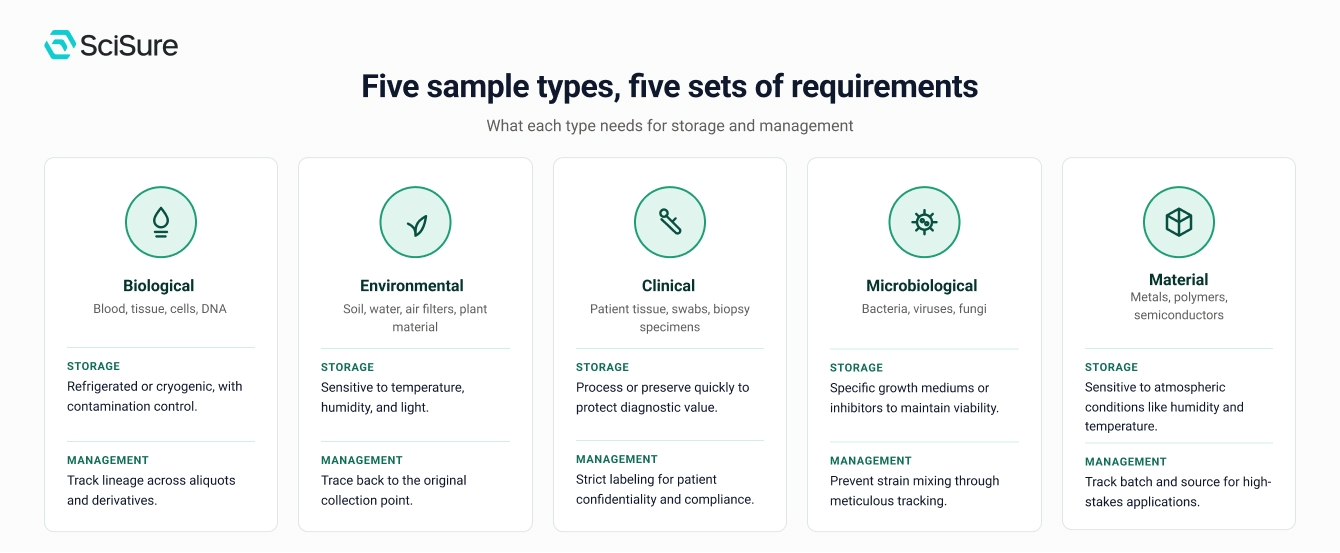
Biological samples
(Blood, tissues, cells, DNA)
- Storage
Biological samples often require precise temperature conditions, such as refrigeration or cryogenic storage, to prevent degradation. The risk of cross-contamination is also a concern, necessitating strict protocols.
- Management
Tracking the lineage and treatment of samples (e.g., aliquoted, stained) is vital, especially in biobanking, where samples may be stored for long periods and used in multiple studies.
Environmental samples
(Soil, water, air filters, plant material)
- Storage
These samples may change over time if not stored properly, with factors like temperature, humidity, and light affecting their integrity.
- Management
Traceability and the ability to link samples back to their collection point are essential.
Clinical samples
(Patient tissues, swabs, biopsy specimens)
- Storage
Many clinical samples are sensitive to environmental conditions and must be processed or preserved quickly to retain their diagnostic value.
- Management
Clinical samples require stringent labeling to protect patient confidentiality and ensure traceability. Compliance with health regulations and standards (e.g., HIPAA, GDPR) is also mandatory.
Microbiological Samples
(Bacteria, viruses, fungi)
- Storage
These require specific growth mediums or inhibitors to maintain viability or dormancy. Controlling contamination is particularly challenging given the infectious nature of many such samples.
- Management:
Ensuring that microbial strains are not mixed or contaminated during handling requires meticulous sample tracking and personnel training.
Material Samples
(Metals, polymers, semiconductors)
- Storage
Some materials may be sensitive to atmospheric conditions, such as humidity or temperature, which can alter their properties.
- Management
Tracking the batch and source of material samples is crucial, especially when these materials are used in high-stakes applications like aerospace or medical devices.
Each type of lab sample demands a tailored sample management strategy. This underscores the need for robust inventory and sample tracking systems that can accommodate the volume of samples, their tracking and labeling needs, and storage requirements.
Common pitfalls in lab sample management
Managing laboratory samples is a multifaceted task that brings a variety of challenges. When relying on traditional sample management systems, like error-prone manual labeling, these challenges become even more pronounced. Here are some common mistakes commonly made in lab sample management:
Mislabelling
Manual labeling, predominant in traditional sample management systems, is highly susceptible to human error. Incorrect, incomplete, or illegible labeling can lead to confusion in sample identification. Such errors compromise the integrity of data, undermining the reproducibility and reliability of research findings. Mislabelling can disrupt entire research projects or lead to incorrect patient diagnoses in clinical settings.
Lost or perished samples
Logbook-based sample management systems often lack robust tracking and monitoring mechanisms, making it easy for samples to be misplaced or improperly stored. Without precise, real-time tracking, samples can easily be left in non-optimal conditions, leading to degradation or spoilage. The loss or deterioration of samples can waste valuable resources, delay research progress, and result in irrevocable data loss in cases of irreplaceable samples (such as those from unique clinical trials).
Sample tracking mismanagement
As labs grow and sample volumes increase, manual tracking methods such as logbooks or spreadsheets become overwhelmed. These methods are time-consuming, prone to oversight, and often cannot be updated in real-time, creating bottlenecks in sample management. Inefficient sample tracking leads to delays in sample retrieval and can cause bottlenecks in data analysis, reducing the overall efficiency and responsiveness of research activities.
Errors in sample management can have far-reaching consequences, from compromised patient diagnoses to invalidated research findings. To minimize the incidence of these errors, many labs are turning to digital lab solutions.
Digital lab sample management solutions
Adopting digital lab solutions is a highly effective strategy for enhancing and streamlining lab sample management processes. A number of technologies are available to support these improvements. For example, a platform that combines a Laboratory Information Management System (LIMS) with an Electronic Lab Notebooks (ELNs) centralizes sample management, storage data, study data and protocols on a real-time updated and accessible platform. Meanwhile, specialized inventory management systems automate numerous aspects of sample management and tracking, significantly boosting efficiency.
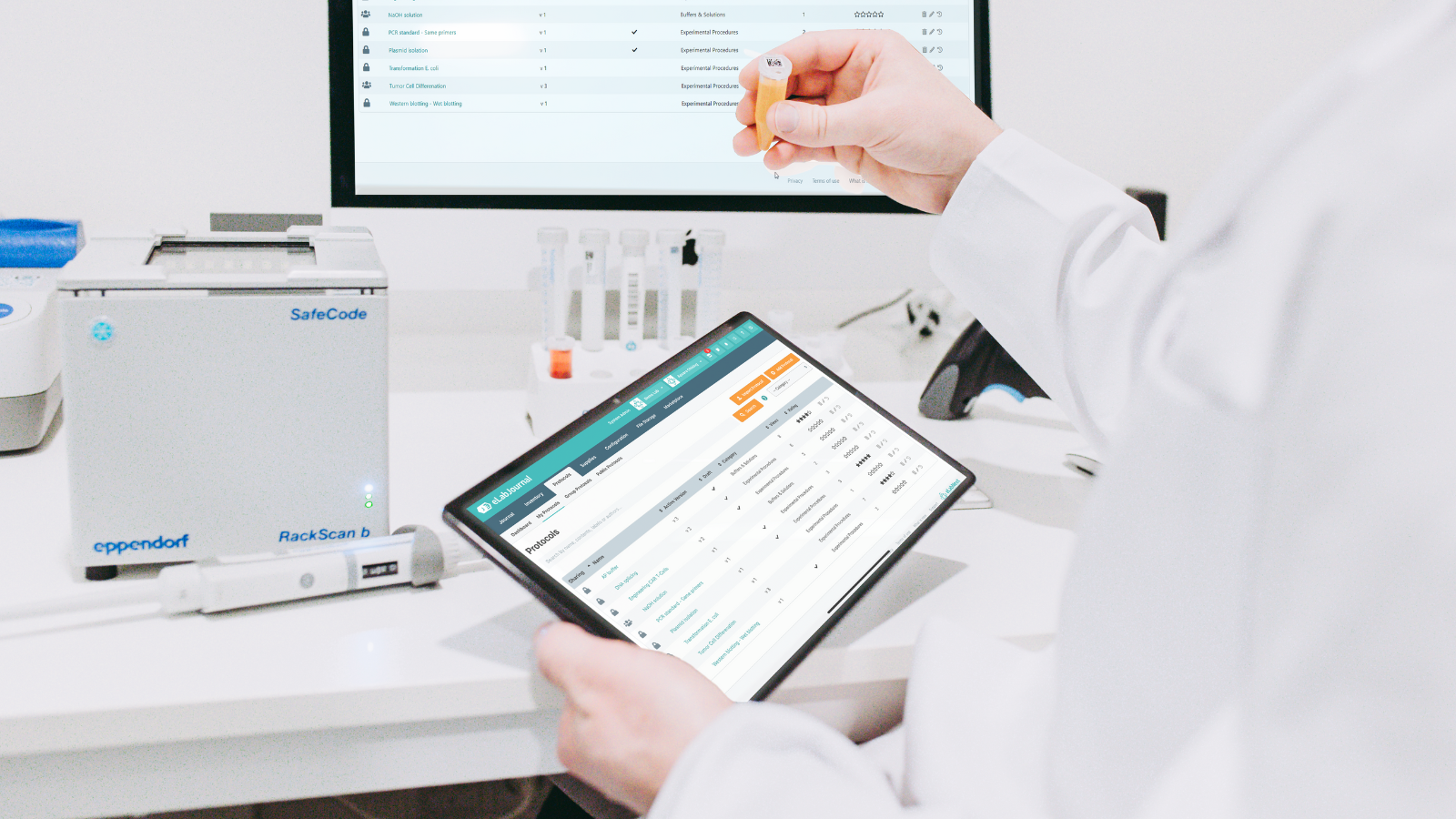
These tools not only simplify daily operations but also ensure that data is consistently accurate and easily retrievable. Digital solutions offer a range of features to streamline and strengthen lab sample management:
Automation
Digital lab solutions such as SciSure, as a standalone Laboratory Information Management System (LIMS) or complete Digital Lab Platform, automate sample tracking, data entry, and storage management. Automating these critical processes minimizes human error while enhancing operational efficiency. ensures that every sample action is accurately logged and standardized, leading to fewer errors and consistent handling procedures.
Barcode labeling and tracking
By incorporating barcode systems, labs can ensure precise tracking of each sample from collection to disposal. Barcode tracking simplifies the retrieval and auditing of samples, allowing for a seamless flow of information throughout the sample's lifecycle. The use of barcode ID virtually eliminates the risks associated with manual sample labeling, drastically reducing errors in sample handling and processing.
Enhanced documentation and reproducibility
Digital lab solutions play a crucial role in enhancing the documentation and reproducibility of experiments. By integrating an ELN, researchers can maintain detailed, time-stamped records of samples during storage and research.
Centralized sample data
Digital platforms such as LIMS and ELNs serve as a centralized repository for all sample information, facilitating easy access and data sharing across the lab. SciSure offers real-time sample tracking data among lab members, accessible from anywhere. Centralized systems also enhance data security and facilitate compliance with regulatory standards.
Customizable workflows
ELNs, LIMS, and inventory management solutions such as SciSure can be customized to fit the specific needs of individual labs, optimizing sample management processes.
The adoption of digital tools in laboratory environments is not merely a trend but a pivotal shift towards more sophisticated, efficient, and error-resistant sample management. As labs continue to modernize, the integration of technologies such as ELNs and digital inventories will become increasingly essential.
5 top tips to improve your lab's sample management processes
Implementing digital solutions is just one aspect of effective sample management. There are a number of best practices that you can adopt to optimize your processes and minimize errors. Here are our top five tips to improve your sample management system:
1. Standardize protocols and procedures
Develop and enforce standardized protocols for all sample-related activities, from collection to storage to disposal. Clear, consistent guidelines and SOPs help reduce errors and improve efficiency, ensuring that all team members follow the same procedures.
2. Implement robust training programs
Regularly train all personnel on the latest sample management practices and technologies. Comprehensive training ensures that staff are proficient in both manual and automated systems, which is crucial for maintaining the integrity and accuracy of samples.
3. Regularly audit and update your systems
Conduct periodic audits of your sample management system to identify areas for improvement. Regularly updating your processes and systems in response to new technologies, changes in compliance regulations, or internal reviews can help you stay ahead of potential issues.
4. Maintain a contingency plan
Prepare for unexpected events, such as power outages, equipment failures, or natural disasters, by having a robust contingency plan in place. This should include backup storage solutions and detailed plans for protecting and recovering samples to prevent loss and ensure continuity of operations.
5. Ensure robust labeling and tracking
Consistent, accurate sample labeling and tracking are crucial for maintaining the integrity of samples and ensuring their traceability. Digital lab solutions are the easiest way to achieve this, bringing invaluable automated labeling and tracking capabilities to eliminate human error, streamline processes, and ensure accurate data management.
These tips are applicable to labs of all disciplines and sizes. By embracing these best practices, you can be sure to improve operational efficiency and research outcomes.
FAQs
What does a LIMS do for sample management?
A LIMS replaces spreadsheets, paper logs, and freezer maps with a structured digital system. It connects sample identity, location, metadata, lineage, and experimental context in one place, so your team stops relying on whoever last updated the shared tracker.
What specific tasks does a LIMS handle?
A LIMS helps your team:
- Register samples with standardized metadata, including sample type, collection date, owner, and storage location
- Track lineage and parent-child relationships across aliquots and derivatives
- Assign barcodes or RFID tags for fast, accurate lookup
- Log every action through a complete audit trail
- Link samples directly to experiment records so nothing falls through the gap
Does a LIMS work alongside an ELN?
Yes, and that connection matters. At the University of Pittsburgh Behavioral Immunology Lab, linking sample tracking to experiment records made it possible to maintain research continuity across complex longitudinal studies. SciSure's integrated ELN and LIMS gives teams that same foundation: samples are searchable, linked to experiments, and tracked from accessioning through disposal, without needing a separate system for each part of the workflow.
What are the most common sample management mistakes?
The four most common pitfalls are mislabeling, inconsistent metadata, untracked storage locations, and no clear chain of custody. Each one is preventable, but only if your systems are built to catch them early.
How do you prevent mislabeling?
Barcode samples at the point of creation, and use a LIMS that validates the label against the registered record. Euroimmun US implemented this kind of structured intake workflow with SciSure, cutting the manual steps between sample receipt and downstream processing.
What happens when sample metadata is incomplete?
A sample without complete metadata is hard to find, hard to trust, and often unusable for reporting or reanalysis. Setting mandatory fields and standardized sample types before samples are registered stops the problem from building up over time.
How do you keep track of where samples are stored?
Use a LIMS with structured storage unit mapping and compartment-level tracking. When a sample is moved or consumed, the record updates automatically. Scientists can find what they need without opening five drawers or asking three colleagues.
Why does chain of custody matter?
Knowing who handled a sample and when is what lets you defend your data when a result gets questioned. Audit trails and check-in/check-out logs are not just compliance features. They are the record that holds everything together.
What about samples that are disposed of or consumed?
Samples discarded without a formal record create traceability gaps that are difficult to close after the fact. Structured disposal workflows document the end of a sample's lifecycle and keep the inventory accurate.
What is the root cause of most sample management problems?
When sample management lives outside a governed system, errors stay invisible until they become expensive. A connected LIMS links sample records to experiments, storage, and audit history, so problems surface before they affect your research or your next audit.
Effective sample management is a critical component of modern laboratory operations, directly impacting research outcomes, productivity, and cost efficiency. If this sounds like the kind of lab you'd like to build, get in touch with us. We'll walk you through how to set up your lab, samples, and scientists for success, so you can focus on what you do best.
Read More:

Read more of our blogs about modern lab management
Discover the latest in lab operations, from sample management to AI innovations, designed to enhance efficiency and drive scientific breakthroughs.