The Hidden Cost of Manual Lab Data Entry & Poor Sample Management

Manual data entry and poor sample management cost labs more than most realize. Here's what the research shows and what better looks like in practice.

September 15, 2026
()
min read
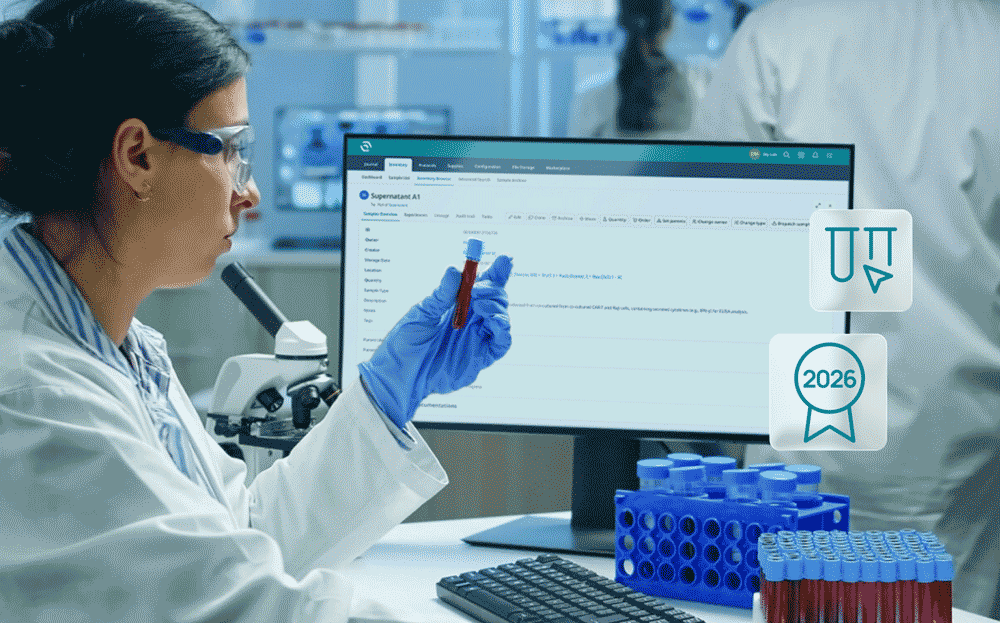
A laboratory

Download Whitepaper

By submitting this form, you agree with our Privacy Policy.
Thank you! Download the file by clicking below:
Download
Oops! Something went wrong while submitting the form.

Table of Contents

Thank you! Your submission has been received!
Oops! Something went wrong while submitting the form.

Table of Contents

TL;DR

Manual lab data entry and poor sample management cost research organizations far more than most realize: wasted time, expired samples, missed experiments, and in extreme cases, catastrophic and irreversible losses. Here's what the research shows, what a worst-case failure actually looked like, and what better sample management looks like in practice.

  • The real cost.
    Manual data entry and poor sample management drain time, waste materials, and create organizational vulnerabilities that compound quietly until they become serious. Two vendor-sponsored studies point to the scale of the problem, but you probably already feel it in your daily work.
  • When it goes wrong.
    The 2019 Karolinska Institutet freezer failure destroyed an estimated 34,400 biobank samples and thousands more. The root cause was organizational, not technical: unclear responsibilities, authorization gaps, and information that never reached the right people in time.
  • What labs gain by fixing it.
    Labs that have moved to structured digital sample management report outcomes like a 50% reduction in sample tracking time, retrieval shrinking from an hour to under a minute, and data management time cut by over 90%. With SciSure, teams can build the kind of traceable, searchable workflows that make those improvements possible.

Every scientist knows the feeling. You spend 20 minutes hunting for a sample that should be in rack B3, only to find an unlabeled tube in the wrong freezer, or a spreadsheet that was last updated six months ago by someone who no longer works in the lab. You make a judgment call, use the sample, and move on.

Multiply that moment across a team of researchers, every day, over months and years. The cost stops being invisible very quickly.

Manual data entry and poor sample management are two of the most persistent sources of wasted time and lost value in laboratory research. They tend to go unexamined precisely because they feel like a normal part of lab life: minor inconveniences rather than systemic problems. But the data, and some high-profile cautionary examples, tell a different story.

This post looks at what the research actually says about the burden of manual lab work, what happens when poor sample management reaches its most catastrophic extreme, and what labs that have addressed these problems have actually experienced on the other side.

What does the data say about manual lab work?

Two frequently cited sources in this space are worth examining, though each comes with an important caveat.

A 2020 report published through C&EN BrandLab, funded by MilliporeSigma, found that researchers spend a substantial portion of their working time on manual data entry, sample tracking, and administrative tasks rather than active science. The sponsored nature of that report matters: MilliporeSigma has a commercial interest in highlighting these inefficiencies, and the framing reflects that. Still, the core finding aligns with what most working scientists would recognize immediately from their own experience.

Likewise, a 2022 industry survey co-published by TetraScience and PharmaIQ, again a vendor-sponsored source, pointed to data management burden as a contributing factor to missed experiments and wasted reagents in pharmaceutical R&D. Vendor-published surveys should always be read with some skepticism about how questions were framed and which responses were emphasized. But the pattern they describe is consistent with broader research on scientific reproducibility and research efficiency.

What both sources point toward, even accounting for their commercial origins, is a familiar reality: time spent transcribing data between systems, searching for sample records, and reconciling inconsistent spreadsheets is time that is not being spent on science.

That trade-off compounds. When a researcher cannot locate a sample or verify its provenance, they face three bad options:

  • Delay their experiment,
  • Use a sample they are not fully confident in,
  • or start over.

None of these options is free.

There is also the question of expired materials. When sample storage is managed through shared spreadsheets or paper records, expiration dates get missed. Reagents degrade. Samples that could have been used in a window of time are discarded, or worse, used without knowing they should have been discarded. The waste is often invisible because it never appears in a budget line. It just shows up as failed experiments and unexplained variability.

SciSure
If your lab is still relying on spreadsheets or paper records to track samples, it's time to take a closer look at what that's actually costing you.
Get a customized walkthrough on how SciSure helps your lab (or labs) eliminate its sample management blind spots.
Talk to a specialist

When poor sample management becomes a catastrophe

In 2019, a freezer failure at the Karolinska Institutet in Stockholm resulted in the destruction of a large collection of biobank and research samples that had been accumulated over decades. Media estimates, including a report in The Guardian, put the value of the lost materials at approximately 500 million kronor, roughly £37 million or $47 million at the time. It's important to be clear that those figures were media estimates. The dean of the institute stated publicly that no official financial valuation had been made. The scale of the loss in absolute terms remains disputed.

What's not in dispute is the approximate scope of what was destroyed. Reports at the time cited approximately 34,400 biobank samples, 3,800 animal-model samples, 2,600 cell line samples, and 6,300 edited cell line samples. Many of these were described as irreplaceable: samples from longitudinal studies, patient cohorts, and research programs that had taken years or decades to build.

The investigation into the failure described a chain of organizational breakdowns. The problems centered on how responsibilities were assigned in job descriptions, where authorization for critical decisions sat, and how information was shared, or failed to be shared, between the people who needed it. Someone needed to know the freezer was failing. Someone needed to have both the authority and the clear responsibility to act. Those conditions were not in place.

That's the part of the story that tends to get less attention than the dramatic headline figure. A catastrophic sample loss of this kind is usually the accumulated result of unclear ownership, gaps in communication, and the absence of systems that would have made the problem visible before it became irreversible.

The organizational failure behind the headline

The Karolinska case is an extreme example, but the underlying organizational vulnerabilities it exposed are not rare. They're present, to varying degrees, in labs that rely on informal knowledge-sharing, undocumented workflows, and manual tracking systems.

When sample storage responsibilities are distributed across team members without formal records of who owns what, you create conditions where critical information lives in someone's memory or inbox rather than in a system. When no single point of accountability exists for monitoring storage conditions or inventory status, problems develop in the gaps between people's responsibilities. When information about equipment status, sample locations, or storage conditions is not systematically shared, decisions get made on incomplete knowledge.

None of this requires negligence. It can happen in well-run labs with competent, conscientious people. The problem is structural, not personal.

This is exactly why the shift from informal systems to structured digital workflows matters. Not because software eliminates human error, but because it makes the right information visible to the right people at the right time, and creates accountability that does not depend on any individual's memory or availability.
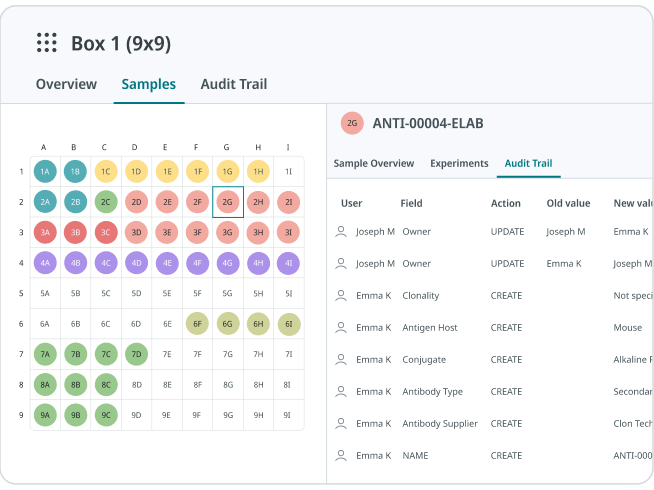
See the full history of any sample with SciSure LIMS

What better sample management looks like in practice

The University of Pittsburgh Behavioral Immunology Lab previously relied on paper records and Excel spreadsheets to manage their samples. The limitations of that approach are familiar to anyone who has worked in a similar environment: information siloed in individual files, no single source of truth, time spent reconciling records and hunting for samples.

After implementing structured digital sample management with SciSure, the lab reported a 50% improvement in the time spent on sample tracking and management. That's not a minor efficiency gain. For a research team, halving the time spent on administrative overhead represents a meaningful increase in the time available for actual science.

Likewise, the Lund University Department of Translational Medicine reported a different but equally striking improvement. Before implementing structured sample management, retrieving a specific sample could take up to an hour. After implementing SciSure, the same task took under a minute. Think about what that means across a working week, across a team, across a year of research. An hour-long search for a single sample, if it happens even a few times per week, represents days of lost research time per year per person. Reducing that to under a minute changes the operational reality of the lab.

Both outcomes reflect the same underlying shift: from systems where knowledge about samples lives in people's heads and disconnected files, to systems where samples are findable, traceable, and linked to the experiments they belong to.

SciSure
See how labs make this shift in practice.
Track samples by storage position. Retrieve in under a minute. Link every sample to the experiment it came from. Explore SciSure sample management or talk to a specialist.
Request a demo

Practical steps your lab can take to reduce manual burden and improve sample traceability

Audit your current tracking methods honestly

Before you can improve sample management, you need to understand what you are actually working with. Map out where sample information currently lives (paper logs, spreadsheets, shared drives, individual notebooks) and identify where records are duplicated, inconsistent, or absent. Pay particular attention to who holds critical knowledge that exists only in their head, and what would happen to that knowledge if they left.

Define ownership clearly and in writing

Ambiguity about who is responsible for maintaining sample records, monitoring storage conditions, and acting on problems is one of the most common organizational vulnerabilities in lab operations. Assign clear ownership for each part of your sample management workflow and document it. This does not need to be elaborate. A simple responsibility matrix is often enough, but it needs to exist outside anyone's memory.

Standardize your sample data before you migrate it

If you are planning to move from spreadsheets to a structured system, resist the temptation to import your existing data without cleaning it first. Inconsistent naming conventions, missing fields, and duplicated records create problems that are much harder to fix once they are inside a structured system. Invest time in defining your sample types, required fields, and naming standards before you start moving data.

Implement barcode or digital identifier tracking

One of the highest-leverage changes you can make is assigning physical identifiers (barcodes or similar) to your samples and linking them to digital records. This closes the gap between what is in your freezer and what is in your tracking system, and makes retrieval dramatically faster. With SciSure, teams can support barcode-driven sample tracking and storage location management, including the kind of position-level specificity that makes a sample findable in under a minute rather than over an hour, where that capability is configured and implemented.

Terminus Bio, a plant biotechnology company managing thousands of cell line samples, used SciSure's barcode automation to cut per-sample data entry from 2 minutes to 10 seconds. What used to require hours of manual record review could be analysed in real time, giving the team faster responses to technical issues and freeing up time they could redirect toward growing the business.
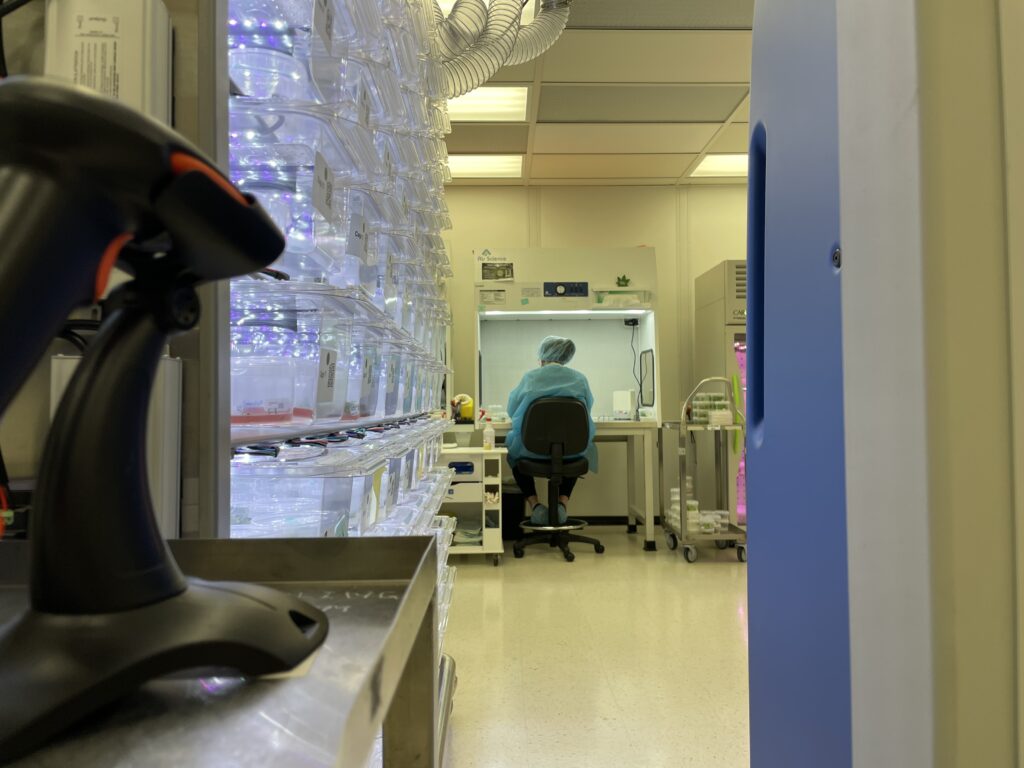
Barcode automation with SciSure at Terminus Bio

Connect sample records to experiment documentation

Sample tracking and experiment documentation are often treated as separate systems, which creates gaps in traceability. When a sample record is linked to the experiment where it was created and the experiments where it was used, you gain a full lineage picture. You can answer questions like "Which experiments used this sample?" or "Where did this sample originate?" without manual reconstruction. That connectivity is the difference between sample management as an administrative task and sample management as a scientific asset.

With SciSure, teams can connect ELN and LIMS records so that sample data is linked directly to the experimental entries that generated or consumed it, where that configuration is in place. Photanol, a biotech company using cyanobacteria to produce sustainable chemicals, found that a product sample could be traced all the way back to the first cloning step in just a few clicks, making it possible to connect every component and result across a full experiment workflow.

Build in expiration monitoring and automated alerts

Expired samples and reagents represent sunk costs that you cannot recover, and using them unknowingly creates experimental noise that is hard to diagnose. Structured inventory systems can monitor expiration dates and trigger alerts before materials reach their end of life, but only if the data is there in the first place. Start by ensuring every sample record includes a storage date and expiration date, and then build the workflow around that data.

With SciSure, teams can configure trigger-based automations that send alerts as expiration dates approach, where that capability is enabled, so problems surface before they become waste.

Stock expiration alerts with SciSure LIMS

Treat equipment monitoring as part of sample management

The Karolinska case is a reminder that sample integrity depends on storage conditions, and storage conditions depend on equipment. Monitoring freezer and refrigerator status, maintaining service records, and having clear escalation paths when equipment behaves abnormally are not separate from sample management. They are part of it. Make sure your equipment oversight is as structured as your sample records.

SciSure
Your samples are only as safe as the systems around them.
Set expiration alerts. Assign equipment owners. Link every sample to where it's been. See how SciSure supports sample traceability or request a demo.
Talk to a specialist

The cost of doing nothing

Most labs that are not managing samples well are not in crisis. The costs are diffuse: a researcher spends 45 minutes tracking down a sample instead of 3, an expired reagent creates a failed experiment that no one connects to a root cause, a freezer alarm goes unnoticed over a weekend. None of these events looks like a disaster in isolation.

But the researchers at Karolinska did not expect a disaster either. And the labs that the University of Pittsburgh and Lund University Behavioral Immunology and Translational Medicine teams were running before their improvements were probably functional in the same unobtrusive, inefficient way that most labs are functional.

The difference between those labs then and now is that someone asked a structural question: what would it look like if we could find any sample in under a minute? What would change if we cut our tracking overhead in half? And then they built the systems to make that possible.

If your lab is still answering those questions with paper records and spreadsheets, that is worth examining. Not because the current approach is failing dramatically, but because the gap between where you are and where you could be is almost certainly larger than it appears.

Interested in how SciSure supports sample tracking, storage management, and experiment traceability for research labs? Explore what structured sample management looks like in practice, or get in touch to talk through what your lab's specific workflow would require.

Frequently Asked Questions

What are the most common causes of sample management failures in research labs?

The most common causes are structural rather than technical: unclear ownership of sample records, tracking information spread across disconnected tools like spreadsheets and paper logs, no systematic monitoring of expiration dates or storage conditions, and a lack of formal processes for what happens when equipment fails or a team member leaves. These problems tend to compound quietly over time rather than producing a single visible failure.

How much time do researchers typically lose to manual data entry and sample tracking?

The figures vary by study, lab size, and research context, and the most frequently cited statistics come from vendor-sponsored surveys, so they should be read with some skepticism. That said, the general pattern is consistent: researchers in labs relying on manual tracking systems spend a meaningful portion of their working week on administrative and tracking tasks rather than active science. The practical examples from labs that have made this shift are telling.

  • The University of Pittsburgh Behavioral Immunology Lab cut sample tracking and management time by 50% after moving from paper records and Excel to structured digital systems.
  • Lund University's Department of Translational Medicine reduced sample retrieval from up to an hour to under a minute.
  • Photanol, an Amsterdam-based biotech, halved its overall administration time after switching from paper lab books to a digital platform.
  • And Terminus Bio, a plant biotechnology company, reduced per-sample data entry from 2 minutes to 10 seconds and cut overall data management time by over 90% after implementing barcode-driven workflows.

These outcomes span academic labs and growth-stage commercial operations, which suggests the burden of manual tracking is not unique to any one type of organization.

What is the difference between a LIMS and an ELN for sample management?

An Electronic Laboratory Notebook (ELN) is designed primarily for documenting experiments, capturing what was planned, performed, and observed. A Laboratory Information Management System (LIMS) is designed primarily for managing samples, materials, and associated workflows, including tracking sample location, lineage, quantity, and metadata. In practice, the most effective sample management connects both: experiments link to the samples they used or produced, and sample records link back to the experiments where they originated.

SciSure Research combines ELN and LIMS capabilities in a single environment, supporting this kind of connected traceability where configured. To learn more, check out our guide on the difference between ELN vs LIMS.

How do you migrate from spreadsheets to structured sample management without disrupting an active lab?

The most important step is to standardize and clean your existing data before migration rather than importing it in whatever state it is currently in.

  • Define your sample types, required fields, and naming conventions first.
  • Map your storage structure in the new system before assigning samples to locations.
  • Pilot the workflow with a subset of samples or a single team before rolling it out more broadly.
  • And plan for a period of parallel operation, maintaining both systems briefly, while confidence in the new system builds.

The goal is to reduce the risk of the transition, not to move fast. Check out our guide on migrating data and transitioning from one ELN to another to get a practical breakdown.

What should labs do to protect samples from storage equipment failures?

Beyond maintaining a service schedule for freezers and refrigerators, the most important protective measures are organizational: assign clear responsibility for monitoring storage conditions, document what the escalation path looks like when equipment behaves abnormally, and ensure that critical alerts reach someone who has both the authority and the knowledge to act. Equipment monitoring tools can provide real-time alerts, but those alerts need to reach people who know what to do with them. The Karolinska failure is a reminder that the technical alert is only as useful as the organizational system around it.

So if you're ready to close the gap, keep in mind that structured sample management starts with the right foundation. Explore SciSure Research to see how labs are building it, or talk to a specialist about your specific workflows.

Read More:

Ready to see SciSure in action?

Get a personalized demo and see how SciSure fits your lab's workflows.
Request demo

No commitment · Free consultation

Every scientist knows the feeling. You spend 20 minutes hunting for a sample that should be in rack B3, only to find an unlabeled tube in the wrong freezer, or a spreadsheet that was last updated six months ago by someone who no longer works in the lab. You make a judgment call, use the sample, and move on.

Multiply that moment across a team of researchers, every day, over months and years. The cost stops being invisible very quickly.

Manual data entry and poor sample management are two of the most persistent sources of wasted time and lost value in laboratory research. They tend to go unexamined precisely because they feel like a normal part of lab life: minor inconveniences rather than systemic problems. But the data, and some high-profile cautionary examples, tell a different story.

This post looks at what the research actually says about the burden of manual lab work, what happens when poor sample management reaches its most catastrophic extreme, and what labs that have addressed these problems have actually experienced on the other side.

What does the data say about manual lab work?

Two frequently cited sources in this space are worth examining, though each comes with an important caveat.

A 2020 report published through C&EN BrandLab, funded by MilliporeSigma, found that researchers spend a substantial portion of their working time on manual data entry, sample tracking, and administrative tasks rather than active science. The sponsored nature of that report matters: MilliporeSigma has a commercial interest in highlighting these inefficiencies, and the framing reflects that. Still, the core finding aligns with what most working scientists would recognize immediately from their own experience.

Likewise, a 2022 industry survey co-published by TetraScience and PharmaIQ, again a vendor-sponsored source, pointed to data management burden as a contributing factor to missed experiments and wasted reagents in pharmaceutical R&D. Vendor-published surveys should always be read with some skepticism about how questions were framed and which responses were emphasized. But the pattern they describe is consistent with broader research on scientific reproducibility and research efficiency.

What both sources point toward, even accounting for their commercial origins, is a familiar reality: time spent transcribing data between systems, searching for sample records, and reconciling inconsistent spreadsheets is time that is not being spent on science.

That trade-off compounds. When a researcher cannot locate a sample or verify its provenance, they face three bad options:

  • Delay their experiment,
  • Use a sample they are not fully confident in,
  • or start over.

None of these options is free.

There is also the question of expired materials. When sample storage is managed through shared spreadsheets or paper records, expiration dates get missed. Reagents degrade. Samples that could have been used in a window of time are discarded, or worse, used without knowing they should have been discarded. The waste is often invisible because it never appears in a budget line. It just shows up as failed experiments and unexplained variability.

SciSure
If your lab is still relying on spreadsheets or paper records to track samples, it's time to take a closer look at what that's actually costing you.
Get a customized walkthrough on how SciSure helps your lab (or labs) eliminate its sample management blind spots.
Talk to a specialist

When poor sample management becomes a catastrophe

In 2019, a freezer failure at the Karolinska Institutet in Stockholm resulted in the destruction of a large collection of biobank and research samples that had been accumulated over decades. Media estimates, including a report in The Guardian, put the value of the lost materials at approximately 500 million kronor, roughly £37 million or $47 million at the time. It's important to be clear that those figures were media estimates. The dean of the institute stated publicly that no official financial valuation had been made. The scale of the loss in absolute terms remains disputed.

What's not in dispute is the approximate scope of what was destroyed. Reports at the time cited approximately 34,400 biobank samples, 3,800 animal-model samples, 2,600 cell line samples, and 6,300 edited cell line samples. Many of these were described as irreplaceable: samples from longitudinal studies, patient cohorts, and research programs that had taken years or decades to build.

The investigation into the failure described a chain of organizational breakdowns. The problems centered on how responsibilities were assigned in job descriptions, where authorization for critical decisions sat, and how information was shared, or failed to be shared, between the people who needed it. Someone needed to know the freezer was failing. Someone needed to have both the authority and the clear responsibility to act. Those conditions were not in place.

That's the part of the story that tends to get less attention than the dramatic headline figure. A catastrophic sample loss of this kind is usually the accumulated result of unclear ownership, gaps in communication, and the absence of systems that would have made the problem visible before it became irreversible.

The organizational failure behind the headline

The Karolinska case is an extreme example, but the underlying organizational vulnerabilities it exposed are not rare. They're present, to varying degrees, in labs that rely on informal knowledge-sharing, undocumented workflows, and manual tracking systems.

When sample storage responsibilities are distributed across team members without formal records of who owns what, you create conditions where critical information lives in someone's memory or inbox rather than in a system. When no single point of accountability exists for monitoring storage conditions or inventory status, problems develop in the gaps between people's responsibilities. When information about equipment status, sample locations, or storage conditions is not systematically shared, decisions get made on incomplete knowledge.

None of this requires negligence. It can happen in well-run labs with competent, conscientious people. The problem is structural, not personal.

This is exactly why the shift from informal systems to structured digital workflows matters. Not because software eliminates human error, but because it makes the right information visible to the right people at the right time, and creates accountability that does not depend on any individual's memory or availability.

See the full history of any sample with SciSure LIMS

What better sample management looks like in practice

The University of Pittsburgh Behavioral Immunology Lab previously relied on paper records and Excel spreadsheets to manage their samples. The limitations of that approach are familiar to anyone who has worked in a similar environment: information siloed in individual files, no single source of truth, time spent reconciling records and hunting for samples.

After implementing structured digital sample management with SciSure, the lab reported a 50% improvement in the time spent on sample tracking and management. That's not a minor efficiency gain. For a research team, halving the time spent on administrative overhead represents a meaningful increase in the time available for actual science.

Likewise, the Lund University Department of Translational Medicine reported a different but equally striking improvement. Before implementing structured sample management, retrieving a specific sample could take up to an hour. After implementing SciSure, the same task took under a minute. Think about what that means across a working week, across a team, across a year of research. An hour-long search for a single sample, if it happens even a few times per week, represents days of lost research time per year per person. Reducing that to under a minute changes the operational reality of the lab.

Both outcomes reflect the same underlying shift: from systems where knowledge about samples lives in people's heads and disconnected files, to systems where samples are findable, traceable, and linked to the experiments they belong to.

SciSure
See how labs make this shift in practice.
Track samples by storage position. Retrieve in under a minute. Link every sample to the experiment it came from. Explore SciSure sample management or talk to a specialist.
Request a demo

Practical steps your lab can take to reduce manual burden and improve sample traceability

Audit your current tracking methods honestly

Before you can improve sample management, you need to understand what you are actually working with. Map out where sample information currently lives (paper logs, spreadsheets, shared drives, individual notebooks) and identify where records are duplicated, inconsistent, or absent. Pay particular attention to who holds critical knowledge that exists only in their head, and what would happen to that knowledge if they left.

Define ownership clearly and in writing

Ambiguity about who is responsible for maintaining sample records, monitoring storage conditions, and acting on problems is one of the most common organizational vulnerabilities in lab operations. Assign clear ownership for each part of your sample management workflow and document it. This does not need to be elaborate. A simple responsibility matrix is often enough, but it needs to exist outside anyone's memory.

Standardize your sample data before you migrate it

If you are planning to move from spreadsheets to a structured system, resist the temptation to import your existing data without cleaning it first. Inconsistent naming conventions, missing fields, and duplicated records create problems that are much harder to fix once they are inside a structured system. Invest time in defining your sample types, required fields, and naming standards before you start moving data.

Implement barcode or digital identifier tracking

One of the highest-leverage changes you can make is assigning physical identifiers (barcodes or similar) to your samples and linking them to digital records. This closes the gap between what is in your freezer and what is in your tracking system, and makes retrieval dramatically faster. With SciSure, teams can support barcode-driven sample tracking and storage location management, including the kind of position-level specificity that makes a sample findable in under a minute rather than over an hour, where that capability is configured and implemented.

Terminus Bio, a plant biotechnology company managing thousands of cell line samples, used SciSure's barcode automation to cut per-sample data entry from 2 minutes to 10 seconds. What used to require hours of manual record review could be analysed in real time, giving the team faster responses to technical issues and freeing up time they could redirect toward growing the business.

Barcode automation with SciSure at Terminus Bio

Connect sample records to experiment documentation

Sample tracking and experiment documentation are often treated as separate systems, which creates gaps in traceability. When a sample record is linked to the experiment where it was created and the experiments where it was used, you gain a full lineage picture. You can answer questions like "Which experiments used this sample?" or "Where did this sample originate?" without manual reconstruction. That connectivity is the difference between sample management as an administrative task and sample management as a scientific asset.

With SciSure, teams can connect ELN and LIMS records so that sample data is linked directly to the experimental entries that generated or consumed it, where that configuration is in place. Photanol, a biotech company using cyanobacteria to produce sustainable chemicals, found that a product sample could be traced all the way back to the first cloning step in just a few clicks, making it possible to connect every component and result across a full experiment workflow.

Build in expiration monitoring and automated alerts

Expired samples and reagents represent sunk costs that you cannot recover, and using them unknowingly creates experimental noise that is hard to diagnose. Structured inventory systems can monitor expiration dates and trigger alerts before materials reach their end of life, but only if the data is there in the first place. Start by ensuring every sample record includes a storage date and expiration date, and then build the workflow around that data.

With SciSure, teams can configure trigger-based automations that send alerts as expiration dates approach, where that capability is enabled, so problems surface before they become waste.

Stock expiration alerts with SciSure LIMS

Treat equipment monitoring as part of sample management

The Karolinska case is a reminder that sample integrity depends on storage conditions, and storage conditions depend on equipment. Monitoring freezer and refrigerator status, maintaining service records, and having clear escalation paths when equipment behaves abnormally are not separate from sample management. They are part of it. Make sure your equipment oversight is as structured as your sample records.

SciSure
Your samples are only as safe as the systems around them.
Set expiration alerts. Assign equipment owners. Link every sample to where it's been. See how SciSure supports sample traceability or request a demo.
Talk to a specialist

The cost of doing nothing

Most labs that are not managing samples well are not in crisis. The costs are diffuse: a researcher spends 45 minutes tracking down a sample instead of 3, an expired reagent creates a failed experiment that no one connects to a root cause, a freezer alarm goes unnoticed over a weekend. None of these events looks like a disaster in isolation.

But the researchers at Karolinska did not expect a disaster either. And the labs that the University of Pittsburgh and Lund University Behavioral Immunology and Translational Medicine teams were running before their improvements were probably functional in the same unobtrusive, inefficient way that most labs are functional.

The difference between those labs then and now is that someone asked a structural question: what would it look like if we could find any sample in under a minute? What would change if we cut our tracking overhead in half? And then they built the systems to make that possible.

If your lab is still answering those questions with paper records and spreadsheets, that is worth examining. Not because the current approach is failing dramatically, but because the gap between where you are and where you could be is almost certainly larger than it appears.

Interested in how SciSure supports sample tracking, storage management, and experiment traceability for research labs? Explore what structured sample management looks like in practice, or get in touch to talk through what your lab's specific workflow would require.

Frequently Asked Questions

What are the most common causes of sample management failures in research labs?

The most common causes are structural rather than technical: unclear ownership of sample records, tracking information spread across disconnected tools like spreadsheets and paper logs, no systematic monitoring of expiration dates or storage conditions, and a lack of formal processes for what happens when equipment fails or a team member leaves. These problems tend to compound quietly over time rather than producing a single visible failure.

How much time do researchers typically lose to manual data entry and sample tracking?

The figures vary by study, lab size, and research context, and the most frequently cited statistics come from vendor-sponsored surveys, so they should be read with some skepticism. That said, the general pattern is consistent: researchers in labs relying on manual tracking systems spend a meaningful portion of their working week on administrative and tracking tasks rather than active science. The practical examples from labs that have made this shift are telling.

  • The University of Pittsburgh Behavioral Immunology Lab cut sample tracking and management time by 50% after moving from paper records and Excel to structured digital systems.
  • Lund University's Department of Translational Medicine reduced sample retrieval from up to an hour to under a minute.
  • Photanol, an Amsterdam-based biotech, halved its overall administration time after switching from paper lab books to a digital platform.
  • And Terminus Bio, a plant biotechnology company, reduced per-sample data entry from 2 minutes to 10 seconds and cut overall data management time by over 90% after implementing barcode-driven workflows.

These outcomes span academic labs and growth-stage commercial operations, which suggests the burden of manual tracking is not unique to any one type of organization.

What is the difference between a LIMS and an ELN for sample management?

An Electronic Laboratory Notebook (ELN) is designed primarily for documenting experiments, capturing what was planned, performed, and observed. A Laboratory Information Management System (LIMS) is designed primarily for managing samples, materials, and associated workflows, including tracking sample location, lineage, quantity, and metadata. In practice, the most effective sample management connects both: experiments link to the samples they used or produced, and sample records link back to the experiments where they originated.

SciSure Research combines ELN and LIMS capabilities in a single environment, supporting this kind of connected traceability where configured. To learn more, check out our guide on the difference between ELN vs LIMS.

How do you migrate from spreadsheets to structured sample management without disrupting an active lab?

The most important step is to standardize and clean your existing data before migration rather than importing it in whatever state it is currently in.

  • Define your sample types, required fields, and naming conventions first.
  • Map your storage structure in the new system before assigning samples to locations.
  • Pilot the workflow with a subset of samples or a single team before rolling it out more broadly.
  • And plan for a period of parallel operation, maintaining both systems briefly, while confidence in the new system builds.

The goal is to reduce the risk of the transition, not to move fast. Check out our guide on migrating data and transitioning from one ELN to another to get a practical breakdown.

What should labs do to protect samples from storage equipment failures?

Beyond maintaining a service schedule for freezers and refrigerators, the most important protective measures are organizational: assign clear responsibility for monitoring storage conditions, document what the escalation path looks like when equipment behaves abnormally, and ensure that critical alerts reach someone who has both the authority and the knowledge to act. Equipment monitoring tools can provide real-time alerts, but those alerts need to reach people who know what to do with them. The Karolinska failure is a reminder that the technical alert is only as useful as the organizational system around it.

So if you're ready to close the gap, keep in mind that structured sample management starts with the right foundation. Explore SciSure Research to see how labs are building it, or talk to a specialist about your specific workflows.

Read More:

About the author:

Alisha Simmons-Ramirez

Alisha Simmons-Ramirez is a Strategic Account Executive at SciSure, where she works with biotech and pharma organizations to bring SciSure's platform into their labs. Her path into sales started at the bench: she ran release testing on drug products at Neovii Biotech GmbH and Kite Pharma using methods like HPLC, ELISA, and flow cytometry, documenting results under GMP and GDP standards. She later moved into commercial roles, promoting UV-Vis spectroscopy instrumentation to research labs at Implen before taking on full-cycle account work, from discovery through implementation and long-term adoption, with scientists and lab leadership across biotech and pharma. She holds a BS in Biochemistry from Mannheim University of Applied Sciences.

See all posts from this author

Sign up for our newsletter

Get the latest tips, articles, and exclusive content on modern lab management delivered to your inbox.
Thank you for subscribing!
Please check your email to verify your submission.
Oops! Something went wrong while submitting the form.