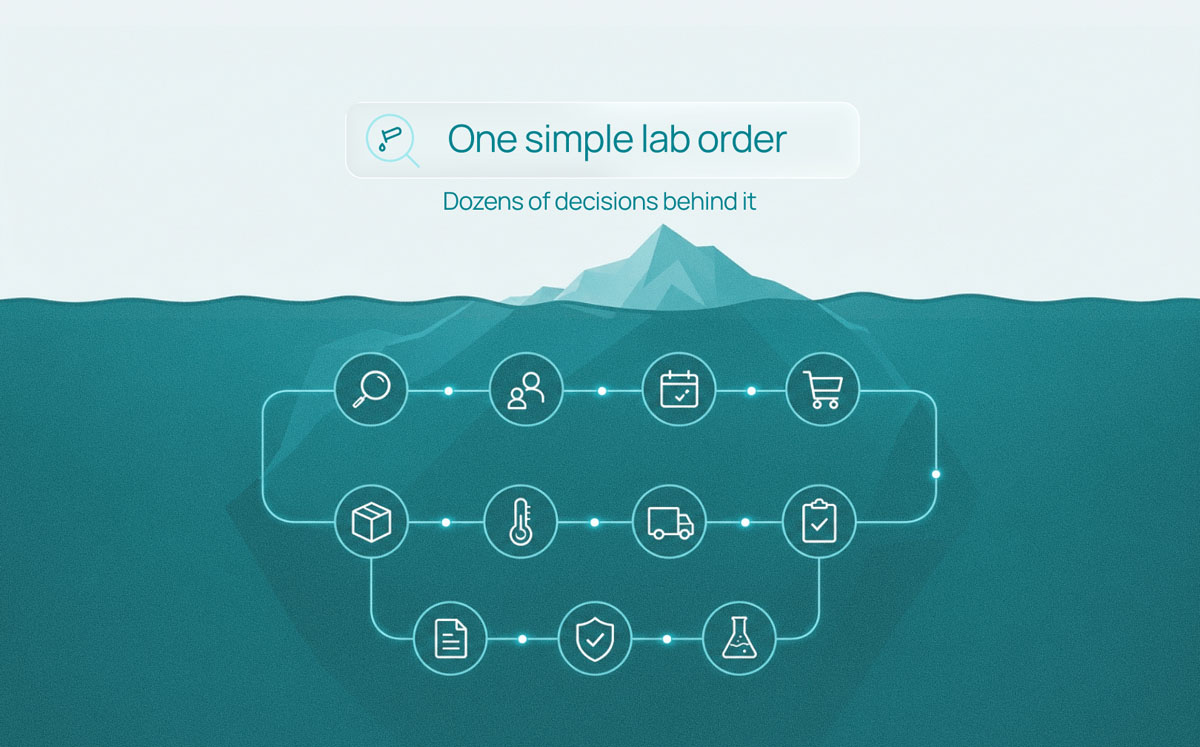
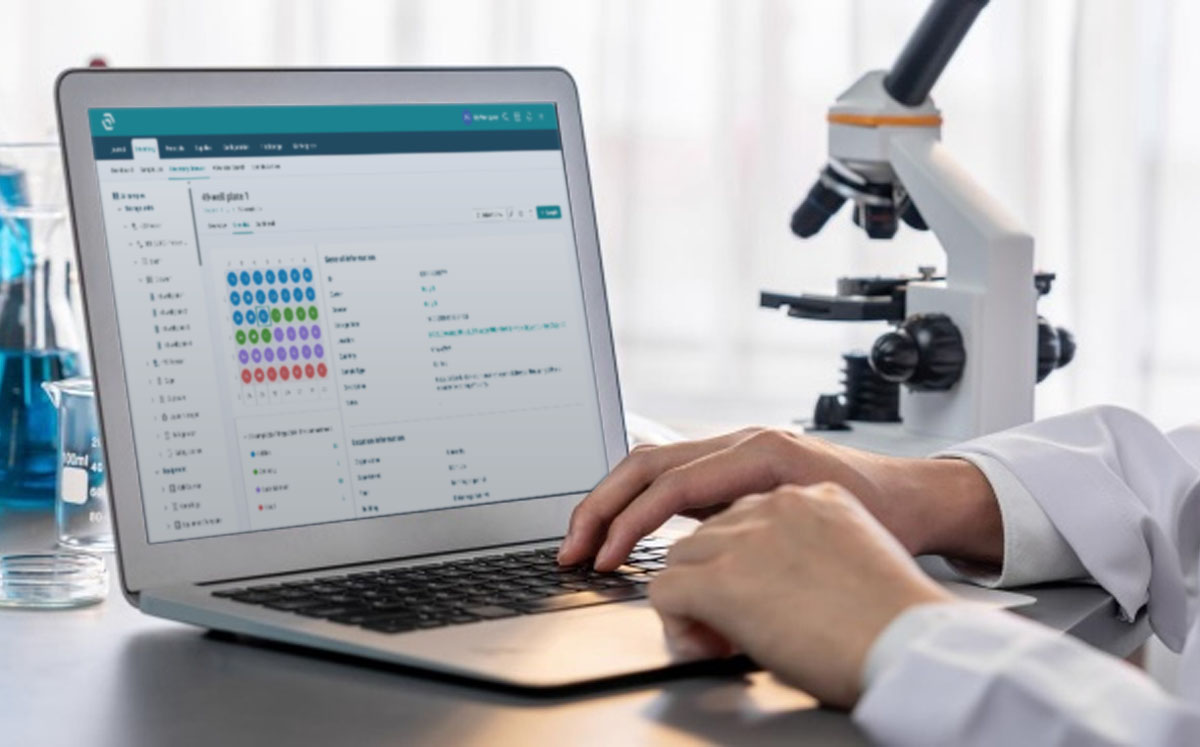
How to Manage Lab Operations: A Practical Guide for Lab Managers

Learn how to improve laboratory operations with sample tracking, inventory control, equipment maintenance, safety workflows and SciSure’s digital tools.

•
October 20, 2026
•
()
min read
A laboratory

Download Whitepaper

By submitting this form, you agree with our Privacy Policy.
Thank you! Download the file by clicking below:
Download
Oops! Something went wrong while submitting the form.

Table of Contents

Thank you! Your submission has been received!
Oops! Something went wrong while submitting the form.

TL;DR

Managing lab operations means coordinating samples, chemicals, equipment, protocols, people and safety processes so research runs consistently, with a clear owner for every record and handoff.
‍

  • What lab operations covers.
    ‍
    Laboratory operations cover sample and material tracking, equipment maintenance and calibration, protocols and experiment records, chemical inventories and safety data sheets (SDS), training, inspections and staff onboarding. These areas overlap constantly: receiving a chemical creates both an inventory task and a safety duty, so handoffs between teams need as much attention as the tasks themselves.
    ‍
  • Measure manual work first.
    ‍
    Before changing systems, track how long your staff spend locating samples, confirming quantities, fixing imports and building inventory, equipment or safety reports. Ten people losing 15 minutes daily adds up to 50 hours a month.
    ‍
  • Samples and chemicals.
    ‍
    Match inventory detail to the decisions your team makes, separating material, lot and physical item. Record movement and quantity changes where work happens, give stock and expiry alerts an owner, and update chemical records at receiving and relocation. SciSure Research supports mobile barcode scanning, and SciSure ChemTracker links containers to SDS information, used by Holobiome and SmartLabs respectively.
    ‍
  • Equipment and protocols.
    ‍
    Give each critical instrument an owner, location, maintenance or calibration schedule, latest service record and operating documentation in one place. Reuse protocols and experiment templates for repeated work, but record each run’s preparation date, reagent lots, resulting batch and deviations so another scientist can reconstruct exactly what was done.
    ‍
  • Close findings, pilot first.
    ‍
    Treat every inspection finding or near-miss as a task with an owner, location, due date, action taken and closure evidence, using shared definitions across sites. Roll out change through a small pilot, such as one freezer or chemical receiving process, importing existing spreadsheets and comparing search time, record accuracy and overdue actions against your baseline.

‍

This post was originally written in 2024 and updated in 2026 to include more in-depth Lab Operations-specific guidance spanning both research and safety workflows and updated social proof.

Managing lab operations means coordinating the materials, equipment, people, records and safety processes that keep laboratory work moving.

For a Lab Operations Manager, that involves more than knowing whether a reagent is in stock. You need to know where it is, whether enough remains, which lot was used in an experiment and who will update the record after someone moves or uses it. Alongside that, equipment needs servicing, new staff need training, and inspection findings need follow-up.

Effective laboratory operations management makes those responsibilities clear and keeps the information useful as work happens. Here’s how to build that approach across research and safety.

What’s involved in Lab Operations?

lab equipment and other symbols

Laboratory operations cover the practical systems that allow scientific work to happen consistently and safely. The scope varies between an academic research group, a growing biotech and a shared laboratory facility, but usually includes:

  • Samples and materials
    Registration, identification, locations, quantities, expiry dates, lineage and disposal.
  • Equipment
    Availability, maintenance, calibration, service records and operating documentation.
  • Procedures and research records
    Protocols, experiment documentation, review and retrieval.
  • Safety
    Chemical inventories, safety data sheets, training, inspections, incidents and corrective actions.
  • People and access
    Onboarding, responsibilities, permissions and continuity when staff leave.

There's a ton of overlap between these activities. Receiving a chemical creates an inventory task and a safety responsibility. Moving a sample changes its location record. Servicing an instrument produces documentation that researchers may need before using it again.

The handoffs between those activities deserve as much attention as the individual tasks.

Lab Operations essentials

how to manage lab operations -
  1. ‍Sample management is one of the core functions of a laboratory and involves tracking samples from receipt to final analysis. Without proper sample management, there is a risk of cross-contamination, mislabeling, or loss of samples, which can result in inaccurate results and compromise data integrity. 
  2. ‍Lab protocols make sure that scientific procedures are carried out consistently and in compliance with regulatory and industry standards. Proper protocol management involves the creation, approval and regular updating of SOPs (Standard Operating Procedures) that guide lab personnel in carrying out experiments accurately. Effective protocol management not only minimizes errors but also ensures reproducibility across experiments.
  3. ‍Data management is another pivotal operation within laboratories. It involves the systematic collection, storage, and analysis of data generated from experiments and testing. Effective data management ensures that data is accurate, retrievable, and secure. This is critical not only for the integrity of research findings and test results but also for maintaining compliance with regulatory standards.
  4. ‍‍Inventory control plays a vital role in lab operations, as it ensures that all necessary reagents and equipment are available when needed—without interruption. Proper inventory management helps to avoid unnecessary downtime that can delay experiments, as well as to prevent the wastage of resources and ensure cost efficiency.
  5. ‍Lab data security is essential for protecting digital assets within the lab environment. This includes the safeguarding of sensitive data, such as research findings, intellectual property, and personally identifiable information (PII), as well as the physical protection of lab samples, equipment, and reagents. Implementing strong data encryption, role-based access controls, and automated backups are key measures to ensure lab data security. 

Together, these operations form the backbone of effective and reliable lab management, ensuring that laboratories can fulfill their critical role in scientific discovery and industry quality assurance with efficiency and integrity.

SciSure Research
Bring structure to everyday lab operations
See how SciSure helps teams manage samples, protocols, inventory, and data in one connected system.
Request a demo

‍Who's responsible for Lab Operations?

The Lab Operations Manager coordinates the process, while researchers, technicians, EHS and other teams maintain the records associated with their work.

Who owns what in the lab: Roles and their operational responsibilities

Team or role Typical operational responsibility
Lab Operations Coordinate materials, equipment, purchasing, workflows, and record-maintenance responsibilities.
Researchers and technicians Record sample use and movement, document experiments, and report equipment or safety issues.
EHS Define safety requirements, review chemical information, conduct inspections, and oversee safety follow-up.
IT and system administrators Manage access, integrations, system configuration, and technical support.

The hidden costs of running a lab without digital tools

Manual work becomes expensive when staff repeatedly search for information, correct inconsistent records or reconstruct what happened. A location check might take a few minutes. Repeat it across researchers, samples and working days, and it becomes a meaningful operational burden. Reporting creates similar costs when someone must combine spreadsheets, resolve naming differences and recalculate totals every month.

In fact, a 2026 study at a medical genetics laboratory found that technologists spent at least 8 cumulative hours preparing quality-management reports manually. An internally developed, rule-based tool reduced preparation to 30 minutes.

So before changing systems, consider measuring a few recurring tasks:

  • Time spent locating samples or confirming remaining quantities.
  • Time spent correcting imports, room names, units or missing information.
  • Hours required to prepare inventory, equipment or safety reports.
  • Materials discarded because they expired or could not be identified.
  • Work delayed while staff resolve missing records or equipment issues.

For illustration, ten people spending 15 minutes each working day checking and reconciling information adds up to 50 hours over a 20-day month. That calculation is a starting point for measuring your own workload, not an assumed software saving.

For a practical look into how you can measure success in your lab, check out our guide to lab KPIs.

How to manage lab operations in practice

Overview of how SciSure transforms lab operations

1. Choose a level of inventory detail your team can maintain

Start by identifying the decisions your inventory needs to support. A sample collection may require precise volumes and freeze-thaw histories. A screening team may primarily need to know how many prepared plates remain and which compound lots they contain. Applying the same tracking requirements to both can create unnecessary work.

Distinguish between:

  • The material: the compound, reagent or sample type.
  • The lot or batch: the particular material received or prepared.
  • The physical item: the bottle, tube, plate or aliquot used in the lab.

For example, a master compound record can describe a reagent, while separate lot and plate records preserve the details needed to investigate experimental variation. Choose required fields around retrieval, scientific interpretation and safety needs. Every extra field should have a clear purpose and an owner.

2. Build the sample journey around real user actions

Map what happens from receipt to final use:

  1. Register the sample or material with a unique identifier.
  2. Assign its storage location.
  3. Link it to the relevant preparation or experiment.
  4. Record movement, use or changes in quantity.
  5. Archive depleted or discarded items while preserving the history.

Then walk through the process with someone who works at the bench. Check whether they can update a record where the work happens, rather than relying on remembering it later.

With SciSure Research, you can scan a sample and update its quantity through the mobile app. The Barcode Automation add-on also supports configured actions such as subtracting a defined amount or archiving a sample. Those actions require setup and the relevant scans.
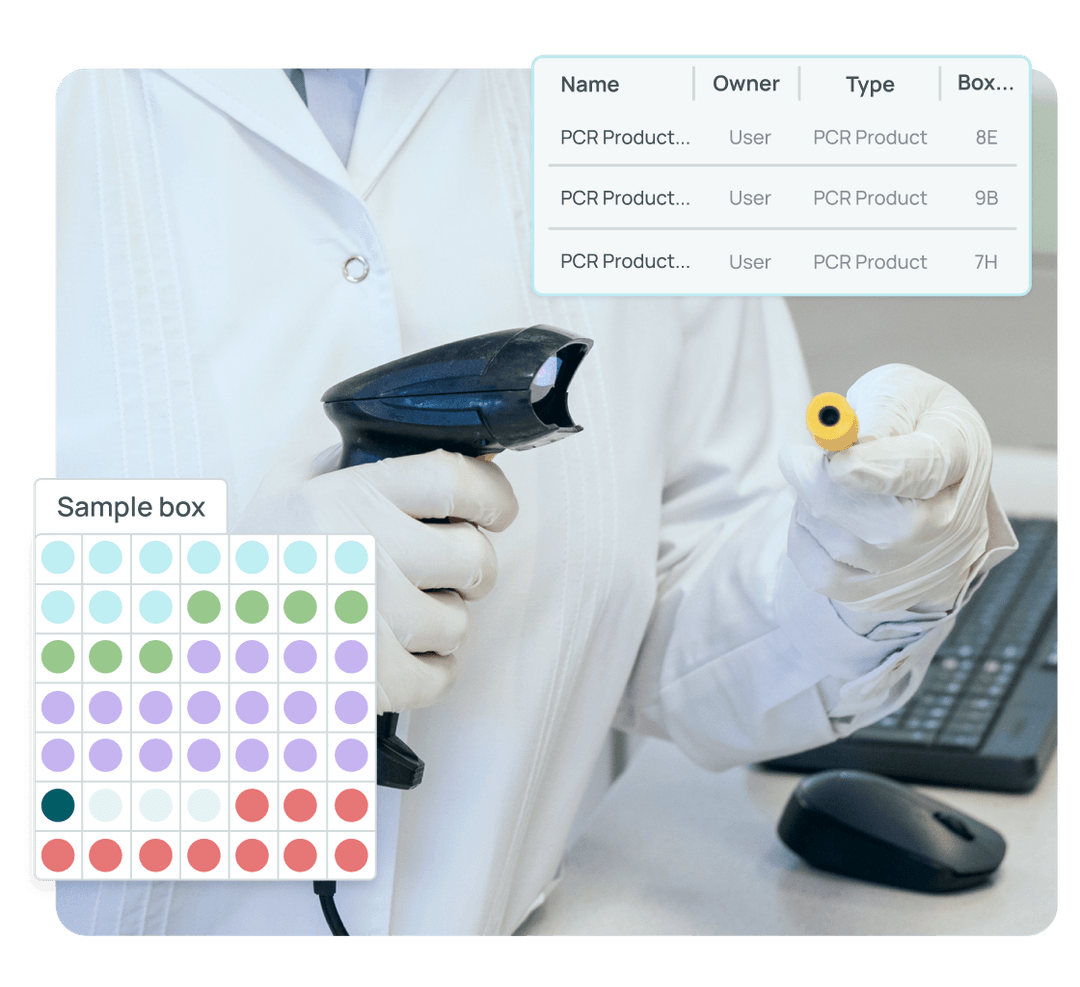
Barcode scanning with the SciSure mobile app

At Holobiome, operational challenges included locating tubes, tracking sample amounts and linking samples to experiments. With SciSure implemented, the team could work with sample inventory and experimental records in the same research workflow, including scanning and experiment-linked files.
‍

“SciSure has significantly improved our approach to lab management. Its streamlined inventory system and integration of external technologies and platforms have reduced our administrative workload, enabling us to dedicate more time to critical research activities.”

- Bridget O’Connor, Senior Research Associate, Holobiome
‍

3. Make remaining quantities useful for planning

Start by defining when your team should update quantities: after use, during check-in or at another clearly specified point. Include the unit of measurement and what to do when the amount is estimated rather than measured. For scarce samples, also define how the team records material set aside for future work.

Configured stock and expiry alerts can help your team act sooner. Give each alert an owner and a next action, such as reviewing planned experiments, preparing another batch or requesting replacement stock.

Low stock alerts on the SciSure platform

4. Update chemical records when materials arrive or move

Build chemical record maintenance into receiving, relocation and empty-container removal. Establish consistent locations and ownership rules, including for shared rooms where several groups use the same materials. Your teams should be able to identify the container, its location, its recorded amount and the associated safety information.

SciSure ChemTracker supports container tracking and linked SDS information. Empty containers can be removed from active inventory while their records remain available historically.

At SmartLabs, Lab Operations and EHS teams use ChemTracker alongside SDS, inspection and equipment tools. With SciSure, they're now able to filter chemical information by hazard class and using inventory data for weekly maximum allowable quantity reviews.
‍

“I have cut my time in half by using ChemTracker for pulling up reports and conducting inspections. It’s so beneficial, especially with flammable and corrosive materials. Being able to section off hazard classes – those are big ones that would take a lot of time if we didn’t have this.”

- Natalie Kosmadakis, EHS & Lab Operations Manager, SmartLabs


5. Keep equipment status and documentation together

An equipment list becomes more useful when it helps staff decide whether an instrument is ready for work and what needs attention next. For each critical instrument, assign an owner and maintain:

  • Its location and identifier.
  • Maintenance or calibration requirements.
  • The latest service record and relevant status.
  • Operating instructions and applicable safety documentation.
  • A process for reporting faults and arranging repairs.

SciSure supports equipment scheduling, maintenance and calibration reminders, usage records and issue tracking. Just keep in mind that whoever's responsible still needs to perform the work and record the outcome.Someone arranging maintenance should be able to find the relevant instrument documentation without rebuilding a document pack from separate folders.

SciSure
Spend less time chasing equipment, samples and supplies.
SciSure keeps bookings, maintenance reminders, service records and inventory in one place, so your team can find what they need and log the work as it happens.
Talk to a specialist

6. Standardize repeated work and preserve what happened

Reusable protocols and experiment templates can reduce repeated setup. Decide which instructions should be standardized and which details users must record for each execution. For a recurring buffer preparation, that might mean reusing the procedure while recording the preparation date, reagent lots, resulting batch and any deviations each time.
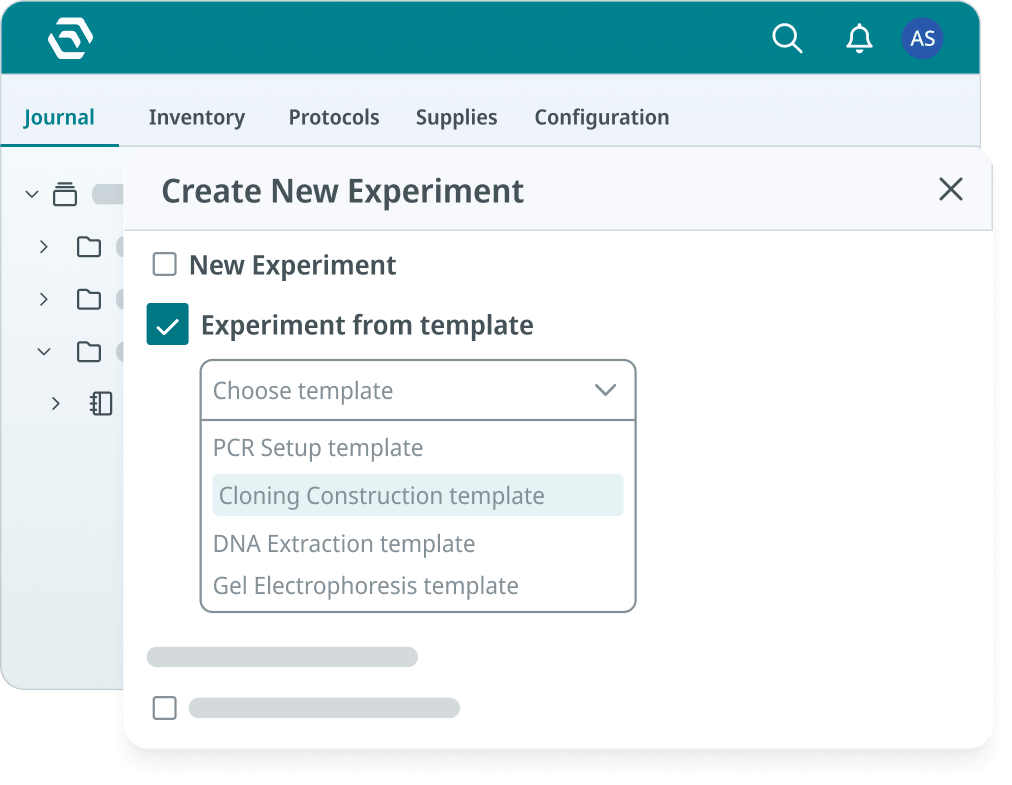
Experimental templates on the SciSure ELN

Keep instructions, execution records and resulting materials distinguishable. This makes it easier to answer which procedure was followed, what was used and which output came from a particular preparation. For example, Holobiome uses SciSure's protocols to calculate reagent requirements, while experiment-linked files reduce repeated data entry.

7. Give safety findings a route to closure

Recording an inspection finding or near-miss begins a process that someone needs to complete. Make sure to define the information required for follow-up: the issue, its location, the responsible person, the due date, the action taken and the evidence needed for closure. Agree who reviews that evidence and how overdue work is escalated.

If your organization spans across several sites, use shared definitions for incidents, findings and action status so teams can interpret reports consistently.

Also distinguish an immediate hazard report from an investigation or a lessons-learned communication. Test each workflow separately when evaluating lab operations software, especially if employees need to report something, resolve it and share what they learned.

Introduce changes through a manageable pilot

Choose a workflow with a clear operational problem, such as one freezer inventory, one chemical receiving process or equipment maintenance for a defined group. Include the people who will maintain the records and ask them to:

  • Import an existing spreadsheet and verify the resulting records.
  • Find, move and update a sample.
  • Record material use and retrieve its history.
  • Find equipment documentation.
  • Assign and close a safety action.

SciSure’s Sample Batch Import workflow helps you transfer data from your existing spreadsheets to the platform. You can filter by sample type, fields and locations, and align spreadsheet formats with the import settings.

Before expanding, assign someone responsible for configuration, user training, record corrections and ongoing reviews. These responsibilities continue after go-live.

Measure whether lab operations are improving

Compare the pilot with the baseline you established. Here are some signs to watch out for to help you figure out if your lab is succeeding:

  • How long staff take to locate a sample and confirm its available quantity.
  • How often recorded locations match physical checks.
  • How much time recurring reports require.
  • How many maintenance tasks or corrective actions are overdue.
  • How often work is delayed by missing materials or documentation.

Use the results to refine the process. If staff repeatedly skip a quantity update, review the steps, access and training involved. If reports still require extensive cleanup, investigate the data being collected.

SciSure Health & Safety
Make compliance part of daily lab work
Track activity, control access, and keep records audit-ready with a connected lab platform.
Talk to a specialist

Bring your everyday workflows into a SciSure demonstration

SciSure offers research tools for samples, inventory, protocols and experiments, alongside Health & Safety tools for chemical records and safety workflows.

Bring us a representative sample, a recurring preparation, an equipment record, or and an inspection finding to the conversation. We'll help you use them to establish which modules and configuration best set your lab up for success. Get in touch with us if that's the kind of support your lab needs.

FAQs

What is the difference between lab operations and lab management?

Lab operations covers the processes that keep daily work moving: coordinating materials, equipment, documentation, people and safety activities. Lab management has a broader remit, including budgets, staffing, scientific priorities and organizational goals. In smaller laboratories, one person may handle both.

Does a small research lab need a dedicated Lab Operations Manager?

A small lab can assign operational responsibilities without creating a dedicated role. What matters is that someone owns each recurring task, including receiving deliveries, coordinating equipment servicing and following up on safety actions. Consider a dedicated position when these responsibilities consistently interrupt scientific work or fall between team members.

Which lab operations processes should you improve first?

Start with a recurring problem that affects several people and has a measurable consequence. Examples include experiments delayed by missing materials, equipment downtime or reports that require repeated reconciliation. Map the current process, identify the handoff causing difficulty and test an improvement with the people who perform the work.

What should a daily lab operations checklist cover?

A daily checklist should highlight exceptions requiring attention: unavailable equipment, materials needed for scheduled work, unresolved operational issues and urgent follow-up actions. Keep it short enough to use consistently. Maintain separate schedules for periodic activities such as inventory checks, servicing and training reviews, with frequencies appropriate to your lab’s requirements.

How should Lab Operations and EHS divide responsibilities?

Agree who performs each task, who reviews it and who resolves exceptions. For example, laboratory staff might register incoming chemicals, Lab Operations might coordinate receiving and storage records, and EHS might review hazard information and reporting requirements. Document the handoffs, especially where responsibilities cross departments or sit within a combined LabOps and EHS role.

How can laboratory operations stay consistent across multiple sites?

Agree on common definitions, required records and review processes. Teams should interpret terms such as “incident,” “overdue maintenance” and “closed corrective action” consistently before combining their reports. Allow documented local requirements where facilities or activities differ, and assign someone to maintain shared procedures as the organization changes.

What should be included in a laboratory handover?

Cover active work, material and equipment locations, pending deliveries, scheduled servicing and unresolved safety or operational actions. Identify the new owner of each outstanding responsibility and update the relevant records. A useful handover lets the incoming person locate information and continue the work without depending on the departing colleague’s memory.

How can Lab Operations support reproducible research?

Preserve the operational context behind an experiment: the material and lot used, the procedure version, relevant equipment records and any deviations. Keep those details connected to the experimental record. This gives researchers information to investigate when results differ and helps another team member understand how the work was performed.

Ready to see SciSure in action?

Get a personalized demo and see how SciSure fits your lab's workflows.
Request demo

No commitment · Free consultation

Managing lab operations means coordinating the materials, equipment, people, records and safety processes that keep laboratory work moving.

For a Lab Operations Manager, that involves more than knowing whether a reagent is in stock. You need to know where it is, whether enough remains, which lot was used in an experiment and who will update the record after someone moves or uses it. Alongside that, equipment needs servicing, new staff need training, and inspection findings need follow-up.

Effective laboratory operations management makes those responsibilities clear and keeps the information useful as work happens. Here’s how to build that approach across research and safety.

What’s involved in Lab Operations?

lab equipment and other symbols

Laboratory operations cover the practical systems that allow scientific work to happen consistently and safely. The scope varies between an academic research group, a growing biotech and a shared laboratory facility, but usually includes:

  • Samples and materials
    Registration, identification, locations, quantities, expiry dates, lineage and disposal.
  • Equipment
    Availability, maintenance, calibration, service records and operating documentation.
  • Procedures and research records
    Protocols, experiment documentation, review and retrieval.
  • Safety
    Chemical inventories, safety data sheets, training, inspections, incidents and corrective actions.
  • People and access
    Onboarding, responsibilities, permissions and continuity when staff leave.

There's a ton of overlap between these activities. Receiving a chemical creates an inventory task and a safety responsibility. Moving a sample changes its location record. Servicing an instrument produces documentation that researchers may need before using it again.

The handoffs between those activities deserve as much attention as the individual tasks.

Lab Operations essentials

how to manage lab operations -
  1. ‍Sample management is one of the core functions of a laboratory and involves tracking samples from receipt to final analysis. Without proper sample management, there is a risk of cross-contamination, mislabeling, or loss of samples, which can result in inaccurate results and compromise data integrity. 
  2. ‍Lab protocols make sure that scientific procedures are carried out consistently and in compliance with regulatory and industry standards. Proper protocol management involves the creation, approval and regular updating of SOPs (Standard Operating Procedures) that guide lab personnel in carrying out experiments accurately. Effective protocol management not only minimizes errors but also ensures reproducibility across experiments.
  3. ‍Data management is another pivotal operation within laboratories. It involves the systematic collection, storage, and analysis of data generated from experiments and testing. Effective data management ensures that data is accurate, retrievable, and secure. This is critical not only for the integrity of research findings and test results but also for maintaining compliance with regulatory standards.
  4. ‍‍Inventory control plays a vital role in lab operations, as it ensures that all necessary reagents and equipment are available when needed—without interruption. Proper inventory management helps to avoid unnecessary downtime that can delay experiments, as well as to prevent the wastage of resources and ensure cost efficiency.
  5. ‍Lab data security is essential for protecting digital assets within the lab environment. This includes the safeguarding of sensitive data, such as research findings, intellectual property, and personally identifiable information (PII), as well as the physical protection of lab samples, equipment, and reagents. Implementing strong data encryption, role-based access controls, and automated backups are key measures to ensure lab data security. 

Together, these operations form the backbone of effective and reliable lab management, ensuring that laboratories can fulfill their critical role in scientific discovery and industry quality assurance with efficiency and integrity.

SciSure Research
Bring structure to everyday lab operations
See how SciSure helps teams manage samples, protocols, inventory, and data in one connected system.
Request a demo

‍Who's responsible for Lab Operations?

The Lab Operations Manager coordinates the process, while researchers, technicians, EHS and other teams maintain the records associated with their work.

Who owns what in the lab: Roles and their operational responsibilities

Team or role Typical operational responsibility
Lab Operations Coordinate materials, equipment, purchasing, workflows, and record-maintenance responsibilities.
Researchers and technicians Record sample use and movement, document experiments, and report equipment or safety issues.
EHS Define safety requirements, review chemical information, conduct inspections, and oversee safety follow-up.
IT and system administrators Manage access, integrations, system configuration, and technical support.

The hidden costs of running a lab without digital tools

Manual work becomes expensive when staff repeatedly search for information, correct inconsistent records or reconstruct what happened. A location check might take a few minutes. Repeat it across researchers, samples and working days, and it becomes a meaningful operational burden. Reporting creates similar costs when someone must combine spreadsheets, resolve naming differences and recalculate totals every month.

In fact, a 2026 study at a medical genetics laboratory found that technologists spent at least 8 cumulative hours preparing quality-management reports manually. An internally developed, rule-based tool reduced preparation to 30 minutes.

So before changing systems, consider measuring a few recurring tasks:

  • Time spent locating samples or confirming remaining quantities.
  • Time spent correcting imports, room names, units or missing information.
  • Hours required to prepare inventory, equipment or safety reports.
  • Materials discarded because they expired or could not be identified.
  • Work delayed while staff resolve missing records or equipment issues.

For illustration, ten people spending 15 minutes each working day checking and reconciling information adds up to 50 hours over a 20-day month. That calculation is a starting point for measuring your own workload, not an assumed software saving.

For a practical look into how you can measure success in your lab, check out our guide to lab KPIs.

How to manage lab operations in practice

Overview of how SciSure transforms lab operations

1. Choose a level of inventory detail your team can maintain

Start by identifying the decisions your inventory needs to support. A sample collection may require precise volumes and freeze-thaw histories. A screening team may primarily need to know how many prepared plates remain and which compound lots they contain. Applying the same tracking requirements to both can create unnecessary work.

Distinguish between:

  • The material: the compound, reagent or sample type.
  • The lot or batch: the particular material received or prepared.
  • The physical item: the bottle, tube, plate or aliquot used in the lab.

For example, a master compound record can describe a reagent, while separate lot and plate records preserve the details needed to investigate experimental variation. Choose required fields around retrieval, scientific interpretation and safety needs. Every extra field should have a clear purpose and an owner.

2. Build the sample journey around real user actions

Map what happens from receipt to final use:

  1. Register the sample or material with a unique identifier.
  2. Assign its storage location.
  3. Link it to the relevant preparation or experiment.
  4. Record movement, use or changes in quantity.
  5. Archive depleted or discarded items while preserving the history.

Then walk through the process with someone who works at the bench. Check whether they can update a record where the work happens, rather than relying on remembering it later.

With SciSure Research, you can scan a sample and update its quantity through the mobile app. The Barcode Automation add-on also supports configured actions such as subtracting a defined amount or archiving a sample. Those actions require setup and the relevant scans.

Barcode scanning with the SciSure mobile app

At Holobiome, operational challenges included locating tubes, tracking sample amounts and linking samples to experiments. With SciSure implemented, the team could work with sample inventory and experimental records in the same research workflow, including scanning and experiment-linked files.
‍

“SciSure has significantly improved our approach to lab management. Its streamlined inventory system and integration of external technologies and platforms have reduced our administrative workload, enabling us to dedicate more time to critical research activities.”

- Bridget O’Connor, Senior Research Associate, Holobiome
‍

3. Make remaining quantities useful for planning

Start by defining when your team should update quantities: after use, during check-in or at another clearly specified point. Include the unit of measurement and what to do when the amount is estimated rather than measured. For scarce samples, also define how the team records material set aside for future work.

Configured stock and expiry alerts can help your team act sooner. Give each alert an owner and a next action, such as reviewing planned experiments, preparing another batch or requesting replacement stock.

Low stock alerts on the SciSure platform

4. Update chemical records when materials arrive or move

Build chemical record maintenance into receiving, relocation and empty-container removal. Establish consistent locations and ownership rules, including for shared rooms where several groups use the same materials. Your teams should be able to identify the container, its location, its recorded amount and the associated safety information.

SciSure ChemTracker supports container tracking and linked SDS information. Empty containers can be removed from active inventory while their records remain available historically.

At SmartLabs, Lab Operations and EHS teams use ChemTracker alongside SDS, inspection and equipment tools. With SciSure, they're now able to filter chemical information by hazard class and using inventory data for weekly maximum allowable quantity reviews.
‍

“I have cut my time in half by using ChemTracker for pulling up reports and conducting inspections. It’s so beneficial, especially with flammable and corrosive materials. Being able to section off hazard classes – those are big ones that would take a lot of time if we didn’t have this.”

- Natalie Kosmadakis, EHS & Lab Operations Manager, SmartLabs


5. Keep equipment status and documentation together

An equipment list becomes more useful when it helps staff decide whether an instrument is ready for work and what needs attention next. For each critical instrument, assign an owner and maintain:

  • Its location and identifier.
  • Maintenance or calibration requirements.
  • The latest service record and relevant status.
  • Operating instructions and applicable safety documentation.
  • A process for reporting faults and arranging repairs.

SciSure supports equipment scheduling, maintenance and calibration reminders, usage records and issue tracking. Just keep in mind that whoever's responsible still needs to perform the work and record the outcome.Someone arranging maintenance should be able to find the relevant instrument documentation without rebuilding a document pack from separate folders.

SciSure
Spend less time chasing equipment, samples and supplies.
SciSure keeps bookings, maintenance reminders, service records and inventory in one place, so your team can find what they need and log the work as it happens.
Talk to a specialist

6. Standardize repeated work and preserve what happened

Reusable protocols and experiment templates can reduce repeated setup. Decide which instructions should be standardized and which details users must record for each execution. For a recurring buffer preparation, that might mean reusing the procedure while recording the preparation date, reagent lots, resulting batch and any deviations each time.

Experimental templates on the SciSure ELN

Keep instructions, execution records and resulting materials distinguishable. This makes it easier to answer which procedure was followed, what was used and which output came from a particular preparation. For example, Holobiome uses SciSure's protocols to calculate reagent requirements, while experiment-linked files reduce repeated data entry.

7. Give safety findings a route to closure

Recording an inspection finding or near-miss begins a process that someone needs to complete. Make sure to define the information required for follow-up: the issue, its location, the responsible person, the due date, the action taken and the evidence needed for closure. Agree who reviews that evidence and how overdue work is escalated.

If your organization spans across several sites, use shared definitions for incidents, findings and action status so teams can interpret reports consistently.

Also distinguish an immediate hazard report from an investigation or a lessons-learned communication. Test each workflow separately when evaluating lab operations software, especially if employees need to report something, resolve it and share what they learned.

Introduce changes through a manageable pilot

Choose a workflow with a clear operational problem, such as one freezer inventory, one chemical receiving process or equipment maintenance for a defined group. Include the people who will maintain the records and ask them to:

  • Import an existing spreadsheet and verify the resulting records.
  • Find, move and update a sample.
  • Record material use and retrieve its history.
  • Find equipment documentation.
  • Assign and close a safety action.

SciSure’s Sample Batch Import workflow helps you transfer data from your existing spreadsheets to the platform. You can filter by sample type, fields and locations, and align spreadsheet formats with the import settings.

Before expanding, assign someone responsible for configuration, user training, record corrections and ongoing reviews. These responsibilities continue after go-live.

Measure whether lab operations are improving

Compare the pilot with the baseline you established. Here are some signs to watch out for to help you figure out if your lab is succeeding:

  • How long staff take to locate a sample and confirm its available quantity.
  • How often recorded locations match physical checks.
  • How much time recurring reports require.
  • How many maintenance tasks or corrective actions are overdue.
  • How often work is delayed by missing materials or documentation.

Use the results to refine the process. If staff repeatedly skip a quantity update, review the steps, access and training involved. If reports still require extensive cleanup, investigate the data being collected.

SciSure Health & Safety
Make compliance part of daily lab work
Track activity, control access, and keep records audit-ready with a connected lab platform.
Talk to a specialist

Bring your everyday workflows into a SciSure demonstration

SciSure offers research tools for samples, inventory, protocols and experiments, alongside Health & Safety tools for chemical records and safety workflows.

Bring us a representative sample, a recurring preparation, an equipment record, or and an inspection finding to the conversation. We'll help you use them to establish which modules and configuration best set your lab up for success. Get in touch with us if that's the kind of support your lab needs.

FAQs

What is the difference between lab operations and lab management?

Lab operations covers the processes that keep daily work moving: coordinating materials, equipment, documentation, people and safety activities. Lab management has a broader remit, including budgets, staffing, scientific priorities and organizational goals. In smaller laboratories, one person may handle both.

Does a small research lab need a dedicated Lab Operations Manager?

A small lab can assign operational responsibilities without creating a dedicated role. What matters is that someone owns each recurring task, including receiving deliveries, coordinating equipment servicing and following up on safety actions. Consider a dedicated position when these responsibilities consistently interrupt scientific work or fall between team members.

Which lab operations processes should you improve first?

Start with a recurring problem that affects several people and has a measurable consequence. Examples include experiments delayed by missing materials, equipment downtime or reports that require repeated reconciliation. Map the current process, identify the handoff causing difficulty and test an improvement with the people who perform the work.

What should a daily lab operations checklist cover?

A daily checklist should highlight exceptions requiring attention: unavailable equipment, materials needed for scheduled work, unresolved operational issues and urgent follow-up actions. Keep it short enough to use consistently. Maintain separate schedules for periodic activities such as inventory checks, servicing and training reviews, with frequencies appropriate to your lab’s requirements.

How should Lab Operations and EHS divide responsibilities?

Agree who performs each task, who reviews it and who resolves exceptions. For example, laboratory staff might register incoming chemicals, Lab Operations might coordinate receiving and storage records, and EHS might review hazard information and reporting requirements. Document the handoffs, especially where responsibilities cross departments or sit within a combined LabOps and EHS role.

How can laboratory operations stay consistent across multiple sites?

Agree on common definitions, required records and review processes. Teams should interpret terms such as “incident,” “overdue maintenance” and “closed corrective action” consistently before combining their reports. Allow documented local requirements where facilities or activities differ, and assign someone to maintain shared procedures as the organization changes.

What should be included in a laboratory handover?

Cover active work, material and equipment locations, pending deliveries, scheduled servicing and unresolved safety or operational actions. Identify the new owner of each outstanding responsibility and update the relevant records. A useful handover lets the incoming person locate information and continue the work without depending on the departing colleague’s memory.

How can Lab Operations support reproducible research?

Preserve the operational context behind an experiment: the material and lot used, the procedure version, relevant equipment records and any deviations. Keep those details connected to the experimental record. This gives researchers information to investigate when results differ and helps another team member understand how the work was performed.

About the author:

Julien Laforest

Julien Laforest is VP of Commercial, EMEA and Asia Pacific at SciSure. With a background in biochemistry and over 20 years in the life sciences industry spanning roles at Thermo Fisher Scientific, bioMérieux, and Eppendorf, he brings deep domain expertise in laboratory workflows, digital lab transformation, and the operational challenges researchers face as organizations scale. He writes about ELN adoption, regulatory compliance, and the future of lab digitalization.

See all posts from this author

Sign up for our newsletter

Get the latest tips, articles, and exclusive content on modern lab management delivered to your inbox.
Thank you for subscribing!
Please check your email to verify your submission.
Oops! Something went wrong while submitting the form.