


The Gap Between What Gets Bought and What Gets Used
Three conferences between June and August: 20,000 biotech executives at BIO, campus EHS leaders at CSHEMA, and lab operations directors at LOFM West. The vocabulary changed in each room. The problem underneath it did not.
Download Whitepaper
TL;DR
The gap between what organizations buy and what their people actually use comes down to two unmet conditions: systems must prove they're worth the purchase, and systems must prove people will actually open them, a pattern that held across BIO International, CSHEMA, and LOFM West conferences in 2026.
- AI trust over capability: At BIO, AI dominated discovery conversations around faster molecules and shorter timelines, but by CSHEMA and LOFM West, buyers shifted to validation, hallucination risk, data provenance, and human review. Vendors leading with accuracy disclaimers and citation-back-to-source features read as credible; those leading with expansive capability lists did not.
- Adoption as the buying gate: EHS leaders at CSHEMA and lab operations leaders at LOFM West both named user adoption, not module coverage or price, as the deciding purchase criterion. With no budget for a second implementation attempt, a system nobody opens counts as a total loss rather than a slow start.
- Fragmentation drives shadow IT: Four institutions at CSHEMA built in-house tools because commercial options didn't fit their workflows. LOFM West described the same pattern as siloed data, scattered equipment logs, and spreadsheets standing in for a single source of truth, all quietly increasing organizational risk.
- Procurement-to-inventory disconnect: SciSure's joint session with ZAGENO at LOFM West addressed how chemical data captured at the purchase order stage often gets retyped weeks later instead of flowing directly into inventory. ChemTracker uses AI to standardize names, normalize units, and enrich records with hazard classification and SDS data automatically.
- Financial case as default expectation: LOFM West sessions treated ROI, cost avoidance, and finance-ready language as baseline requirements for lab operations leaders, not optional add-ons. SciSure frames implementation speed and adoption measurement as the real starting line for return, rather than a cost absorbed before value begins.
Ready to see SciSure in action?
No commitment · Free consultation
Between June and August, we sat in three conference rooms with almost nothing in common. BIO in San Diego in June, CSHEMA in Austin in July, and LOFM West back in San Diego in August. Biotech executives, Campus Safety Directors, Lab Operations and Facilities leaders. Different audiences, different regulatory pressure, and very, very different budgets.
Two moments from those rooms are worth putting side by side.
At CSHEMA in July, a senior EHS leader described adoption as his single biggest buying criterion. Not module coverage. Not price. If the people who need to use a system will not use it, it does not get selected.
Three weeks later at LOFM West, an entire session was given over to what looks like a different problem: how lab operations leaders translate their work into cost avoidance, risk reduction, and ROI, in language a finance team will approve.
They are the same problem seen from either end. You have to prove a system is worth buying, and then you must prove people will open it. Neither half is a feature, and both are getting harder on a smaller budget than last year.
Three rooms
BIO International Convention 2026
June 22 to 25, San Diego, CA
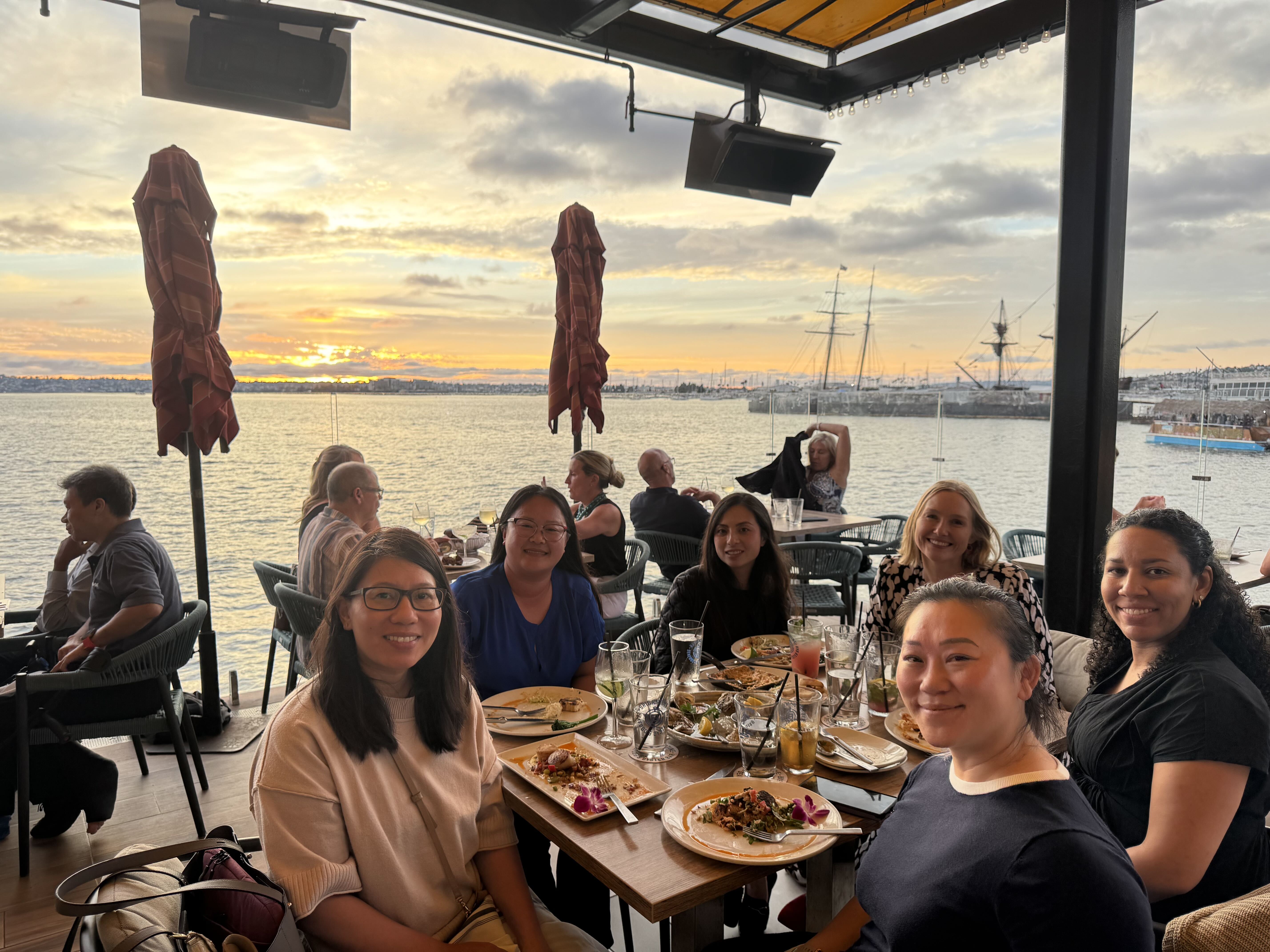
The industry stating its ambitions. Roughly 20,000 attendees from more than 70 countries, across 135 sessions in 18 focus areas ranging from AI and Digital Health to Biomanufacturing and Science and Regulatory Innovation. BIO is where the sector describes what it intends to build over the next five years.
July 18 to 22, Austin, TX
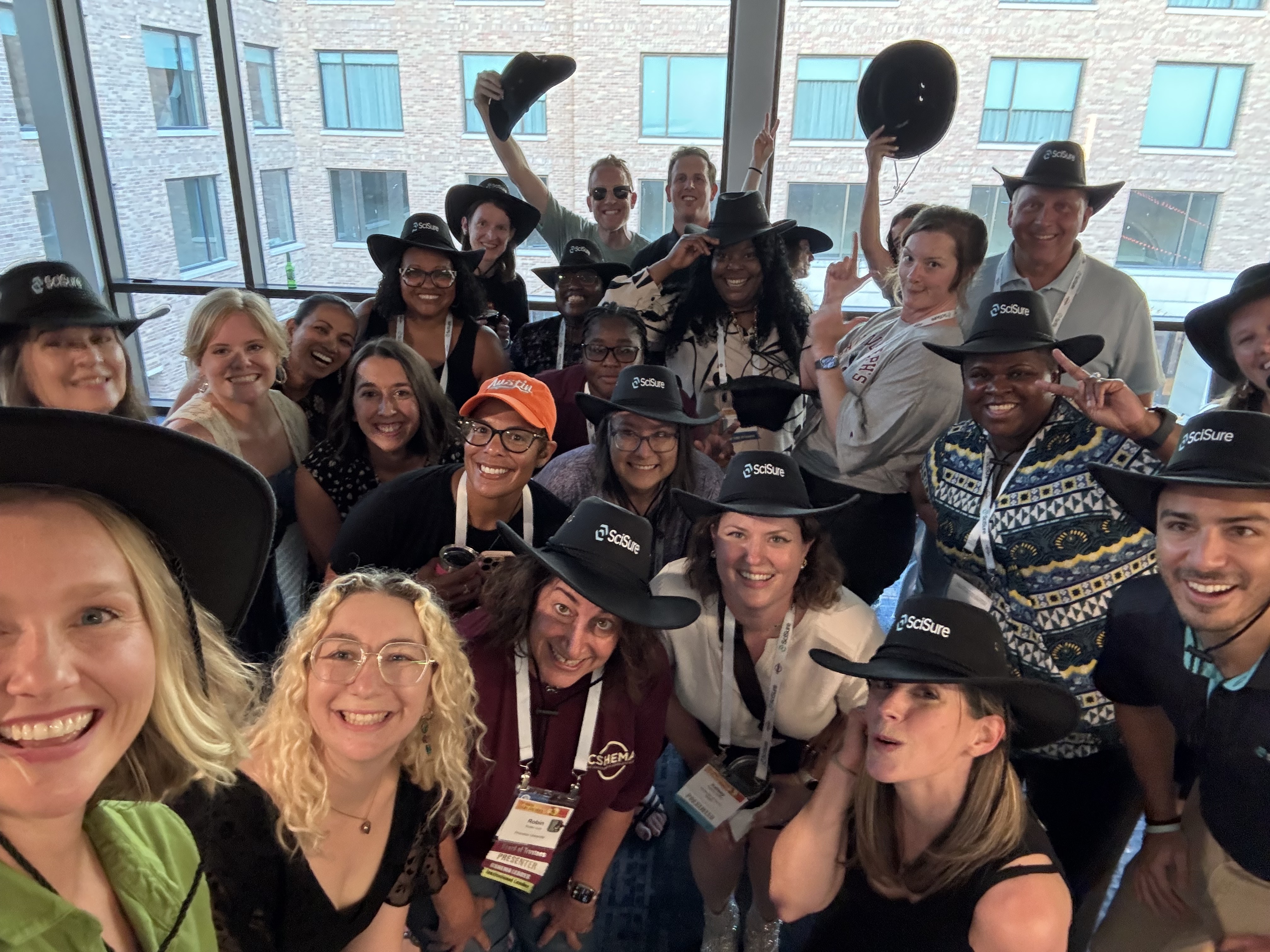
Where the ambition meets a real building. Campus environmental health and safety professionals, accountable for chemical inventories, inspections, and regulatory reporting across hundreds of labs they often do not directly control. Public institution procurement scores things the private sector treats as optional, so the questions asked here are more specific than almost anywhere else.
Lab Ops & Facility Management for Biopharma West
August 11 to 13, San Diego, CA
Where it gets operational. Around 70 senior lab operations and facilities leaders, roughly half at Director level or above and about 80% from drug developers. The agenda was built around site consolidations, hiring freezes, and doing more with less.
Trust is now the first question, not the last
At BIO, AI was everywhere. The AI Summit opened the program, sixteen further sessions dealt with it explicitly, and the through-line was acceleration: better molecules, faster targets, shorter development timelines. Coverage from the event also surfaced open questions about which use cases actually return on the investment, and a widening adoption gap between large biopharma and smaller companies.
A month later at CSHEMA, the same technology showed up in a completely different register. In the vendor AI sessions, the first audience question in both cases was not about features. It was about validation and hallucination. Where does this output come from, how do we know it is right, and what happens to our data. The vendor that gated its AI behind explicit controls and an accuracy disclaimer read as credible. The vendor that led with an expansive capability list did not.
By LOFM West, that had settled into something practical. The pre-conference workshop was framed as a toolkit rather than a vision, covering inventory logging, equipment issue tracking, SOP drafting, and predictive maintenance. One session examined what 12 million equipment bookings reveal about real utilization versus perceived demand, which is only answerable if the underlying data is clean.
Discovery-side AI is still selling potential. Operations-side AI is already being asked to show its work.
If you are evaluating tools right now, three questions held up in all three rooms:
- What is the output grounded in?
- Can it be cited back to a source record?
- Where does the data live, and where does a human stay in the loop?
Adoption is the gate, not the feature list
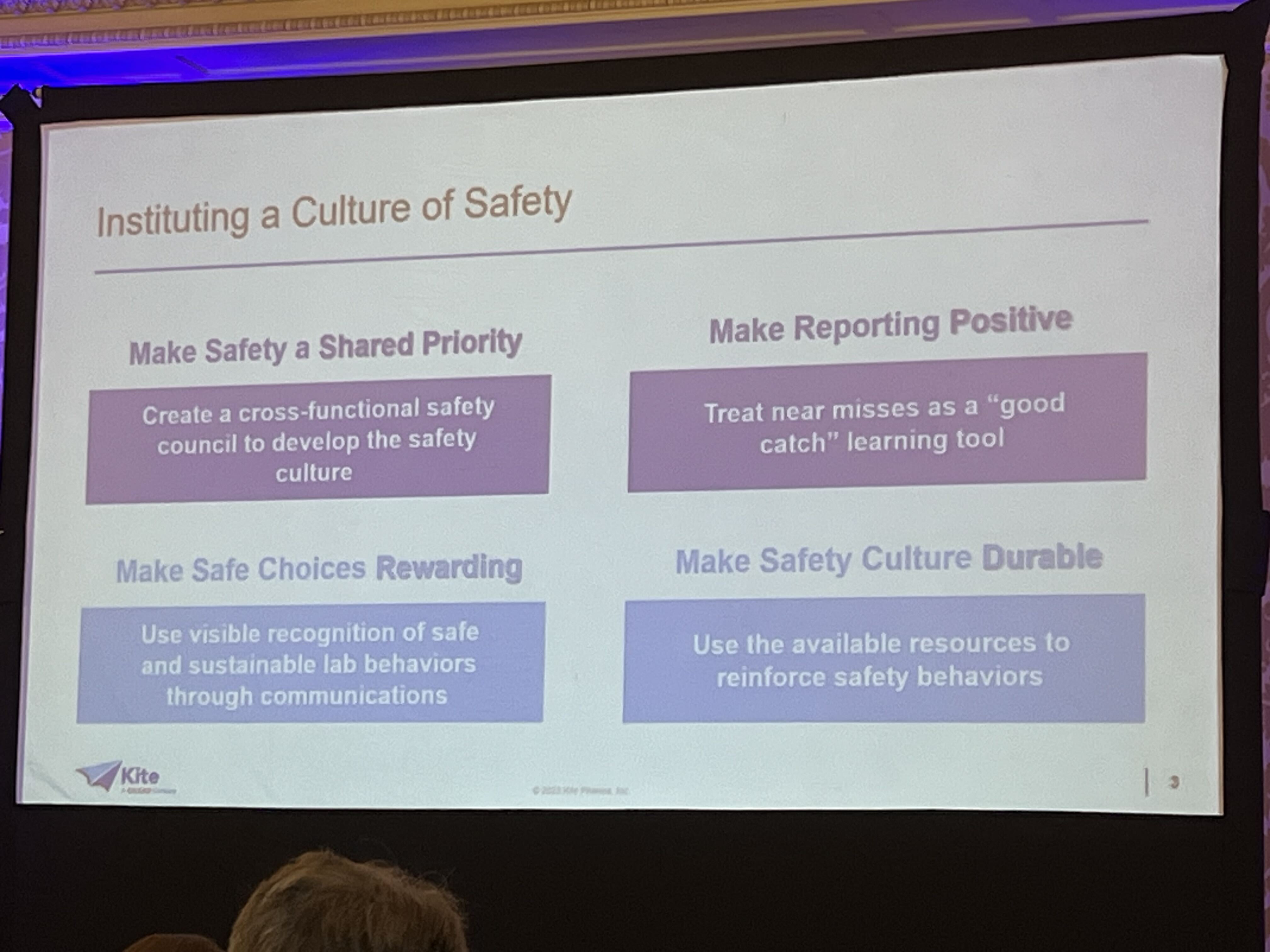
The CSHEMA comment that opens this piece came from the campus safety side, where the buyer and the daily user frequently sit in different departments with different definitions of success.
At LOFM West, the same idea wore a different name. An entire afternoon track was built around scientist engagement and buy-in for inventory and asset management systems, with a separate session on bridging the gap between scientists and lab ops. The framing was consistent: the barrier is behavioral, not technical.
Budget pressure makes this sharper rather than softer. LOFM did not treat cost constraint as a temporary condition; it was in the summit's own subtitle. Long implementations are no longer an acceptable cost of doing business, and nobody in this market has convincingly claimed the ground of fast, low-disruption migration. When there is no budget for a second attempt, a system nobody opens is not a slow start. It is the whole loss.
EHS and Lab Ops buy the system. Scientists use it. Both halves must work, or the investment does not return.
This is why we treat adoption as something to measure rather than assume, and implementation as the real starting line for ROI rather than a cost you absorb before the return begins. When a hazard lookup drops from days to minutes, that is not a feature claim. It is a signal that people are opening the system instead of routing around it. It is the same failure mode behind why ELN and LIMS adoption stalls at enterprise scale, and the reason we treat the scientist experience as a design requirement rather than a nice-to-have.
The gap starts at the purchase order
At CSHEMA, four separate institutions presented tools they had built in-house because commercial options did not fit. When organizations would rather maintain their own software than adopt yours, the gap is usually integration, not features.
The LOFM agenda described the same fragmentation from the operations side: siloed data systems, scattered equipment logs, spreadsheets standing in for a single source of truth, inventory data disconnected from the workflows that generate it. It is the kind of fragmentation that quietly increases organizational risk long before anyone calls it a problem.
Procurement is where it costs the most, because it sits at the very front of the chain. Most organizations know what they ordered. Far fewer know where it is, what condition it is in, when it expires, or what happens to it at end of life. Everything downstream depends on data that was already captured the moment the purchase order went out: hazard classification, storage assignment, MAQ and Fire Code and Tier II reporting, and disposal.
That gap was the substance of our joint session with ZAGENO at LOFM West. When a material is sourced through a procurement platform, that information should flow directly into chemical inventory with the relevant data attached rather than being retyped by someone three weeks later.
In ChemTracker, procurement exports are uploaded and mapped, AI standardizes chemical names and normalizes quantities and units, your team reviews and approves the results before anything is imported, and each record is enriched with hazard classifications, physical properties, storage handling, and SDS. MAQ, Fire Code, and Tier II reports then become push-button rather than a reconciliation project.
Duplicate data entry disappears for the person doing the work. For the organization, inventory accuracy stops depending on whether someone remembered to log the box.
Connecting procurement to inventory is not about adding another system. It is about building the bridge between the ones you already run.
What we are carrying into the rest of the year
Three rooms, one conclusion: the distance between what an organization buys and what its people actually use is where the money goes. Closing that distance is not a feature problem.
- Lead with grounding, provenance, and human review when talking about AI, not with a capability list
- Treat adoption as a design requirement and a measured outcome, not a change management afterthought
- Assume every buyer is building a financial case, and make that case easier to build rather than harder
- Solve for connection between systems, because fragmentation is what organizations quietly pay for twice
If you are working through any of this, whether that is a chemical inventory that no longer reflects reality, a procurement-to-inventory gap you have been patching manually, or a business case you need a second pair of eyes on, we are happy to talk it through.
Up next: find us at I2SL in Boston, September 14 to 16, and at Future Labs Live USA in Philadelphia, October 28 to 29.

Read more of our blogs about modern lab management
Discover the latest in lab operations, from sample management to AI innovations, designed to enhance efficiency and drive scientific breakthroughs.