Understanding Biosafety and Biosecurity: Key Differences and Lab Controls
Learn the difference between biosafety and biosecurity, how Risk Groups and BSLs differ, and which controls support safer, more secure lab operations.

Download Whitepaper
TL;DR
Biosafety reduces the risk of accidental exposure or release, while biosecurity protects biological materials and information from unauthorized access, theft, misuse, or intentional release.
- Risk Groups and Biosafety Levels are different classification systems. Appropriate containment depends on a risk assessment of the agent, procedures, personnel, and facility.
- Effective biosafety and biosecurity programs combine containment, training, PPE, access controls, inventory management, cybersecurity, and incident response.
- Regulatory requirements vary by jurisdiction, facility, and activity. U.S. laboratories may follow OSHA, Federal Select Agent regulations, NIH Guidelines, and Institutional Biosafety Committee oversight.
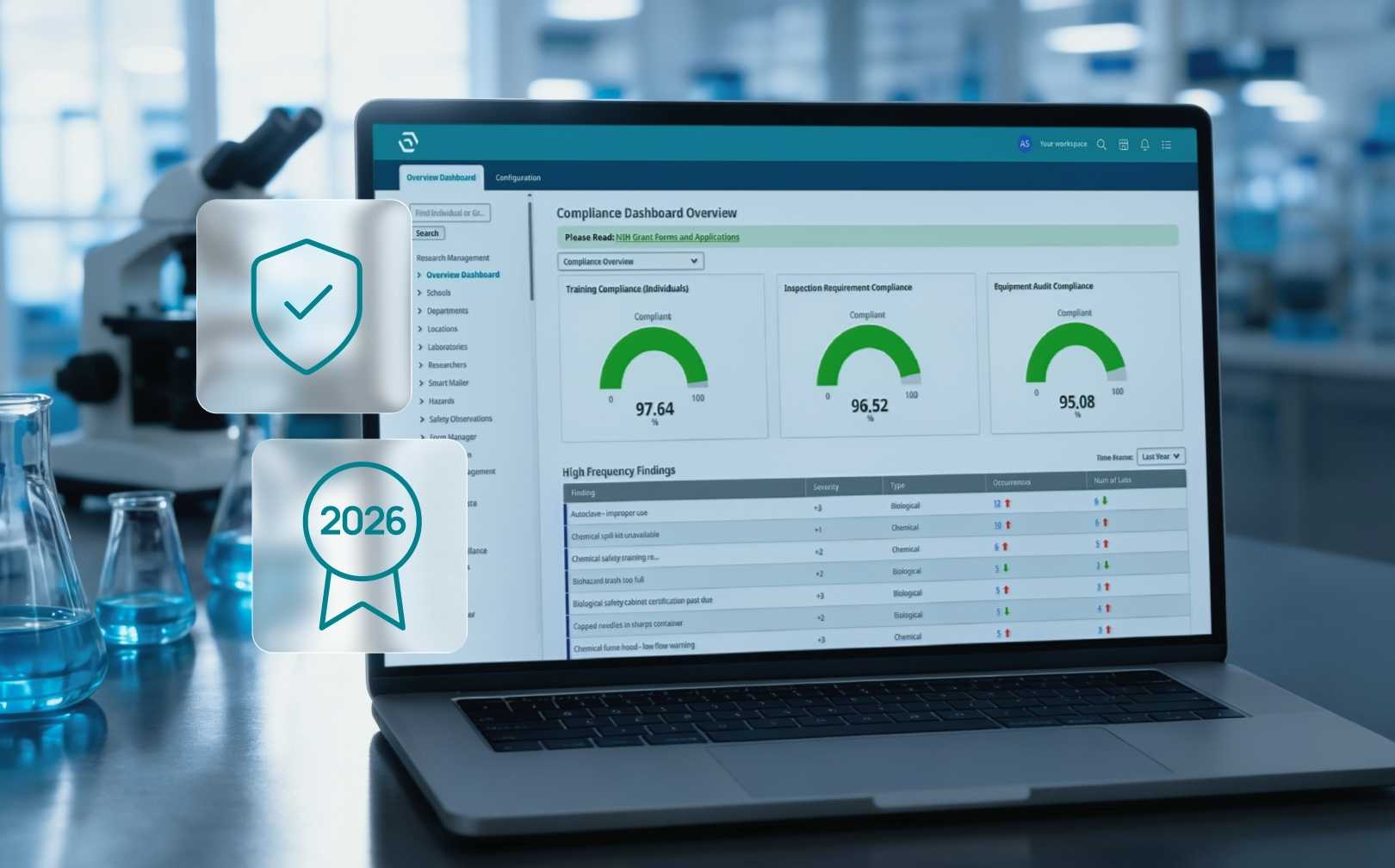
- SciSure helps labs maintain structured records across research and safety with connected ELN, LIMS, and EHS capabilities that support traceability, training, inspections, and compliance workflows.
This post was originally published in 2025 and updated in 2026 to reflect current biosafety and biosecurity guidance, clarify the relationship between Risk Groups and Biosafety Levels, and include new examples of integrated laboratory controls and SciSure workflows.
Ready to see SciSure in action?
No commitment · Free consultation
Introduction
Materials that are hazardous due to their biological or infectious properties are called biohazardous materials or simply biohazards. Research laboratories may work with materials that present biological hazards, including:
- Certain microorganisms
- Toxins
- Prions
- Human or animal specimens
- Cell lines
- Viral vectors,
- and recombinant or synthetic nucleic acid constructs.
Not every biological material is hazardous; its classification and controls depend on its properties and the work being performed.
Managing these materials responsibly requires two distinct but interconnected programs: biosafety and biosecurity. Biosafety focuses on protecting people and the environment from accidental exposure. Biosecurity focuses on preventing intentional misuse, theft, or unauthorized access to biological materials. Your lab should assess and manage both accidental and deliberate biological risks in proportion to their work. The specific legal and oversight requirements depend on the jurisdiction, biological materials, activities, funding, and facility.
This guide covers the difference between biosafety and biosecurity, how each works in practice, the frameworks that govern them, and what an integrated program looks like in a research environment. We’ll also cover how SciSure connects experiment documentation, biological material traceability, and safety oversight through its ELN, LIMS, and Health & Safety capabilities.
What is biosafety?
Within research laboratories, biosafety encompasses the control measures, regulations, containment principles, and administrative controls used to manage risks associated with the handling and use of biological agents. The WHO defines laboratory biosafety as "the containment principles, technologies and practices that are implemented to prevent unintentional exposure to pathogens and toxins, or their accidental release."
The goals of biosafety are to minimize the risk of exposure to lab researchers and other personnel, contain biohazards to prevent inadvertent release into the environment or community, and establish standard operating procedures for safe handling and disposal of biological materials.
To evaluate biohazard risks, biosafety risk assessments identify exposures from work activities that are reasonably anticipated to elevate the risk of contracting disease from an infectious agent. A biosafety risk assessment evaluates those risks so that appropriate control measures can be implemented.
What is biosecurity?
Biosecurity involves the comprehensive set of measures implemented to securely handle and store biological materials. It focuses on preventing unauthorized access, theft, misuse, or intentional release of biological materials that could have catastrophic consequences if used for malicious purposes such as bioterrorism or biological warfare.
The goals of biosecurity are to prevent the intentional misuse of biological agents that threaten public health, ecosystems, agriculture, and national and global security, and to ensure the integrity of research activities and safeguard the biological materials used throughout the research process.
Key differences at a glance
Biosafety and biosecurity are often discussed together because they share overlapping goals and many of the same underlying protocols. But they protect against fundamentally different threats.
Both become more and more vital as synthetic biology and biotechnology expand. Robust biosafety and biosecurity programs prevent both accidental laboratory incidents and intentional misuse of biological materials.
Biosafety and biosecurity measures in practice
The practical implementation of biosafety and biosecurity involves overlapping but distinct sets of controls.
- Biosafety measures focus on containment, protective equipment, and safe handling practices.
- Biosecurity measures focus on access control, personnel screening, and inventory accountability. Together they address the full range of biological risks your lab is responsible for managing.
Biosafety measures
Biological Risk Groups (Risk Groups 1 to 4)
Biological agents are classified according to their risk level considering infectivity, pathogenicity, and availability of preventive measures and treatments. The NIH Guidelines classify agents into four Risk Groups for use in assessing recombinant or synthetic nucleic acid research. WHO’s fourth-edition Laboratory Biosafety Manual takes a broader risk- and evidence-based approach: control measures should reflect the agent, procedure, personnel, facility, and local context rather than a presumed one-to-one relationship between a pathogen category and a containment level.
Biosafety Levels (BSL-1 to BSL-4)
Based on the biosafety risk assessment and biological agents involved, specific biosafety levels are designated, each with increasingly stringent containment requirements. BSL definitions are established by CDC and NIH in the Biosafety in Microbiological and Biomedical Laboratories (BMBL).
- BSL-1 uses standard microbiological practices for work presenting minimal potential hazard.
- BSL-2 adds measures such as restricted access during work and primary containment for procedures that may create infectious aerosols or splashes.
- At BSL-3, manipulations of infectious material are conducted in a BSC or another primary containment device, open-vessel bench work is not permitted, and the facility maintains inward directional airflow. Additional PPE, including respiratory protection, is selected through the risk assessment.
- BSL-4 uses maximum-containment cabinet or positive-pressure-suit laboratories for work with dangerous agents that pose a high individual risk of life-threatening disease.
Biological Safety Cabinets (BSCs)
BSCs are designed to reduce the escape of research materials and agents into the room environment and to remove contaminants from the research work zone. There are different classes of BSCs, and selection depends on the types of biological agents being handled. BSCs must be tested and certified.
Safe work practices, training, and procedures
Hazard awareness training and risk-specific training are required. Safe work practices and SOPs should cover general safety rules and techniques, inventory control, minimization of aerosol generation, and emergency response.
Personal Protective Equipment (PPE)
Appropriate PPE including gloves, gowns, respirators, and eye protection reduces potential exposure. The specific PPE required depends on the biological agents involved and the procedures being performed.
Biosecurity measures
Physical security
Securing access points to facilities that handle biological agents through fencing, gates, locks, surveillance cameras, and access control systems that prevent unauthorized entry.
Personnel security
Personnel security measures are proportionate to the risk and may include role-based authorization, identity and access management, training, visitor controls, and (where required for high-consequence or regulated materials) formal screening or security risk assessments.
Inventory control
Records of biological agents including quantity, location, and authorized users help with tracking usage and traceability. This supports both biosecurity and biosafety program requirements.
Cybersecurity and data management
Protecting sensitive information associated with research activities and biological materials. Breaches in these systems can warn of potential biosecurity threats and expose valuable research data.
Dual-use research assessments
These evaluate the intended beneficial applications and potential for misuse of biological materials, ensuring that research with biosecurity implications receives appropriate oversight.
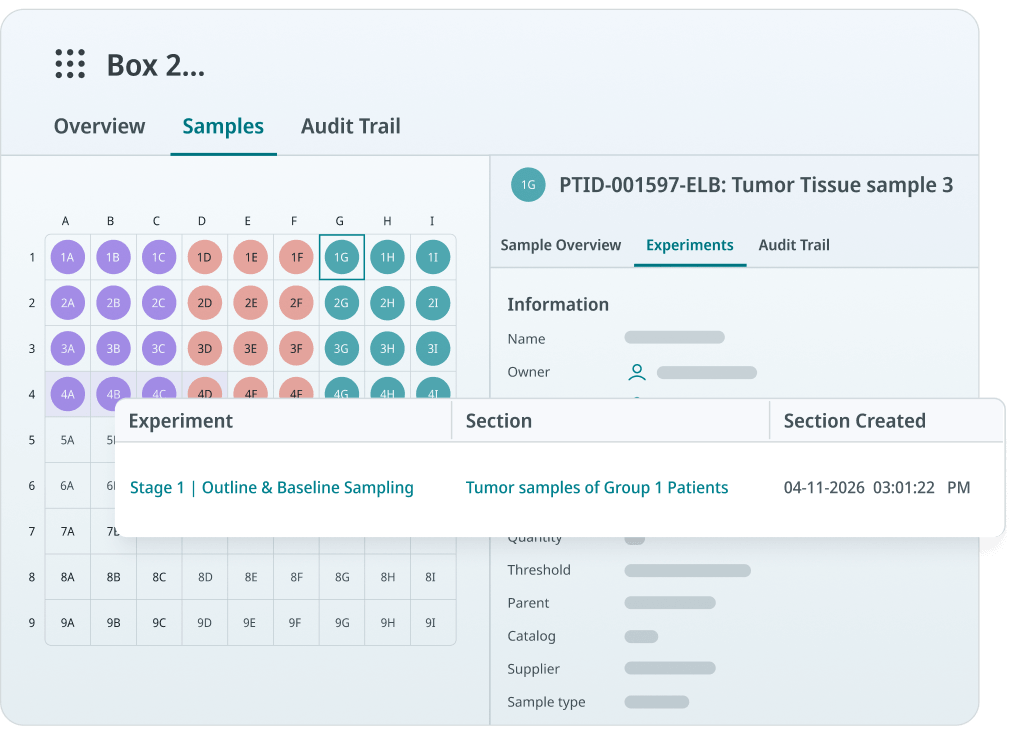
Digital traceability supports material accountability
Biosecurity depends on knowing what biological material exists, where it is stored, and who changed its record. With SciSure LIMS, you can maintain structured sample and storage records, user roles and permissions, complete sample audit trails, and lifecycle and disposal history. These digital controls complement (not replace) physical access controls and institutional security policies.
Regulatory compliance
Biosafety and biosecurity obligations vary by jurisdiction and activity. In the United States, examples include OSHA’s Bloodborne Pathogens Standard for covered occupational exposures, the Federal Select Agent regulations for covered agents and toxins, and the NIH Guidelines for applicable recombinant or synthetic nucleic acid research. CDC/NIH BMBL and the WHO laboratory manuals provide influential guidance and best practices, but they should not be described as regulations.
Your organization should maintain up-to-date compliance registers covering handling and storage of biological materials, management of biohazardous waste including transportation, protection of workers from bloodborne pathogens and other potentially infectious materials, and implementation of biosecurity controls. You should also maintain a current applicability register that distinguishes legal requirements, funding conditions, permits, institutional policies, and voluntary guidance.
Key regulatory frameworks and guidance include:
- The CDC/NIH Biosafety in Microbiological and Biomedical Laboratories (BMBL)
- The WHO Laboratory Biosafety Manual
- NIH Guidelines for Research Involving Recombinant or Synthetic Nucleic Acid Molecules
- Select agent regulations for particularly dangerous biological agents
Risk assessment
Both biosafety and biosecurity programs require formal risk assessments, but the two processes are distinct in scope and focus.
- A biosafety risk assessment evaluates the likelihood and consequences of accidental exposure to biological agents.
- A biosecurity risk assessment identifies vulnerabilities that could be exploited for deliberate misuse. Running both is necessary, as a gap in either leaves the program incomplete.
Biosafety risk assessment
A biosafety risk assessment involves hazard identification, hazard assessment and risk evaluation, risk management, documentation and communication, and review and update. The purpose is to identify risks and implement corrective and preventive actions (CAPAs) to mitigate gaps.
Biosecurity risk assessment
This assessment identifies potential biological threats and assesses vulnerabilities in physical security, personnel controls, inventory systems, and cybersecurity infrastructure. Outcomes can include emergency preparedness and response plans, training programs, and communication and coordination protocols.
Both types of assessments are ongoing. They should be periodically reviewed and updated to reflect new processes, controls, procedures, or organizational changes that could affect biosafety and biosecurity risk levels.
SciSure’s Health & Safety features can help you centralize biological registrations, project reviews, documented amendments, inspections, incident follow-up, and potential exposure records. Its Training LMS assigns role- and hazard-specific requirements, automates reminders, and tracks completion. Where an IBC is part of the institution’s process, configurable review statuses can also support biosafety review and committee workflows.
Education and training
Comprehensive biosafety and biosecurity training is essential for protecting people and the environment. Training equips individuals with the knowledge and skills required for safe and secure research practices.
- Biosafety training covers relevant regulations, modes of transmission of pathogens, standard precaution measures, vaccine information (such as Hepatitis B), containment with BSCs, safe handling practices, PPE requirements and limitations, decontamination of waste, incident reporting, and emergency response procedures.
- Biosecurity training covers incident reporting, dual-use research considerations, ethical and legal aspects, security policies and procedures including access control, data management practices, and specific security measures applicable to the facility and agents involved.
How Institut Pasteur manages biological material traceability with SciSure
Across Institut Pasteur’s 12 research departments, individual units had developed different approaches to managing research documentation and samples, often using a mix of paper-based systems and digital tools. The lack of standardization made it harder to locate samples, track data, organize experimental records, and collaborate across teams.
Institut Pasteur selected SciSure’s ELN and LIMS capabilities for an institute-wide rollout. The resulting platform connects protocols, experiments, and samples, creating traceability into what was done and by whom. Teams can also centralize equipment information and bookings.
.jpg)
In the Bacterial Cell Cycle Mechanisms Unit, Research Engineer and Lab Manager Mariano Martinez described SciSure’s tracking capabilities as a major improvement to sample management. "I'm thoroughly impressed with how SciSure has transformed our daily operations," he shares. Read the full Institut Pasteur story.
Building an integrated biosafety and biosecurity program
Biosafety and biosecurity are distinct in their objectives but mutually reinforcing in practice. A strong biosafety program reduces the risk of accidental exposure; a strong biosecurity program reduces the risk of intentional misuse. Weaknesses in either create vulnerabilities in the other.
Oversight structures vary. In the United States, institutions conducting research covered by the NIH Guidelines use an Institutional Biosafety Committee (IBC) to review recombinant or synthetic nucleic acid research. Many institutions give the IBC a broader biohazard remit, while biosecurity responsibilities may also involve biosafety professionals, security, IT, legal, facilities, and research leadership. The IBC sets the requirements, but executing them day to day means keeping biological material logs, training records, access controls, and inspection documentation current and audit-ready across the lab.
How SciSure connects biosafety and biosecurity workflows
SciSure connects the research, material-tracking, and safety records that biosafety and biosecurity programs rely on.
- The SciSure Electronic Lab Notebook (ELN) keeps experiments and protocols structured, searchable, time-stamped, and version-controlled, with links to the samples and inventory used.
- The SciSure Laboratory Information Management System (LIMS) provides biological-material traceability through centralized sample and storage records, barcodes, role-based permissions, audit trails, and lifecycle and disposal tracking.
- SciSure’s Health & Safety (EHS) features help you manage biological registrations and amendments alongside training requirements, inspections, incidents, potential exposure records, and compliance workflows.
With these powers combined, your research and safety teams can more easily maintain consistent, audit-ready evidence across laboratories and sites.
From documentation to action: keeping programs current
Biosafety and biosecurity programs are always changing and adapting. They need to reflect changes in the biological agents being used, the procedures being performed, the personnel involved, and the regulatory landscape. That means regular review cycles, updated risk assessments, and training that keeps pace with new research activities.
Labs that rely on disconnected systems like spreadsheets for inventory, paper training records, and separate inspection logs, tend to have visibility gaps that only become apparent during an audit or an incident. Centralizing biosafety and biosecurity documentation in a structured digital system means that records are searchable, version-controlled, and available when they're needed, not reconstructed under pressure.
SciSure supports this kind of ongoing program management across research and EHS workflows. If you want to see how it fits your lab's biosafety and biosecurity requirements, talk to a specialist.
FAQ
What is the difference between biosecurity and biosafety?
Biosafety focuses on protecting laboratory workers, the environment, and the public from accidental exposure to biological agents through containment measures, PPE, safe work practices, and facility design. Biosecurity focuses on preventing unauthorized access, theft, misuse, or intentional release of biological materials. The key difference is the nature of the threat: biosafety addresses accidents and unintentional exposures, while biosecurity addresses deliberate or malicious acts.
How does biosafety relate to biosecurity?
Biosafety and biosecurity are complementary disciplines that address different aspects of biological risk management. Many of the same measures (inventory control, access restrictions, training, and documentation) serve both programs simultaneously. For example, restricting storage access to trained, authorized personnel can reduce accidental exposure while also deterring unauthorized access. Accurate inventory records and access logs can support incident response, exposure assessment, material accountability, and investigation of discrepancies.
What is the basis of biosafety and biosecurity?
Both disciplines are grounded in biological risk assessment: the systematic process of identifying hazards, evaluating risks, implementing controls, and reviewing outcomes over time. For biosafety, risk assessment determines the appropriate containment level and protective measures for a given biological agent and procedure. For biosecurity, it identifies vulnerabilities in physical security, personnel management, inventory systems, and data protection. The WHO Laboratory Biosafety Manual, CDC/NIH BMBL, and NIH Guidelines provide the primary frameworks for both disciplines in research settings.
What factors are considered in a biosafety risk assessment?
A biosafety risk assessment considers the biological agent and its hazardous characteristics, the procedures being performed, the likelihood and routes of exposure, the competence and health of personnel, the quantities and concentrations used, the facility and containment equipment, and the consequences of an incident. The assessment then identifies controls and documents how their effectiveness will be reviewed.
There are five factors that interact to determine the level of biological risk in a laboratory setting and guide the controls needed to reduce it. Colloquially, you might have heard of them referred to as the “5 P’s of Biosafety.” Here they are:
- The pathogen refers to the specific biological agent, its virulence, transmission routes, and infectious dose.
- Personnel covers the training level, health status, and susceptibility of the staff handling the materials.
- Place refers to the physical environment, lab layout, and containment equipment.
- PPE is the protective gear worn to act as a barrier against exposure.
- Procedures cover the specific methods used to manipulate biological agents, which dictate aerosol risk and spill potential.
Understanding how these five factors interact is central to conducting an accurate biosafety risk assessment. However, the 5 Ps are not a formal CDC, NIH, or WHO risk-assessment standard.
What are examples of biosafety and biosecurity measures?
Examples of biosafety measures include biosafety cabinets, PPE such as gloves and respirators, BSL-designated containment facilities, decontamination protocols, waste disposal procedures, and biosafety training programs. Examples of biosecurity measures include access control systems, personnel background checks, locked storage for biological agents, inventory accountability systems, cybersecurity protections for sensitive research data, and dual-use research assessments. Many labs implement both simultaneously. For example, a locked freezer with an access log serves both biosafety (limiting who can handle hazardous materials) and biosecurity (maintaining accountability for biological agent inventory) purposes.

Read more of our blogs about modern lab management
Discover the latest in lab operations, from sample management to AI innovations, designed to enhance efficiency and drive scientific breakthroughs.