How to Improve Lab Turnaround Time with Digital Research Management Tools
Learn how to improve lab turnaround time with structured workflows, automated approvals, and real-time tracking across the research lifecycle.
Download Whitepaper
TL;DR
Lab turnaround time improves not by speeding up bench work - but by replacing fragmented coordination with structured digital research management workflows that make handoffs, approvals, sample movement, and data capture visible and automated across the full research lifecycle.
- Map hidden delays
Most turnaround time is elapsed time, not active experimentation. Samples wait in intake queues, approvals sit in inboxes, data pauses before review, and experiments reset due to missing metadata. End-to-end visibility through a connected platform timestamps every workflow transition, surfaces queue lengths and average cycle times. It also exposes where work consistently stalls.
- Fix handoffs, automate approvals
Ambiguous transitions between roles cause idle work that email threads cannot solve. Digital workflows replace informal coordination with role-based task routing, automatic assignment when experiments reach defined statuses, and escalation rules for aging tasks. Conditional logic gates progression on required fields, safety confirmations, and QA (Quality Assurance) signoff, so control steps trigger automatically.
- Track sample flow centrally
Samples move through intake, preparation, analysis, storage, and disposal, but visibility is often fragmented across spreadsheets, ELNs (Electronic Lab Notebooks), and hallway conversations. Centralizing sample status, queue depth, ownership, chain of custody, and priority routing in one system reduces idle time at shared instruments. It also prevents urgent samples from getting buried in general queues.
- Capture data structurally to prevent rework
Incomplete documentation, inconsistent metadata, and skipped required fields force experiments to reset, quietly compounding cycle times. Embedding standardized templates, required fields, and inline metadata capture into experiment records guides scientists during work rather than after. Structured capture speeds downstream review, reduces status reversals, and ends the trade-off between speed and scientific rigor.
- Monitor turnaround time as a KPI
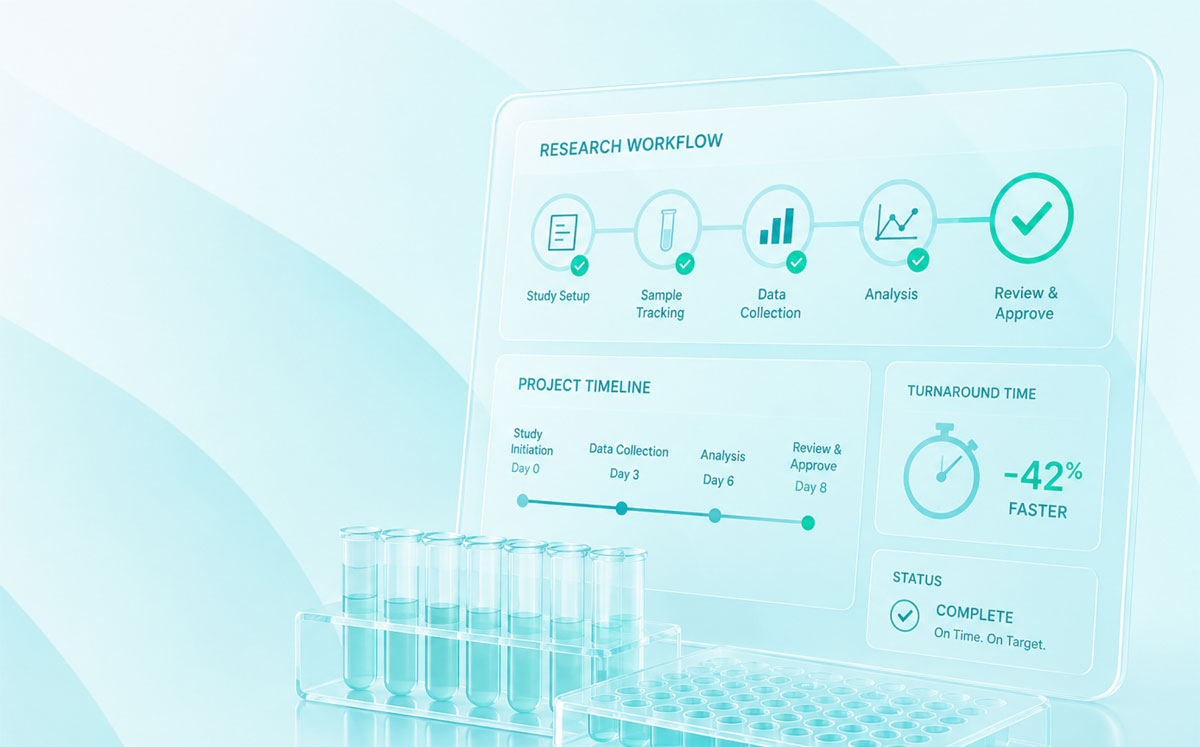
Turnaround time should be tracked continuously, not investigated only when deadlines slip. Dashboards built on timestamped workflow data reveal average completion time by experiment type, time spent in review or intake, aging approvals, queue depth by team, and rework frequency. Treating it as an operational KPI (Key Performance Indicator) shifts teams from reactive postmortems to systematic improvement.
Ready to see SciSure in action?
No commitment · Free consultation
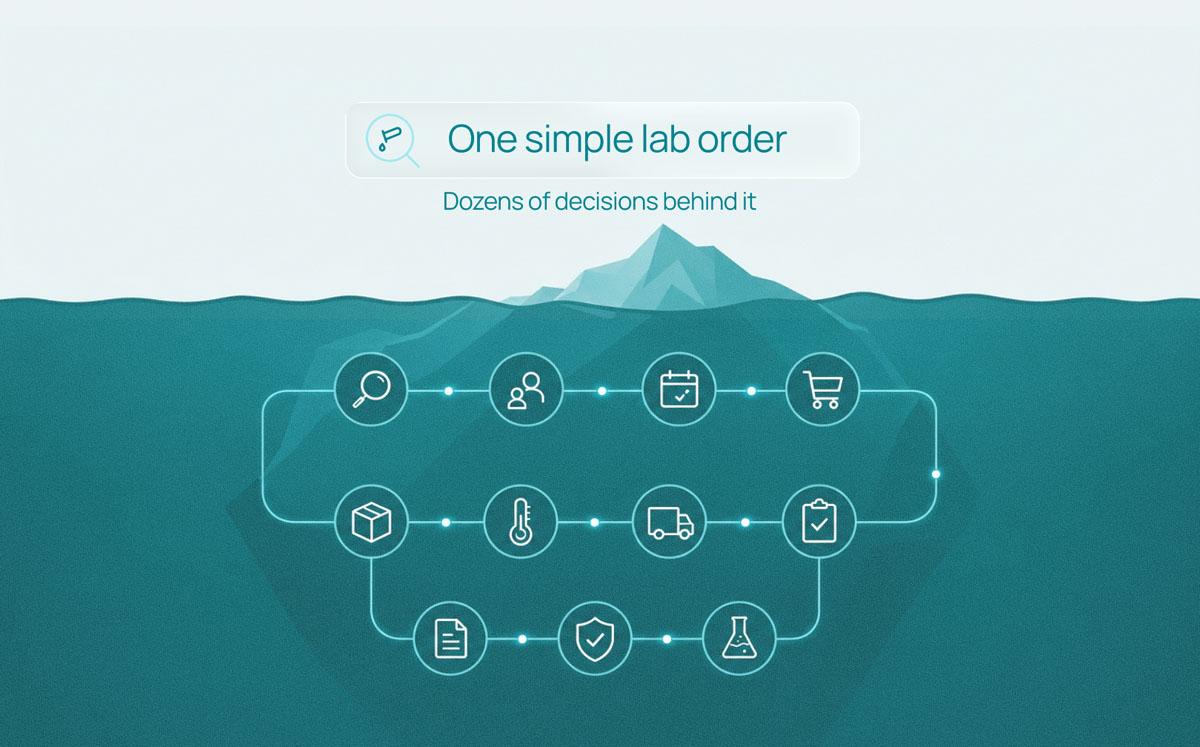
When experiment timelines stretch in most research organizations, slow progress has less to do with assay difficulty or experimental design; it has more to do with coordination gaps between people, systems, and steps in the workflow. Samples wait for assignment. Approvals sit in inboxes. Data review gets delayed because no one has visibility into queue length. Rework resets the clock because required metadata wasn’t captured upfront.
Individually, these delays seem minor. Collectively, they compound, quietly extending experiment and research turnaround time across teams and projects.
The real challenge lies in how work moves between those stages. If you want to improve lab turnaround time, you have to look beyond individual experiments and examine how work flows through the system.
This is where digital research management tools make a measurable difference. When workflows are structured, handoffs are automated, and teams have real-time visibility into task status and sample movement, delays become predictable, and preventable.
In this guide, we’ll walk through a practical, step-by-step approach to improving lab turnaround time by:
- Identifying where time is actually being lost
- Eliminating ambiguous task handoffs
- Automating passive waiting steps
- Making sample flow visible and predictable
- Reducing rework through structured data capture
- Monitoring turnaround time as an operational KPI
Step 1: Map where time is actually being lost
If you want to improve lab turnaround time, start by measuring the full research lifecycle. Not just the bench work. Most labs can tell you how long an assay takes to run. Far fewer can tell you how long samples wait before assignment, how long approvals sit in review, or how often experiments reset due to missing information. Turnaround time is elapsed time, from request or design to validated result. And much of that time isn’t active experimentation. It’s waiting.
Common hidden delays include:
- Samples sitting in intake queues
- Experiments paused pending safety or material approvals
- Data waiting for review or signoff
- Rework caused by incomplete metadata or documentation
In fragmented environments, these stages are spread across disconnected systems: ELNs, inventory tools, spreadsheets, inboxes. That fragmentation makes delays hard to trace and even harder to fix.
The first practical step is creating end-to-end visibility across the research lifecycle. A connected research management platform like SciSure timestamps workflow transitions, tracks sample status in real time, and surfaces stalled tasks before deadlines slip. When you can see queue lengths, average cycle times, and where work consistently pauses, patterns emerge. And once patterns are visible, lab turnaround time stops being a mystery metric. It becomes something you can actively manage.
Here are 5 organizational risks that fragmented lab systems create and why an integrated system is mission-critical.
Step 2: Eliminate ambiguous handoffs
To improve lab turnaround time, make sure you're targeting handoff failures. When coordination depends on email threads, verbal updates, or informal tracking, ownership becomes unclear. Tasks sit idle not because no one is capable of doing them, but because no one is explicitly accountable. For example, when a finished experiment remains waiting for review, samples are logged but not assigned, or data is ready but no one knows it requires approval.
Digital research management workflows replace informal coordination with structured task assignment. SciSure defines these transition points explicitly. For example:
- When an experiment is marked “complete,” the system automatically assigns the data review task to a named QA role.
- When a sample is received, it is routed to the appropriate queue based on study type or priority.
- If a review step exceeds a defined time threshold, an alert or escalation is triggered.
Instead of asking, “Who’s handling this?” the system already knows. Role-based task routing, automated notifications, and escalation rules ensure that work transitions cleanly from one stage to the next. No inbox archaeology. No status-chasing meetings.
Step 3: Automate the “waiting work”
Automated digital research management workflows can prevent delays from unclear ownership and passive waiting. For example, steps that require validation, confirmation, or approval before work can continue, e.g., safety reviews, material release checks, QA signoff, and data validation. Unlike ambiguous handoffs, these delays occur even when ownership is clear, because progression depends on formal control steps.
Each of these steps is necessary. But when they’re managed manually, they introduce unpredictable delays. An approval request gets buried in email. A reviewer doesn’t realize a task is pending. An experiment isn’t documented correctly, so the workflow resets. Individually, these pauses seem small. Collectively, they stretch lab turnaround time significantly.
Within SciSure, conditional workflows ensure that:
- Approval steps are built into the workflow and automatically triggered when an experiment reaches a defined status (e.g., “Ready for QA Review”).
- Required data fields and documentation must be completed before the system allows progression to the next stage.
- Sample status cannot advance until prerequisite actions (such as safety confirmation or material verification) are logged.
- Dashboards surface pending approvals and aging tasks, making delays visible before they become bottlenecks.
Instead of relying on someone to remember the next step, the system advances it automatically. This reduces invisible wait time: the hours or days where no one is actively working, but the experiment is still not progressing.
Step 4: Make sample flow predictable
Improving turnaround time requires making sample lifecycle status visible in real time. Predictable sample flow reduces idle time between processing stages, prevents unnecessary rework, and shortens overall experiment turnaround time. Not by accelerating individual steps, but by reducing friction between them.
Even well-designed experiment workflows can stall if sample tracking is poor. In many labs, samples pass through multiple stages: intake, preparation, analysis, storage, disposal – but visibility into their status is fragmented. Teams rely on spreadsheets, manual logs, or hallway conversations to understand where material is and what happens next.
Common issues include:
- Samples sitting unassigned after receipt
- Priority samples mixed into general queues
- Capacity bottlenecks at shared instruments
- Delays caused by incomplete chain-of-custody records
Within the SciSure platform, samples can be tracked from receipt through processing and final disposition within a centralized system. Status changes are logged automatically as samples move between workflow stages. Teams can view queue depth, identify backlogs, and prioritize work based on predefined criteria such as study type or urgency.
When sample location, ownership, and status are transparent, fewer delays occur due to uncertainty. When scientists don’t have to ask, “Where is this sample?” or “Is this ready for analysis?” work progresses more consistently.
Here's an example from the field: Euroimmun US - a diagnostics company within Revvity. Before SciSure, the team managed samples through Excel spreadsheets and undocumented institutional knowledge held in staff memory. As the company scaled, sample status became scattered across multiple document versions. This forced the team to repeatedly revisit and reconcile data points before work could move forward.
After implementing SciSure, sample organization, retrieval, and status tracking moved into a single live system, cutting the time and resources spent on sample-related activities. The team can now locate samples faster, reduce mix-ups and unnecessary freeze-thaw cycles, and filter inventory across cohorts and test types - turning sample management from a coordination bottleneck into a predictable, searchable workflow.
"...With the SciSure platform, our organization has dramatically reduced the time and resources required for all sample-related activities. The proper, live, and adjustable organization system streamlines sample access in a way that impacts all scientific teams within our organization."
— Kiprian Gernat, Internal Application Scientist, Revvity's Euroimmun US
Read more: How Euroimmun US Streamlined Sample Management and Saved Time with SciSure
Step 5: Reduce rework through structured data capture
When data is captured in a structured and consistent way, downstream review becomes faster and more predictable. Reviewers spend less time chasing missing information and more time evaluating results. Fewer documentation gaps mean fewer resets. Fewer resets mean shorter cycle times. Shorter cycle times improve overall lab turnaround time. When structure is built into the system, speed and rigor stop competing – they reinforce each other.
For example, an experiment runs successfully, but documentation is incomplete, metadata is inconsistent, version control is unclear, or a required safety field was skipped. In many cases, oversights like these result in the research pausing while corrections are requested, or rework is completed - and the clock resets. These resets rarely show up in formal reporting. But across multiple experiments they compound into significant delays.
Within SciSure, experiment templates, required fields, and standardized data structures can be configured to guide users through documentation as work is performed – not after the fact. Metadata requirements are embedded directly into experiment records. Inventory usage can be logged in context. Status changes are recorded automatically.
Because improving lab turnaround time isn’t just about moving work forward faster. It’s about preventing it from moving backward.
Step 6: Monitor lab turnaround time as an operational KPI
If cycle time matters (and it always does in research environments), it should be monitored continuously. When lab turnaround time is treated as a visible operational KPI, improvement becomes systematic rather than reactive. Teams can set targets, monitor trends over time, and adjust workflows before delays cascade across projects.
In many organizations, turnaround time is only examined when a deadline slips or a project falls behind. By then, the delays are already baked in. Teams reconstruct what happened, identify bottlenecks retrospectively, and move on, without changing the underlying system.
Improving lab turnaround time isn’t a one-time workflow redesign. It’s an ongoing operational discipline. Within the SciSure platform, workflow transitions, experiment status updates, and sample movements are timestamped automatically as part of daily activity. That operational data can be surfaced through dashboards and reporting views to provide visibility into:
- Average time to completion by experiment type or study
- Time spent in specific workflow stages (e.g., review, intake, analysis)
- Aging tasks and pending approvals
- Queue depth by function or team
- Frequency of rework or status reversals
This level of visibility changes the conversation. Instead of asking, “Why was this late?” leaders can ask, “Where are we consistently losing time?” A recurring delay in QA review may signal capacity imbalance. A growing intake queue may point to resourcing gaps. A spike in rework could indicate unclear documentation standards.
Faster results start with better systems
An improved lab turnaround time is the outcome of your operational design. When workflows are structured, handoffs are clear, control points are embedded, and sample movement is visible, progress becomes consistent. Delays are identified earlier. Rework decreases. Idle time between stages shrinks.
Digital research management tools like SciSure provide the operational infrastructure that allows teams to coordinate work deliberately rather than reactively. And when coordination improves, timelines stabilize.
Science will always carry uncertainty. But the way work flows through your lab doesn’t have to. Improve the system, and lab turnaround time improves with it. Because faster science isn’t about pushing people harder. It’s about designing systems that remove unnecessary friction.
If you’re ready to rethink how work moves through your lab, connect with our team to explore what’s possible.

Read more of our blogs about modern lab management
Discover the latest in lab operations, from sample management to AI innovations, designed to enhance efficiency and drive scientific breakthroughs.