Worauf Wissenschaftler bei der Auswahl einer digitalen Laborplattform achten sollten
Ihre Laborsoftware sollte sich Ihren Arbeitsabläufen anpassen, nicht umgekehrt. Hier kommen Konnektivität, Benutzerfreundlichkeit, Integrationen und Funktionsumfang ins Spiel.
Download Whitepaper
TL;DR
Bei der Wahl einer digitalen Laborplattform geht es weniger darum, die längste Funktionsliste zu finden, als vielmehr darum, dass sie sich im wissenschaftlichen Alltag Ihres Labors bewährt. Dieser Artikel führt Sie durch den Auswahlprozess für die richtige Softwareplattform.
- Beginnen Sie bei Ihren tatsächlichen Arbeitsabläufen.
Bringen Sie ein oder zwei reale Arbeitsabläufe in jede Demo ein: vom Probeneingang über die Lagerung und experimentelle Nutzung bis hin zur Protokollausführung, Gerätebuchung oder Reagenzienbestellung. Bitten Sie die Anbieter, den vollständigen Prozess zu zeigen. - Halten Sie wissenschaftliche Aufzeichnungen vernetzt.
Ihre Plattform sollte Proben, Herkunft, Experimente, Protokolle, Inventar, Geräte, Ergebnisse und die beteiligten Personen miteinander verknüpfen. Der Test ist einfach: Können Sie nachvollziehen, was mit einer Probe geschehen ist, ohne Tabellen und Ordner durchsuchen zu müssen? - Testen Sie Rückverfolgbarkeit und Benutzerfreundlichkeit.
Achten Sie auf Berechtigungen, Audit-Trails, Versionsverläufe, Freigaben, zuverlässige Exporte und Backup-Optionen. Lassen Sie dann die Wissenschaftler selbst alltägliche Aufgaben ausprobieren. - Prüfen Sie Integrationen vor Vertragsabschluss.
Bestätigen Sie, wie die Plattform mit den bereits in Ihrem Labor verwendeten Tools kommuniziert. Fragen Sie nach, welche Integrationen enthalten sind und welche nicht. - Wählen Sie den richtigen Funktionsumfang.
SciSure ist eine starke Option für Labore, die vernetzte Forschungsabläufe benötigen, wie ELN, LIMS, Probenmanagement, Inventar, Geräte, Integrationen sowie relevante Gesundheits- und Sicherheitsfunktionen. Für eine unabhängige Bewertung der Stärken, Grenzen und Eignung von SciSure lesen Sie den vollständigen SciSure-Testbericht auf BestLabTech.com.
Dieser Gastbeitrag wurde 2026 von Colm O'Regan verfasst, einem wissenschaftlichen Werbetexter und ehemaligen Forscher mit einem B.Sc. und Doktortitel in Chemie und Materialwissenschaften.
Ready to see SciSure in action?
No commitment · Free consultation
Eine digitale Laborplattform sollte Ihre Arbeit erleichtern – bei der Durchführung, der Wiederholung und der Dokumentation, selbst wenn Sie sechs Monate später darauf zurückblicken.
Doch viele Systeme sehen in einer glänzenden Demo gut aus, scheitern aber im Laboralltag. Das betrifft Aufgaben wie das Auffinden einer Probe, die Überprüfung der verwendeten Protokollversion, die Buchung eines Geräts, die Nachverfolgung von Reagenzien oder die Dokumentation, wer einen Datensatz geändert hat und warum.
Diese Lücke zwischen Demo und Realität ist weiter verbreitet, als man denkt. Umfassende Studien zu Unternehmenssoftware zeigen, dass etwa 66 % der Technologieprojekte teilweise oder vollständig scheitern und 70 % der Initiativen zur digitalen Transformation ihre ursprünglichen Ziele nicht erreichen – oft, weil die Tools nicht zu den tatsächlichen Arbeitsabläufen passen. Die richtige Plattform unterstützt die Arbeitsweise Ihres Labors, auch wenn sie nicht die längste Funktionsliste hat.
Lassen Sie uns also darüber sprechen, wie Sie die beste Softwareplattform für Ihr Labor auswählen.
Beginnen Sie mit dem Arbeitsablauf, nicht mit der Softwarekategorie
"ELN", "LIMS", "Inventarsoftware" und "Labormanagement-Plattform" sind nützliche Begriffe, können aber vieles verschleiern.
Bevor Sie Anbieter vergleichen, notieren Sie ein oder zwei Arbeitsabläufe, die Ihr Team wöchentlich durchführt. Zum Beispiel:
- Eine Probe trifft ein, wird etikettiert, gelagert, in einem Experiment verwendet und in Aliquots aufgeteilt.
- Ein Wissenschaftler folgt einem Protokoll, zeichnet Beobachtungen auf, verknüpft Geräteausgaben und lässt ein Ergebnis überprüfen.
- Ein Reagenz wird entgegengenommen, einem Lagerort zugewiesen, auf sein Verfallsdatum überwacht und nachbestellt, bevor der Vorrat aufgebraucht ist.
- Ein gemeinsam genutztes Gerät wird gebucht, kalibriert, verwendet, gewartet und bei Bedarf außer Betrieb genommen.
Bitten Sie anschließend jeden Anbieter, diesen vollständigen Arbeitsablauf unter Verwendung Ihrer Terminologie und Ihrer Probentypen zu demonstrieren.
Wenn die Demo nur mit einer fiktiven „Probe A“ in einem perfekten, linearen Prozess funktioniert, haben Sie das System noch nicht angemessen bewertet.
Dies ist wichtig, da ein Großteil der Laborfehler nach wie vor vor der eigentlichen Analyse entsteht. Eine begutachtete Prüfung klinischer Labore ergab, dass 60 % bis 70 % aller gemeldeten Fehler präanalytisch waren (Probenhandhabung, Etikettierung und Identifizierung) und nicht auf Probleme bei der Analyse selbst zurückzuführen waren.
Achten Sie auf Datensätze, die miteinander verknüpft bleiben
Untersuchungen von McKinsey zeigen, dass Datennutzer, einschließlich Wissenschaftler und Forscher, 30 % bis 40 % ihrer Arbeitszeit allein mit der Suche nach Informationen verbringen, wenn es kein klares System zur Datenerfassung gibt. Eine Umfrage unter 4000 Arbeitnehmern ergab, dass sie durchschnittlich 3,6 Stunden pro Tag auf der Suche nach Informationen zu ihrer Arbeit sind.
Genau hier zahlt sich eine Labor-Softwareplattform aus. Sie sollten in der Lage sein, eine Probe zu nehmen und folgende Fragen zu beantworten: Was ist das? Wo befindet sie sich? Wer hat sie verwendet? In welchem Experiment wurde sie eingesetzt? Welche Protokollversion wurde angewendet? Was geschah danach?
Wenn Sie für diese Antworten immer noch zwischen Tabellenkalkulationen, freigegebenen Laufwerken, E-Mail-Verläufen und handschriftlichen Notizen hin- und herwechseln müssen, nimmt Ihnen die Plattform nicht genug operative Arbeit ab.
Sie sollten beispielsweise in der Lage sein, Folgendes miteinander zu verknüpfen:
- Proben sowie deren Ausgangsmaterialien, Derivate, Lagerorte und Lebenszyklushistorie.
- Experimente, Protokolle, Beobachtungen, Ergebnisse und angehängte Dateien.
- Reagenzien, Verbrauchsmaterialien, Lagerbestände, Verfallsdaten usw.
- Gerätebuchungen und Wartungshistorie.
- Die an jedem Arbeitsablauf beteiligten Personen, Rollen, Genehmigungen und Berechtigungen.
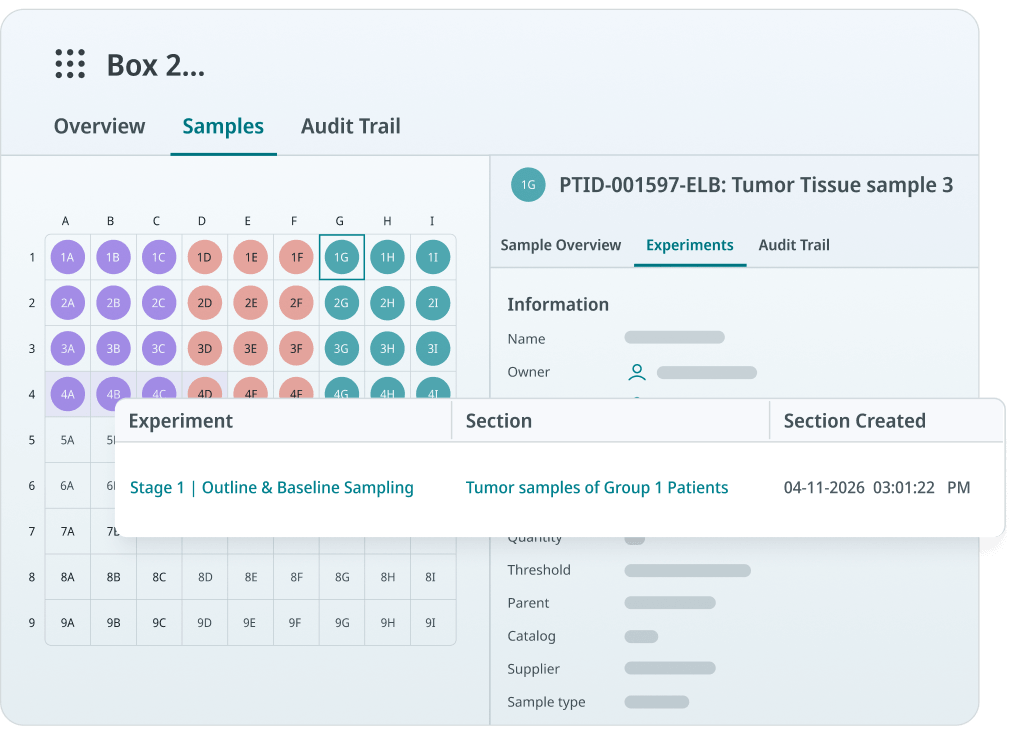
SciSure LIMS verbindet konfigurierbare Probendatensätze mit Lagerung, Herkunft, Experimenten, Protokollen, Inventar und Geräten. Die Funktionen zur Probenverwaltung sind darauf ausgelegt, Teams dabei zu unterstützen, Materialien von der Erstellung über die Verwendung und Bewegung bis hin zur Entsorgung nachzuverfolgen.
Testen Sie die Rückverfolgbarkeit, bevor Sie sie benötigen
Die Bedeutung der Rückverfolgbarkeit wird oft unterschätzt – bis ein Ergebnis überprüft werden muss, eine Probe nicht auffindbar ist oder ein Auditor fragt, wie ein Datensatz geändert wurde.
Achten Sie auf eine klare, durchsuchbare Audit-Historie, rollenbasierte Berechtigungen, versionskontrollierte Protokolle und Experimentaufzeichnungen, elektronische Signaturen oder Zeugenschritte, wo Ihr Arbeitsablauf dies erfordert, exportierbare Datensätze, die außerhalb des Systems lesbar sind, sowie Backup-, Wiederherstellungs- und Datenaufbewahrungsoptionen, die zu Ihrem Labor passen.
Bei regulierten Arbeiten sind Softwarefunktionen nur ein Teil des Ganzen. FDA 21 CFR Part 11 gilt für bestimmte elektronische Aufzeichnungen und Signaturen. Ihr Unternehmen ist für die Validierung, die Verfahren, die Schulung und das Änderungsmanagement verantwortlich.
Und die Aufzeichnungen selbst sollten die Datenintegrität unterstützen. Die GxP-Datenintegritätsrichtlinie der MHRA legt die ALCOA-Prinzipien (attributable, legible, contemporaneous, original, and accurate) sowie die zusätzlichen Erwartungen fest, dass Aufzeichnungen vollständig, konsistent, dauerhaft und verfügbar sein müssen.
Mit anderen Worten: Fragen Sie, was die Plattform leisten kann, aber akzeptieren Sie „Part 11-konform“ nicht als Ersatz für das Verständnis Ihres eigenen Verwendungszwecks.
Stellen Sie sicher, dass es am Labortisch funktioniert
Das beste System ist das, das Wissenschaftler auch tatsächlich nutzen. Das bedeutet, alltägliche Abläufe zu testen, nicht nur Verwaltungsmasken:
Beispiele für zu prüfende Punkte:
- Kann jemand eine Probe in Sekundenschnelle finden?
- Kann ein Datensatz direkt am Gefrierschrank oder Labortisch aktualisiert werden?
- Können Vorlagen genutzt werden, ohne die für die Forschung erforderliche Flexibilität zu verlieren?
- Können Etiketten gescannt, Materialien verschoben und die Nutzung protokolliert werden, ohne Daten doppelt eingeben zu müssen?
- Kann mit Ausnahmen umgegangen werden, ohne auf Excel-Workarounds ausweichen zu müssen?
Testen Sie auch die Suche, die Navigation, Massenaktionen und die Dateiverwaltung. Das klingt nebensächlich, bis Ihr Team diese Aufgaben hunderte Male pro Woche wiederholt. Eine gute Faustregel ist daher, mehreren zukünftigen Nutzern in einer Testumgebung die Aufgaben einer normalen Arbeitswoche zu übertragen.
Die Akzeptanz der Software, nicht der Funktionsumfang, ist der häufigste Grund für die mangelnde Leistung von Unternehmens-Tools: Umfangreiche Implementierungsstudien zeigen, dass 70 % der Software-Einführungen scheitern gerade wegen mangelnder Nutzerakzeptanz, unabhängig davon, wie leistungsfähig die zugrunde liegende Plattform ist.
Prüfen Sie, was verbunden ist … und was nicht
Keine Plattform existiert isoliert. Ihr Labor verlässt sich möglicherweise bereits auf Analysegeräte, Barcodescanner, Etikettendrucker, Lagerhardware, Analysetools, elektronische Patientenakten, Einkaufssysteme oder Sicherheitssoftware.
Stellen Sie daher gezielte Fragen:
- Welche Integrationen sind nativ, welche nutzen Add-ons und welche erfordern individuelle Anpassungen?
- Gibt es eine API oder ein Entwickler-Toolkit für Systeme, die Sie später benötigen werden?
- Sind Integrationen für das Hosting-Modell und die Abonnementstufe verfügbar, die Sie in Betracht ziehen?
- Ist ein bidirektionaler Datenaustausch möglich oder handelt es sich nur um einen Export?
- Wer ist für die Integration verantwortlich, wenn sich ein externes System ändert?
SciSure ist eine Überlegung wert, wenn Sie Forschungsdokumentation, Proben- und Bestandsverwaltung, Gerätedaten, Arbeitsabläufe, Integrationen sowie Funktionen für Arbeitssicherheit im Labor unter einer vernetzten Plattformstrategievereinen möchten. Es ist besonders relevant für multidisziplinäre Organisationen und chemielastige Labore, bei denen Forschungsbetrieb und Sicherheitsüberwachung Hand in Hand gehen müssen.

Doch die Passgenauigkeit ist wichtiger als der Funktionsumfang. Wenn Ihr Hauptbedarf in der biologieorientierten Sequenzplanung, der Chargenfreigabe in der Produktion oder einem sehr einfachen, kostengünstigen digitalen Laborbuch liegt, ist ein anderer Spezialist möglicherweise die bessere Wahl.
Berücksichtigen Sie, wie sich Ihr Labor im Laufe der Zeit verändern wird
Das System, für das Sie sich heute entscheiden, sollte ein aktuelles Problem lösen, ohne Sie bei zukünftigem Wachstum einzuschränken.
Suchen Sie nach einer Plattform, die neue Probentypen, sich ändernde Arbeitsabläufe, zusätzliche Benutzer, weitere Standorte, neue Geräte und strengere Governance-Richtlinien unterstützt, ohne dass ein kompletter Systemumbau erforderlich ist.
Kaufen Sie jedoch keine Komplexität, nur weil Sie sie vielleicht eines Tages benötigen könnten. Es ist weitaus kostengünstiger, eine passgenaue Plattform später zu erweitern, als jetzt ein überdimensioniertes System zurückzubauen.
Beginnen Sie daher mit den Arbeitsabläufen, die die meisten Reibungspunkte verursachen. Testen Sie diese gründlich. Binden Sie Wissenschaftler, Laborbetrieb, IT, Qualitätssicherung und Sicherheitsbeauftragte frühzeitig ein, wenn diese alle auf das System angewiesen sind.
Und falls SciSure auf Ihrer Auswahlliste steht, fordern Sie eine persönliche Demo an. Bringen Sie Ihre konkreten Beispiel-Workflows, Ihre Organisationsstruktur, Ihre Integrationsanforderungen und Ihre Bereitstellungsbedürfnisse mit in das Gespräch.

Read more of our blogs about modern lab management
Discover the latest in lab operations, from sample management to AI innovations, designed to enhance efficiency and drive scientific breakthroughs.