Why ELN/LIMS Adoption Fails at the Enterprise Level & What Management Needs to Do Differently
Enterprise ELN/LIMS adoption often breaks down when leadership stays hands-off. Here's why management needs to take a more active role to unify data, protect IP, and help teams make faster, better decisions.

Download Whitepaper
Ready to see SciSure in action?
No commitment · Free consultation
I've been in life sciences technology for a long time. Long enough to watch the same failure play out across organizations of every size, every funding stage, and every therapeutic focus. An ELN or LIMS gets purchased. Scientists are excited. Implementation happens or at least starts.
And then, somewhere between the kick-off call and the six-month check-in, the whole thing quietly falls apart.
Someone starts keeping their sample data in Excel again. A PI goes back to their paper notebook. A lab manager builds a workaround in SharePoint. The system is technically live, but nobody's really using it, which is why if your scientists aren't using it, you may as well have spent $0.
And when renewal comes around, the question at the table is: why are we paying for something nobody uses?
I've had this conversation more times than I can count. And almost every time, the root cause is the same: management was hands-off when they needed to be anything but.
The "any solution for any scientist" problem
For about fifteen years, the prevailing philosophy in research informatics was simple: give scientists whatever tools they want and let the science take care of itself. I understand the logic. Scientists are brilliant, particular, and not especially interested in being told how to work. Institutional leadership has been understandably reluctant to get between a PI and their preferred system.
But that philosophy has become expensive. Not just in licensing fees, but in something far harder to recover: data.
When every lab in your organization runs on a different ELN, a different LIMS, or some combination of paper notebooks and point solutions, what you've built isn't a research operation. You've built a collection of silos. Each one contains valuable scientific data and none of them talk to each other.
And when someone upstairs needs to make a business decision - whether to double down on a program, cut spending on one that isn't working, or prepare for an IND filing - someone has to manually pull data from five different systems, normalize it, compile it, and put together a report.
By the time that report lands on an executive's desk, the data in it might be a month old.
You cannot make fast, confident business decisions from a month-old report.
And in today's environment - where speed to hypothesis matters, where failing fast is a feature, not a bug - that lag is a competitive disadvantage.
The "any solution for any scientist" mentality made sense when money was plentiful, and urgency was low. Neither of those things is true anymore.
What management gets wrong about their own role
Here's what I hear from leadership when I suggest they need to get more involved in ELN and LIMS adoption:
"We don't want to dictate what the labs use. We just want the results."
I understand that instinct. But there's a fundamental flaw in it: you cannot get consistent, real-time results from inconsistent, fragmented systems. Stepping back from that decision actually limits what your scientists can achieve together.
The fear, usually, is that mandating a system will push scientists out the door. That PIs will balk at being told what to do. That the friction of change will disrupt the science.
In my experience, that fear is overblown. Scientists don't want to spend time managing data across disconnected tools any more than anyone else does. What they resist is change for its own sake. If you can show them that a unified ELN/LIMS platform makes their work more traceable, their samples easier to find, and their collaboration with other labs more seamless, then most of them will come around. Not overnight, but they will.
What they won't do on their own - what no one will do without clear organizational direction - is to abandon the system they're comfortable with just because there's a better one available. That requires executive directive. That requires someone at the top of the organization saying: We invested in this, and we are using it.
Management being hands-off is the single biggest predictor of ELN and LIMS adoption failure. It’s not the neutral stance you might think it is.
Selling the wrong value to the wrong people
Part of why management stays disengaged is that nobody has made the case in terms that actually matter to them.
If you walk into a budget meeting and tell a CSO or COO that your new ELN/LIMS system will save each scientist five hours a week, you might get a polite nod. But that executive is not going to go back to their lab directors and say: "Make this a priority." Because five hours a week, in the language of a business leader, translates to: We can get more out of the same headcount. They're not moved by it.
What moves them is different entirely.
I’d start by telling management that by running four or five more experiments per scientist per week, they can get to a hypothesis faster. Or that a drug development program typically requires hundreds - sometimes over five hundred - experiments to reach a testable conclusion. Or that by providing cleaner, structured, real-time data across their research portfolio, they can make the call to stop funding a failing program months earlier.
Or, better still, tell them that a unified platform with clean structured data can help them file an IND 3-6 months sooner than they otherwise would.
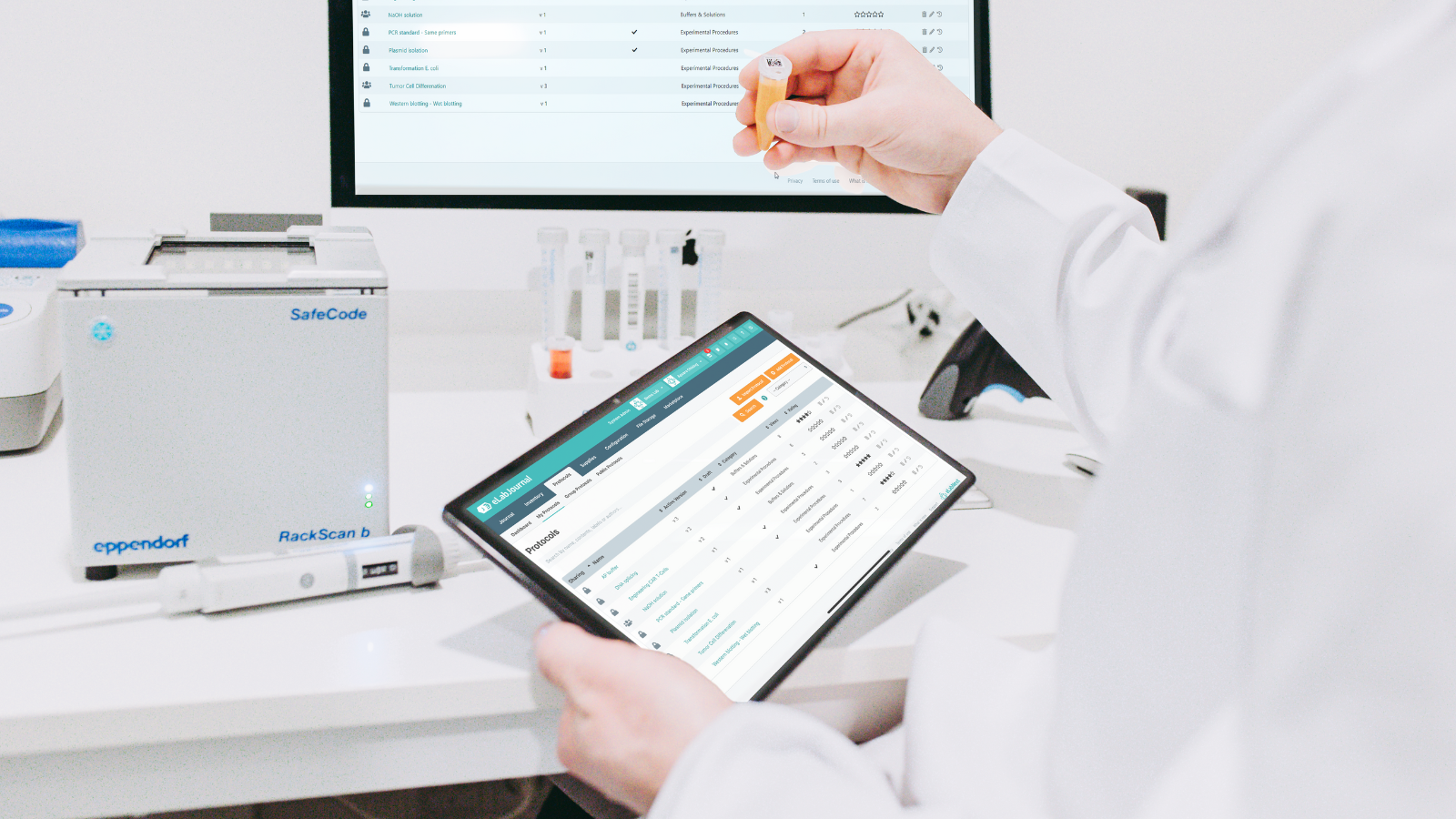
What does that mean for company valuation? What does it mean for competitive positioning? What does it mean for the board conversation next quarter?
That is the conversation that gets executives leaning forward. Not feature lists. Not time-savings arithmetic. Clear, measurable results from labs having implemented a digital platform built to adapt to their workflows, not the other way round.
And there's an important corollary: if an IND is filed and it fails publicly, the market knows. The valuation takes a hit. The narrative around the company shifts.
By contrast, if your data infrastructure is strong enough to identify early on that a program isn't going to work, you can cut it quietly and redirect that investment toward something with a real chance. That kind of decision-making is only possible when your data is organized, unified, and current.
The IP risk nobody talks about until it’s too late
There's a business case for enterprise ELN/LIMS adoption that goes beyond efficiency. I want to be direct about it, because it's one that I've watched unfold in painful real-world terms.
A major academic institution with approximately 1,400 labs had, for years, allowed researchers to work however they wanted. Paper notebooks, point solutions, proprietary tools, whatever each PI preferred. No one at the organization had visibility into what any individual lab was producing. No system of record. No centralized data.
A researcher working under that institution's umbrella developed what became the backbone of a blockbuster drug. He left and took his research with him, his paper notebooks, his data, everything. The drug went on to generate billions of dollars for the pharmaceutical company that ultimately developed it. The institution took legal action - and they lost.
Why? Because they couldn't prove the work was done under their umbrella. They had no system of record, no audit trail, no evidence that the discovery happened within their organization and under their agreements.
That outcome was the consequence of years of organizational hands-off-ness, of treating research data as the scientist's property rather than a shared organizational asset.
After that case, the institution mandated a unified platform across all of its labs. Scientists pushed back, PIs resisted, but leadership held firm. Because at that point, it was about more than the science. It was about protecting the billions of dollars in intellectual property being created under their roof every year.
This isn't an isolated story. It's the extreme version of something that happens in smaller ways all the time whenever a scientist leaves and takes undocumented institutional knowledge with them, whenever a lab closure means years of research data becomes inaccessible, whenever a grad student finishes their dissertation and walks out with notebooks that were never digitized.
Point solutions vs. Enterprise solutions: How adoption failure sets up
Most organizations that struggle with ELN adoption are usually running multiple point solutions that were never designed to work together. A point solution solves a specific problem for a specific lab. An enterprise solution solves an organizational problem for everyone.
The distinction matters more than people realize, especially now that AI tools have entered the conversation. Every conference I've attended in the last year featured AI front and center. Vendors are promising AI-driven insights, AI-assisted analysis, AI-powered research acceleration. And the excitement is not entirely misplaced. The processing power available today really does enable a kind of data analysis that wasn't possible a decade ago.
But what gets lost in the noise is fundamental:
There is no data science without clean, structured data and AI can only do so much if it's fragmented across multiple systems.
If your research data lives in five different ELN systems, three LIMS platforms, a handful of spreadsheets, and some paper notebooks, no AI tool in the world is going to make sense of it. The normalization problem alone - translating data from incompatible systems into a common format - is enormously time-consuming and introduces its own errors. By the time you've done all of that, you're still not working with real-time data.
A unified platform changes the equation entirely.
When experiments, samples, inventory, equipment, and protocols all live in one governed system - structured the same way, searchable in the same interface - the data is ready for analysis immediately. You don't need a data engineer to spend two weeks stitching it together before every board meeting.
What good adoption looks like at the leadership level
Organizations that successfully adopt ELNs and LIMS platforms at the enterprise level have a few things in common. To begin with, they measure what people actually do when they're in the system.
At SciSure, we do what we call Value Realization exercises typically once or twice a year for each customer. We benchmark where a customer is at the start of implementation, and then we measure real utilization over time: number of samples logged, size of inventory tracked, number of protocols followed, number of experiments entered. Not just "did they log in today."
That's why the real worth of software, the real ROI, depends on a solid Implementation process.
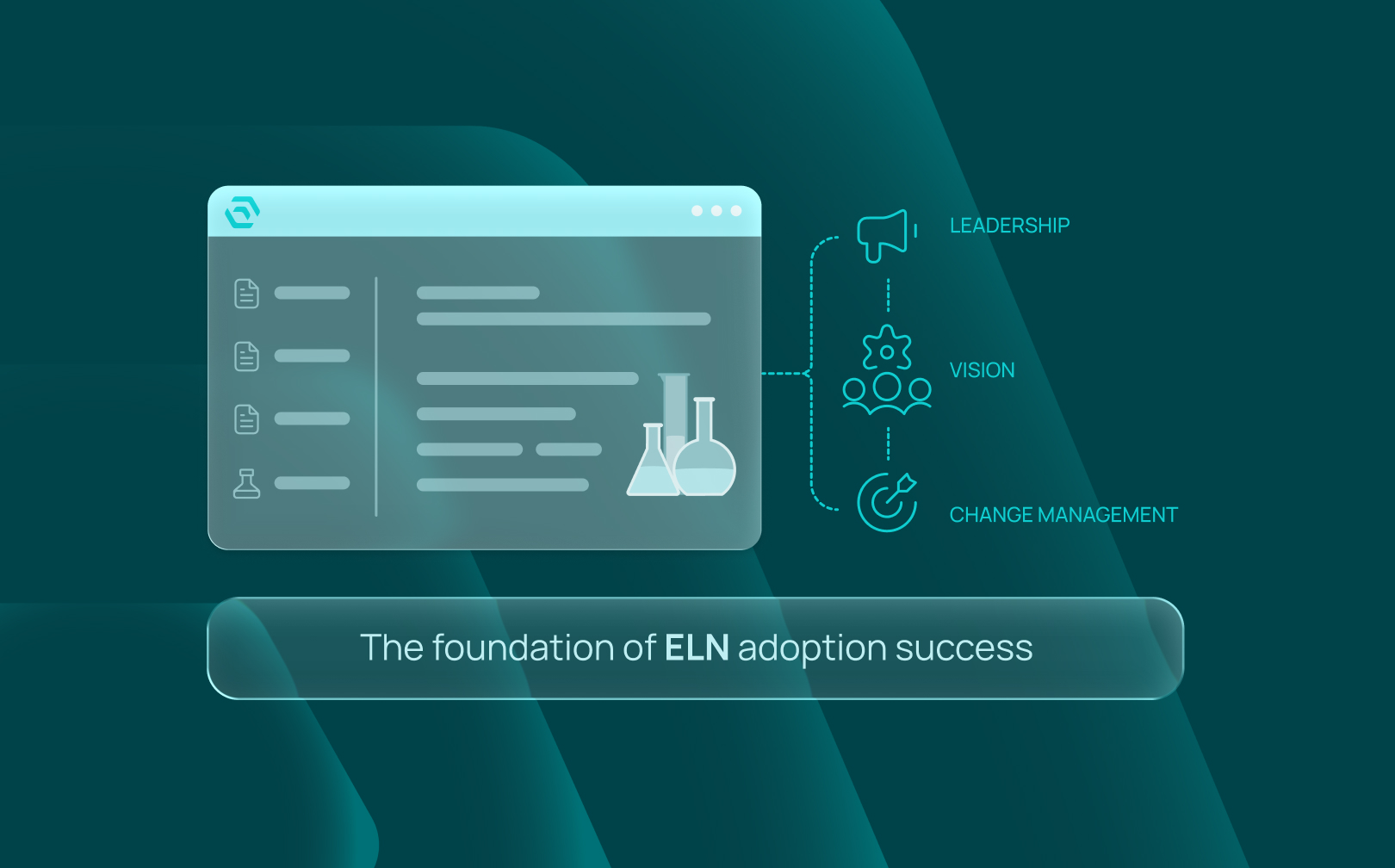
This matters because adoption gaps don't announce themselves. They show up subtly, in the lab that got busy and never finished implementing the sample management module, in the two research groups that are still mostly using the old spreadsheet, in the equipment records that never got migrated.
Without active measurement, those gaps stay invisible until they become expensive.
What we often find when we run these exercises is that utilization problems are implementation and enablement problems, not technology problems. A lab that was fully set up in month one sometimes stalls because the person who led the rollout got pulled onto something else and never went back to finish what they started. Nobody did. And now the system has partial data, inconsistent records, and scientists who aren't sure they can trust what they find in it.
The fix is rarely technical. It's usually training, configuration support, and - critically - a clear signal from leadership that using the system isn't optional.
When we can show an organization where their utilization has improved over six months, the response is almost always the same: they didn't realize how far they'd come. And when we can show an executive that their research teams are running more experiments faster, reaching hypotheses sooner, and producing cleaner data for regulatory filings, that's when the conversation shifts from "Why are we paying for this?" to "How do we expand it?"
Do you know, right now, what's happening across your research portfolio?
If you're a CSO, Head of R&D, COO, or VP of Operations, here's what I'd ask you to consider honestly: Can you pull up a current view of what your labs are working on, how experiments are progressing, where your highest-performing programs are concentrated, and where resources are being spent on work that isn't gaining traction?
If the answer is no - or if getting that information requires someone to build a report from scratch using data extracted from multiple systems - then the problem is your data infrastructure, not your scientists’ productivity.
The organizations that are going to make the fastest business decisions, reach their hypotheses soonest, protect their IP most rigorously, and build the most defensible case for their investors are the ones investing now in unified, governed platforms. Not cobbled-together point solutions.
These are the organizations whose leadership has decided that "Any solution for any scientist" is no longer a viable strategy.
SciSure is one of the only platforms that combines full ELN and LIMS capabilities within a single application, giving research organizations everything they need to manage their labs, their data, their compliance, and their science in one place. No separate ELN, no separate LIMS, no gaps between them.
If you'd like to understand how SciSure's Value Realization process could help your organization identify adoption gaps and build a measurable case for enterprise-wide implementation, get in touch with our team. We'll start where it matters most, with your data, your workflows, and the business decisions you're trying to make faster.
Read More:
- Implementing an Electronic Lab Notebook (ELN) in a New Lab: A Step-by-Step Guide
- How to Implement an Electronic Lab Notebook (ELN) in an Existing Lab Without Slowing Research
- How to Transition from Another ELN: A Practical Migration Strategy for Research Labs
- 6 Electronic Lab Notebook (ELN) Adoption Barriers & How To Help Your Research Team Overcome Them
- GxP Regulatory Guidelines: GLP and GMP Compliance for Electronic Laboratory Notebooks (ELNs)
- Electronic Lab Notebook Best Practices: What to do after you Implement an ELN
- Paper vs. Electronic Lab Notebooks: A Guide for Enterprise Labs

Read more of our blogs about modern lab management
Discover the latest in lab operations, from sample management to AI innovations, designed to enhance efficiency and drive scientific breakthroughs.