Connecting Scientific Data, Devices, and People

A recap of our SciSure Talks signature event in Berlin, in partnership with UniteLabs.
•
November 12, 2026
•
()
min read
A laboratory

Download Whitepaper

By submitting this form, you agree with our Privacy Policy.
Thank you! Download the file by clicking below:
Download
Oops! Something went wrong while submitting the form.

Table of Contents

Thank you! Your submission has been received!
Oops! Something went wrong while submitting the form.

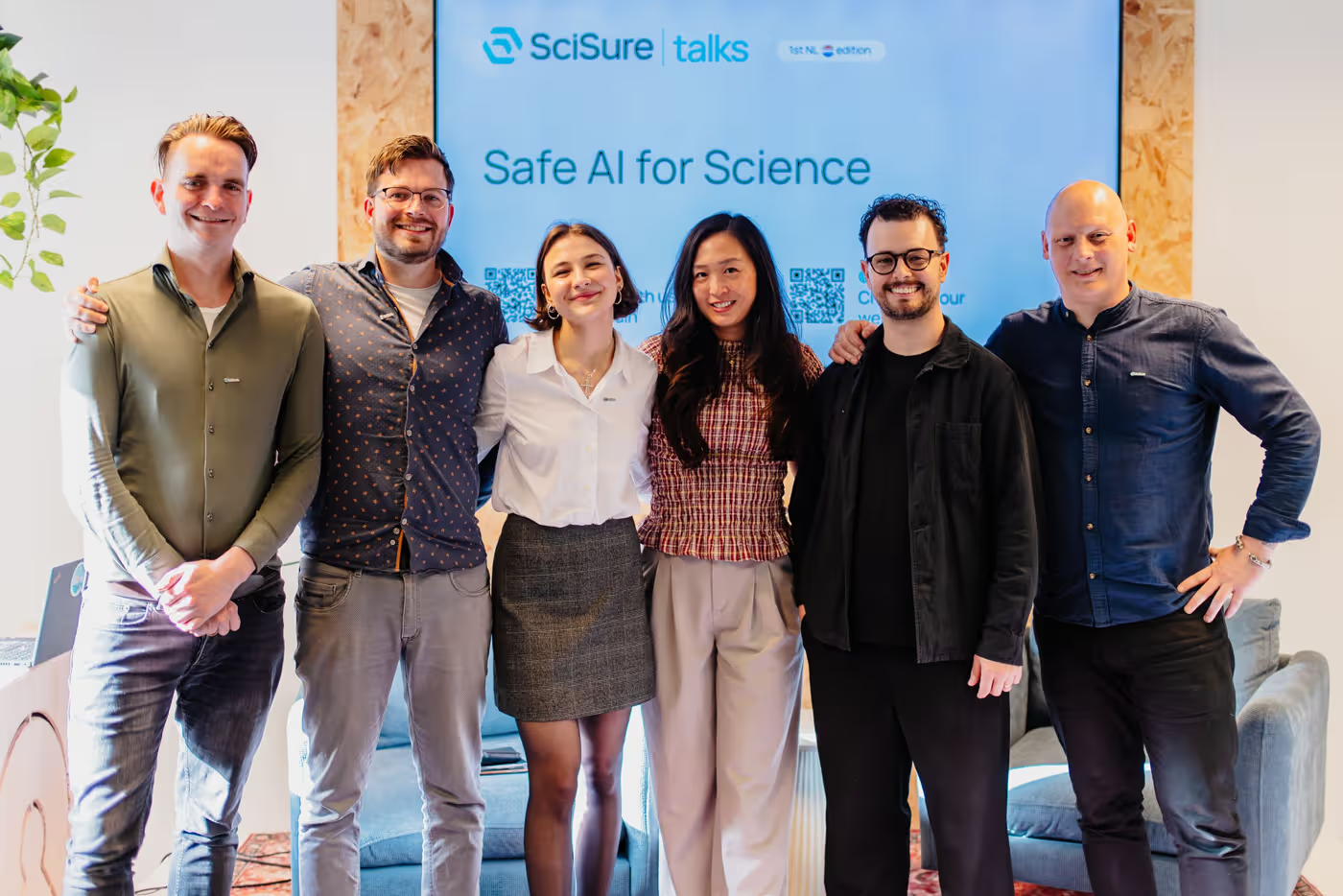
On October 28, SciSure Talks made its first stop in Germany. Hosted in Berlin in collaboration with UniteLabs, the third edition of our community event series explored how connected laboratory data, digital documentation, and automation can help research teams make better decisions and accelerate R&D.  

Scientific research generates enormous amounts of valuable information, but that information is not always easy to find, interpret, or reuse.  

Experimental records, instrument outputs, and laboratory workflows often exist across different systems. As research teams grow and processes become more complex, disconnected information can make it harder to maintain continuity, reproduce experiments, and make informed decisions.  

Addressing these challenges requires more than introducing new digital tools. It requires thinking about how scientific information is documented, connected, and made accessible throughout the research process. This was the focus of SciSure Talks in Berlin, with two complementary perspectives from SciSure and UniteLabs.

The data needed tomorrow is being created today  

What if the data your research team needs for its next breakthrough is already there, in experiments conducted years ago?

This question set the direction for Sebastian Reichau, Principal Product Manager at SciSure, who focused on the connection between today's research practices and tomorrow's scientific possibilities.

As AI becomes an increasingly important part of R&D, the conversation is shifting from simply collecting data to making it useful across teams, projects, and technologies. Electronic Laboratory Notebooks (ELNs) have an important role to play, providing the structure needed to support AI-powered workflows and more connected research operations.

For R&D leaders, the implications go beyond technology: standardization, greater visibility across research activities, operational efficiency, risk reduction, and the ability to scale. Investing in how scientific data is managed today is ultimately an investment in what research organizations will be capable of tomorrow.
Closing the loop between laboratory instruments and digital workflows  

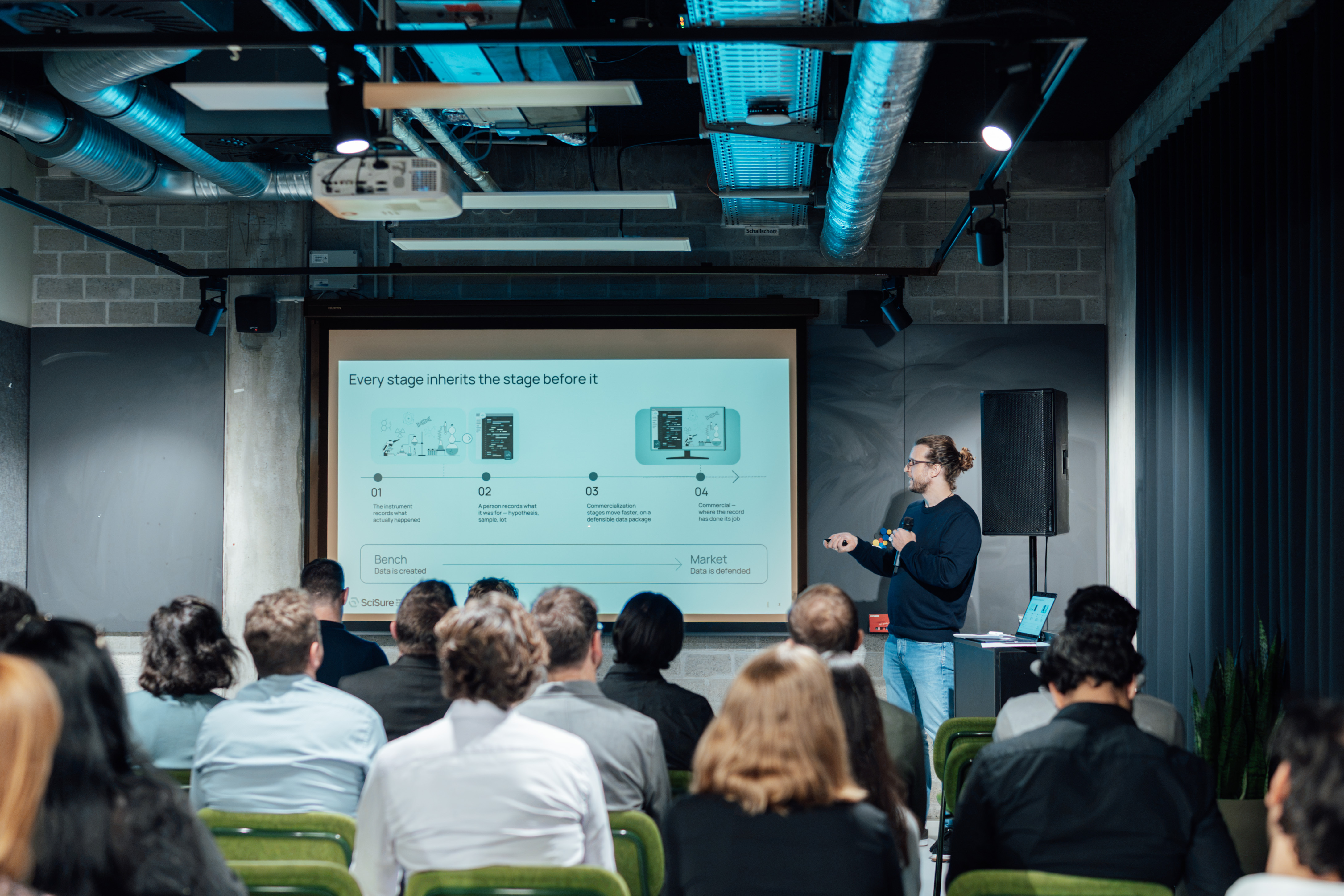
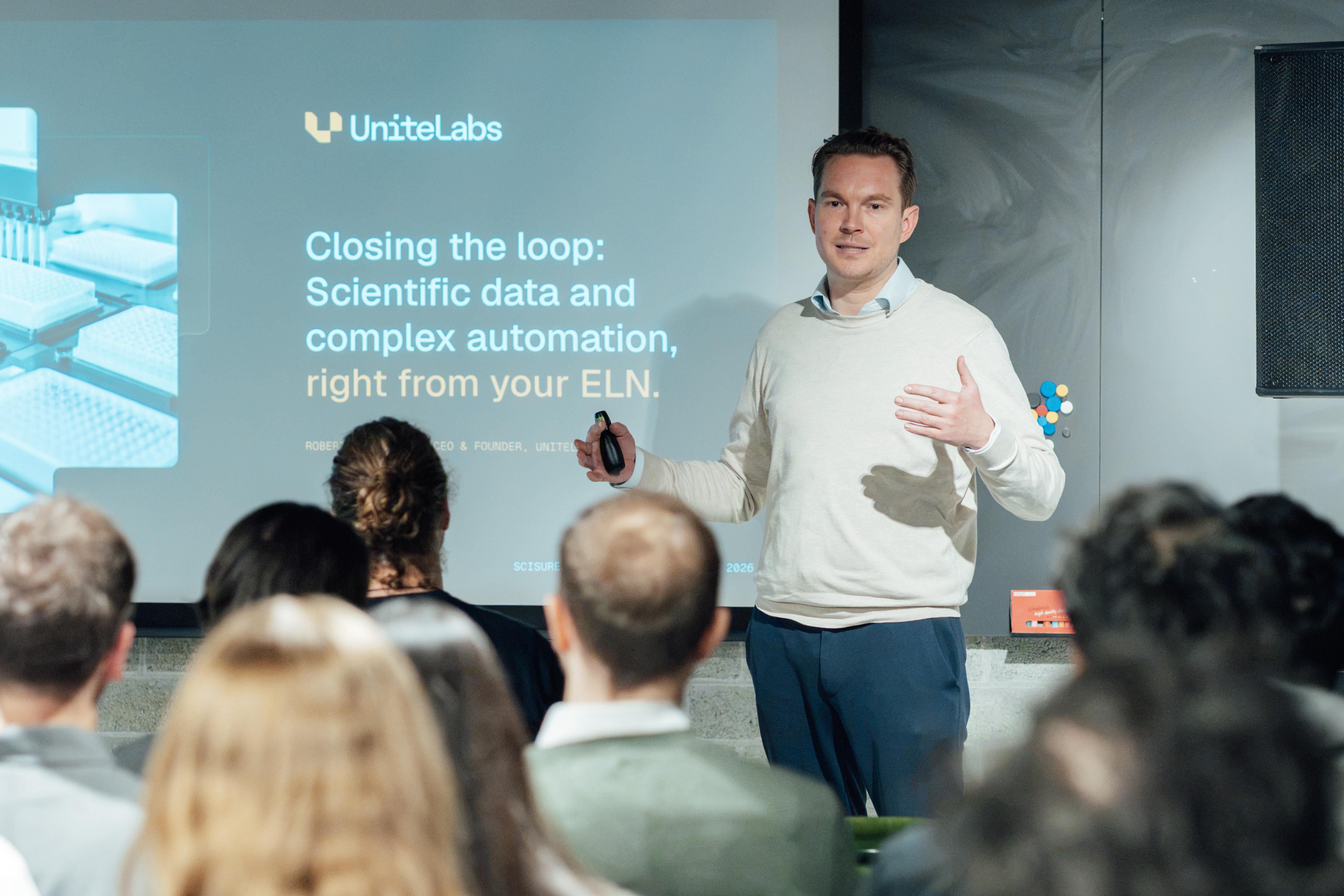
Robert Zechlin, Co-Founder of UniteLabs, focused on the connection between laboratory instruments and Electronic Laboratory Notebooks (ELNs), and how bidirectional integration can support more efficient scientific workflows.  

Laboratory instruments generate important experimental data, but transferring that information into digital research records can involve manual steps and disconnected processes.  

Connecting instruments directly with laboratory software creates opportunities to reduce manual data handling, preserve experimental context, and support increasingly automated workflows.  

These connections are also important for the future of AI in laboratories. Reliable, contextualized scientific data provides a stronger foundation for advanced analytics and AI-enabled applications. In Robert’s words, the ELN tells us what happened, while laboratory equipment tells us how it happened. Connecting the two provides a more complete picture of the research process.
A community for those who challenge the status quo  

Innovation requires curiosity, but also the willingness to question existing approaches, acknowledge what isn't working, and consider alternatives. That mindset is at the heart of the community we're building. SciSure Talks is for people who don't believe scientific progress should be limited by established ways of thinking, organizational boundaries, or the assumption that things must continue as they always have.
‍

“Closing the loop between lab devices and the data they generate is core to our mission at UniteLabs. We live and breathe this topic daily, so this was a perfect fit for us.

Partner events like SciSure Talks are a great way to meet new people, strengthen ties, and learn valuable insights. I enjoyed this event in Berlin very much and am already looking forward to the next one. Great people, great format.”

-
Jamie Beach, Marketing Lead at UniteLabs

‍

And that's exactly what we hope to see more of: organizations sharing their expertise, new connections being made, and conversations that continue long after the event itself. Every edition is shaped by the people and partners involved, and we're excited to see where the next one takes us.


The next edition of SciSure Talks is still an open page. If you have a story worth telling and would like to help shape what comes next, we'd love to hear from you!

Ready to see SciSure in action?

Get a personalized demo and see how SciSure fits your lab's workflows.
Request demo

No commitment · Free consultation

On October 28, SciSure Talks made its first stop in Germany. Hosted in Berlin in collaboration with UniteLabs, the third edition of our community event series explored how connected laboratory data, digital documentation, and automation can help research teams make better decisions and accelerate R&D.  

Scientific research generates enormous amounts of valuable information, but that information is not always easy to find, interpret, or reuse.  

Experimental records, instrument outputs, and laboratory workflows often exist across different systems. As research teams grow and processes become more complex, disconnected information can make it harder to maintain continuity, reproduce experiments, and make informed decisions.  

Addressing these challenges requires more than introducing new digital tools. It requires thinking about how scientific information is documented, connected, and made accessible throughout the research process. This was the focus of SciSure Talks in Berlin, with two complementary perspectives from SciSure and UniteLabs.

The data needed tomorrow is being created today  

What if the data your research team needs for its next breakthrough is already there, in experiments conducted years ago?

This question set the direction for Sebastian Reichau, Principal Product Manager at SciSure, who focused on the connection between today's research practices and tomorrow's scientific possibilities.

As AI becomes an increasingly important part of R&D, the conversation is shifting from simply collecting data to making it useful across teams, projects, and technologies. Electronic Laboratory Notebooks (ELNs) have an important role to play, providing the structure needed to support AI-powered workflows and more connected research operations.

For R&D leaders, the implications go beyond technology: standardization, greater visibility across research activities, operational efficiency, risk reduction, and the ability to scale. Investing in how scientific data is managed today is ultimately an investment in what research organizations will be capable of tomorrow.

Closing the loop between laboratory instruments and digital workflows  

Robert Zechlin, Co-Founder of UniteLabs, focused on the connection between laboratory instruments and Electronic Laboratory Notebooks (ELNs), and how bidirectional integration can support more efficient scientific workflows.  

Laboratory instruments generate important experimental data, but transferring that information into digital research records can involve manual steps and disconnected processes.  

Connecting instruments directly with laboratory software creates opportunities to reduce manual data handling, preserve experimental context, and support increasingly automated workflows.  

These connections are also important for the future of AI in laboratories. Reliable, contextualized scientific data provides a stronger foundation for advanced analytics and AI-enabled applications. In Robert’s words, the ELN tells us what happened, while laboratory equipment tells us how it happened. Connecting the two provides a more complete picture of the research process.

A community for those who challenge the status quo  

Innovation requires curiosity, but also the willingness to question existing approaches, acknowledge what isn't working, and consider alternatives. That mindset is at the heart of the community we're building. SciSure Talks is for people who don't believe scientific progress should be limited by established ways of thinking, organizational boundaries, or the assumption that things must continue as they always have.
‍

“Closing the loop between lab devices and the data they generate is core to our mission at UniteLabs. We live and breathe this topic daily, so this was a perfect fit for us.

Partner events like SciSure Talks are a great way to meet new people, strengthen ties, and learn valuable insights. I enjoyed this event in Berlin very much and am already looking forward to the next one. Great people, great format.”

-
Jamie Beach, Marketing Lead at UniteLabs

‍

And that's exactly what we hope to see more of: organizations sharing their expertise, new connections being made, and conversations that continue long after the event itself. Every edition is shaped by the people and partners involved, and we're excited to see where the next one takes us.


The next edition of SciSure Talks is still an open page. If you have a story worth telling and would like to help shape what comes next, we'd love to hear from you!

About the author:

SciSure Team

The SciSureTeam combines expertise in lab digitization, software development, and research management to deliver reliable insights and practical advice. Our goal is to empower scientists with the knowledge and tools to optimize workflows and stay ahead in the ever-evolving world of research.

See all posts from this author

Sign up for our newsletter

Get the latest tips, articles, and exclusive content on modern lab management delivered to your inbox.
Thank you for subscribing!
Please check your email to verify your submission.
Oops! Something went wrong while submitting the form.