Beyond Biosafety: A Holistic Approach to Research Risk

Biosafety extends beyond the bench. See how the SciSure SMP supports holistic risk management across experiment design, sample transport, and biobank storage.
February 5, 2026
()
min read
A laboratory

Download Whitepaper

By submitting this form, you agree with our Privacy Policy.
Thank you! Download the file by clicking below:
Download
Oops! Something went wrong while submitting the form.

Table of Contents

Thank you! Your submission has been received!
Oops! Something went wrong while submitting the form.

Table of Contents

When most researchers think about biosafety, they picture containment levels, cabinet certifications, and PPE. But true biosafety goes far deeper than what happens inside the lab. Many of the most significant risks in modern research arise not from the experimental design itself, but from the ordinary routines that surround it: how materials are handled, transported, or stored away from where the work is done.

A single unlabeled tube moved between buildings, an aerosol generated during sample prep, or a freezer containing incompatible materials can all pose risks that sit just outside traditional biosafety reviews. These aren’t the kind of hazards a checklist alone can catch — they’re the ones that slip through when scientific operations, documentation, and oversight aren’t fully connected.

In this article, we’ll explore what a holistic risk review really looks like, and why it matters most in one of the most complex and safety-critical areas of modern research: biobanks. We’ll also highlight how an integrated digital platform, such as the SciSure Scientific Management Platform (SMP), helps labs and biobanks link biosafety, sample management, and operational oversight in one place — turning risk prevention into an everyday practice rather than an annual review.

The hidden biosafety risks in routine research

With biosafety, the biggest vulnerabilities rarely announce themselves. They develop quietly in the gap between how scientists actually work and how their risk assessments imagine that work. Most institutional reviews are designed around discrete projects, rather than the movement of people, samples, and information between them — yet research today is continuous, shared, and distributed across multiple facilities. That disconnect creates blind spots that no checklist can fully capture.

Here are some of the areas in which biosafety can lapse unnoticed:

Aerosol generation

Aerosols are among the most underestimated hazards in research. They can be produced during vortexing, pipetting, centrifugation, or even when opening sample tubes after transport. Because these activities are routine, risk assessments often record them generically (e.g., “handled under BSL-2 conditions”) without describing where and how they occur.

These are the kinds of oversights that frequently surface during IBC review, because the operational details aren’t fully captured. When containment records sit in one system, equipment certificates in another, and operator training logs in a third, reviewers see fragments of compliance rather than a full chain of control. As a result, an experiment might appear safe on paper even if the biosafety cabinet used for aerosol work is out of certification, uncertified for that application, or lacks readily verifiable documentation at the time of review. The outcome could be accidental exposure, loss of sample integrity, or findings that no longer meet containment validation standards.

Inter-building transport

Moving biological material between buildings, or even between floors, introduces a new layer of risk rarely captured in static facility reviews. Secondary containment may be mandated, but are staff trained on the correct packaging? Is the route documented? Is the receiving facility validated for that material type?

Legacy biosafety management methods like spreadsheets or PDF forms make it easy for these details to go missing — especially when projects span departments or collaborators. An unlogged transfer might seem administrative, but it can trigger serious compliance violations if the destination lab operates at a lower containment level or lacks appropriate waste-handling capabilities. Even small gaps in traceability can raise red flags during inspection and cause costly delays in research continuity.

Shared and transitional spaces

Containment boundaries are rarely as rigid in practice as they are on a floor plan. Hallways, cold rooms, and shared freezers exist in the “grey zones” of research — technically outside containment, yet used daily for storage or staging.

A freezer shared by multiple groups might house BSL-1 plasmids alongside BSL-2 viral vectors simply because nobody owns the master inventory. Labels fade; spreadsheets drift out of date; new researchers inherit old samples with little context. One misplaced box can lead to a non-compliant storage event or even a regulatory reportable incident. Traditional safety audits may catch these inconsistencies during scheduled inspections, but by then, the problem has often persisted unseen for months — eroding containment discipline and trust in records that underpin compliance.

Waste management

Waste is the final proof of biosafety discipline — and one of the easiest places for it to fail. Labs often state that “all waste will be autoclaved,” but few maintain verifiable logs that confirm cycle validation, load records, or maintenance schedules. In multi-building institutions, waste may travel through public corridors or be stored temporarily in unsecured rooms before decontamination. Each of these points introduces potential for exposure, contamination, or audit non-compliance.

Disconnected documentation turns this into a black box: EHS teams might not discover a lapse until an audit or a malfunction triggers investigation. With connected oversight, every sterilization cycle, validation report, and maintenance event becomes part of a continuous audit trail — closing the loop between practice and proof.

How risk hides in the gaps

What unites all these examples is not negligence but fragmentation. In most organizations, biosafety information is scattered across LIMS, spreadsheets, HR systems, and paper logs — each reliable in isolation, but collectively unable to show a complete picture. Risk reviews then focus on individual protocols instead of the continuous movement of people, materials, and data that defines modern research.

A holistic research risk review closes those gaps by examining the entire lifecycle — from experiment design to sample transport, long-term storage, and waste disposal — to understand how risks connect, not just where they occur.

That’s exactly what the SciSure SMP delivers in practice. By linking biosafety oversight, EHS workflows, operational records, and biobank management within one connected framework, the SMP turns fragmented data into a living, auditable picture of readiness — making invisible risks visible and preventing small oversights from escalating into costly failures.

These are the kinds of oversights that frequently surface during IBC review. Explore our article on this topic: How to Prepare a Strong IBC Submission: What Reviewers Wish You Knew.

When biosafety meets biobank management

Biobanks offer a clear example of how biosafety risks evolve beyond the bench. As centralized repositories for thousands of biological samples—often shared across multiple projects, teams, and institutions—they combine all the operational pressures discussed earlier: complex containment requirements, distributed oversight, and high stakes for data integrity.

Common biobank risks include:

  • Data integrity and traceability – fragmented records make it difficult to verify sample provenance, classification, or approval status.
  • Sample mix-ups and contamination – inconsistent labeling or outdated spreadsheets can lead to cross-contamination or misidentification.
  • Regulatory and consent compliance – ethical or privacy conditions are easily breached when approvals aren’t linked to sample metadata.
  • Cross-project material storage – incompatible samples stored in the same location can breach containment requirements.
  • Chain-of-custody visibility – manual transfer logs obscure who accessed what, when, and under which authorization.

How the SciSure SMP strengthens biobank risk management

Managing a biobank means managing these risks at scale. Every vial, plate, or aliquot represents not only valuable research material but also an obligation—to maintain traceability, containment, consent, and data integrity over time.  

The SciSure SMP gives biobank teams the tools to uphold that responsibility through connected, auditable workflows that link biosafety management directly with operational control. In doing so, it enables the kind of holistic research risk review that traditional, fragmented systems can’t support.  

Biosafety management


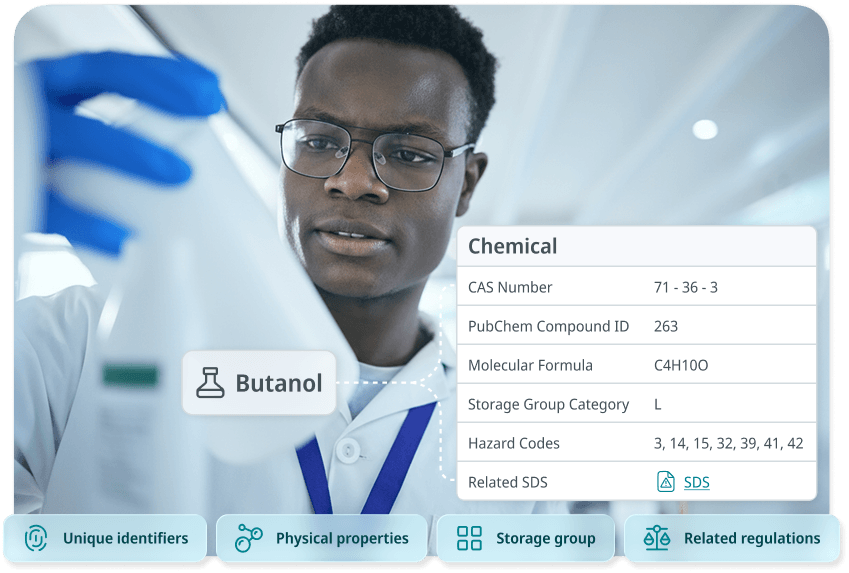
The SMP’s Biosafety Management module maintains a digital identity for every sample. Each record links the material to its biosafety classification, containment level, project, and storage location. This ensures containment requirements are never separated from where the sample resides or who is authorized to handle it. Automatic alerts flag inconsistencies, such as BSL-2 materials stored in a BSL-1 freezer or expired storage certifications—closing gaps that static inventory systems can’t.

Sample lifecycle tracking


From accessioning to disposal, the SMP captures every movement and change in status. Each handoff, freeze–thaw event, or transfer is logged automatically, creating a permanent, time-stamped audit trail. Continuous visibility helps labs prove compliance during inspections and rapidly trace materials in the event of contamination, mix-ups, or recalls—turning reactive reporting into proactive assurance.

Chain-of-custody visibility


The SMP records every exchange of materials between users, departments, and facilities. Role-based permissions ensure only trained, authorized staff can access restricted samples. Cross-institutional transfers include linked approvals and containment documentation, creating a verifiable chain of custody that satisfies biosafety and regulatory reviewers alike.


Integrated EHS and inspection data


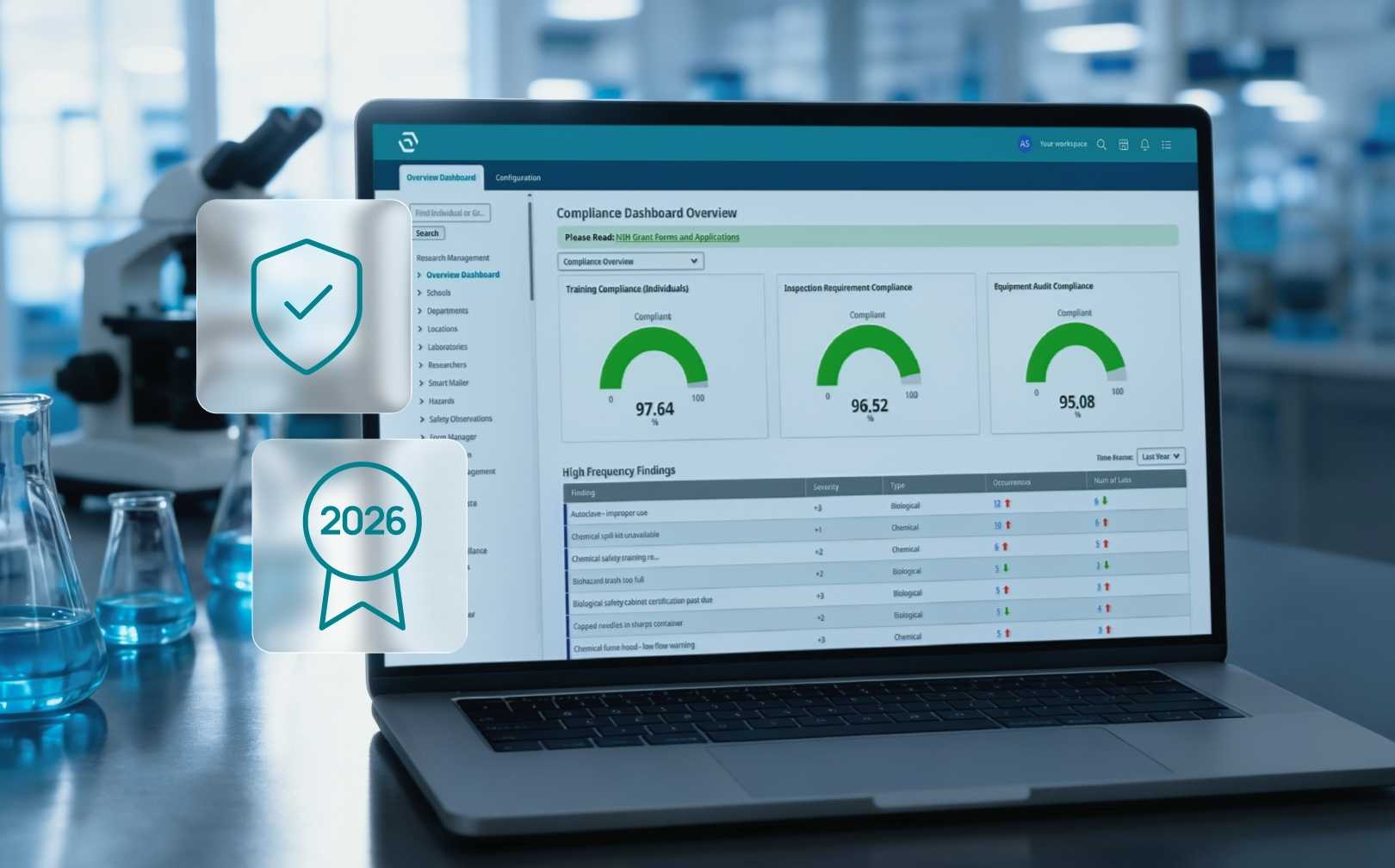
The SMP connects environmental monitoring, equipment certification, and corrective-action records directly to the samples and facilities they affect. By linking these data sets, teams can more easily assess potential impact when issues arise—such as out-of-range conditions, or expired certifications—and respond in a structured, documented way. This supports informed decision-making and timely escalation, helping biobanks maintain oversight as conditions change over time.

Together, these capabilities create a single, living record of operational readiness. For biobanks—and the laboratories that depend on them—it turns biosafety oversight from a static exercise into a dynamic, organization-wide process: transparent, traceable, and always audit-ready.

Building a culture of continuous biosafety readiness

Biosafety isn’t a static requirement — it’s a living system that depends on visibility, accountability, and connected oversight. As research becomes more distributed, risks no longer fit neatly within a single project or containment zone. They move with people, materials, and data.

A holistic research risk review recognizes that reality. It looks across the entire ecosystem — from benchwork and sample transfer to long-term biobank storage — to ensure every safeguard functions as part of a single, traceable process.

That’s the value of the SciSure SMP. By linking biosafety management, operational workflows, and biobank oversight in one integrated framework, it gives labs and biobanks continuous proof of compliance and the confidence to focus on discovery rather than documentation.

With connected systems, readiness stops being something you prepare for — it becomes part of how you work every day.

Ready to strengthen your biosafety program and build lasting resilience? Contact us today and explore how the SMP helps labs turn oversight into assurance and compliance into confidence.

Ready to see SciSure in action?

Get a personalized demo and see how SciSure fits your lab's workflows.
Request demo

No commitment · Free consultation

When most researchers think about biosafety, they picture containment levels, cabinet certifications, and PPE. But true biosafety goes far deeper than what happens inside the lab. Many of the most significant risks in modern research arise not from the experimental design itself, but from the ordinary routines that surround it: how materials are handled, transported, or stored away from where the work is done.

A single unlabeled tube moved between buildings, an aerosol generated during sample prep, or a freezer containing incompatible materials can all pose risks that sit just outside traditional biosafety reviews. These aren’t the kind of hazards a checklist alone can catch — they’re the ones that slip through when scientific operations, documentation, and oversight aren’t fully connected.

In this article, we’ll explore what a holistic risk review really looks like, and why it matters most in one of the most complex and safety-critical areas of modern research: biobanks. We’ll also highlight how an integrated digital platform, such as the SciSure Scientific Management Platform (SMP), helps labs and biobanks link biosafety, sample management, and operational oversight in one place — turning risk prevention into an everyday practice rather than an annual review.

The hidden biosafety risks in routine research

With biosafety, the biggest vulnerabilities rarely announce themselves. They develop quietly in the gap between how scientists actually work and how their risk assessments imagine that work. Most institutional reviews are designed around discrete projects, rather than the movement of people, samples, and information between them — yet research today is continuous, shared, and distributed across multiple facilities. That disconnect creates blind spots that no checklist can fully capture.

Here are some of the areas in which biosafety can lapse unnoticed:

Aerosol generation

Aerosols are among the most underestimated hazards in research. They can be produced during vortexing, pipetting, centrifugation, or even when opening sample tubes after transport. Because these activities are routine, risk assessments often record them generically (e.g., “handled under BSL-2 conditions”) without describing where and how they occur.

These are the kinds of oversights that frequently surface during IBC review, because the operational details aren’t fully captured. When containment records sit in one system, equipment certificates in another, and operator training logs in a third, reviewers see fragments of compliance rather than a full chain of control. As a result, an experiment might appear safe on paper even if the biosafety cabinet used for aerosol work is out of certification, uncertified for that application, or lacks readily verifiable documentation at the time of review. The outcome could be accidental exposure, loss of sample integrity, or findings that no longer meet containment validation standards.

Inter-building transport

Moving biological material between buildings, or even between floors, introduces a new layer of risk rarely captured in static facility reviews. Secondary containment may be mandated, but are staff trained on the correct packaging? Is the route documented? Is the receiving facility validated for that material type?

Legacy biosafety management methods like spreadsheets or PDF forms make it easy for these details to go missing — especially when projects span departments or collaborators. An unlogged transfer might seem administrative, but it can trigger serious compliance violations if the destination lab operates at a lower containment level or lacks appropriate waste-handling capabilities. Even small gaps in traceability can raise red flags during inspection and cause costly delays in research continuity.

Shared and transitional spaces

Containment boundaries are rarely as rigid in practice as they are on a floor plan. Hallways, cold rooms, and shared freezers exist in the “grey zones” of research — technically outside containment, yet used daily for storage or staging.

A freezer shared by multiple groups might house BSL-1 plasmids alongside BSL-2 viral vectors simply because nobody owns the master inventory. Labels fade; spreadsheets drift out of date; new researchers inherit old samples with little context. One misplaced box can lead to a non-compliant storage event or even a regulatory reportable incident. Traditional safety audits may catch these inconsistencies during scheduled inspections, but by then, the problem has often persisted unseen for months — eroding containment discipline and trust in records that underpin compliance.

Waste management

Waste is the final proof of biosafety discipline — and one of the easiest places for it to fail. Labs often state that “all waste will be autoclaved,” but few maintain verifiable logs that confirm cycle validation, load records, or maintenance schedules. In multi-building institutions, waste may travel through public corridors or be stored temporarily in unsecured rooms before decontamination. Each of these points introduces potential for exposure, contamination, or audit non-compliance.

Disconnected documentation turns this into a black box: EHS teams might not discover a lapse until an audit or a malfunction triggers investigation. With connected oversight, every sterilization cycle, validation report, and maintenance event becomes part of a continuous audit trail — closing the loop between practice and proof.

How risk hides in the gaps

What unites all these examples is not negligence but fragmentation. In most organizations, biosafety information is scattered across LIMS, spreadsheets, HR systems, and paper logs — each reliable in isolation, but collectively unable to show a complete picture. Risk reviews then focus on individual protocols instead of the continuous movement of people, materials, and data that defines modern research.

A holistic research risk review closes those gaps by examining the entire lifecycle — from experiment design to sample transport, long-term storage, and waste disposal — to understand how risks connect, not just where they occur.

That’s exactly what the SciSure SMP delivers in practice. By linking biosafety oversight, EHS workflows, operational records, and biobank management within one connected framework, the SMP turns fragmented data into a living, auditable picture of readiness — making invisible risks visible and preventing small oversights from escalating into costly failures.

These are the kinds of oversights that frequently surface during IBC review. Explore our article on this topic: How to Prepare a Strong IBC Submission: What Reviewers Wish You Knew.

When biosafety meets biobank management

Biobanks offer a clear example of how biosafety risks evolve beyond the bench. As centralized repositories for thousands of biological samples—often shared across multiple projects, teams, and institutions—they combine all the operational pressures discussed earlier: complex containment requirements, distributed oversight, and high stakes for data integrity.

Common biobank risks include:

  • Data integrity and traceability – fragmented records make it difficult to verify sample provenance, classification, or approval status.
  • Sample mix-ups and contamination – inconsistent labeling or outdated spreadsheets can lead to cross-contamination or misidentification.
  • Regulatory and consent compliance – ethical or privacy conditions are easily breached when approvals aren’t linked to sample metadata.
  • Cross-project material storage – incompatible samples stored in the same location can breach containment requirements.
  • Chain-of-custody visibility – manual transfer logs obscure who accessed what, when, and under which authorization.

How the SciSure SMP strengthens biobank risk management

Managing a biobank means managing these risks at scale. Every vial, plate, or aliquot represents not only valuable research material but also an obligation—to maintain traceability, containment, consent, and data integrity over time.  

The SciSure SMP gives biobank teams the tools to uphold that responsibility through connected, auditable workflows that link biosafety management directly with operational control. In doing so, it enables the kind of holistic research risk review that traditional, fragmented systems can’t support.  

Biosafety management


The SMP’s Biosafety Management module maintains a digital identity for every sample. Each record links the material to its biosafety classification, containment level, project, and storage location. This ensures containment requirements are never separated from where the sample resides or who is authorized to handle it. Automatic alerts flag inconsistencies, such as BSL-2 materials stored in a BSL-1 freezer or expired storage certifications—closing gaps that static inventory systems can’t.

Sample lifecycle tracking


From accessioning to disposal, the SMP captures every movement and change in status. Each handoff, freeze–thaw event, or transfer is logged automatically, creating a permanent, time-stamped audit trail. Continuous visibility helps labs prove compliance during inspections and rapidly trace materials in the event of contamination, mix-ups, or recalls—turning reactive reporting into proactive assurance.

Chain-of-custody visibility


The SMP records every exchange of materials between users, departments, and facilities. Role-based permissions ensure only trained, authorized staff can access restricted samples. Cross-institutional transfers include linked approvals and containment documentation, creating a verifiable chain of custody that satisfies biosafety and regulatory reviewers alike.


Integrated EHS and inspection data


The SMP connects environmental monitoring, equipment certification, and corrective-action records directly to the samples and facilities they affect. By linking these data sets, teams can more easily assess potential impact when issues arise—such as out-of-range conditions, or expired certifications—and respond in a structured, documented way. This supports informed decision-making and timely escalation, helping biobanks maintain oversight as conditions change over time.

Together, these capabilities create a single, living record of operational readiness. For biobanks—and the laboratories that depend on them—it turns biosafety oversight from a static exercise into a dynamic, organization-wide process: transparent, traceable, and always audit-ready.

Building a culture of continuous biosafety readiness

Biosafety isn’t a static requirement — it’s a living system that depends on visibility, accountability, and connected oversight. As research becomes more distributed, risks no longer fit neatly within a single project or containment zone. They move with people, materials, and data.

A holistic research risk review recognizes that reality. It looks across the entire ecosystem — from benchwork and sample transfer to long-term biobank storage — to ensure every safeguard functions as part of a single, traceable process.

That’s the value of the SciSure SMP. By linking biosafety management, operational workflows, and biobank oversight in one integrated framework, it gives labs and biobanks continuous proof of compliance and the confidence to focus on discovery rather than documentation.

With connected systems, readiness stops being something you prepare for — it becomes part of how you work every day.

Ready to strengthen your biosafety program and build lasting resilience? Contact us today and explore how the SMP helps labs turn oversight into assurance and compliance into confidence.

Sign up for our newsletter

Get the latest tips, articles, and exclusive content on modern lab management delivered to your inbox.
Thank you for subscribing!
Please check your email to verify your submission.
Oops! Something went wrong while submitting the form.