


The State of EHS in US Labs: 2026 & Beyond
What 60+ US lab safety and research professionals told us about budgets, OSHA HazCom, NIH biosafety, AI and safety culture. Get the free report.
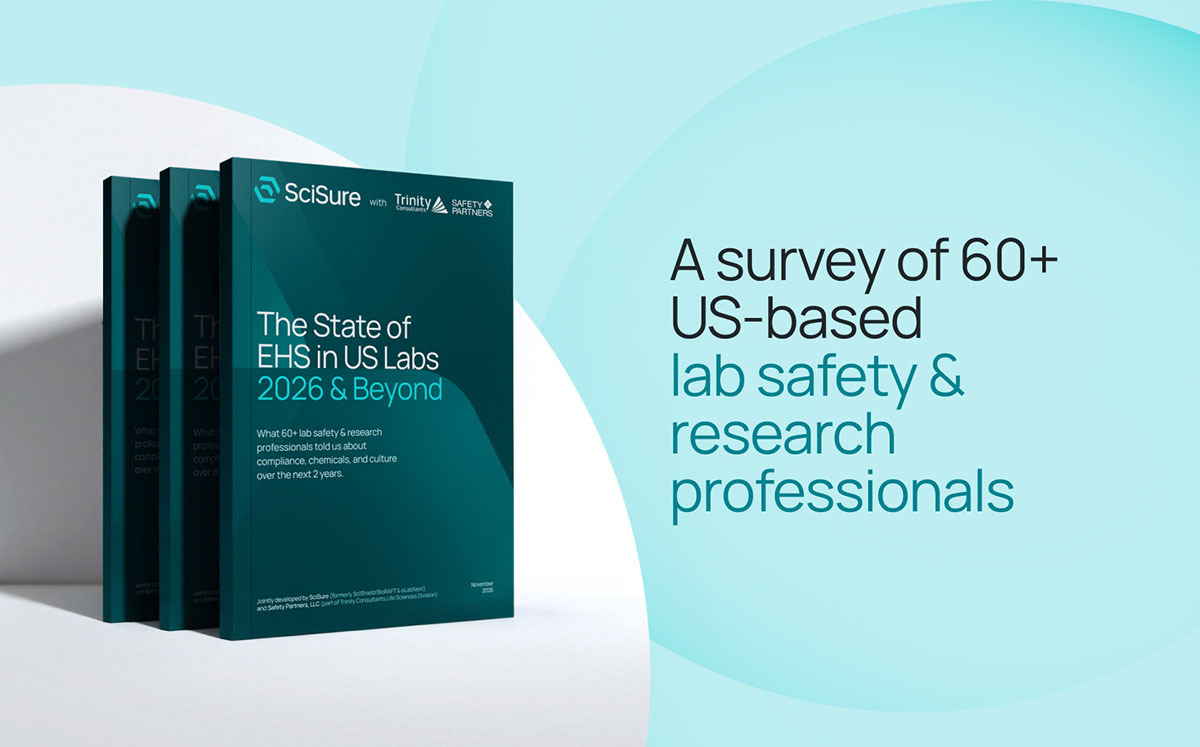
The State of EHS in US Labs: 2026 & Beyond
What 60+ US lab safety and research professionals told us about budgets, OSHA HazCom, NIH biosafety, AI and safety culture. Get the free report.
The State of EHS in US Labs: 2026 & Beyond
What 60+ US lab safety and research professionals told us about budgets, OSHA HazCom, NIH biosafety, AI and safety culture. Get the free report.
The State of EHS in US Labs: 2026 & Beyond
What 60+ US lab safety and research professionals told us about budgets, OSHA HazCom, NIH biosafety, AI and safety culture. Get the free report.

Lab safety is changing. Is your lab keeping up?
EHS (environment, health and safety) teams are heading into 2027 with more rules, more reporting and, for most, the same budget. To find out how labs are coping, SciSure and Safety Partners, LLC (part of Trinity Consultants’ Life Sciences division) surveyed more than 60 EHS managers, lab operations staff, principal investigators and scientists at US universities and biotech companies between August and October 2026.
This report covers what they told us about compliance, chemicals and safety culture, and what they expect over the next two years.
What you’ll learn
- Where the pressure is coming from.
58% of EHS teams expect their budget to stay flat or shrink, while staffing, workload and regulatory demands keep growing. - How ready labs are for new rules.
41% of respondents aren’t familiar with OSHA’s updated Hazard Communication Standard, and 45% didn’t know about the NIH’s proposed expansion of biosafety oversight. - How EHS teams actually use AI today.
Most use it to draft documents (54%). Very few use it for hazard identification or incident analysis (11%). You’ll also see what teams need before they’d trust it with more. - Why your records affect what you catch.
Labs using dedicated EHS software are far more likely to track near-misses systematically (74% vs 42% of labs using spreadsheets, paper or no formal system). - Where EHS and researchers see things differently.
51% of EHS staff say they’re brought into new projects at the planning stage. Only 30% of researchers say the same.
Each finding comes with practical next steps, plus a five-point checklist to work through with your team.
Who should read it
- EHS and safety managers and directors
- Lab operations and facilities teams
- Principal investigators and research leads working with hazardous chemicals or biological agents
- Compliance leads preparing for the OSHA HazCom and NIH biosafety changes
Why this matters now
The first OSHA HazCom employer deadline was November 20, 2026, and the deadline for mixtures follows on May 19, 2028. The NIH’s draft biosafety policy would take effect six months after the final version is published. Labs that get their records, AI review steps and EHS check-ins in order now will have much less to catch up on later.
Fill in the form to get your free copy.
Read more
Discover the latest in lab operations, from sample management to AI innovations, designed to enhance efficiency and drive scientific breakthroughs.


Ready to transform your lab?
Enhance lab operations, improve collaboration, and ensure data security with SciSure.

Experiment management
Inventory management
Improved collaboration
Protocol management
Research workflow management
