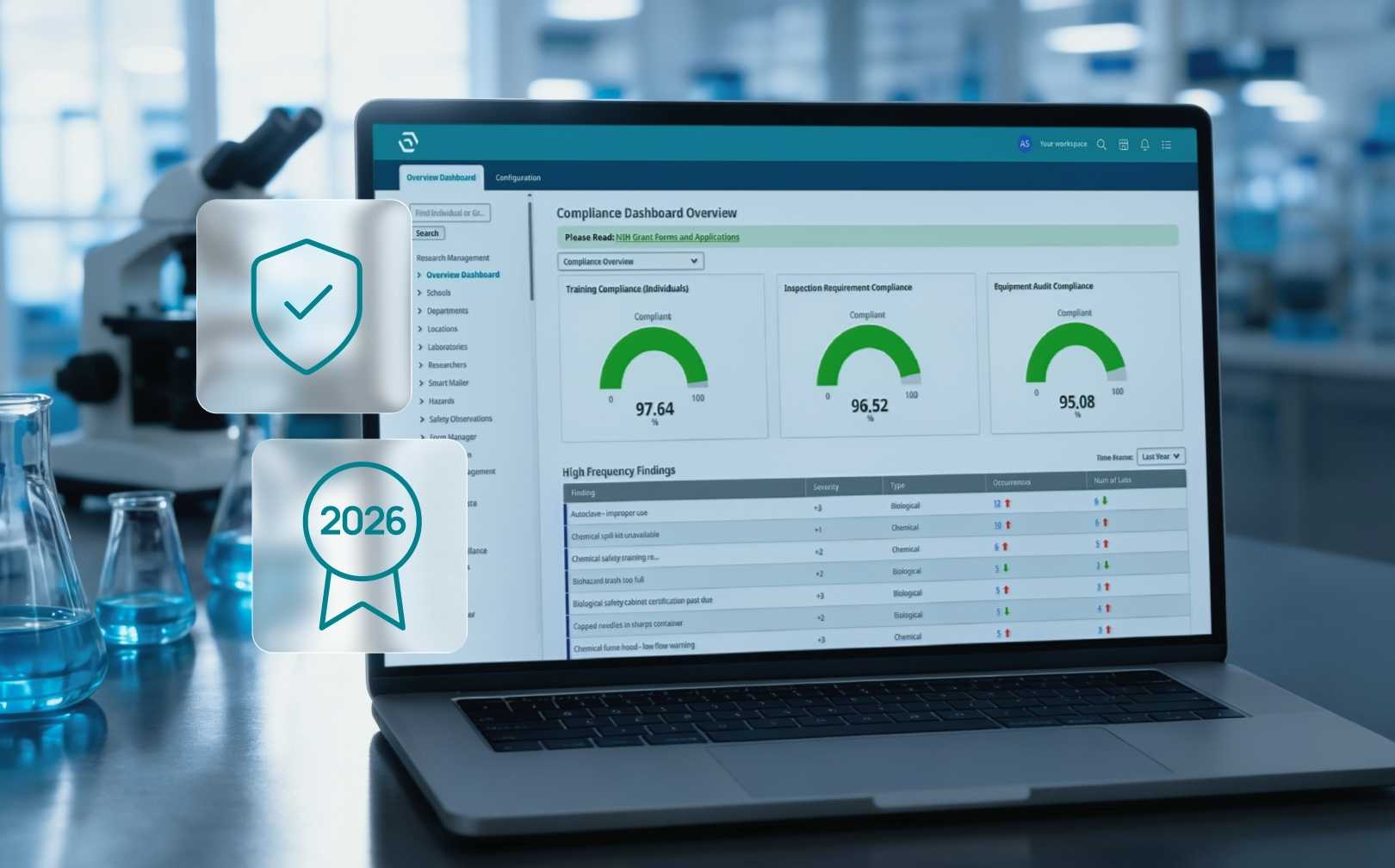
Understanding Biohazards: Definitions, Examples, Preventative Biosafety Protocols & What's Changed in 2026

Biohazardous materials pose risks due to their biological properties. Learn more about managing biohazards safely with SciSure.
August 27, 2026
()
min read
A laboratory

Download Whitepaper

By submitting this form, you agree with our Privacy Policy.
Thank you! Download the file by clicking below:
Download
Oops! Something went wrong while submitting the form.

Table of Contents

Thank you! Your submission has been received!
Oops! Something went wrong while submitting the form.

Table of Contents

TL;DR

Biohazards are materials that pose a risk to human health because of their biological or infectious properties, and the U.S. rules governing how labs register and oversee work with them changed substantially in 2026.

  • What counts as a biohazard?
    Blood and other potentially infectious materials, cultured microorganisms, contaminated sharps, mold and yeast growth, animal waste and bedding, plus recombinant or synthetic nucleic acids, viral vectors, prions, and toxins. Most labs hold several of these at once without a single record of where they are.
  • Risk Groups are not Biosafety Levels.
    The NIH classifies biological agents into four Risk Groups based on the agent's properties. The CDC and NIH BMBL sets four Biosafety Levels based on containment. They use the same 1 to 4 scale but answer different questions, and a risk assessment decides which BSL a given piece of work needs.
  • New federal policy, July 2026.
    The U.S. Government Policy for Stopping High-Risk Life Sciences Research replaced the 2024 DURC/PEPP policy, the 2012 and 2014 DURC policies, and the 2017 P3CO framework. It prohibits federal funding for dangerous gain-of-function research and requires institutions to screen all proposed and ongoing life sciences work.
  • NIH biosafety rules under revision.
    A draft NIH Biosafety Policy for Research Involving Biohazards, out for comment until October 19, 2026, would replace the NIH Guidelines, extend coverage from recombinant work to all biohazards, and require IBC minutes and incident reports to be posted publicly.
  • What can your lab do now?
    Centralize biological registration, keep a live record of who works with which materials in which spaces, and connect training, inspections, and medical surveillance to that record. SciSure Health & Safety supports these workflows, and SmartLabs runs them across hundreds of lab spaces.

This post was originally published in 2024 and updated in 2026 with the new federal high-risk research policy, the draft NIH biosafety policy, corrected Risk Group and Biosafety Level framing, and customer evidence from SmartLabs.

Materials that are hazardous because of their biological or infectious properties are called biohazardous materials, or biohazards. Your research lab likely works with a wide range of them: recombinant or synthetically derived nucleic acids, blood, tissues, body fluids, cell lines, bacteria, viruses, viral vectors, plasmids, fungi, prions, and parasites that cause disease in humans, animals, or plants.

Recognizing what you hold is the starting point. Knowing where it is, who is authorized to touch it, and whether their training is current is what regulators actually ask about, and it is where most programs come unstuck. That gap is the reason biological registration, training records, inspections, and medical surveillance sit together in SciSure Health & Safety rather than in four separate places.

Understanding Biological Hazards

To ensure the safety of people, the environment, and the public, it’s crucial to have proper biosafety measures in place. Certain workplace safety laws require employers that are exposed to transmissible infectious pathogens to have effective written safety plans and controls in place. Laboratories that perform procedures with biohazardous materials that contain transmissible pathogens are likely to have occupational exposure to these agents.

Here are some common biohazard examples found in laboratories:

  • Blood and other potentially infectious materials (OPIM)
    Human and animal blood, along with other bodily fluids, can transmit various pathogens.
  • Laboratory cultures and samples
    Working with cultured microorganisms and biological research materials carries the risk of exposure to infectious agents.
  • Contaminated sharps
    Used syringes, needles, and other sharp instruments contaminated with biohazardous materials pose a significant risk of puncture wounds and potential infection.
  • Fungal growth
    Mold and yeast can thrive in laboratory environments, causing respiratory problems and allergic reactions.
  • Waste from animals
    Animal waste or contaminated bedding can harbor harmful pathogens.

Risk Groups and Biohazard Safety Levels

Biological agents are classified by risk, taking into account infectivity, pathogenicity, and the availability of preventive measures and treatments. The National Institutes of Health classifies agents into four Risk Groups (RG1 to RG4) in the NIH Guidelines for Research Involving Recombinant or Synthetic Nucleic Acid Molecules.

The CDC and NIH define biosafety levels in Biosafety in Microbiological and Biomedical Laboratories (BMBL), 6th edition. Four levels, BSL-1 through BSL-4, describe practices, containment equipment, and facility design, each stricter than the last.

The two systems use the same 1 to 4 scale, and they get conflated constantly, but they are not the same thing.

  • Risk Groups describe the biological properties of an agent.
  • Biosafety Levels describe how you contain work with it.

The NIH puts it plainly in its own draft policy: depending on the work proposed, the appropriate BSL for handling an agent may be lower or higher than its Risk Group number. Research with an RG3 agent is often done at BSL-3, but a risk assessment covering the specific manipulations and any genetic modifications is what sets the level, not the agent's classification on its own.

For more on how the two frameworks fit together, see our biosafety guidelines guide.

SciSure
Strengthen biosafety oversight across your lab
Bring visibility to biological risks, approvals, and compliance with a system built for regulated lab environments.
Talk to a specialist

What Changed in U.S. Biosafety Oversight in 2025 and 2026

If your biosafety program was built around the 2024 DURC/PEPP policy, it is built on a framework that no longer exists.

On May 5, 2025, Executive Order 14292 paused dangerous gain-of-function research and directed agencies to revise or replace the 2024 policy. Two days later, NIH rescinded its implementation of that policy in NOT-OD-25-112, before it ever took effect on May 6, 2025. The replacement then took over a year to arrive.

It landed on July 28, 2026, as the U.S. Government Policy for Stopping High-Risk Life Sciences Research. It replaces the 2024 DURC/PEPP policy, the 2012 and 2014 DURC policies, and the 2017 P3CO framework, and it moves away from a mainly list-based model toward one based on research outcomes.

What that means in practice:

  • Federal funding for dangerous gain-of-function research (DGOF) is prohibited, in the U.S. and abroad.
  • Potential DGOF research can still be funded, but only after institutional risk-benefit analysis, a mitigation plan, and review by a government-wide Independent Third-Party Review Body.
  • Institutions must screen all proposed and ongoing life sciences research, not only work already flagged as high risk.
  • International collaborations face new restrictions tied to designated countries, institutions, and individuals of concern.
  • Institutions receiving federal life sciences funding must also identify and annually report non-federally funded work that meets the DGOF or potential-DGOF definitions.

That last point catches a lot of people. Privately funded work inside a federally funded institution is no longer outside the frame.

Running alongside this, NIH is rewriting its own biosafety rules. On August 19, 2026 it released a Draft NIH Biosafety Policy for Research Involving Biohazards for public comment, open until October 19, 2026. When finalized it will supersede the NIH Guidelines, and it changes the shape of the job considerably: coverage widens from recombinant and synthetic nucleic acid work to biohazards generally, oversight is tiered so low-risk work can be delegated to an individual or subgroup of the IBC, and transparency requirements tighten.

NIH biosafety oversight: What applies today vs. What the August 2026 draft policy proposes

Requirement Where it stands now What the draft NIH policy proposes
Scope of covered research Recombinant or synthetic nucleic acid molecules under the NIH Guidelines All laboratory research involving biohazards, including wild-type agents, toxins, prions, and genetically modified cells and organisms
IBC meeting minutes Must be posted publicly for meetings held on or after June 1, 2025 (NOT-OD-25-082) Posted publicly using a required template, kept available for at least five years
Incident reporting Significant problems reported to OSP within 30 days, with immediate reporting for overt exposures Certain incidents notified to NIH within 24 hours with a full report inside 30 days, and final reports posted publicly
Approval duration Set locally by the IBC Approval for no more than three years, then a fresh registration and review
Who is covered Institutions receiving NIH support for recombinant or synthetic nucleic acid research Any research conducted at an institution that receives any NIH funding, regardless of that project's funding source

Both frameworks point the same direction. More work falls in scope, more records have to be produced on a schedule, and more of those records end up on a public webpage. Outside the U.S., EU labs continue to work under Directive 2000/54/EC on protecting workers from exposure to biological agents, whose annexes were substantially updated by Directive (EU) 2019/1833 and amended again by Directive (EU) 2020/739.

None of this is settled. The draft NIH policy is still in comment, agency implementation guidance for the July 2026 policy is due by November 17, 2026, and institutions have until January 16, 2027 to stand up the required review structures. Treat the dates below as planning anchors and check with your biosafety office and counsel before changing your own procedures.

5 Opportunities to Prevent Biohazards Through Effective Biosafety and Biosecurity Governance

1. A single, centralized system for biological registration approvals

Oversight requirements are getting broader, not narrower. Organizations receiving federal funding in the U.S. work under the NIH Guidelines today and, once finalized, the draft NIH Biosafety Policy. Federally funded life sciences research is separately covered by the U.S. Government Policy for Stopping High-Risk Life Sciences Research, issued July 2026. EU labs work under Directive 2000/54/EC.

Registration and approval systems used to be a matter of good practice. They are becoming the record that proves compliance. A single place where projects, biological materials, personnel, and spaces are registered means the answer to "what did we approve, when, and on what basis" is one query rather than a week of reconstruction.

With SciSure, biological registrations move through submission, review, committee review, approval, amendment, and renewal in one workflow, with the review history attached to the registration.

Biosafety compliance on the SciSure platform

2. Biosecurity - Who is working on what? Where?

Understanding who is working on what and where within a biomedical lab presents a pivotal opportunity for enhancing overall biohazard prevention strategies. By implementing comprehensive biological registration and authorization systems, organizations can gain real-time visibility into project activities, including tracking material, personnel, and space exposure levels.

Streamlining registration management processes reduces approval times and facilitates efficient communication, ensuring robust oversight and risk management throughout the project lifecycle.

Furthermore, driving consistency in materials management through standardized biomaterials libraries enables organizations to establish controls over materials usage, personnel, and locations, thereby enhancing biosecurity and internal compliance processes. This holistic approach to understanding lab activities fosters a culture of accountability and transparency, ultimately mitigating risks associated with biohazard incidents and safeguarding the well-being of personnel and the broader community.

3. Institutional Biosafety Committee Oversight for Biologicals Projects

The gap in IBC coverage is narrowing. Today, the requirement to maintain an IBC attaches to institutions receiving NIH support for recombinant or synthetic nucleic acid research, which has left privately funded work in a different position. The draft NIH Biosafety Policy would change that by applying to non-NIH-funded research conducted at any institution that receives NIH funding at all, and by setting minimum IBC composition: at least five members with relevant expertise, a Biological Safety Officer as a voting member where the institution runs BSL-3, BSL-4, or gene drive work, and at least two members unaffiliated with the institution to represent community interests.

If your IBC currently sits at four members, or has no unaffiliated members, that is worth looking at now rather than in 2027.

By mandating a universal requirement for local oversight bodies, potential risks associated with laboratory-acquired infections and biological incidents can be mitigated. This approach not only ensures a consistent level of review and approval across all institutions but also addresses public concerns regarding the oversight and input of risky research conducted within communities. While there are challenges such as additional bureaucracy for non-compliant organizations and the need to establish and operate biosafety committees, the benefits of standardized oversight outweigh the disadvantages, promoting transparency, safety, and community trust in biosafety practices.

4. De-risking the Organization and Personnel with Training and Assessment of Biohazards

In high-containment laboratories like BSL-3 and BSL-4 facilities, personnel handle indigenous or exotic agents capable of causing severe or fatal diseases. Training in the safe handling of such pathogens is crucial for personnel, who must be supervised by knowledgeable scientists. However, the consistency and rigor of this training vary across institutions, highlighting the need for standardized assessment and guidance to ensure personnel proficiency and risk awareness.

Establishing minimum education and training requirements for personnel in high-containment laboratories offers several benefits for effective biosafety governance. It fosters confidence in the competence of individuals working with hazardous pathogens, promoting trust within the community. Moreover, by ensuring that personnel understand and can manage risks effectively, such standards enhance overall laboratory safety. However, implementing new requirements may pose challenges, particularly in adapting regulations across diverse research operations and ensuring compliance among existing workforce members. Despite these obstacles, standardized training protocols are essential for safeguarding personnel, institutions, and the wider community from biohazard risks.

5. Inspections and Medical Surveillance

By implementing robust biosafety management protocols with software such as SciSure for Health & Safety (formerly SciShield), organizations can identify personnel handling biological agents and mitigate exposure risks effectively. Leveraging Learning Management Systems (LMS) presents an opportunity to automate training assignments tailored to individual staff members' risk exposures, ensuring they receive necessary medical clearances, vaccinations, and skill enhancements. Simultaneously, optimizing equipment management processes ensures the availability and functionality of safety gear, bolstering biosecurity measures.

The pattern that works is to build safety records in the order a program can absorb them. SmartLabs, which runs flexible lab infrastructure across biopharma hubs on both U.S. coasts, did exactly that with SciSure Health & Safety. They started in December 2019 with chemical inventory, SDS, inspections, and equipment management, added Biosafety Management in 2021, and medical surveillance in 2022.

The results their EHS team reported include:

  • Finding the chemical inventory for a given lab or group went from 15 minutes to 1 or 2.
  • Reconciling an entire research center went from an all-day task to as little as 20 minutes.
  • Generating an inventory report went from about half an hour to about a minute.

The part that matters most for biohazard oversight is the visibility. Their previous setup could not break hazards down by researcher or R&D suite. Now it can, across 729 lab spaces, and training delinquencies can be chased with a targeted email rather than a blanket reminder. Read the full SmartLabs customer story.

SciSure
Manage biohazards with structured lab workflows
Track materials, personnel exposure, and safety processes in one place without adding manual overhead.
Request a demo

Managing Biological Hazards with Software

A biosafety program is only as good as the records behind it, and 2026 raised the bar on what those records have to show. Registrations with a visible review history. Training tied to the specific hazards a person actually works with. Inspection findings that lead to a documented corrective action. Incident reports that can be produced on a 24-hour clock and, under the draft NIH policy, posted publicly.

You can hold all of that in spreadsheets and shared drives. Plenty of labs do. It stops working at the point where someone asks a question that spans two of those systems, and the answer takes a week. But with SciSure Health & Safety, biological registration, training records, inspections, incidents, medical surveillance, and space hazard information sit in one system, where configured. Get in touch with us to see for yourself how it adapts to your lab's workflows.

FAQs

What is a biohazard?

A biohazard is any biological material that poses a risk to human, animal, or plant health. In labs this typically means blood and other potentially infectious materials, cultured microorganisms, contaminated sharps, viral vectors, recombinant or synthetic nucleic acids, prions, toxins, and animal waste or bedding.

Are Risk Groups and Biosafety Levels the same thing?

No. Risk Groups classify the agent based on its biological properties. Biosafety Levels describe the containment used to work with it. A risk assessment covering the agent, the manipulations involved, and any genetic modifications determines the appropriate BSL, which can be higher or lower than the agent's Risk Group number.

Is the DURC/PEPP policy still in effect?

No. The 2024 DURC/PEPP policy was rescinded before it took effect and was replaced on July 28, 2026 by the U.S. Government Policy for Stopping High-Risk Life Sciences Research, which also supersedes the 2012 and 2014 DURC policies and the 2017 P3CO framework.

Do the NIH Guidelines still apply?

Yes, for now. The April 2024 NIH Guidelines remain the operative framework. NIH released a draft NIH Biosafety Policy for Research Involving Biohazards on August 19, 2026 that would supersede them once finalised, with comments accepted through October 19, 2026 and an effective date six months after the final policy is published.

Does an institution need an IBC if the research is privately funded?

Under the current NIH Guidelines the requirement follows NIH support for recombinant or synthetic nucleic acid research. The draft NIH Biosafety Policy would extend coverage to non-NIH-funded research conducted at any institution that receives NIH funding. The July 2026 high-risk research policy separately requires institutions with federal life sciences funding to identify and report non-federally funded work meeting its risk definitions.

Ready to see SciSure in action?

Get a personalized demo and see how SciSure fits your lab's workflows.
Request demo

No commitment · Free consultation

Materials that are hazardous because of their biological or infectious properties are called biohazardous materials, or biohazards. Your research lab likely works with a wide range of them: recombinant or synthetically derived nucleic acids, blood, tissues, body fluids, cell lines, bacteria, viruses, viral vectors, plasmids, fungi, prions, and parasites that cause disease in humans, animals, or plants.

Recognizing what you hold is the starting point. Knowing where it is, who is authorized to touch it, and whether their training is current is what regulators actually ask about, and it is where most programs come unstuck. That gap is the reason biological registration, training records, inspections, and medical surveillance sit together in SciSure Health & Safety rather than in four separate places.

Understanding Biological Hazards

To ensure the safety of people, the environment, and the public, it’s crucial to have proper biosafety measures in place. Certain workplace safety laws require employers that are exposed to transmissible infectious pathogens to have effective written safety plans and controls in place. Laboratories that perform procedures with biohazardous materials that contain transmissible pathogens are likely to have occupational exposure to these agents.

Here are some common biohazard examples found in laboratories:

  • Blood and other potentially infectious materials (OPIM)
    Human and animal blood, along with other bodily fluids, can transmit various pathogens.
  • Laboratory cultures and samples
    Working with cultured microorganisms and biological research materials carries the risk of exposure to infectious agents.
  • Contaminated sharps
    Used syringes, needles, and other sharp instruments contaminated with biohazardous materials pose a significant risk of puncture wounds and potential infection.
  • Fungal growth
    Mold and yeast can thrive in laboratory environments, causing respiratory problems and allergic reactions.
  • Waste from animals
    Animal waste or contaminated bedding can harbor harmful pathogens.

Risk Groups and Biohazard Safety Levels

Biological agents are classified by risk, taking into account infectivity, pathogenicity, and the availability of preventive measures and treatments. The National Institutes of Health classifies agents into four Risk Groups (RG1 to RG4) in the NIH Guidelines for Research Involving Recombinant or Synthetic Nucleic Acid Molecules.

The CDC and NIH define biosafety levels in Biosafety in Microbiological and Biomedical Laboratories (BMBL), 6th edition. Four levels, BSL-1 through BSL-4, describe practices, containment equipment, and facility design, each stricter than the last.

The two systems use the same 1 to 4 scale, and they get conflated constantly, but they are not the same thing.

  • Risk Groups describe the biological properties of an agent.
  • Biosafety Levels describe how you contain work with it.

The NIH puts it plainly in its own draft policy: depending on the work proposed, the appropriate BSL for handling an agent may be lower or higher than its Risk Group number. Research with an RG3 agent is often done at BSL-3, but a risk assessment covering the specific manipulations and any genetic modifications is what sets the level, not the agent's classification on its own.

For more on how the two frameworks fit together, see our biosafety guidelines guide.

SciSure
Strengthen biosafety oversight across your lab
Bring visibility to biological risks, approvals, and compliance with a system built for regulated lab environments.
Talk to a specialist

What Changed in U.S. Biosafety Oversight in 2025 and 2026

If your biosafety program was built around the 2024 DURC/PEPP policy, it is built on a framework that no longer exists.

On May 5, 2025, Executive Order 14292 paused dangerous gain-of-function research and directed agencies to revise or replace the 2024 policy. Two days later, NIH rescinded its implementation of that policy in NOT-OD-25-112, before it ever took effect on May 6, 2025. The replacement then took over a year to arrive.

It landed on July 28, 2026, as the U.S. Government Policy for Stopping High-Risk Life Sciences Research. It replaces the 2024 DURC/PEPP policy, the 2012 and 2014 DURC policies, and the 2017 P3CO framework, and it moves away from a mainly list-based model toward one based on research outcomes.

What that means in practice:

  • Federal funding for dangerous gain-of-function research (DGOF) is prohibited, in the U.S. and abroad.
  • Potential DGOF research can still be funded, but only after institutional risk-benefit analysis, a mitigation plan, and review by a government-wide Independent Third-Party Review Body.
  • Institutions must screen all proposed and ongoing life sciences research, not only work already flagged as high risk.
  • International collaborations face new restrictions tied to designated countries, institutions, and individuals of concern.
  • Institutions receiving federal life sciences funding must also identify and annually report non-federally funded work that meets the DGOF or potential-DGOF definitions.

That last point catches a lot of people. Privately funded work inside a federally funded institution is no longer outside the frame.

Running alongside this, NIH is rewriting its own biosafety rules. On August 19, 2026 it released a Draft NIH Biosafety Policy for Research Involving Biohazards for public comment, open until October 19, 2026. When finalized it will supersede the NIH Guidelines, and it changes the shape of the job considerably: coverage widens from recombinant and synthetic nucleic acid work to biohazards generally, oversight is tiered so low-risk work can be delegated to an individual or subgroup of the IBC, and transparency requirements tighten.

NIH biosafety oversight: What applies today vs. What the August 2026 draft policy proposes

Requirement Where it stands now What the draft NIH policy proposes
Scope of covered research Recombinant or synthetic nucleic acid molecules under the NIH Guidelines All laboratory research involving biohazards, including wild-type agents, toxins, prions, and genetically modified cells and organisms
IBC meeting minutes Must be posted publicly for meetings held on or after June 1, 2025 (NOT-OD-25-082) Posted publicly using a required template, kept available for at least five years
Incident reporting Significant problems reported to OSP within 30 days, with immediate reporting for overt exposures Certain incidents notified to NIH within 24 hours with a full report inside 30 days, and final reports posted publicly
Approval duration Set locally by the IBC Approval for no more than three years, then a fresh registration and review
Who is covered Institutions receiving NIH support for recombinant or synthetic nucleic acid research Any research conducted at an institution that receives any NIH funding, regardless of that project's funding source

Both frameworks point the same direction. More work falls in scope, more records have to be produced on a schedule, and more of those records end up on a public webpage. Outside the U.S., EU labs continue to work under Directive 2000/54/EC on protecting workers from exposure to biological agents, whose annexes were substantially updated by Directive (EU) 2019/1833 and amended again by Directive (EU) 2020/739.

None of this is settled. The draft NIH policy is still in comment, agency implementation guidance for the July 2026 policy is due by November 17, 2026, and institutions have until January 16, 2027 to stand up the required review structures. Treat the dates below as planning anchors and check with your biosafety office and counsel before changing your own procedures.

5 Opportunities to Prevent Biohazards Through Effective Biosafety and Biosecurity Governance

1. A single, centralized system for biological registration approvals

Oversight requirements are getting broader, not narrower. Organizations receiving federal funding in the U.S. work under the NIH Guidelines today and, once finalized, the draft NIH Biosafety Policy. Federally funded life sciences research is separately covered by the U.S. Government Policy for Stopping High-Risk Life Sciences Research, issued July 2026. EU labs work under Directive 2000/54/EC.

Registration and approval systems used to be a matter of good practice. They are becoming the record that proves compliance. A single place where projects, biological materials, personnel, and spaces are registered means the answer to "what did we approve, when, and on what basis" is one query rather than a week of reconstruction.

With SciSure, biological registrations move through submission, review, committee review, approval, amendment, and renewal in one workflow, with the review history attached to the registration.

Biosafety compliance on the SciSure platform

2. Biosecurity - Who is working on what? Where?

Understanding who is working on what and where within a biomedical lab presents a pivotal opportunity for enhancing overall biohazard prevention strategies. By implementing comprehensive biological registration and authorization systems, organizations can gain real-time visibility into project activities, including tracking material, personnel, and space exposure levels.

Streamlining registration management processes reduces approval times and facilitates efficient communication, ensuring robust oversight and risk management throughout the project lifecycle.

Furthermore, driving consistency in materials management through standardized biomaterials libraries enables organizations to establish controls over materials usage, personnel, and locations, thereby enhancing biosecurity and internal compliance processes. This holistic approach to understanding lab activities fosters a culture of accountability and transparency, ultimately mitigating risks associated with biohazard incidents and safeguarding the well-being of personnel and the broader community.

3. Institutional Biosafety Committee Oversight for Biologicals Projects

The gap in IBC coverage is narrowing. Today, the requirement to maintain an IBC attaches to institutions receiving NIH support for recombinant or synthetic nucleic acid research, which has left privately funded work in a different position. The draft NIH Biosafety Policy would change that by applying to non-NIH-funded research conducted at any institution that receives NIH funding at all, and by setting minimum IBC composition: at least five members with relevant expertise, a Biological Safety Officer as a voting member where the institution runs BSL-3, BSL-4, or gene drive work, and at least two members unaffiliated with the institution to represent community interests.

If your IBC currently sits at four members, or has no unaffiliated members, that is worth looking at now rather than in 2027.

By mandating a universal requirement for local oversight bodies, potential risks associated with laboratory-acquired infections and biological incidents can be mitigated. This approach not only ensures a consistent level of review and approval across all institutions but also addresses public concerns regarding the oversight and input of risky research conducted within communities. While there are challenges such as additional bureaucracy for non-compliant organizations and the need to establish and operate biosafety committees, the benefits of standardized oversight outweigh the disadvantages, promoting transparency, safety, and community trust in biosafety practices.

4. De-risking the Organization and Personnel with Training and Assessment of Biohazards

In high-containment laboratories like BSL-3 and BSL-4 facilities, personnel handle indigenous or exotic agents capable of causing severe or fatal diseases. Training in the safe handling of such pathogens is crucial for personnel, who must be supervised by knowledgeable scientists. However, the consistency and rigor of this training vary across institutions, highlighting the need for standardized assessment and guidance to ensure personnel proficiency and risk awareness.

Establishing minimum education and training requirements for personnel in high-containment laboratories offers several benefits for effective biosafety governance. It fosters confidence in the competence of individuals working with hazardous pathogens, promoting trust within the community. Moreover, by ensuring that personnel understand and can manage risks effectively, such standards enhance overall laboratory safety. However, implementing new requirements may pose challenges, particularly in adapting regulations across diverse research operations and ensuring compliance among existing workforce members. Despite these obstacles, standardized training protocols are essential for safeguarding personnel, institutions, and the wider community from biohazard risks.

5. Inspections and Medical Surveillance

By implementing robust biosafety management protocols with software such as SciSure for Health & Safety (formerly SciShield), organizations can identify personnel handling biological agents and mitigate exposure risks effectively. Leveraging Learning Management Systems (LMS) presents an opportunity to automate training assignments tailored to individual staff members' risk exposures, ensuring they receive necessary medical clearances, vaccinations, and skill enhancements. Simultaneously, optimizing equipment management processes ensures the availability and functionality of safety gear, bolstering biosecurity measures.

The pattern that works is to build safety records in the order a program can absorb them. SmartLabs, which runs flexible lab infrastructure across biopharma hubs on both U.S. coasts, did exactly that with SciSure Health & Safety. They started in December 2019 with chemical inventory, SDS, inspections, and equipment management, added Biosafety Management in 2021, and medical surveillance in 2022.

The results their EHS team reported include:

  • Finding the chemical inventory for a given lab or group went from 15 minutes to 1 or 2.
  • Reconciling an entire research center went from an all-day task to as little as 20 minutes.
  • Generating an inventory report went from about half an hour to about a minute.

The part that matters most for biohazard oversight is the visibility. Their previous setup could not break hazards down by researcher or R&D suite. Now it can, across 729 lab spaces, and training delinquencies can be chased with a targeted email rather than a blanket reminder. Read the full SmartLabs customer story.

SciSure
Manage biohazards with structured lab workflows
Track materials, personnel exposure, and safety processes in one place without adding manual overhead.
Request a demo

Managing Biological Hazards with Software

A biosafety program is only as good as the records behind it, and 2026 raised the bar on what those records have to show. Registrations with a visible review history. Training tied to the specific hazards a person actually works with. Inspection findings that lead to a documented corrective action. Incident reports that can be produced on a 24-hour clock and, under the draft NIH policy, posted publicly.

You can hold all of that in spreadsheets and shared drives. Plenty of labs do. It stops working at the point where someone asks a question that spans two of those systems, and the answer takes a week. But with SciSure Health & Safety, biological registration, training records, inspections, incidents, medical surveillance, and space hazard information sit in one system, where configured. Get in touch with us to see for yourself how it adapts to your lab's workflows.

FAQs

What is a biohazard?

A biohazard is any biological material that poses a risk to human, animal, or plant health. In labs this typically means blood and other potentially infectious materials, cultured microorganisms, contaminated sharps, viral vectors, recombinant or synthetic nucleic acids, prions, toxins, and animal waste or bedding.

Are Risk Groups and Biosafety Levels the same thing?

No. Risk Groups classify the agent based on its biological properties. Biosafety Levels describe the containment used to work with it. A risk assessment covering the agent, the manipulations involved, and any genetic modifications determines the appropriate BSL, which can be higher or lower than the agent's Risk Group number.

Is the DURC/PEPP policy still in effect?

No. The 2024 DURC/PEPP policy was rescinded before it took effect and was replaced on July 28, 2026 by the U.S. Government Policy for Stopping High-Risk Life Sciences Research, which also supersedes the 2012 and 2014 DURC policies and the 2017 P3CO framework.

Do the NIH Guidelines still apply?

Yes, for now. The April 2024 NIH Guidelines remain the operative framework. NIH released a draft NIH Biosafety Policy for Research Involving Biohazards on August 19, 2026 that would supersede them once finalised, with comments accepted through October 19, 2026 and an effective date six months after the final policy is published.

Does an institution need an IBC if the research is privately funded?

Under the current NIH Guidelines the requirement follows NIH support for recombinant or synthetic nucleic acid research. The draft NIH Biosafety Policy would extend coverage to non-NIH-funded research conducted at any institution that receives NIH funding. The July 2026 high-risk research policy separately requires institutions with federal life sciences funding to identify and report non-federally funded work meeting its risk definitions.

About the author:

Jon Zibell

Jon Zibell is Vice President of Global Alliances & Marketing at SciSure, where he leads strategic partnerships with organizations like The Engine (MIT), My Green Lab, and Safety Partners to help life science and research institutions modernize lab operations and compliance. He writes about the operational, safety, and technology challenges facing modern scientific organizations. Jon holds a B.S. in Marketing & Corporate Communications from Bentley University.

See all posts from this author

Sign up for our newsletter

Get the latest tips, articles, and exclusive content on modern lab management delivered to your inbox.
Thank you for subscribing!
Please check your email to verify your submission.
Oops! Something went wrong while submitting the form.