Lab Safety Symbols and Meanings: A Guide for Lab Teams
A practical guide to lab safety symbols and meanings, including GHS pictograms, biological and radiation warnings, PPE signs, and U.S. hazard-communication considerations.
.jpg)
Download Whitepaper
TL;DR
Lab safety symbols communicate specific hazards and precautions, but the rule that governs a sign depends on the hazard, container, equipment, and work area.
- Chemical pictograms.
The UN GHS uses nine pictograms. OSHA’s Hazard Communication Standard designates eight for covered chemical hazards; the environmental pictogram is not mandatory under OSHA because environmental hazards are outside OSHA’s jurisdiction.
- Labeling scope.
GHS-style pictograms are required on shipped-container labels when the chemical’s classification calls for them. Employers may use the same label or a compliant alternative system for workplace containers.
- Other lab hazards.
Biohazard, ionizing-radiation, laser or other non-ionizing-radiation, low-temperature, and electrical warnings follow different regulations, licenses, codes, or consensus standards.
- PPE and access rules.
A symbol communicates a requirement already selected through a hazard assessment, SDS, chemical hygiene plan, biosafety risk assessment, radiation-safety program, or other applicable procedure; the symbol alone does not determine the control.
- Connected safety data.
SciSure connects chemical inventory, SDSs, training requirements, reminders, space hazards, and door-sign generation so safety communications can be kept current and audit-ready at all times.
This post was originally published in 2023 and has been updated in 2026 to reflect more recent regulatory and safety standards, SciSure’s EHS positioning, and new customer proof from SmartLabs.
Ready to see SciSure in action?
No commitment · Free consultation
Introduction
Lab safety symbols are the first line of hazard communication in any laboratory. They're designed to communicate risk instantly, before anyone reads a label, opens a container, or starts a procedure. When your team recognizes them instinctively, they work. When familiarity breeds complacency, they become invisible.
In a 1977 study by A. L. Dorris and J. L. Purswell, 100 students performed a hammering task using hammers bearing warning labels, and none reported noticing the labels. This study is often cited as an example of how a warning can often be filtered out while a person focuses on a familiar task. It doesn’t imply that signs are ineffective on their own, but it does reinforce the need for conspicuous placement, task-specific training, and periodic review.
This guide covers the most important safety symbols in labs and their meanings, organized by category so your team can reference and train on them efficiently. It includes the nine GHS hazard pictograms, biological and radiation warnings, PPE requirement symbols, prohibition signs, and guidance on where symbols should be placed and how to keep your team's awareness sharp.
What are lab safety symbols?
Lab safety symbols are standardized visual warnings that communicate the nature of a hazard in a specific area, on a piece of equipment, or on a chemical container. They're designed to work across language barriers, be recognized at a glance, and remain meaningful even under pressure or in an emergency.
In the United States, chemical hazard communication is governed primarily by OSHA’s Hazard Communication Standard, 29 CFR 1910.1200, together with the Laboratory Standard, 29 CFR 1910.1450, where applicable. OSHA’s 2024 HCS update aligns primarily with GHS Revision 7 and is being implemented on a phased schedule. During the transition, regulated parties may follow the prior standard, the updated standard, or both, as OSHA permits.
For covered hazardous chemicals, shipped containers must carry the label elements assigned to the chemical’s hazard class and category, including applicable pictograms. Your lab may use those same elements on workplace containers or a compliant alternative workplace-labeling system that gives employees general hazard information and immediate access to the specific physical and health hazards. Other symbols (such as biohazard, radiation, laser, cryogenic, electrical, PPE, and prohibition signs) are governed by different regulations, licenses, codes, institutional programs, or consensus standards.
Understanding a sign’s meaning is only one part of compliance. Employers also need an applicable written program, accessible SDSs or other hazard information, training, controls, and procedures matched to the work being performed.
GHS chemical hazard symbols
The nine GHS pictograms are the most important laboratory safety symbols and meanings for any lab working with hazardous chemicals. Each consists of a black symbol on a white background inside a red diamond border.
The UN GHS uses nine pictograms to communicate chemical hazards. OSHA’s HCS designates eight of them; the environmental pictogram is not mandatory under OSHA because environmental hazards are outside the agency’s jurisdiction. On an OSHA-compliant GHS label, each pictogram has a black symbol on a white background within a red square set on a point. The pictograms that appear depend on the chemical’s hazard classification.
Flame
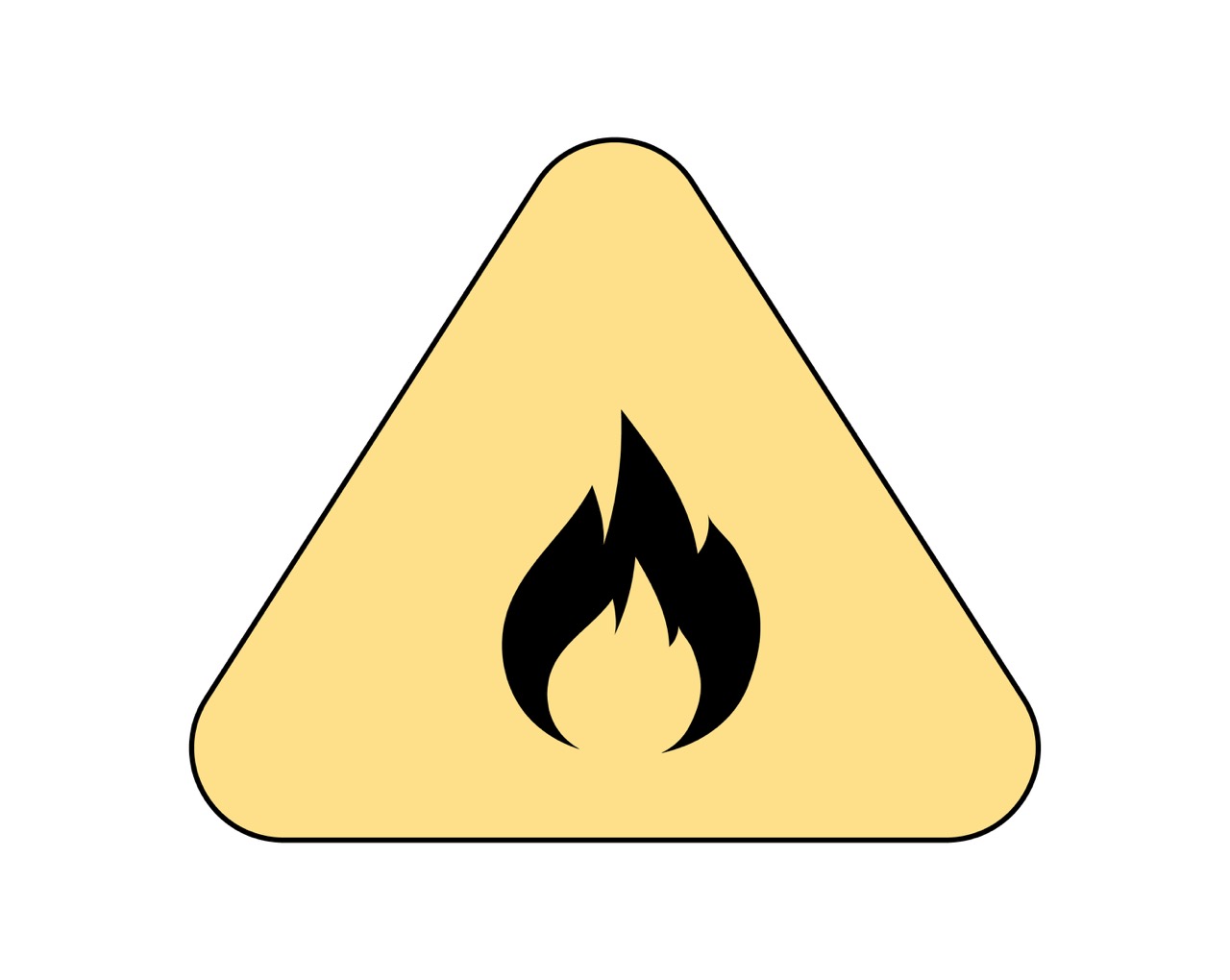
The flame pictogram is assigned to specified categories of flammable gases, aerosols, liquids, and solids, as well as certain pyrophoric, self-heating, water-reactive, self-reactive, and organic-peroxide hazards. Do not select storage or PPE from the icon alone. Follow the label, SDS, chemical hygiene plan, and applicable fire-code or institutional requirements.
Flame over circle
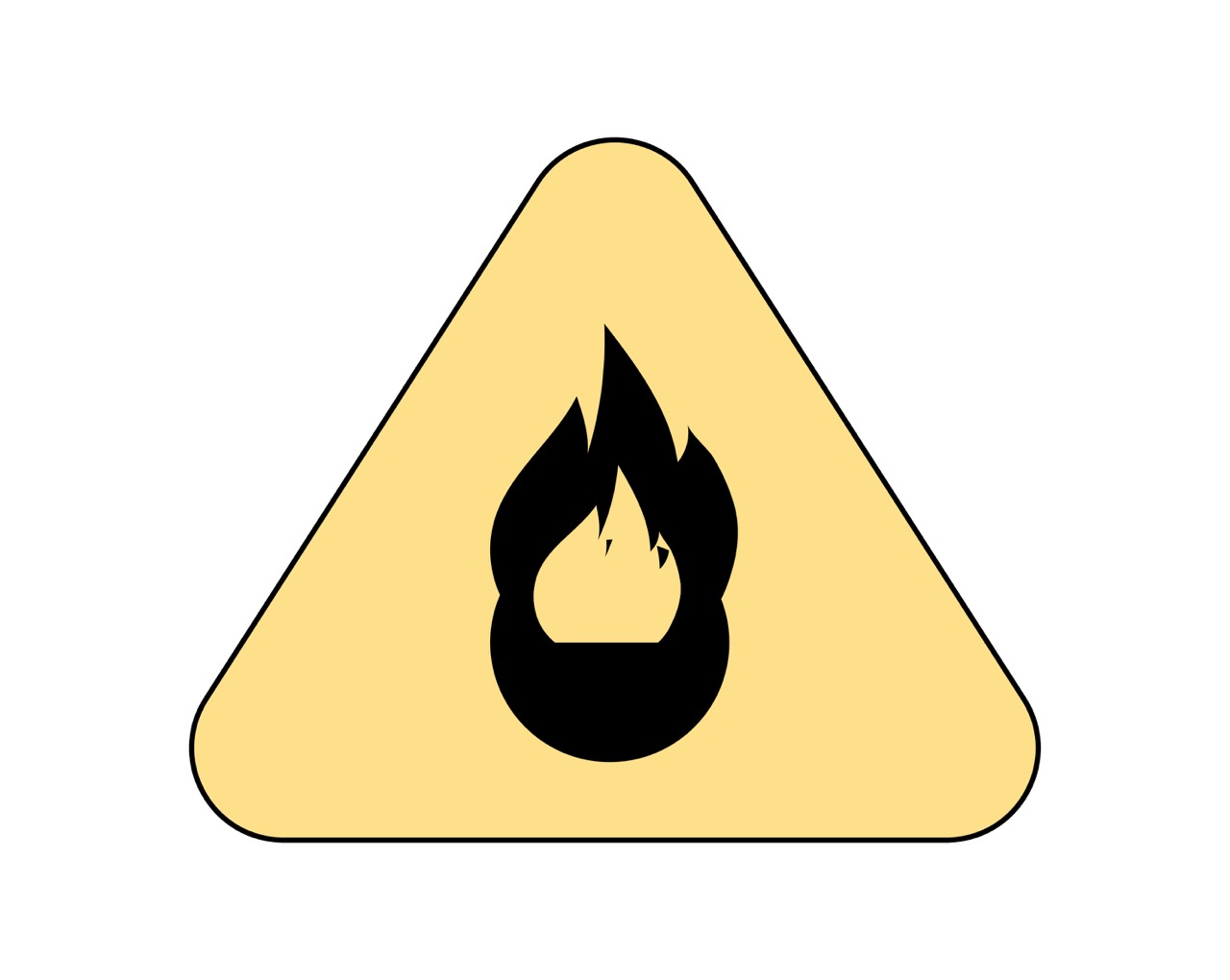
The flame-over-circle pictogram identifies oxidizers. Depending on the hazard class and category, the label may state that the material can cause or intensify fire or, for strong oxidizers, cause fire or explosion. Keep oxidizers away from incompatible combustible or reducing materials as specified by the SDS and the lab’s compatibility plan. Avoid the blanket statement that oxidizers “do not burn themselves” or always work by supplying oxygen.
Exploding bomb
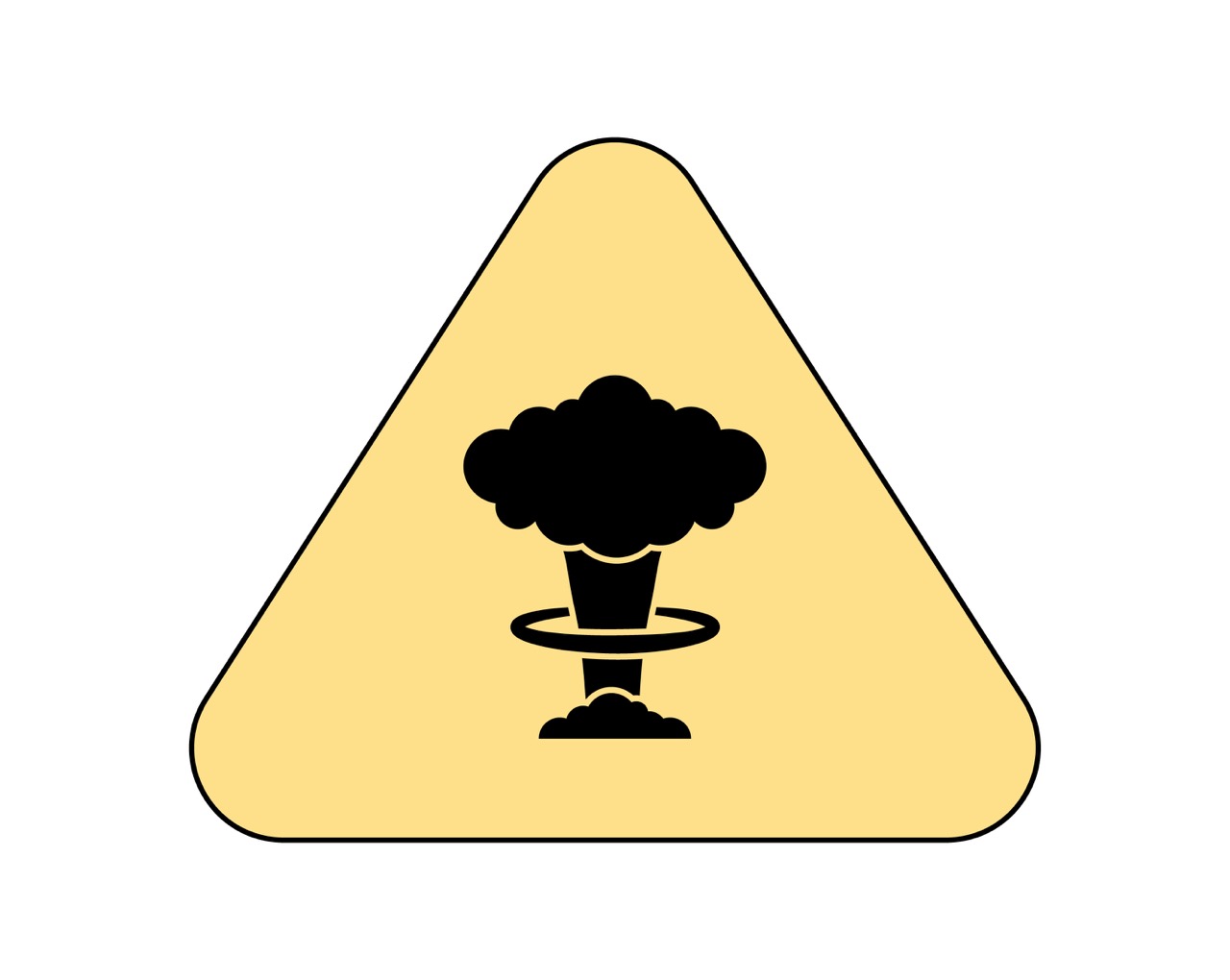
The exploding-bomb pictogram is assigned to specified categories of explosives, self-reactive substances and mixtures, and organic peroxides. Some lower-hazard categories use the flame pictogram or no pictogram instead, so the symbol should not be described as applying to every self-reactive material or organic peroxide. Handling and storage must follow the SDS and approved procedures for the material and scale involved.
Corrosion
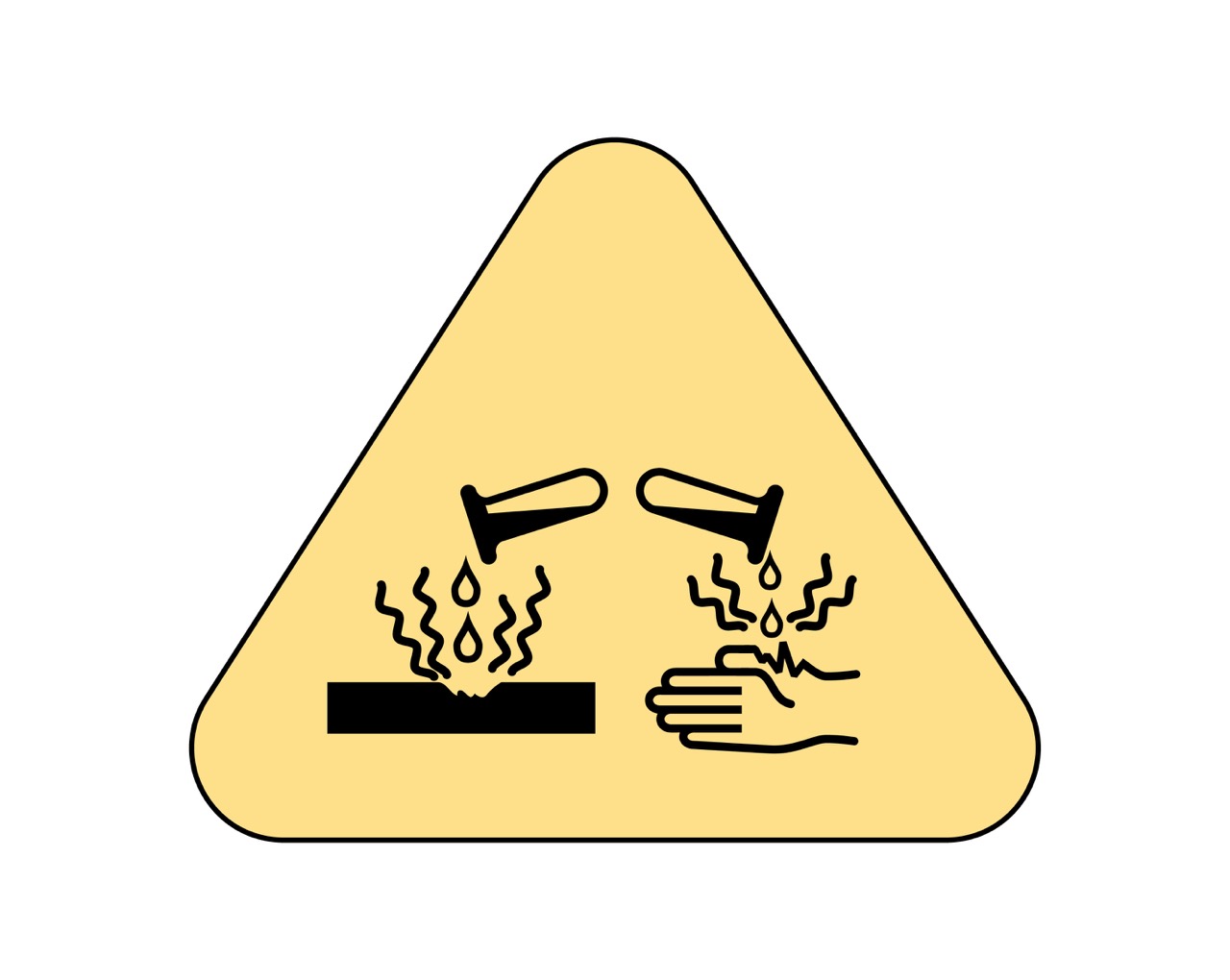
The corrosion pictogram covers specified categories of skin corrosion, serious eye damage, and corrosion to metals. Make sure to choose PPE based on a thorough hazard assessment and the SDS; “gloves, eye protection, and a lab coat at minimum” is not a universal rule because glove material, eye/face protection, clothing, and engineering controls depend on the chemical and task.
Skull and crossbones
.jpeg)
The skull-and-crossbones pictogram identifies acute toxicity classified as fatal or toxic by the oral, dermal, or inhalation route. Read the signal word, hazard statement, precautionary statements, and SDS to understand the applicable route and severity.
Health hazard
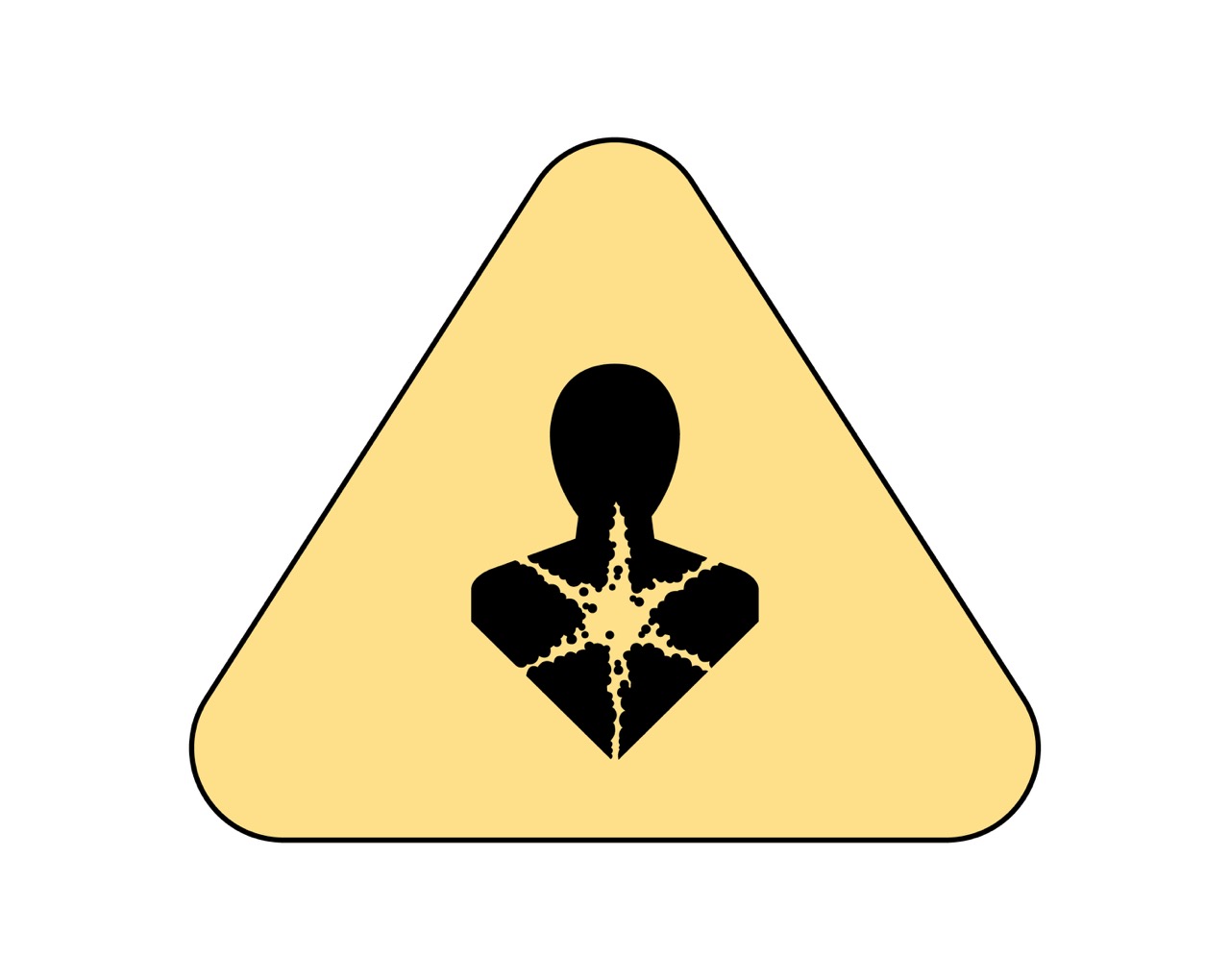
The health-hazard pictogram can indicate carcinogenicity, germ-cell mutagenicity, reproductive toxicity, respiratory sensitization, specific target-organ toxicity, or aspiration hazard. Some covered hazards, including aspiration hazard and specific target-organ toxicity after a single exposure, can involve acute events.
Exclamation mark
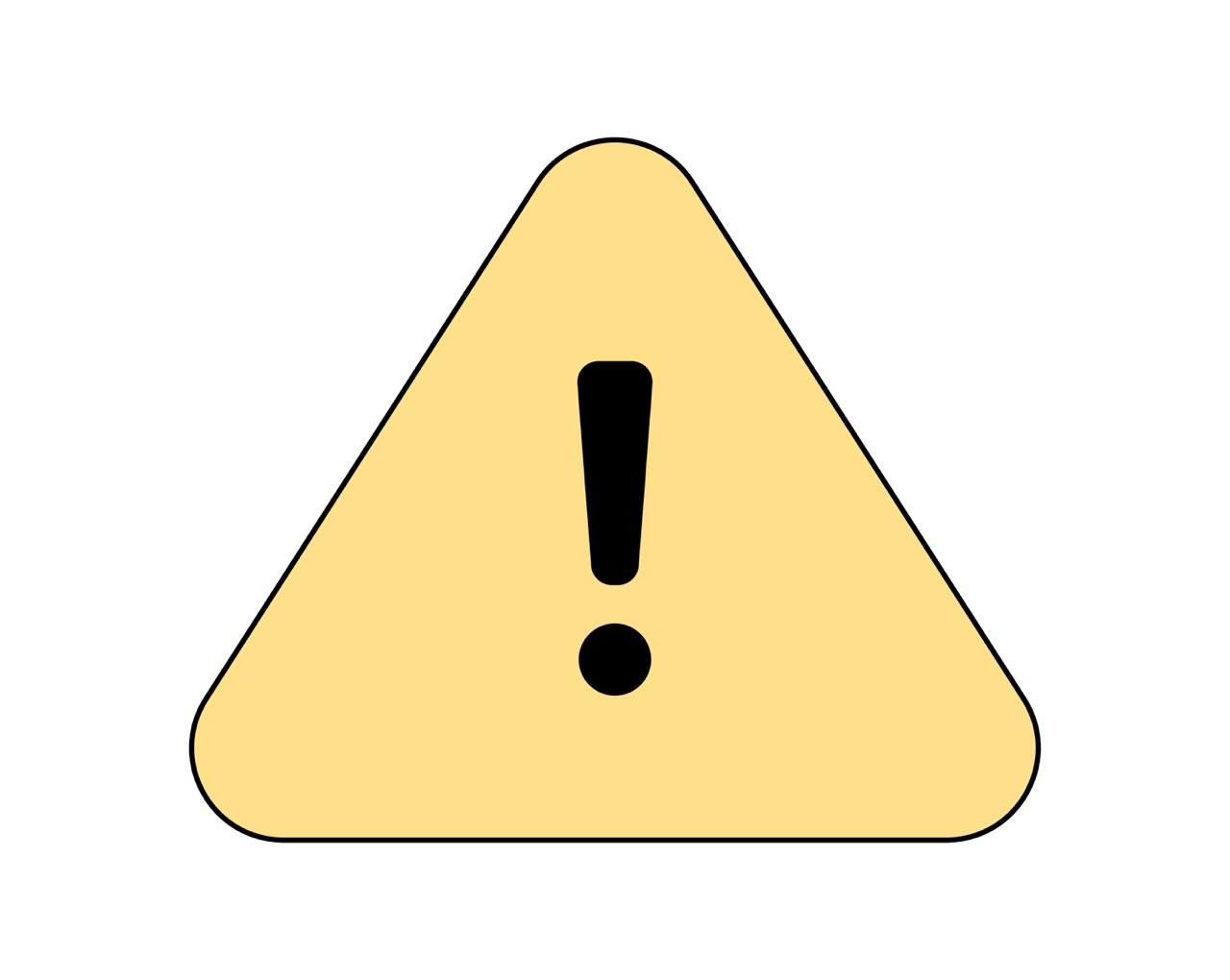
The exclamation-mark pictogram can indicate skin or eye irritation, skin sensitization, harmful acute toxicity, narcotic effects, or respiratory-tract irritation. OSHA also permits a nonmandatory use for hazards to the ozone layer.
Gas cylinder
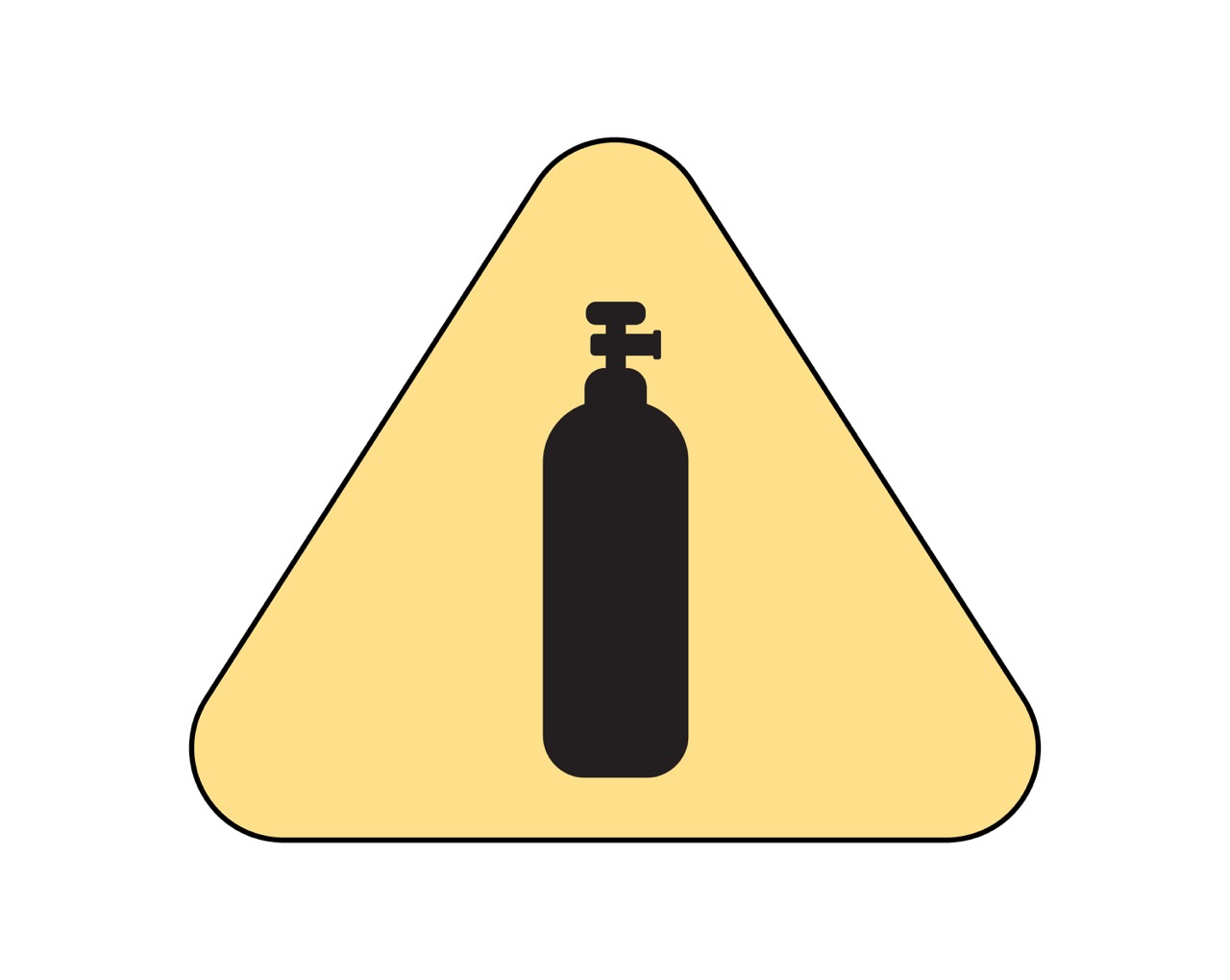
The gas-cylinder pictogram identifies gases under pressure, including compressed, liquefied, dissolved, and refrigerated liquefied gases. It warns that the container can explode if heated or that refrigerated gas can cause cryogenic burns or injury. Storage, securing, valve protection, transport, and ventilation requirements depend on the gas, cylinder design, use state, and applicable standards. Make sure to follow the supplier instructions, SDS, and site procedures.
Environment
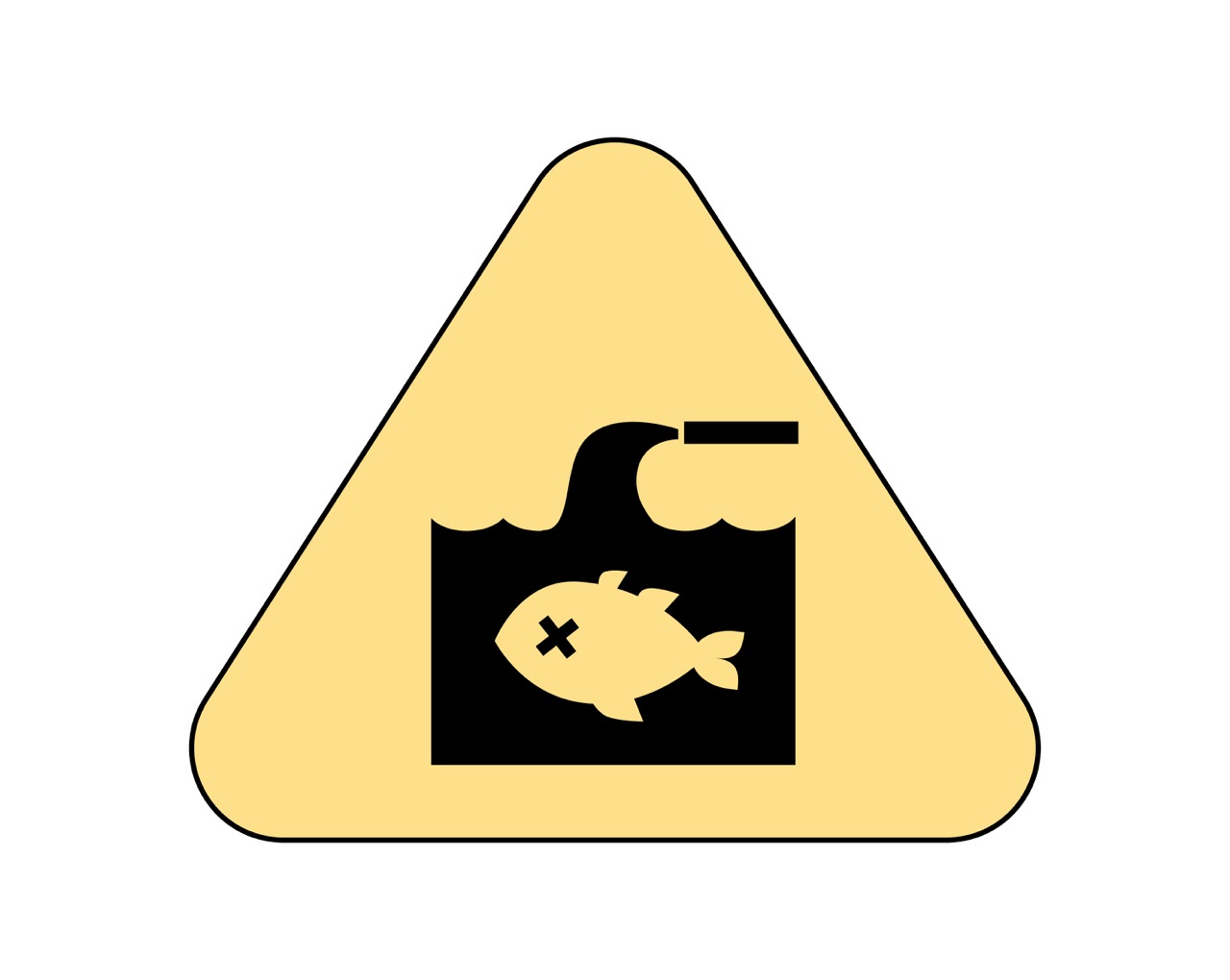
The environmental pictogram signifies aquatic toxicity under the UN GHS. OSHA does not require it under the HCS because environmental hazards are outside OSHA’s jurisdiction, although it may appear as supplemental information when it does not conflict with required label elements. Make sure not to infer hazardous-waste status from this pictogram alone. A generator must make the applicable federal and state hazardous-waste determination for the waste actually generated.
Biological, radiation, low-temperature, and electrical warnings
These warnings are not part of OSHA’s GHS chemical-pictogram set. Their required form and placement depend on the material, equipment, operation, applicable regulation or license, and the institution’s risk assessment.
Biohazard
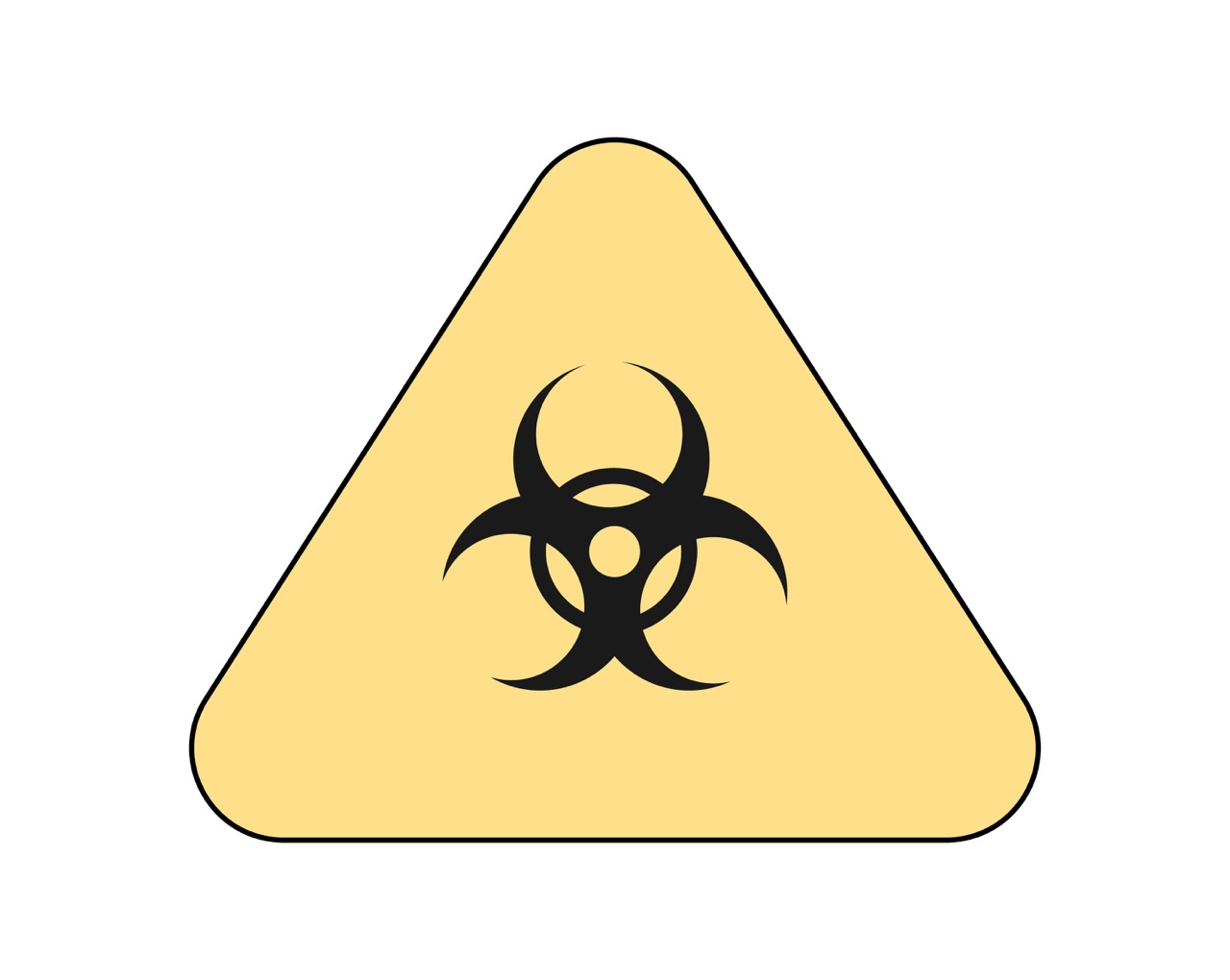
The biohazard symbol was developed in 1966 by Charles Baldwin and colleagues to provide a distinctive warning of an actual or potential biological hazard. Its regulated use is context-specific. For example, OSHA’s Bloodborne Pathogens Standard requires biohazard labels or permitted color coding for specified regulated waste, containers, refrigerators, freezers, and contaminated equipment, with defined exceptions. CDC/NIH biosafety guidance recommends entrance signage when infectious materials are present. The symbol does not mean that gloves, a mask, and a gown are always required; PPE and entry procedures must be set by the applicable exposure or biosafety risk assessment.
Ionizing radiation
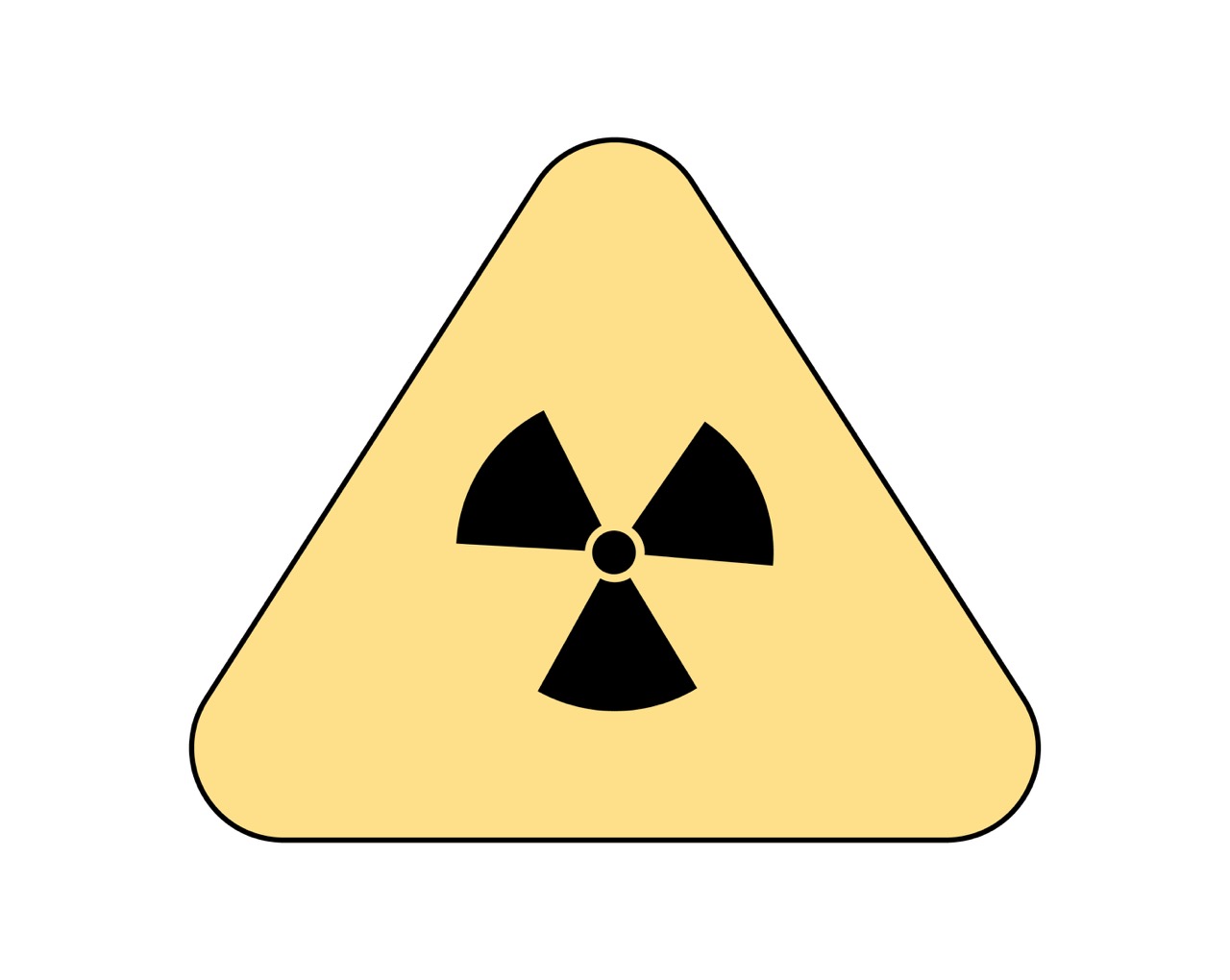
The ionizing-radiation trefoil marks defined radiation areas, radioactive materials, or equipment under the applicable OSHA rule, NRC or Agreement State regulation, and license conditions. The standard NRC symbol may be magenta, purple, or black on a yellow background. Posting and labeling requirements depend on dose rate, material quantity, container, and regulatory jurisdiction, and include specific exceptions. The sign should direct readers to the facility’s radiation-safety controls rather than implying that PPE is always the primary or “stricter” control.
Non-ionizing radiation and lasers
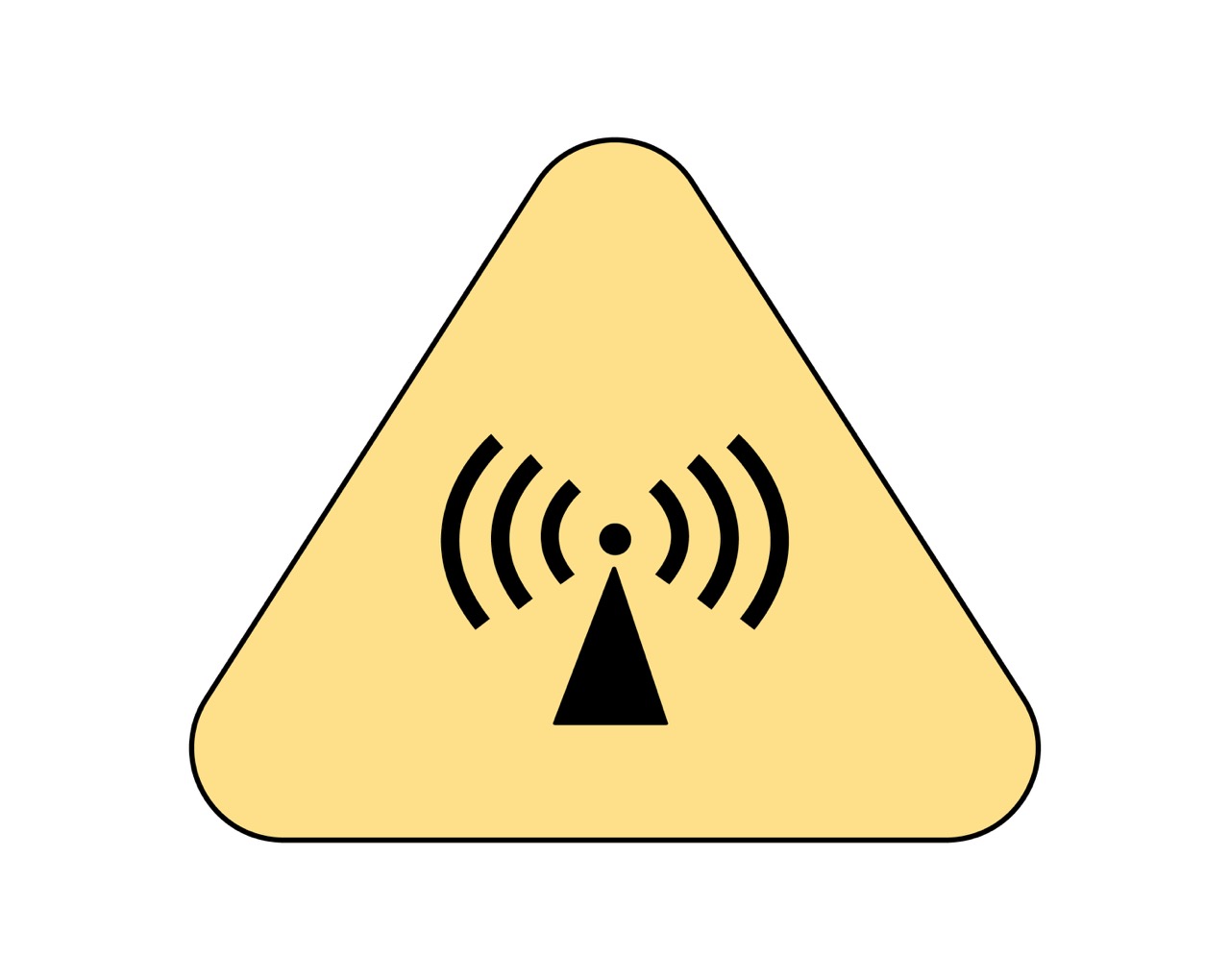
Facilities may use an ISO-style non-ionizing-radiation warning symbol for sources such as radiofrequency or microwave equipment, but hazard-specific requirements still apply. OSHA specifies a separate radiofrequency warning symbol in 29 CFR 1910.97, and laser products and controlled areas use class- and hazard-specific labels or signs. For lasers, the label or sign should communicate the laser class and relevant exposure warning; a generic wavy-line symbol alone is not enough.
Low temperature and cryogenic conditions
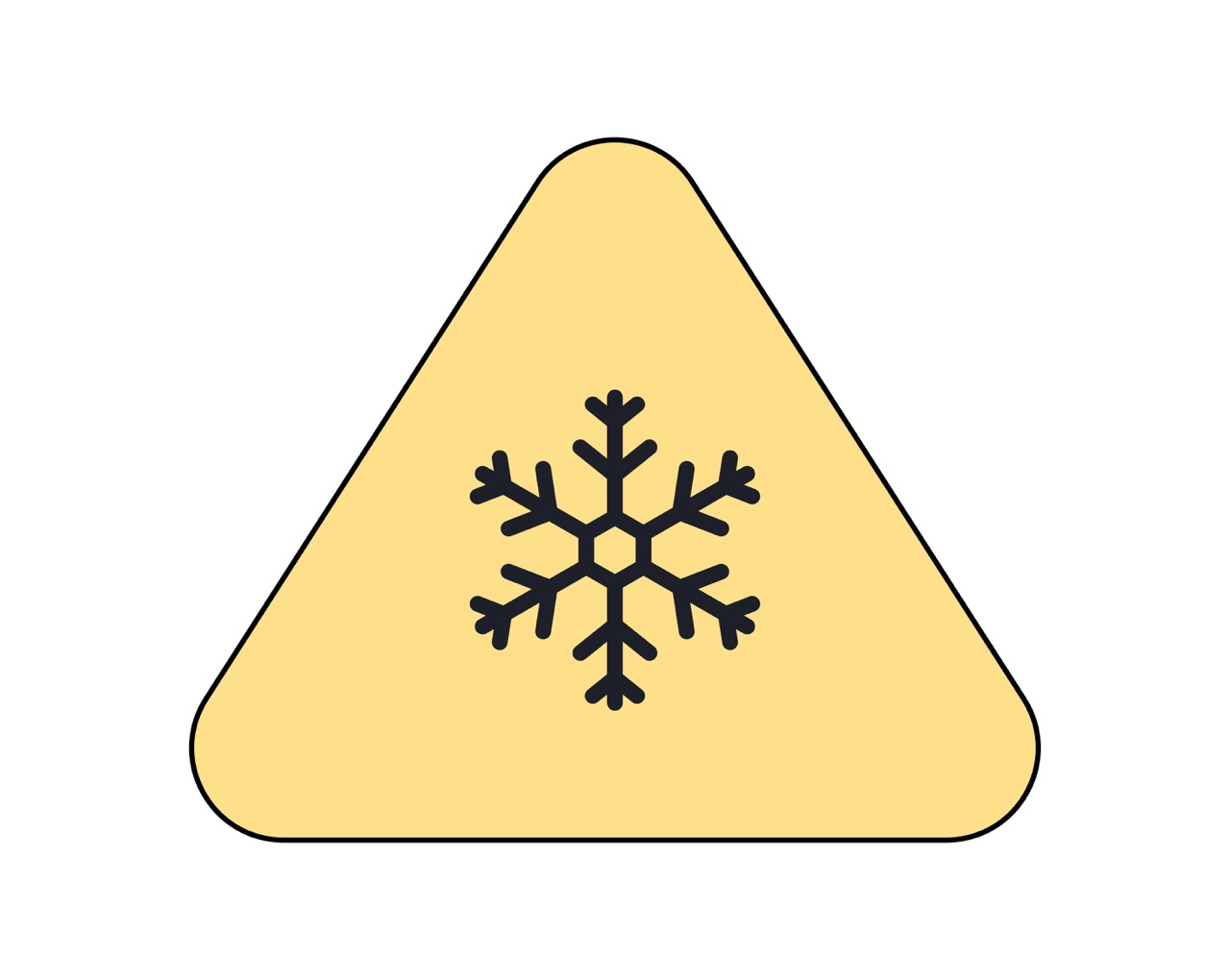
ISO 7010 W010 is an active warning sign for low-temperature or freezing conditions and uses a snowflake. It is not one of OSHA’s HCS pictograms. Because ISO notes that supplementary text may be needed for comprehension, pair the symbol with clear wording and site instructions. For refrigerated liquefied gases, the OSHA gas-cylinder pictogram and hazard statement may also apply. Select cold-insulating gloves, eye or face protection, footwear, body protection, ventilation, and handling controls from the SDS and task-specific risk assessment.
Electrical and high voltage
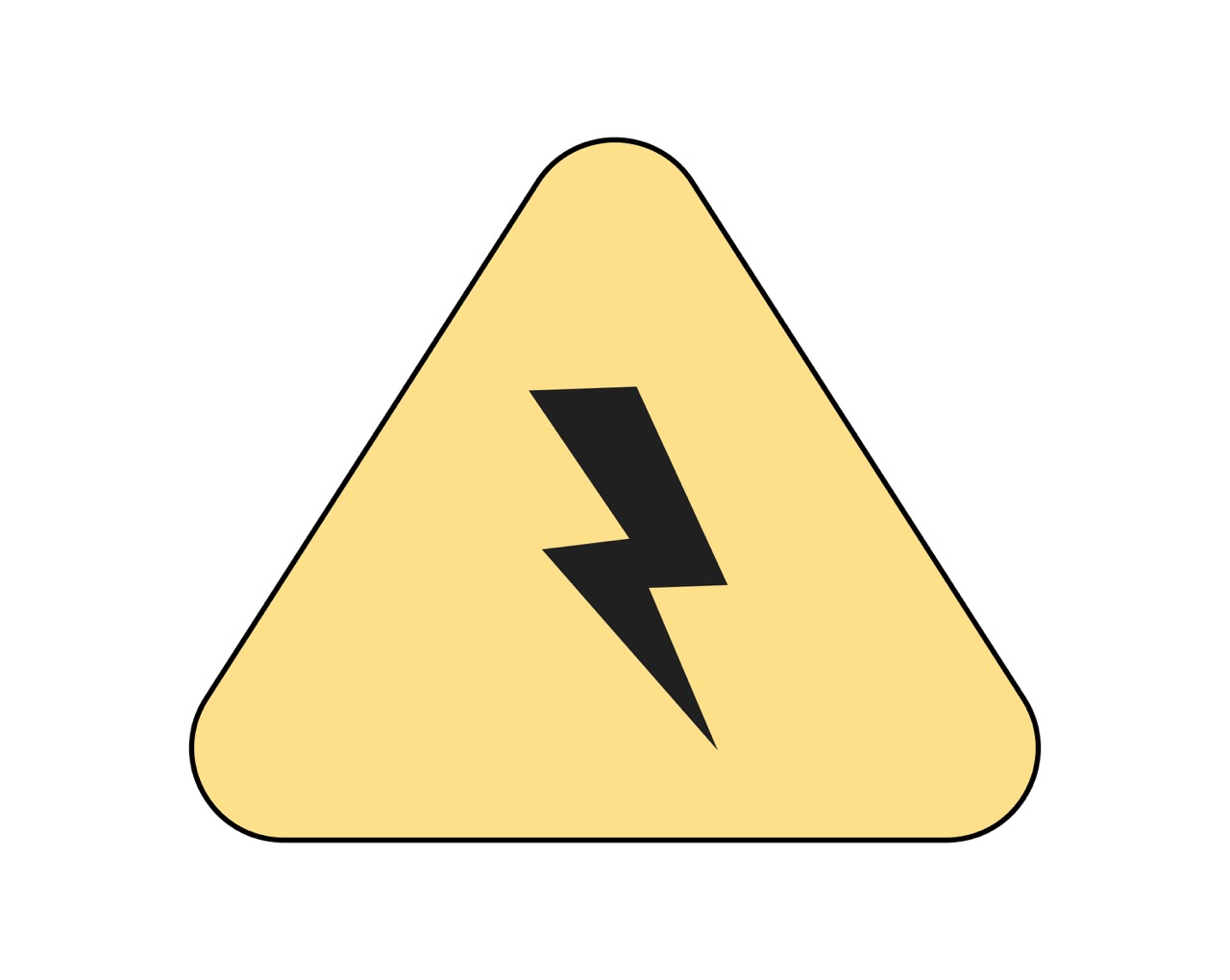
A lightning-bolt warning identifies an electrical hazard, but the safe-work rule depends on the task. OSHA generally requires exposed live parts to be de-energized before employees work on or near them unless an allowed exception applies. Only qualified persons may work on exposed energized parts, and lockout/tagout applies when the relevant electrical or hazardous-energy standard covers the servicing or maintenance activity. Follow the equipment instructions and the employer’s electrical-safety and energy-control procedures.
PPE requirement symbols
PPE symbols communicate protective-equipment rules established by your organization for a defined task or area. They don’t replace the hazard assessment, SDS, chemical hygiene plan, biosafety risk assessment, or written procedure that determines what protection is appropriate.
- Eye protection required.
This symbol is used where the hazard assessment identifies an eye hazard. Specify safety glasses, goggles, or other protection appropriate to the impact, splash, optical-radiation, or other exposure. - Gloves required.
This symbol identifies the glove type or direct workers to a glove-selection procedure. “Chemical-resistant” is not one universal material; compatibility, breakthrough time, dexterity, and biological or thermal hazards matter. - Protective clothing required.
This symbol specifies a lab coat, gown, apron, flame-resistant garment, or other clothing when the assessment calls for it. A lab coat is not automatically sufficient for every wet-chemistry or biological task. - Face protection required.
A face shield may supplement, but does not automatically replace, primary eye protection.Make sure to pick one appropriate for the specific splash, impact, heat, or optical hazard. - Respiratory protection required.
This symbol is included when part of a compliant respiratory-protection program. OSHA prioritizes feasible engineering controls and requires appropriate respirator selection, medical evaluation, training, and fit testing for tight-fitting facepieces.
Check out our chemistry lab safety guide which covers these PPE requirements in more detail.
Prohibition symbols
Prohibition signs communicate activities that the employer, an applicable standard, a fire code, a license, or a site procedure does not allow in a defined area. They use a red circle with a diagonal slash over the prohibited action. Common lab prohibition signs include:
- No ignition sources or open flame.
This symbol is used when the fire-code analysis, chemical classification, process, or site procedure prohibits flames, sparks, or other ignition sources. - No smoking.
This symbol is used where required by law, fire code, or facility policy, including applicable flammable-material areas. - No food or drink.
OSHA’s Bloodborne Pathogens Standard specifically prohibits eating and drinking in work areas where there is a reasonable likelihood of occupational exposure. - No unauthorized entry.
This symbol is used for controlled areas when the governing biosafety, radiation, laser, electrical, security, or facility procedure restricts access. “BSL-2,” by itself, should not be presented as a universal OSHA trigger for a particular prohibition sign.
Where should lab safety symbols be placed?
Placement begins with the rule that applies to the specific label or sign:
- Shipped chemical containers.
Required HCS label elements, including applicable pictograms, must be prominently displayed on the container, tag, or mark. - Workplace chemical containers.
OSHA permits signs, placards, process sheets, batch tickets, or similar materials for stationary process containers when they identify the containers, convey the required information, and remain readily accessible during the work shift. A portable container intended only for the immediate use of the employee who transfers the chemical has a limited labeling exception. - Storage areas and cabinets.
While there’s no blanket OSHA HCS rule requiring every cabinet to display every GHS pictogram represented by its contents, make sure to apply the relevant fire code, building code, local authority requirements, chemical-compatibility plan, and institutional signage rules. - Doors and controlled areas.
Make sure to include biohazard, ionizing-radiation, laser, RF, PPE, or access-control information when required by the applicable standard, license, risk assessment, or site procedure. This should provide all the information necessary for a person before entry. - Equipment.
Preserve manufacturer labels and add task- or site-specific warnings where the risk assessment or procedure calls for them. - Visibility and upkeep.
OSHA requires relevant workplace warnings to be legible, prominently displayed or readily available, and accessible. “At eye level” is a useful design practice, not a universal regulatory measurement. Inspect signs and labels when conditions change and as part of the site’s documented safety program.
How SmartLabs manages lab safety signs and hazard communication across 729 lab spaces
SmartLabs provides flexible laboratory infrastructure across biopharma hubs in the US, managing EHS compliance for hundreds of partner companies with different workflows, chemical inventories, and regulatory requirements. Their primary operational challenge: managing safety across hundreds of lab spaces for partner companies with different workflows and requirements.
At the time covered by the story, SmartLabs was posting signage across 729 lab spaces. With SciSure’s Health & Safety features implemented, the team gained a more granular view by researcher and R&D suite.
"Now we can break it down by suite. For instance, 'This suite only has non-hazardous material and only needs the necessary spill kit that pertains to these chemicals.’”
- Natalie Kosmadakis, EHS & Lab Operations Manger at SmartLabs
Connected suite-level safety data helped SmartLabs target signage and related safety actions to the conditions described in each space. That kind of granularity means hazard symbols and safety requirements stay matched to actual conditions rather than defaulting to a blanket approach across the whole facility. Read the full SmartLabs story.
Training your team to actually respond to lab safety symbols
Posting a symbol is not enough. Your employees need to understand the workplace labeling system, the hazards behind the sign, the controls and PPE it calls for, and what to do in an emergency.
- Initial and change-based training.
Under OSHA’s HCS, provide effective information and training at initial assignment and whenever a new chemical hazard the employee has not previously been trained about is introduced into the work area.
- Laboratory refresher frequency.
Under OSHA’s Laboratory Standard, make sure to provide information at initial assignment and before new exposure situations. Make sure to refresh this training periodically.
- Hazard-specific schedules.
Check the standard that applies to the work. For example, OSHA’s Bloodborne Pathogens Standard requires training at initial assignment and at least annually for employees with occupational exposure.
- Task-based examples.
Use incidents, near misses, inspections, and drills that are approved for internal training.
- Accessible information.
Ensure required SDSs and written programs are immediately accessible where the standard requires, and train employees on how to use them rather than relying on a symbol chart alone.
Where configured, SciSure’s Health & Safety features can assign role- and hazard-based training requirements, track completion and expiration or delinquency status, and automate reminders. Your organization remains responsible for deciding which training is legally and operationally required and for validating that the content and schedule fit its hazards and applicable standards.
When safety symbols meet lab data: the bigger picture
Lab and science safety symbols are one layer of hazard communication. The full picture includes SDS management, chemical inventory tracking, inspection records, and training documentation, all of which need to be current, accessible, and connected to be effective.
SciSure’s Health & Safety features can support these workflows in one platform, so your lab's safety information doesn't live in a separate binder that no one opens until an audit.
Where configured, your team can manage chemical inventory and SDS access, assign and track training requirements, maintain space-level hazards, and generate door signs using chemical, hazard, equipment, emergency-contact, PPE or precaution, and entry-procedure information. If you want to see how it works in practice, talk to a specialist.
FAQ
What are the basic lab safety symbols?
The basic lab safety symbols fall into several categories. The nine GHS pictograms cover chemical hazards: flammable, oxidizer, explosive, corrosive, acute toxicity (skull and crossbones), health hazard, irritant/harmful (exclamation mark), compressed gas, and environmental hazard. Beyond GHS, labs commonly use the biohazard trefoil, ionizing and non-ionizing radiation symbols, the low temperature/cryogenic snowflake, and the electrical/high-voltage lightning bolt. PPE symbols and prohibition signs round out the set.
What does the biohazard symbol mean?
The biohazard symbol warns of an actual or potential biological hazard in a defined material, container, piece of equipment, or area. Its required use depends on the applicable rule or biosafety program. OSHA’s Bloodborne Pathogens Standard, for example, specifies labels and signs for defined blood, other potentially infectious materials, regulated waste, and certain research-laboratory conditions. PPE and entry procedures must come from the applicable exposure or biosafety risk assessment, not from the symbol alone.
What does the skull and crossbones symbol mean in a lab?
Under OSHA’s HCS, the skull and crossbones pictogram identifies substances with acute toxicity, meaning they have an immediate and potentially severe effect through inhalation, ingestion, or skin contact. It's distinct from the health hazard symbol, which covers long-term or chronic effects like cancer or organ damage. When you see the skull and crossbones, the substance requires strict handling protocols and appropriate PPE before any contact. Read the signal word, hazard statement, precautionary statements, and SDS to understand the route, severity, first-aid instructions, and controls for the specific chemical.
What is the difference between the flammable and oxidizer symbols?
The flammable symbol shows a flame and marks substances that catch fire easily or present a fire hazard. The oxidizer symbol shows a flame over a circle and marks substances that don't burn themselves but supply oxygen to a reaction, intensifying fires. Both require careful storage, but they must be stored separately from each other, since combining a flammable substance with an oxidizer significantly increases the risk of a violent reaction.
What are the 9 GHS hazard pictograms?
The nine GHS hazard pictograms are: flame (flammable), flame over circle (oxidizer), exploding bomb (explosive), corrosion (corrosive to skin and metals), skull and crossbones (acute toxicity), health hazard (serious/chronic health effects), exclamation mark (irritant or harmful), gas cylinder (compressed gas), and environment (aquatic toxicity). OSHA requires eight of the nine in US workplaces. The environmental pictogram is part of the UN GHS model but isn't mandated by OSHA's Hazard Communication Standard.
What is the general warning symbol?
The general warning symbol is an exclamation point inside a yellow triangle. It's used to signal a variety of non-specific hazards including slipping risks, falling objects, electrical hazards, and other general cautions that don't fall under a more specific category. It’s different from the GHS exclamation-mark pictogram, which is a black symbol in a red diamond and is assigned to specified chemical hazard classes. Use a more specific warning sign when one applies, and make sure to add text or instructions when the hazard would otherwise be unclear.
What do the PPE symbols in a lab mean?
PPE symbols indicate what protective equipment must be worn in a specific area or when handling a specific substance. Common ones include eye protection, gloves, lab coat, face shield, and respiratory protection. They're typically posted at lab entrances or on equipment to ensure people are protected before they encounter a hazard, not after.
The underlying hazard assessment, SDS, chemical hygiene plan, biosafety risk assessment, or written procedure should specify the required equipment. For example, the compatible glove material or whether safety glasses, goggles, or a face shield are needed. Respirator signs must be used within a compliant respiratory-protection program.
Where should lab safety symbols be placed?
Lab safety symbols should be placed at lab entrances, on chemical storage cabinets and areas, directly on equipment that carries specific risks, and at the point of use where a hazard is actually encountered. Signs should be at eye level and unobstructed. Labels fade and get covered over time, so make sure to keep required warnings legible, prominent, and accessible.

Read more of our blogs about modern lab management
Discover the latest in lab operations, from sample management to AI innovations, designed to enhance efficiency and drive scientific breakthroughs.