Digitalization
(read time)

Tackling Tech Debt in Scientific Research

Discover how tech debt slows scientific progress—and how connected platforms like SciSure for Research help labs evolve without adding complexity.
A laboratory

Download Whitepaper

By submitting this form, you agree with our Privacy Policy.
Thank you! Download the file by clicking below:
Download
Oops! Something went wrong while submitting the form.

Table of Contents

Publish Date

Thank you! Your submission has been received!
Oops! Something went wrong while submitting the form.

Table of Contents

Digital tools have become indispensable to modern research. From electronic lab notebooks (ELNs) to sample-tracking systems and data analytics platforms, scientists now depend on software at almost every stage of discovery. Yet for all this apparent progress, many labs still find themselves slowed by inefficiency. Data lives in too many places. Instruments don’t talk to one another. A simple process change can take weeks to implement.

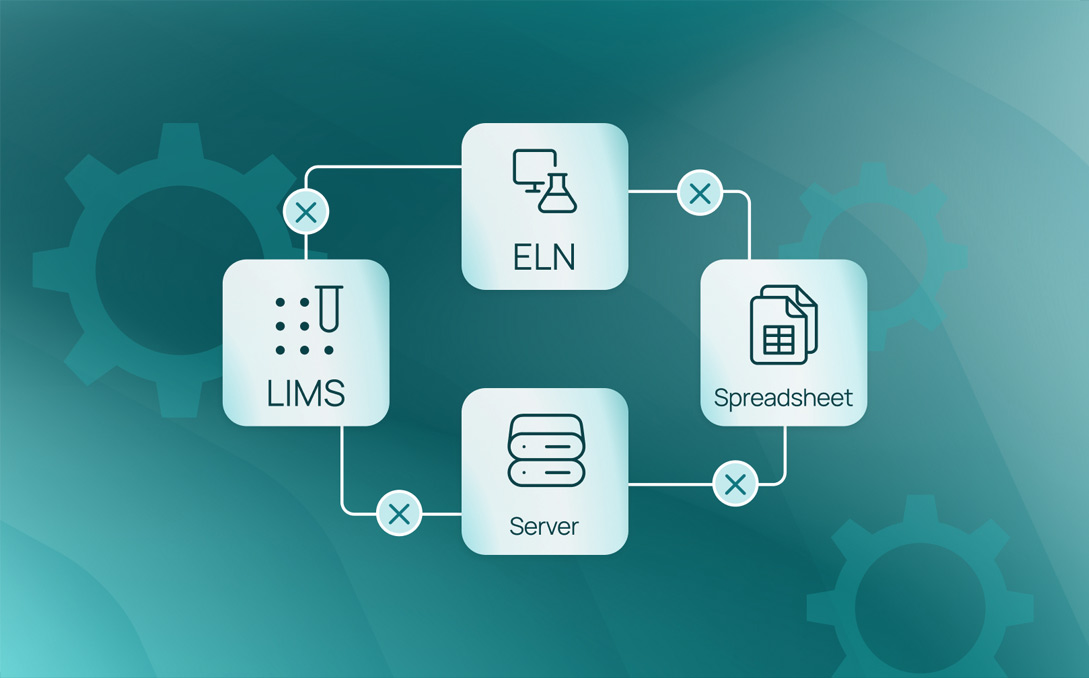
The culprit is often something labs don’t even realize they’ve built up: technical debt, or tech debt. Borrowed from software development, the term describes the hidden cost of quick fixes — when short-term solutions, legacy systems, or patchy integrations create long-term complexity. In research environments, tech debt shows up as outdated ELNs that can’t handle new data types, one-off scripts that break with every update, or scientists relying on spreadsheets to bridge systems that were never meant to connect.

As labs move closer to 2026, the shift from Biotech to TechBio is accelerating. Instruments are becoming smarter, data volume is exploding, and digital expectations are rising across every research discipline. Labs that continue to rely on fragmented systems will face increasing operational friction, while those that adopt connected infrastructure will unlock faster discoveries, stronger compliance, and AI-ready workflows.

In this article, we’ll unpack what tech debt really means in a scientific context, how it accumulates in research labs, and why it’s one of the biggest unseen barriers to innovation. Most importantly, we’ll explore how a connected, future-ready digital ecosystem can help research teams modernize without adding to the problem.

What is tech debt?

The term “tech debt” was first coined by software developers to describe the trade-off between speed and sustainability. Sometimes, to meet a deadline or get a product out the door, software development teams take shortcuts in their code. Those shortcuts work as a quick fix, but they create a “debt” that must be repaid later in the form of rework, maintenance, and reduced flexibility.

The same principle applies in scientific research. Every time a lab makes a quick technology decision — adopting a stopgap tool, customizing an aging system, or finding a workaround to fill a gap — it’s effectively borrowing against future efficiency. Each quick-fix saves time today but adds complexity tomorrow. Over the years, these small decisions accumulate into layers of tech debt that slow innovation, increase IT overhead, and make system changes far more difficult than they should be.

In a lab setting, tech debt might look like:

  • An ELN that can’t capture data from new instruments without a manual upload step.
  • A sample-tracking database that requires weekly “clean-up” to stay accurate.
  • Dozens of isolated systems, decentralized data, each with its own logins, data formats, and update schedules.

These aren’t outright failures — they’re survival strategies. But when the infrastructure becomes too tangled to evolve, science pays the price. Progress stalls not because researchers lack ideas, but because their systems can’t keep up.

How tech debt accumulates in the lab

Few labs set out to build complicated digital ecosystems. Tech debt often grows slowly, the byproduct of good intentions and quick decisions made under pressure. A new instrument needs data capture? Add a plugin. A compliance update changes documentation rules? Customize the workflow. A new collaborator uses a different data format? Build a bridge file to connect the two.

Each decision makes sense in isolation — but collectively, they create fragile, fragmented systems that are difficult to maintain and even harder to upgrade. Over time, those once-practical solutions turn into long-term liabilities.

Some of the most common sources of tech debt in research environments include:

  • Legacy ELNs and LIMS: Systems built years ago for narrower use cases struggle to support modern demands, e.g., multi-omic or AI-driven research. Custom code and rigid data structures make integration costly.
  • Patchwork integrations: Point-to-point connections between instruments and databases can break with every update or vendor change.
  • Siloed data storage: When inventory, experiment, and safety data all live in separate systems, teams lose visibility — and time.
  • Manual workarounds: Scientists often rely on spreadsheets or macros to compensate for missing functionality, creating hidden data trails that bypass governance.
  • Custom configurations: Overly tailored workflows that make validation and upgrades slow, expensive, or sometimes impossible.

Left unchecked, this digital sprawl becomes a major source of inertia. Even when labs recognize the need for change, their accumulated tech debt makes transformation daunting. Each dependency feels too critical to replace, every integration too risky to touch — and innovation grinds to a halt.

The unseen cost of tech debt

In fast-paced research environments, the true cost of tech debt isn’t always visible — until something breaks. A data handoff fails right before a submission deadline. An instrument update crashes a fragile integration. Or an auditor asks for documentation that exists only in a scientist’s personal spreadsheet. Each incident feels isolated, but together they reveal a deeper structural problem: the lab is spending more time maintaining its systems than advancing its science.

The impact shows up in several ways:

  • Innovation drag: When tools can’t adapt quickly, researchers spend more time troubleshooting than experimenting. Adding a new workflow or integrating an emerging technology becomes a multi-month project instead of a routine update.
  • Compliance exposure: Manual data transfers and disjointed chain of custody increase the risk of transcription errors, missing audit trails, and non-compliance with standards like GLP or ISO 17025.
  • Hidden financial costs: Custom patches and ongoing IT maintenance quietly eat into budgets. The total cost of ownership rises, even as productivity falls.
  • Staff frustration and turnover: Scientists didn’t train to debug file paths or reconcile data silos. Over time, tech debt erodes morale and contributes to burnout.
  • Missed opportunities for insight: When data is fragmented across systems, it’s nearly impossible to perform cross-study analysis or leverage AI-driven discovery tools.

The longer tech debt persists, the steeper the “interest” becomes. Every delayed upgrade or avoided refactor compounds the challenge, making change harder with each passing year. Eventually, labs reach a tipping point where standing still costs more than transforming — not just financially, but scientifically.

When “digital transformation” efforts fall short

When labs embark on digital transformation, the intent is progress: replace outdated systems, improve data visibility, and create a more connected research environment. But too often, those initiatives end up layering new complexity on top of the old — trading one form of tech debt for another.

The problem isn’t modernization itself; it’s how it’s executed. Many transformations focus on tools, not architecture. A lab replaces a legacy LIMS with a modern one, or moves its ELN to the cloud, but leaves the same fragmented data structures underneath. Information still lives in silos — only now they’re web-based.

Other efforts fall into vendor lock-in. A platform that promises seamless integration might deliver it — but only within its own closed ecosystem. Once data and workflows are tied to a single vendor’s architecture, switching or expanding becomes costly. Labs lose flexibility, depend on external timelines for updates, and risk turning short-term convenience into long-term constraint.

And perhaps most commonly, labs carry their old habits into new systems. They digitize paper processes without rethinking how data should actually flow. Instead of building a connected environment, they recreate legacy inefficiencies in digital form.

In each case, the result is the same: digital transformation that looks modern but still feels clunky and inefficient. The surface changes, but the structural debt remains. To break that cycle, labs need a more strategic approach — one that emphasizes interoperability, open data models, and modular design from the start.

Escaping the debt cycle: a connected ecosystem approach

Avoiding tech debt isn’t about avoiding change — it’s about building for change. The most resilient labs don’t just digitize existing processes; they design digital ecosystems that can evolve as science evolves.

That means moving away from monolithic systems and toward connected, modular architectures that make it easy to adapt without starting over. In a connected ecosystem, every component, from ELN and LIMS to safety and inventory tools, shares a common data backbone. This ensures that information flows freely between modules while maintaining traceability, security, and context.

A connected approach helps labs:

  • Reduce complexity: Standardized data models eliminate duplicate entry and fragile integrations.
  • Stay adaptable: Modular design allows new capabilities or instruments to be added without disrupting existing workflows.
  • Simplify validation and compliance: Consistent architecture reduces rework during upgrades and regulatory changes.
  • Avoid vendor lock-in: Open integrations and interoperability standards ensure labs can evolve their systems on their own terms.
  • Lower maintenance costs: Centralized updates and consistent infrastructure reduce IT overhead and downtime.

This connected philosophy is at the core of SciSure for Research — a modern, cloud-based ecosystem built to help labs eliminate the hidden inefficiencies that lead to tech debt. Rather than forcing labs into a single, rigid structure, SciSure provides the flexibility to integrate, expand, and evolve at their own pace.

Here’s how SciSure for Research puts those principles into practice:

  • Interoperability by design: SciSure’s open API, developer SDK and flexible data structures enable seamless integration with existing instruments, databases, and third-party software. Labs aren’t locked into a single vendor’s stack; they can connect what they already use and expand as needs change.
  • Unified architecture: Instead of separate silos for ELN, inventory, safety, and compliance, SciSure unifies these modules on a shared platform — giving every user access to consistent, traceable data.
  • Scalability without rework: Cloud-based infrastructure allows labs to grow capacity, add teams, or support new research areas without rebuilding or revalidating the core system.
  • Continuous improvement: Regular platform updates and configuration-based enhancements keep systems current without the disruption of custom code maintenance.
  • Lifecycle visibility: Every change — from experiment design to audit reporting — is tracked automatically, creating a transparent digital record that simplifies reviews and future upgrades.

This is the foundation of digital resilience — a system that not only keeps pace with discovery but enables it.

With this approach, modernization stops being a series of one-off projects and becomes a continuous, low-friction process. Each system update strengthens the foundation rather than adding to its weight. Labs can focus their resources on discovery and innovation instead of infrastructure upkeep — progress without the baggage of tech debt.

Interested in learning what this looks like in practice and how to begin preparing your lab today?

Join our webinar, Get Your Research Labs Ready for 2026, on December 11.  

You’ll walk away with the key trends sharing the future of research, plus practical steps you can start implementing right away. Click the banner:  

The sustainable path forward

Tech debt will always exist to some degree — the goal isn’t to eliminate it entirely, but to manage it intelligently. In research, where science and technology move faster than any one platform can, sustainability depends on how well a lab can adapt. The question isn’t whether systems will need to evolve, but how much friction that evolution will create.

Digital sustainability comes from intentional design. Labs that plan for interoperability, modularity, and transparency from the start can absorb new methods, data types, and collaborations without major upheaval. They’re not locked into static tools or brittle integrations — they’re free to grow.

This is where the real payoff of connected infrastructure becomes clear. By building on flexible, open systems like SciSure for Research, labs shift from a model of reactive maintenance to one of continuous improvement. Each upgrade strengthens the ecosystem, reduces technical burden, and opens new possibilities for innovation.

Ultimately, escaping tech debt isn’t just a technical achievement — it’s a leadership mindset. It requires treating digital systems not as one-time investments, but as living frameworks that evolve with the science they support. When labs take that view, progress becomes sustainable. The digital foundation doesn’t just keep up with discovery — it accelerates it.

Digital tools have become indispensable to modern research. From electronic lab notebooks (ELNs) to sample-tracking systems and data analytics platforms, scientists now depend on software at almost every stage of discovery. Yet for all this apparent progress, many labs still find themselves slowed by inefficiency. Data lives in too many places. Instruments don’t talk to one another. A simple process change can take weeks to implement.

The culprit is often something labs don’t even realize they’ve built up: technical debt, or tech debt. Borrowed from software development, the term describes the hidden cost of quick fixes — when short-term solutions, legacy systems, or patchy integrations create long-term complexity. In research environments, tech debt shows up as outdated ELNs that can’t handle new data types, one-off scripts that break with every update, or scientists relying on spreadsheets to bridge systems that were never meant to connect.

As labs move closer to 2026, the shift from Biotech to TechBio is accelerating. Instruments are becoming smarter, data volume is exploding, and digital expectations are rising across every research discipline. Labs that continue to rely on fragmented systems will face increasing operational friction, while those that adopt connected infrastructure will unlock faster discoveries, stronger compliance, and AI-ready workflows.

In this article, we’ll unpack what tech debt really means in a scientific context, how it accumulates in research labs, and why it’s one of the biggest unseen barriers to innovation. Most importantly, we’ll explore how a connected, future-ready digital ecosystem can help research teams modernize without adding to the problem.

What is tech debt?

The term “tech debt” was first coined by software developers to describe the trade-off between speed and sustainability. Sometimes, to meet a deadline or get a product out the door, software development teams take shortcuts in their code. Those shortcuts work as a quick fix, but they create a “debt” that must be repaid later in the form of rework, maintenance, and reduced flexibility.

The same principle applies in scientific research. Every time a lab makes a quick technology decision — adopting a stopgap tool, customizing an aging system, or finding a workaround to fill a gap — it’s effectively borrowing against future efficiency. Each quick-fix saves time today but adds complexity tomorrow. Over the years, these small decisions accumulate into layers of tech debt that slow innovation, increase IT overhead, and make system changes far more difficult than they should be.

In a lab setting, tech debt might look like:

  • An ELN that can’t capture data from new instruments without a manual upload step.
  • A sample-tracking database that requires weekly “clean-up” to stay accurate.
  • Dozens of isolated systems, decentralized data, each with its own logins, data formats, and update schedules.

These aren’t outright failures — they’re survival strategies. But when the infrastructure becomes too tangled to evolve, science pays the price. Progress stalls not because researchers lack ideas, but because their systems can’t keep up.

How tech debt accumulates in the lab

Few labs set out to build complicated digital ecosystems. Tech debt often grows slowly, the byproduct of good intentions and quick decisions made under pressure. A new instrument needs data capture? Add a plugin. A compliance update changes documentation rules? Customize the workflow. A new collaborator uses a different data format? Build a bridge file to connect the two.

Each decision makes sense in isolation — but collectively, they create fragile, fragmented systems that are difficult to maintain and even harder to upgrade. Over time, those once-practical solutions turn into long-term liabilities.

Some of the most common sources of tech debt in research environments include:

  • Legacy ELNs and LIMS: Systems built years ago for narrower use cases struggle to support modern demands, e.g., multi-omic or AI-driven research. Custom code and rigid data structures make integration costly.
  • Patchwork integrations: Point-to-point connections between instruments and databases can break with every update or vendor change.
  • Siloed data storage: When inventory, experiment, and safety data all live in separate systems, teams lose visibility — and time.
  • Manual workarounds: Scientists often rely on spreadsheets or macros to compensate for missing functionality, creating hidden data trails that bypass governance.
  • Custom configurations: Overly tailored workflows that make validation and upgrades slow, expensive, or sometimes impossible.

Left unchecked, this digital sprawl becomes a major source of inertia. Even when labs recognize the need for change, their accumulated tech debt makes transformation daunting. Each dependency feels too critical to replace, every integration too risky to touch — and innovation grinds to a halt.

The unseen cost of tech debt

In fast-paced research environments, the true cost of tech debt isn’t always visible — until something breaks. A data handoff fails right before a submission deadline. An instrument update crashes a fragile integration. Or an auditor asks for documentation that exists only in a scientist’s personal spreadsheet. Each incident feels isolated, but together they reveal a deeper structural problem: the lab is spending more time maintaining its systems than advancing its science.

The impact shows up in several ways:

  • Innovation drag: When tools can’t adapt quickly, researchers spend more time troubleshooting than experimenting. Adding a new workflow or integrating an emerging technology becomes a multi-month project instead of a routine update.
  • Compliance exposure: Manual data transfers and disjointed chain of custody increase the risk of transcription errors, missing audit trails, and non-compliance with standards like GLP or ISO 17025.
  • Hidden financial costs: Custom patches and ongoing IT maintenance quietly eat into budgets. The total cost of ownership rises, even as productivity falls.
  • Staff frustration and turnover: Scientists didn’t train to debug file paths or reconcile data silos. Over time, tech debt erodes morale and contributes to burnout.
  • Missed opportunities for insight: When data is fragmented across systems, it’s nearly impossible to perform cross-study analysis or leverage AI-driven discovery tools.

The longer tech debt persists, the steeper the “interest” becomes. Every delayed upgrade or avoided refactor compounds the challenge, making change harder with each passing year. Eventually, labs reach a tipping point where standing still costs more than transforming — not just financially, but scientifically.

When “digital transformation” efforts fall short

When labs embark on digital transformation, the intent is progress: replace outdated systems, improve data visibility, and create a more connected research environment. But too often, those initiatives end up layering new complexity on top of the old — trading one form of tech debt for another.

The problem isn’t modernization itself; it’s how it’s executed. Many transformations focus on tools, not architecture. A lab replaces a legacy LIMS with a modern one, or moves its ELN to the cloud, but leaves the same fragmented data structures underneath. Information still lives in silos — only now they’re web-based.

Other efforts fall into vendor lock-in. A platform that promises seamless integration might deliver it — but only within its own closed ecosystem. Once data and workflows are tied to a single vendor’s architecture, switching or expanding becomes costly. Labs lose flexibility, depend on external timelines for updates, and risk turning short-term convenience into long-term constraint.

And perhaps most commonly, labs carry their old habits into new systems. They digitize paper processes without rethinking how data should actually flow. Instead of building a connected environment, they recreate legacy inefficiencies in digital form.

In each case, the result is the same: digital transformation that looks modern but still feels clunky and inefficient. The surface changes, but the structural debt remains. To break that cycle, labs need a more strategic approach — one that emphasizes interoperability, open data models, and modular design from the start.

Escaping the debt cycle: a connected ecosystem approach

Avoiding tech debt isn’t about avoiding change — it’s about building for change. The most resilient labs don’t just digitize existing processes; they design digital ecosystems that can evolve as science evolves.

That means moving away from monolithic systems and toward connected, modular architectures that make it easy to adapt without starting over. In a connected ecosystem, every component, from ELN and LIMS to safety and inventory tools, shares a common data backbone. This ensures that information flows freely between modules while maintaining traceability, security, and context.

A connected approach helps labs:

  • Reduce complexity: Standardized data models eliminate duplicate entry and fragile integrations.
  • Stay adaptable: Modular design allows new capabilities or instruments to be added without disrupting existing workflows.
  • Simplify validation and compliance: Consistent architecture reduces rework during upgrades and regulatory changes.
  • Avoid vendor lock-in: Open integrations and interoperability standards ensure labs can evolve their systems on their own terms.
  • Lower maintenance costs: Centralized updates and consistent infrastructure reduce IT overhead and downtime.

This connected philosophy is at the core of SciSure for Research — a modern, cloud-based ecosystem built to help labs eliminate the hidden inefficiencies that lead to tech debt. Rather than forcing labs into a single, rigid structure, SciSure provides the flexibility to integrate, expand, and evolve at their own pace.

Here’s how SciSure for Research puts those principles into practice:

  • Interoperability by design: SciSure’s open API, developer SDK and flexible data structures enable seamless integration with existing instruments, databases, and third-party software. Labs aren’t locked into a single vendor’s stack; they can connect what they already use and expand as needs change.
  • Unified architecture: Instead of separate silos for ELN, inventory, safety, and compliance, SciSure unifies these modules on a shared platform — giving every user access to consistent, traceable data.
  • Scalability without rework: Cloud-based infrastructure allows labs to grow capacity, add teams, or support new research areas without rebuilding or revalidating the core system.
  • Continuous improvement: Regular platform updates and configuration-based enhancements keep systems current without the disruption of custom code maintenance.
  • Lifecycle visibility: Every change — from experiment design to audit reporting — is tracked automatically, creating a transparent digital record that simplifies reviews and future upgrades.

This is the foundation of digital resilience — a system that not only keeps pace with discovery but enables it.

With this approach, modernization stops being a series of one-off projects and becomes a continuous, low-friction process. Each system update strengthens the foundation rather than adding to its weight. Labs can focus their resources on discovery and innovation instead of infrastructure upkeep — progress without the baggage of tech debt.

Interested in learning what this looks like in practice and how to begin preparing your lab today?

Join our webinar, Get Your Research Labs Ready for 2026, on December 11.  

You’ll walk away with the key trends sharing the future of research, plus practical steps you can start implementing right away. Click the banner:  

The sustainable path forward

Tech debt will always exist to some degree — the goal isn’t to eliminate it entirely, but to manage it intelligently. In research, where science and technology move faster than any one platform can, sustainability depends on how well a lab can adapt. The question isn’t whether systems will need to evolve, but how much friction that evolution will create.

Digital sustainability comes from intentional design. Labs that plan for interoperability, modularity, and transparency from the start can absorb new methods, data types, and collaborations without major upheaval. They’re not locked into static tools or brittle integrations — they’re free to grow.

This is where the real payoff of connected infrastructure becomes clear. By building on flexible, open systems like SciSure for Research, labs shift from a model of reactive maintenance to one of continuous improvement. Each upgrade strengthens the ecosystem, reduces technical burden, and opens new possibilities for innovation.

Ultimately, escaping tech debt isn’t just a technical achievement — it’s a leadership mindset. It requires treating digital systems not as one-time investments, but as living frameworks that evolve with the science they support. When labs take that view, progress becomes sustainable. The digital foundation doesn’t just keep up with discovery — it accelerates it.

Sign up for our newsletter

Get the latest tips, articles, and exclusive content on modern lab management delivered to your inbox.
Thank you for subscribing!
Please check your email to verify your submission.
Oops! Something went wrong while submitting the form.