GxP Regulatory Guidelines: GLP and GMP Compliance for Electronic Laboratory Notebooks (ELNs)

Build a GLP/GMP-ready ELN plan that helps you validate software, protect data integrity, use GxP signatures, and retrieve audit evidence without hunting through notebooks, spreadsheets, and shared drives.

July 7, 2026
()
min read
Un laboratoire

Download Whitepaper

By submitting this form, you agree with our Privacy Policy.
Thank you! Download the file by clicking below:
Download
Oops! Something went wrong while submitting the form.

Table of Contents

Thank you! Your submission has been received!
Oops! Something went wrong while submitting the form.

Table of Contents

TL;DR

An electronic laboratory notebook (ELN) supports Good Laboratory Practice (GLP), Good Manufacturing Practice (GMP), and 21 CFR Part 11 compliance when it's configured around regulated workflows that preserve raw data, protocol history, sample traceability, electronic signatures, and audit trails, while validation, standard operating procedures (SOPs), and quality oversight remain the lab's responsibility.

  • GLP study records.
    Under 21 CFR Part 58, GLP governs nonclinical safety studies. An ELN should preserve raw data, control protocol versions, and record each correction with its original entry, reason, date, and author. It should trace every test article, control article, sample, and specimen, then support study director final reports and orderly archive retrieval.
  • GMP QC controls.
    For finished pharmaceuticals, 21 CFR Part 211 and Section 211.68 cover quality control (QC) test execution, reagent and batch records, instrument calibration, deviations, and electronic data backup. EU Annex 11 adds validation, audit trail review, and access control, while FDA's Data Integrity and Compliance With Drug CGMP guidance expects risk-based safeguards.
  • GxP signature proof.
    A Part 11 electronic signature must show who signed, when, why (authorship, review, or approval), and which record it applies to. Unique credentials, controlled passwords, witness review, and accountability policies turn a name at the bottom of a page into reviewable evidence a quality assurance (QA) auditor can inspect.
  • Your regulated organization owns validation for its intended use.
    (And not the vendor.) A validation package covers intended use, user requirements, risk assessment, supplier assessment, configuration and data integrity testing, migration checks, SOPs, training, and change control. Revalidate after upgrades, integrations, migrations, audit findings, or quality-system changes, and review periodically per Annex 11.
  • Start small first.
    Map one regulated workflow, like a single GLP study or GMP QC process, before migrating every notebook, spreadsheet, and freezer map at once. Configure structure, permissions, signatures, and validation evidence around it. Using SciSure, cultivated cocoa firm Food Brewer reported a 60% research and development productivity gain and full material traceability across scaled bioprocessing.


This post was originally published in 2023, but has been updated to reflect current research data expectations, electronic recordkeeping standards, SciSure's ELN and LIMS capabilities, and research-focused customer examples.

If your biotech, biopharma, pharmaceutical, or regulated research lab uses an electronic laboratory notebook (ELN), you need more than searchable notes. You need records your team can trust, explain, sign, protect, and retrieve during audits, inspections, quality reviews, submissions, and internal investigations.

That means you need to understand how GLP, GMP, Part 11, and computerized-system validation apply to your actual workflows. A discovery group documenting exploratory biology doesn't face the same record requirements as a nonclinical safety study, a QC lab supporting batch release, or a bioprocess team generating manufacturing evidence.

This post focuses on the practical question: how can an ELN help you support GLP/GMP compliance without turning every bench workflow into a compliance bottleneck?

Read MoreThe 5 Best Electronic Lab Notebooks (ELN) in 2026 Ranked by Ease-of-Use & ROI: Based on Real User Reviews

What does GxP compliance mean for ELNs in the pharmaceutical industry?

GxP compliance means your lab follows the Good Practice rules that apply to the regulated work, such as GLP for nonclinical safety studies and GMP for drug or biologic manufacturing and QC workflows.

For GxP compliance, pharmaceutical industry teams need to connect each electronic record to the rule, workflow, product, study, batch, sample, or decision it supports. Scope drives the answer. An ELN may support GLP study documentation in one team, GMP QC records in another, and exploratory research records in a third.

For ELNs, the most important question starts here: which records will your team rely on for regulated work?

  • A toxicology team may need GLP controls for raw data, protocol changes, test and control article records, study director sign-off, final reports, and archived data.
  • A QC lab may need GMP controls for test methods, sample records, reagent lots, instrument checks, laboratory records, deviations, and batch-related evidence.
  • A bioprocess team may need traceable sample lineage, equipment records, process observations, media or reagent lots, and controlled handoffs when records support manufacturing or quality decisions.
  • A research team planning future IND-enabling work may choose to structure records early so validation, signatures, sample traceability, and retrieval do not require a painful rebuild later.

21 CFR Part 11 applies when your team creates, modifies, maintains, archives, retrieves, or transmits electronic records under FDA record requirements, or when your team submits electronic records to FDA. It matters because FDA expects electronic records and electronic signatures in scope to function as trustworthy equivalents to paper records and handwritten signatures.

SciSure
Working through GLP, GMP, Part 11, or GxP signature requirements for your ELN?
Talk to a SciSure specialist about matching ELN/LIMS workflows to your regulated records, validation plan, and audit evidence.
Request a demo

What does GLP compliance require from an ELN?

GLP compliance requires an ELN to help your team preserve raw data, protocol history, corrections, study records, signatures or initials, and archive retrieval for nonclinical safety studies.

For GLP compliance for biopharma labs, start with the study context. 21 CFR Part 58 focuses on nonclinical laboratory studies that support FDA research or marketing permits. GLP controls matter because regulators need confidence in the quality and integrity of safety data.

In everyday ELN terms, GLP means your system and SOPs need to support:

  • Study protocol control.
    Scientists need to know which protocol version governed the study and how the team handled any change.
  • Raw data capture.
    Your team needs direct, prompt, legible records for observations, instrument outputs, images, calculations, and automated data inputs.
  • Change history.
    Any correction needs to preserve the original entry, explain the reason for the change, show the date, and identify the responsible person.
  • Test article and sample traceability.
    A reviewer should understand which test article, control article, sample, reagent, animal, specimen, or system supported the result.
  • Final report support.
    Your records should help the study director explain procedures, changes, data transformations, study personnel, conclusions, and storage locations.
  • Archive retrieval.
    Your team needs an orderly archive index so authorized users can retrieve raw data, protocols, specimens, interim reports, and final reports throughout the retention period.

An ELN can help only when your team configures it around the study workflow. A generic notebook page will not prove much if it loses the sample link, protocol version, correction reason, reviewer identity, or archive location.
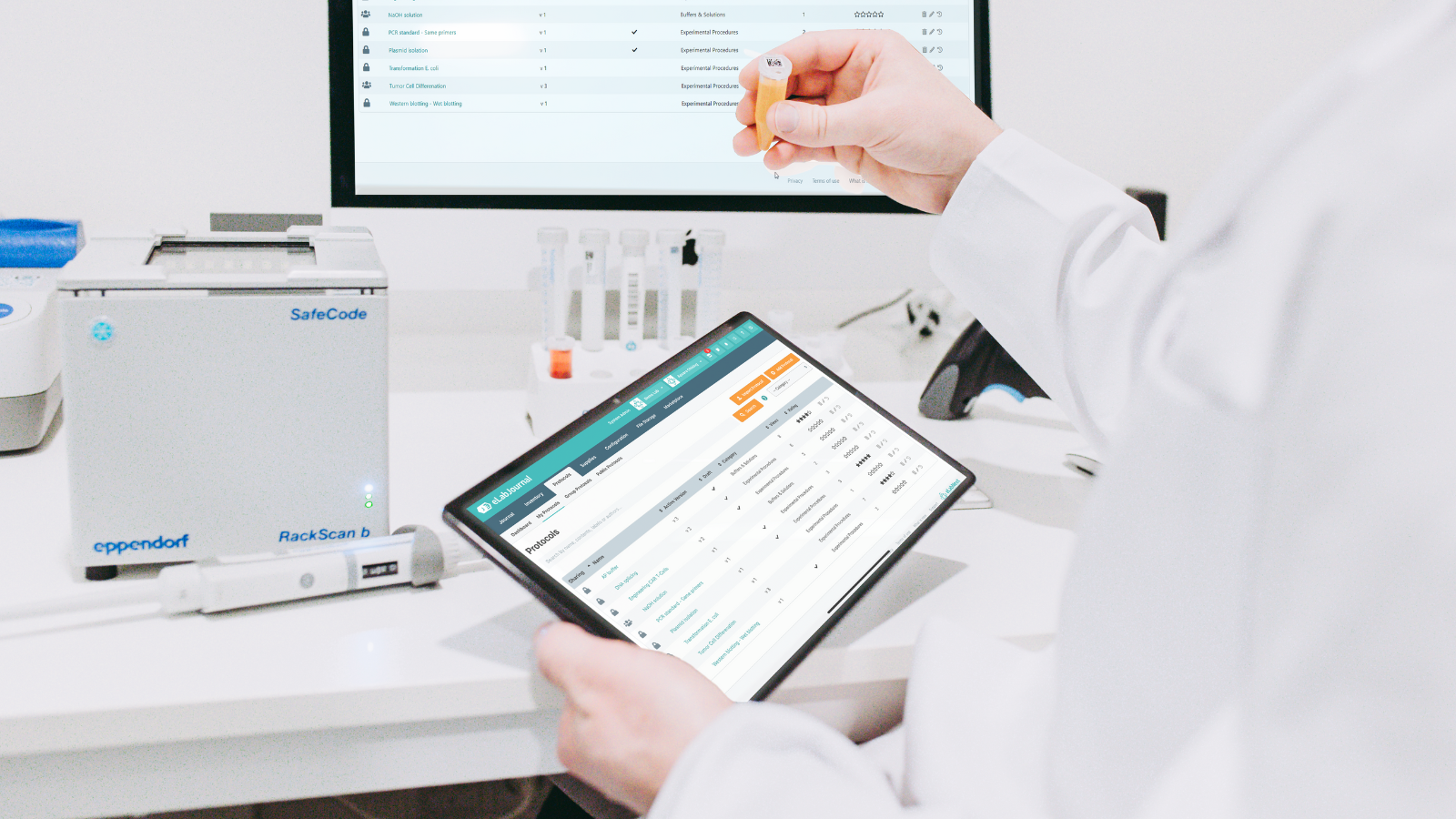
A tablet view of the SciSure ELN
A tablet view of the SciSure ELN platform

What does GMP compliance require from an ELN?

GMP compliance requires an ELN or connected lab system to help your team control manufacturing and QC records, restrict unauthorized changes, verify data accuracy, retain backup evidence, and retrieve records during the required retention period.

21 CFR Part 211 matters for finished pharmaceuticals because it governs current good manufacturing practice for records including equipment use, components, laboratory controls, production and control records, and retention. Section 211.68 allows electronic equipment and computer systems when firms check, inspect, or calibrate those systems through a written program and control changes to records through authorized personnel.

For ELNs and LIMS workflows, GMP often touches:

  • QC test execution and result review.
  • Reagent, standard, and solution preparation.
  • Instrument use, calibration, maintenance, and verification.
  • Component, lot, batch, and sample records.
  • Deviations, investigations, and method modifications.
  • Master production and control record evidence where the ELN touches batch-related work.
  • Backup, retrieval, and review of electronic data.

The FDA guidance Data Integrity and Compliance With Drug CGMP explains why this matters: FDA expects reliable and accurate data, and firms should use risk-based strategies to prevent and detect data integrity issues.

For EU GMP environments, EudraLex Volume 4 Annex 11 gives a practical computerized-systems lens: validate the application, qualify IT infrastructure, trace user requirements through the lifecycle, assess suppliers, test data migrations, review audit trails, check backups and restores, control access, use electronic signatures appropriately, and periodically confirm the system remains valid.

SciSure
Preparing a GMP ELN rollout or QC workflow review?
Book a SciSure demo to discuss experiment records, LIMS sample history, approvals, audit trails, signatures, and validation planning.
Request a demo

What are the validation requirements for implementing an electronic lab notebook system in a GMP environment?

The validation requirements for implementing an ELN system in a GMP environment include intended-use definition, regulated-record scope, user requirements, risk assessment, supplier assessment, configuration testing, data integrity testing, migration checks, SOPs, training, change control, and periodic review.

Your organization owns validation for its intended use. A vendor can provide product capabilities, support, documentation, and implementation help, but your regulated team still needs to prove the system works for your workflows, records, users, data, and quality procedures.

Validation requirements for implementing an ELN in a GMP environment

Validation area What your team should document
Intended use and scope Which GLP, GMP, Part 11, Annex 11, or internal quality records the ELN will manage
User requirements What scientists, QA, lab operations, IT, and reviewers need the system to do
Risk assessment Which workflows affect patient safety, product quality, data integrity, audit readiness, IP, or submission evidence
Supplier and system assessment Vendor controls, product fit, hosting model, support model, release process, and security expectations
Configuration and testing Roles, permissions, templates, signatures, audit trails, record copies, backups, restores, searches, exports, and integrations
Data migration Source records, field mapping, sample IDs, attachments, signatures, archive location, reconciliation checks, and exceptions
Procedures and training SOPs for record creation, review, correction, signing, export, retention, incident handling, and user access
Change control How your team evaluates updates, configuration changes, new workflows, integrations, and periodic review findings

For GMP labs, validation should connect directly to bench work. A cell therapy QC workflow might need sample chain of custody, sterility test records, instrument checks, reviewer approval, and deviation links. A biologics formulation workflow might need batch-related sample IDs, reagent lots, protocol versions, calculation checks, and a signed result review. Your validation evidence should show that the system supports those tasks reliably.

What should GLP software validation cover for biotech and biopharma labs?

GLP software validation for biotech labs and GLP software validation for biopharma labs should prove that the ELN preserves study data integrity, supports authorized users, records changes clearly, maintains protocol and sample context, and enables archive retrieval.

Use a GLP lens when your ELN supports nonclinical safety work. Focus your validation on what a study reviewer, quality unit, sponsor, or regulator may need to reconstruct:

  • Who performed each study activity.
  • Which protocol and SOP version governed the work.
  • Which test article, control article, reagent, solution, animal, specimen, sample, or instrument supported each result.
  • When the scientist recorded raw data, changed an entry, or added a correction.
  • Why the team changed a data entry.
  • Where the team retains raw data, protocol history, specimens, interim reports, and final reports.
  • How authorized users retrieve archived records without changing them.

If your lab uses automated data collection, include tests that identify the responsible data-input person, preserve original values, capture change reasons, and protect the link between instrument output and the ELN record.

This level of validation helps your team avoid the classic audit scramble: a study result exists, but the sample context, protocol version, correction history, or archive location sits somewhere else.

SciSure Research
Need help translating GLP software validation into real ELN workflows?
Talk to SciSure about study records, sample traceability, templates, audit trails, signatures, archive retrieval, and implementation support.
Request a demo

What should a GxP signature show?

A GxP signature should show who signed, when they signed, why they signed, and which electronic record the signature applies to.

For Part 11 electronic signatures, your workflow should capture the signer name, date and time, and the meaning of the signature, such as authorship, review, approval, or responsibility. Your system and SOPs should also link the signature to the record, use unique credentials, control identification codes and passwords, and hold users accountable for actions taken under their signatures.

That sounds simple until you test it against real lab workflows:

  • A scientist signs an experiment after completing a dose-response assay.
  • A reviewer signs after checking sample links, protocol version, attachments, calculations, and interpretation.
  • A witness signs after reviewing the record and confirming the right evidence supports the result.
  • A QA user reviews a signed record during an internal audit and needs the signature meaning, timestamp, signer identity, and change history in one place.

With SciSure, you can request approvals from your team with witness signing and full audit trails in the ELN workflow. That capability matters because a GxP signature has to support a reviewable record, not just a name at the bottom of a page.
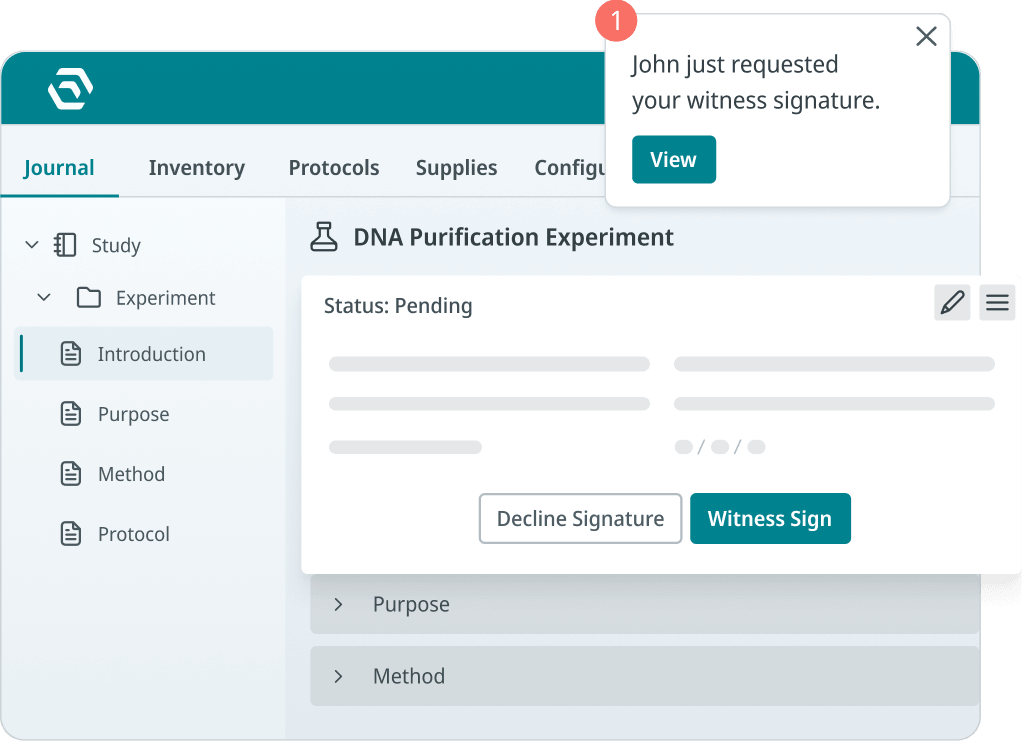
Witness signatures on the SciSure ELN

Which ELN and LIMS capabilities help you stay audit-ready?

ELN and LIMS capabilities help you stay audit-ready when they connect experiments, samples, protocols, approvals, signatures, audit trails, permissions, record copies, and retrieval in the workflows your team actually uses.

Look for capabilities that map to concrete compliance evidence:

ELN/LIMS workflows tied to your compliance needs

Compliance need ELN or LIMS workflow to look for
Trace experiment context Project, study, experiment, protocol version, sample links, attachments, and reviewer notes
Control access Role-based permissions for users, projects, experiments, samples, protocols, and administrative actions
Review completed work Approval workflows, witness signing, signature meaning, timestamps, and locked or controlled records where your SOP requires them
Track changes Audit trails that show who changed a record, when they changed it, and what changed
Support sample integrity Sample history, barcodes, storage locations, lineage, batch updates, lifecycle status, and links back to experiments
Retrieve records Advanced search, exports, readable copies, archive planning, and retention procedures

With SciSure, you can document experiments, collaborate in real time, create experiment templates, use advanced search, connect instruments and supporting data, request approvals with witness signing and audit trails, manage version control, and link experiments to samples and inventory through the SciSure ELN. With SciSure LIMS, you can manage samples, inventory, equipment, storage units, barcode labels, user roles and permissions, sample lifecycle tracking, disposal tracking, and audit logs.

Your team still needs SOPs, validation, training, retention rules, and change control. Software gives you the control surface. Your quality system turns that control surface into compliant use.

How does SciSure reflect the newer ELN and LIMS workflow?

SciSure now frames ELN and LIMS work as connected scientific management workflows: experiments, samples, inventory, protocols, approvals, audit trails, integrations, and compliance evidence can live in one platform strategy.

That matters for GLP and GMP teams because regulated evidence rarely sits in one notebook entry. A QC result may depend on a sample record, reagent lot, instrument file, method version, reviewer signature, and exception note. A nonclinical study may depend on raw observations, protocol amendments, specimens, test article records, and final report support.

Those updates make the article stronger than a legacy ELN-only discussion. The practical value for regulated labs comes from connecting the evidence chain:

  • The experiment shows what the scientist did.
  • The sample record shows what material the scientist used.
  • The protocol version shows how the scientist performed the work.
  • The attachment or integration shows the source result.
  • The audit trail shows what changed.
  • The signature shows who reviewed or approved the record.
  • The archive plan shows where the record lives later.

SciSure ELN and LIMS workflows

SciSure ELN SciSure LIMS
  • Experiment documentation
  • Real-time collaboration
  • Compliance
  • Inventory management
  • Sample integration
  • Experiment templates
  • Advanced search
  • Instrument integration
  • Approval workflows
  • Version control
  • Variable parameters
  • Mobile access
  • Regulatory support for GxP and FDA 21 CFR Part 11
  • Sample management
  • Inventory management
  • Equipment management
  • Workflow automation
  • Barcode label printing
  • User roles
  • Access control
  • Sample lifecycle tracking
  • Audit logs

Food Brewer: Increasing R&D productivity with SciSure

Food Brewer shows how structured ELN, inventory, barcoding, automation, and data integration can improve traceability and productivity as research and bioprocess work scales. The Switzerland-based cultivated cocoa company needed to manage proprietary plant cell cultures, track materials and equipment, protect IP, prepare for regulatory approval processes, support onboarding, and keep R&D and bioprocess workflows reproducible as the team scaled selected cocoa tissues up to 2,500 liter bioreactors.

Food Brewer selected SciSure as its digital lab platform and introduced standardized naming conventions, project and dataset structure, barcoding for cell cultures, equipment, chemicals, and consumables, plus automation through the SciSure SDK. The team reported:

  • 60% productivity increase in R&D.
  • 40% productivity increase in upstream processing.
  • Full culture and material traceability.
  • Reduced manual tracking and documentation.
  • Faster onboarding and knowledge transfer.
  • Stronger regulatory and IP documentation.

This story functions as a workflow lesson for GLP/GMP planning: productivity gains and compliance readiness come from structured records, consistent identifiers, sample traceability, and fewer manual handoffs. If your team wants to validate an ELN for regulated use, those same foundations make validation evidence easier to define and test.

Food Brewer: R&D and Upstream Processing at Scale
Customer outcomes

Food Brewer: R&D and Upstream Processing at Scale

Less manual tracking, full sample traceability, and automation that scaled cultivated cocoa research from tissue selection to 2,500-liter bioreactors.

After implementing SciSure to unify data, samples, and processes:

40%-60% productivity gains

  • R&D productivity up 60%
  • Upstream processing up 40%
  • Full traceability across cultures, chemicals, and equipment
  • Faster onboarding and stronger regulatory and intellectual property documentation

Sources

SciSure customer story: Food Brewer, "Food Brewer scales cultivated cocoa research with SciSure." Metrics are condensed from that story.

How should you plan implementation without creating new compliance gaps?

Plan implementation by mapping regulated workflows first, then configure ELN/LIMS structure, validation evidence, permissions, signatures, training, migration, and adoption metrics around those workflows.

Start with a contained workflow. Don't begin by moving every notebook, spreadsheet, freezer map, and protocol into a new system at once. Choose one study, one QC process, one assay family, or one sample-heavy workflow where better structure will reduce risk quickly.

Here's a practical sequence you can use:

  1. Define the regulated scope: GLP study, GMP QC workflow, Part 11 record, internal quality record, or research record.
  2. Map the workflow from protocol to experiment to sample to result to review.
  3. Identify the records that need signatures, witness review, audit trails, exports, retention, or archive indexing.
  4. Define the validation package: intended use, user requirements, risk assessment, test cases, migration checks, SOPs, training, and approvals.
  5. Configure the ELN and LIMS structure: projects, studies, templates, sample fields, storage units, permissions, signatures, search metadata, and report needs.
  6. Pilot with real users and real records.
  7. Review completed records with QA, lab managers, scientists, and IT.
  8. Track adoption metrics, such as complete experiments, template use, sample search success, signature completion, support issues, and retired side spreadsheets.

This approach helps you avoid the common failure mode where the team technically launches an ELN but still stores critical context in spreadsheets, local instrument folders, email approvals, and paper notes.

SciSure
If your lab needs both productivity and compliance readiness...
Book a SciSure demo to discuss ELN/LIMS structure, sample traceability, validation planning, signatures, audit trails, and implementation support.
Talk to a specialist

FAQs: GLP, GMP, validation, and ELN records

Here are some common questions that usually come up during our onboarding and implementation rounds: whether lab records fall under GLP, GMP, or Part 11, who owns validation, what a GxP signature needs to show, and how an ELN can support compliance without replacing the quality system.

Does every ELN record fall under GxP?

Scope determines the answer. ELN records fall under GxP when they support regulated activities such as nonclinical safety studies, manufacturing, QC, batch release, FDA-required records, electronic FDA submissions, or another governed quality workflow. Exploratory research records may still need strong integrity controls for reproducibility, IP, funding, or internal review, even when GLP or GMP does not apply.

Does Part 11 make an ELN GMP-compliant?

Part 11 covers electronic records and electronic signatures in FDA-regulated contexts. GMP compliance also depends on the predicate GMP rules, your procedures, training, validation, quality oversight, change control, record retention, and how your team uses the system.

Who owns ELN validation in a GMP environment?

Your regulated organization owns validation for the specific intended use. The vendor can support the process with product capabilities, implementation help, release information, and documentation, but your quality team must define scope, approve requirements, test workflows, train users, control changes, and maintain validation status.

What does a GxP signature need to include?

A GxP signature should include the signer identity, date, time, signature meaning, and a durable link to the signed record. Your system should also use unique user credentials, control password or identification-code use, and support policies that hold users accountable for actions under their signatures.

How often should your team review a validated ELN?

Review the ELN after material configuration changes, new regulated workflows, integrations, migrations, upgrades, audit findings, incidents, or quality-system changes. EU Annex 11 also emphasizes periodic evaluation, so regulated teams should define a review cadence that fits system risk and business impact.

What causes compliance gaps with basic electronic laboratory notebook tools?

Compliance gaps arise when a basic ELN can store laboratory notes but cannot enforce the controls required for regulated records. Common weaknesses include incomplete audit trails, shared or poorly controlled user access, inadequate version history, missing electronic signatures, editable signed records, and limited retention or export capabilities. These gaps make it difficult to prove who performed the work, what changed, when it changed, and who reviewed or approved it.

Gaps also appear when important evidence remains outside the ELN. For example, in spreadsheets, local instrument folders, email approvals, or paper notes. Even a GxP-ready ELN must be supported by intended-use validation, SOPs, training, quality oversight, backup and retention procedures, and change control. The software provides the necessary controls; the laboratory’s processes determine whether those controls are used compliantly.

Can SciSure alone make a lab GLP or GMP compliant?

SciSure can support compliant use through ELN, LIMS, sample, inventory, template, approval, witness signing, audit trail, permissions, version control, search, and implementation workflows. Your lab still needs the right regulatory scope, validation, SOPs, training, quality oversight, retention plan, and change-control process.

If your team needs a GLP/GMP-ready ELN, begin with the records that regulators, QA, sponsors, or internal reviewers will actually inspect. Then build the ELN workflow around proof: who did the work, which sample and protocol supported it, what changed, who reviewed it, and how your team can retrieve the evidence later.

What is the best electronic laboratory notebook for GxP compliance?

The best electronic laboratory notebook for GxP compliance is one that fits your regulated workflows and provides the controls and documentation your organization needs to validate it for its intended use. Look for secure audit trails, role-based access, version control, electronic signatures, record retention and retrieval, validation support, and traceability between experiments, samples, protocols, instruments, and results.

Here are some ELN vendors that support regulated laboratory environments:

ELN platform: Potential fit for GxP teams

ELN platform Potential fit for GxP teams Capabilities to evaluate
SciSure Biotech, biopharma, and enterprise R&D teams that want connected ELN, LIMS, sample, inventory, and compliance workflows Version-controlled records, audit trails, permissions, electronic and witness signatures, sample traceability, configurable workflows, and validation support
SciNote Teams seeking straightforward experiment documentation and protocol management Electronic signatures, electronic witnessing, timestamps, audit trails, user permissions, readable exports, and a validation-ready package
Labguru Growing biotech teams combining ELN, inventory, and sample management Signable records, digital signatures, audit trails, historical versions, password policies, and access controls
IDBS E-WorkBook Enterprise biopharma teams with structured, template-driven or manufacturing-adjacent workflows Controlled templates, electronic signatures, detailed audit trails, structured data capture, and GxP and 21 CFR Part 11 support
Benchling Validated Cloud Sequence-heavy molecular biology teams that need a dedicated validated environment GxP workflow controls, electronic signatures, audit trails, controlled releases, structured templates, and validation documentation

Keep in mind: this is a shortlist, not a universal ranking. Before selecting an ELN, test each platform against a real regulated workflow and confirm which capabilities are included in the proposed edition, hosting model, implementation package, and validation documentation.

For labs that need to connect experiment documentation with samples, protocols, inventory, approvals, and audit evidence, SciSure is a strong option. However, no ELN vendor can make a laboratory GxP compliant by itself. Your organization remains responsible for intended-use validation, SOPs, training, quality oversight, change control, and compliant day-to-day use.

Read MoreThe 5 Best Electronic Lab Notebooks (ELN) in 2026 Ranked by Ease-of-Use & ROI: Based on Real User Reviews

What if you're choosing or changing ELNs?

Our ELN implementation guides are based on your starting point: new lab setup, active lab rollout, migration from another ELN, or adoption resistance.

If this sounds like the lab you'd like to build, get in touch with us. We'll walk you through how to choose the right scope, configure real workflows, train users, migrate carefully, and make your system useful enough that your scientists stop depending on side records.

Ready to see SciSure in action?

Get a personalized demo and see how SciSure fits your lab's workflows.
Request demo

No commitment · Free consultation

If your biotech, biopharma, pharmaceutical, or regulated research lab uses an electronic laboratory notebook (ELN), you need more than searchable notes. You need records your team can trust, explain, sign, protect, and retrieve during audits, inspections, quality reviews, submissions, and internal investigations.

That means you need to understand how GLP, GMP, Part 11, and computerized-system validation apply to your actual workflows. A discovery group documenting exploratory biology doesn't face the same record requirements as a nonclinical safety study, a QC lab supporting batch release, or a bioprocess team generating manufacturing evidence.

This post focuses on the practical question: how can an ELN help you support GLP/GMP compliance without turning every bench workflow into a compliance bottleneck?

Read MoreThe 5 Best Electronic Lab Notebooks (ELN) in 2026 Ranked by Ease-of-Use & ROI: Based on Real User Reviews

What does GxP compliance mean for ELNs in the pharmaceutical industry?

GxP compliance means your lab follows the Good Practice rules that apply to the regulated work, such as GLP for nonclinical safety studies and GMP for drug or biologic manufacturing and QC workflows.

For GxP compliance, pharmaceutical industry teams need to connect each electronic record to the rule, workflow, product, study, batch, sample, or decision it supports. Scope drives the answer. An ELN may support GLP study documentation in one team, GMP QC records in another, and exploratory research records in a third.

For ELNs, the most important question starts here: which records will your team rely on for regulated work?

  • A toxicology team may need GLP controls for raw data, protocol changes, test and control article records, study director sign-off, final reports, and archived data.
  • A QC lab may need GMP controls for test methods, sample records, reagent lots, instrument checks, laboratory records, deviations, and batch-related evidence.
  • A bioprocess team may need traceable sample lineage, equipment records, process observations, media or reagent lots, and controlled handoffs when records support manufacturing or quality decisions.
  • A research team planning future IND-enabling work may choose to structure records early so validation, signatures, sample traceability, and retrieval do not require a painful rebuild later.

21 CFR Part 11 applies when your team creates, modifies, maintains, archives, retrieves, or transmits electronic records under FDA record requirements, or when your team submits electronic records to FDA. It matters because FDA expects electronic records and electronic signatures in scope to function as trustworthy equivalents to paper records and handwritten signatures.

SciSure
Working through GLP, GMP, Part 11, or GxP signature requirements for your ELN?
Talk to a SciSure specialist about matching ELN/LIMS workflows to your regulated records, validation plan, and audit evidence.
Request a demo

What does GLP compliance require from an ELN?

GLP compliance requires an ELN to help your team preserve raw data, protocol history, corrections, study records, signatures or initials, and archive retrieval for nonclinical safety studies.

For GLP compliance for biopharma labs, start with the study context. 21 CFR Part 58 focuses on nonclinical laboratory studies that support FDA research or marketing permits. GLP controls matter because regulators need confidence in the quality and integrity of safety data.

In everyday ELN terms, GLP means your system and SOPs need to support:

  • Study protocol control.
    Scientists need to know which protocol version governed the study and how the team handled any change.
  • Raw data capture.
    Your team needs direct, prompt, legible records for observations, instrument outputs, images, calculations, and automated data inputs.
  • Change history.
    Any correction needs to preserve the original entry, explain the reason for the change, show the date, and identify the responsible person.
  • Test article and sample traceability.
    A reviewer should understand which test article, control article, sample, reagent, animal, specimen, or system supported the result.
  • Final report support.
    Your records should help the study director explain procedures, changes, data transformations, study personnel, conclusions, and storage locations.
  • Archive retrieval.
    Your team needs an orderly archive index so authorized users can retrieve raw data, protocols, specimens, interim reports, and final reports throughout the retention period.

An ELN can help only when your team configures it around the study workflow. A generic notebook page will not prove much if it loses the sample link, protocol version, correction reason, reviewer identity, or archive location.

A tablet view of the SciSure ELN
A tablet view of the SciSure ELN platform

What does GMP compliance require from an ELN?

GMP compliance requires an ELN or connected lab system to help your team control manufacturing and QC records, restrict unauthorized changes, verify data accuracy, retain backup evidence, and retrieve records during the required retention period.

21 CFR Part 211 matters for finished pharmaceuticals because it governs current good manufacturing practice for records including equipment use, components, laboratory controls, production and control records, and retention. Section 211.68 allows electronic equipment and computer systems when firms check, inspect, or calibrate those systems through a written program and control changes to records through authorized personnel.

For ELNs and LIMS workflows, GMP often touches:

  • QC test execution and result review.
  • Reagent, standard, and solution preparation.
  • Instrument use, calibration, maintenance, and verification.
  • Component, lot, batch, and sample records.
  • Deviations, investigations, and method modifications.
  • Master production and control record evidence where the ELN touches batch-related work.
  • Backup, retrieval, and review of electronic data.

The FDA guidance Data Integrity and Compliance With Drug CGMP explains why this matters: FDA expects reliable and accurate data, and firms should use risk-based strategies to prevent and detect data integrity issues.

For EU GMP environments, EudraLex Volume 4 Annex 11 gives a practical computerized-systems lens: validate the application, qualify IT infrastructure, trace user requirements through the lifecycle, assess suppliers, test data migrations, review audit trails, check backups and restores, control access, use electronic signatures appropriately, and periodically confirm the system remains valid.

SciSure
Preparing a GMP ELN rollout or QC workflow review?
Book a SciSure demo to discuss experiment records, LIMS sample history, approvals, audit trails, signatures, and validation planning.
Request a demo

What are the validation requirements for implementing an electronic lab notebook system in a GMP environment?

The validation requirements for implementing an ELN system in a GMP environment include intended-use definition, regulated-record scope, user requirements, risk assessment, supplier assessment, configuration testing, data integrity testing, migration checks, SOPs, training, change control, and periodic review.

Your organization owns validation for its intended use. A vendor can provide product capabilities, support, documentation, and implementation help, but your regulated team still needs to prove the system works for your workflows, records, users, data, and quality procedures.

Validation requirements for implementing an ELN in a GMP environment

Validation area What your team should document
Intended use and scope Which GLP, GMP, Part 11, Annex 11, or internal quality records the ELN will manage
User requirements What scientists, QA, lab operations, IT, and reviewers need the system to do
Risk assessment Which workflows affect patient safety, product quality, data integrity, audit readiness, IP, or submission evidence
Supplier and system assessment Vendor controls, product fit, hosting model, support model, release process, and security expectations
Configuration and testing Roles, permissions, templates, signatures, audit trails, record copies, backups, restores, searches, exports, and integrations
Data migration Source records, field mapping, sample IDs, attachments, signatures, archive location, reconciliation checks, and exceptions
Procedures and training SOPs for record creation, review, correction, signing, export, retention, incident handling, and user access
Change control How your team evaluates updates, configuration changes, new workflows, integrations, and periodic review findings

For GMP labs, validation should connect directly to bench work. A cell therapy QC workflow might need sample chain of custody, sterility test records, instrument checks, reviewer approval, and deviation links. A biologics formulation workflow might need batch-related sample IDs, reagent lots, protocol versions, calculation checks, and a signed result review. Your validation evidence should show that the system supports those tasks reliably.

What should GLP software validation cover for biotech and biopharma labs?

GLP software validation for biotech labs and GLP software validation for biopharma labs should prove that the ELN preserves study data integrity, supports authorized users, records changes clearly, maintains protocol and sample context, and enables archive retrieval.

Use a GLP lens when your ELN supports nonclinical safety work. Focus your validation on what a study reviewer, quality unit, sponsor, or regulator may need to reconstruct:

  • Who performed each study activity.
  • Which protocol and SOP version governed the work.
  • Which test article, control article, reagent, solution, animal, specimen, sample, or instrument supported each result.
  • When the scientist recorded raw data, changed an entry, or added a correction.
  • Why the team changed a data entry.
  • Where the team retains raw data, protocol history, specimens, interim reports, and final reports.
  • How authorized users retrieve archived records without changing them.

If your lab uses automated data collection, include tests that identify the responsible data-input person, preserve original values, capture change reasons, and protect the link between instrument output and the ELN record.

This level of validation helps your team avoid the classic audit scramble: a study result exists, but the sample context, protocol version, correction history, or archive location sits somewhere else.

SciSure Research
Need help translating GLP software validation into real ELN workflows?
Talk to SciSure about study records, sample traceability, templates, audit trails, signatures, archive retrieval, and implementation support.
Request a demo

What should a GxP signature show?

A GxP signature should show who signed, when they signed, why they signed, and which electronic record the signature applies to.

For Part 11 electronic signatures, your workflow should capture the signer name, date and time, and the meaning of the signature, such as authorship, review, approval, or responsibility. Your system and SOPs should also link the signature to the record, use unique credentials, control identification codes and passwords, and hold users accountable for actions taken under their signatures.

That sounds simple until you test it against real lab workflows:

  • A scientist signs an experiment after completing a dose-response assay.
  • A reviewer signs after checking sample links, protocol version, attachments, calculations, and interpretation.
  • A witness signs after reviewing the record and confirming the right evidence supports the result.
  • A QA user reviews a signed record during an internal audit and needs the signature meaning, timestamp, signer identity, and change history in one place.

With SciSure, you can request approvals from your team with witness signing and full audit trails in the ELN workflow. That capability matters because a GxP signature has to support a reviewable record, not just a name at the bottom of a page.

Witness signatures on the SciSure ELN

Which ELN and LIMS capabilities help you stay audit-ready?

ELN and LIMS capabilities help you stay audit-ready when they connect experiments, samples, protocols, approvals, signatures, audit trails, permissions, record copies, and retrieval in the workflows your team actually uses.

Look for capabilities that map to concrete compliance evidence:

ELN/LIMS workflows tied to your compliance needs

Compliance need ELN or LIMS workflow to look for
Trace experiment context Project, study, experiment, protocol version, sample links, attachments, and reviewer notes
Control access Role-based permissions for users, projects, experiments, samples, protocols, and administrative actions
Review completed work Approval workflows, witness signing, signature meaning, timestamps, and locked or controlled records where your SOP requires them
Track changes Audit trails that show who changed a record, when they changed it, and what changed
Support sample integrity Sample history, barcodes, storage locations, lineage, batch updates, lifecycle status, and links back to experiments
Retrieve records Advanced search, exports, readable copies, archive planning, and retention procedures

With SciSure, you can document experiments, collaborate in real time, create experiment templates, use advanced search, connect instruments and supporting data, request approvals with witness signing and audit trails, manage version control, and link experiments to samples and inventory through the SciSure ELN. With SciSure LIMS, you can manage samples, inventory, equipment, storage units, barcode labels, user roles and permissions, sample lifecycle tracking, disposal tracking, and audit logs.

Your team still needs SOPs, validation, training, retention rules, and change control. Software gives you the control surface. Your quality system turns that control surface into compliant use.

How does SciSure reflect the newer ELN and LIMS workflow?

SciSure now frames ELN and LIMS work as connected scientific management workflows: experiments, samples, inventory, protocols, approvals, audit trails, integrations, and compliance evidence can live in one platform strategy.

That matters for GLP and GMP teams because regulated evidence rarely sits in one notebook entry. A QC result may depend on a sample record, reagent lot, instrument file, method version, reviewer signature, and exception note. A nonclinical study may depend on raw observations, protocol amendments, specimens, test article records, and final report support.

Those updates make the article stronger than a legacy ELN-only discussion. The practical value for regulated labs comes from connecting the evidence chain:

  • The experiment shows what the scientist did.
  • The sample record shows what material the scientist used.
  • The protocol version shows how the scientist performed the work.
  • The attachment or integration shows the source result.
  • The audit trail shows what changed.
  • The signature shows who reviewed or approved the record.
  • The archive plan shows where the record lives later.

SciSure ELN and LIMS workflows

SciSure ELN SciSure LIMS
  • Experiment documentation
  • Real-time collaboration
  • Compliance
  • Inventory management
  • Sample integration
  • Experiment templates
  • Advanced search
  • Instrument integration
  • Approval workflows
  • Version control
  • Variable parameters
  • Mobile access
  • Regulatory support for GxP and FDA 21 CFR Part 11
  • Sample management
  • Inventory management
  • Equipment management
  • Workflow automation
  • Barcode label printing
  • User roles
  • Access control
  • Sample lifecycle tracking
  • Audit logs

Food Brewer: Increasing R&D productivity with SciSure

Food Brewer shows how structured ELN, inventory, barcoding, automation, and data integration can improve traceability and productivity as research and bioprocess work scales. The Switzerland-based cultivated cocoa company needed to manage proprietary plant cell cultures, track materials and equipment, protect IP, prepare for regulatory approval processes, support onboarding, and keep R&D and bioprocess workflows reproducible as the team scaled selected cocoa tissues up to 2,500 liter bioreactors.

Food Brewer selected SciSure as its digital lab platform and introduced standardized naming conventions, project and dataset structure, barcoding for cell cultures, equipment, chemicals, and consumables, plus automation through the SciSure SDK. The team reported:

  • 60% productivity increase in R&D.
  • 40% productivity increase in upstream processing.
  • Full culture and material traceability.
  • Reduced manual tracking and documentation.
  • Faster onboarding and knowledge transfer.
  • Stronger regulatory and IP documentation.

This story functions as a workflow lesson for GLP/GMP planning: productivity gains and compliance readiness come from structured records, consistent identifiers, sample traceability, and fewer manual handoffs. If your team wants to validate an ELN for regulated use, those same foundations make validation evidence easier to define and test.

Food Brewer: R&D and Upstream Processing at Scale
Customer outcomes

Food Brewer: R&D and Upstream Processing at Scale

Less manual tracking, full sample traceability, and automation that scaled cultivated cocoa research from tissue selection to 2,500-liter bioreactors.

After implementing SciSure to unify data, samples, and processes:

40%-60% productivity gains

  • R&D productivity up 60%
  • Upstream processing up 40%
  • Full traceability across cultures, chemicals, and equipment
  • Faster onboarding and stronger regulatory and intellectual property documentation

Sources

SciSure customer story: Food Brewer, "Food Brewer scales cultivated cocoa research with SciSure." Metrics are condensed from that story.

How should you plan implementation without creating new compliance gaps?

Plan implementation by mapping regulated workflows first, then configure ELN/LIMS structure, validation evidence, permissions, signatures, training, migration, and adoption metrics around those workflows.

Start with a contained workflow. Don't begin by moving every notebook, spreadsheet, freezer map, and protocol into a new system at once. Choose one study, one QC process, one assay family, or one sample-heavy workflow where better structure will reduce risk quickly.

Here's a practical sequence you can use:

  1. Define the regulated scope: GLP study, GMP QC workflow, Part 11 record, internal quality record, or research record.
  2. Map the workflow from protocol to experiment to sample to result to review.
  3. Identify the records that need signatures, witness review, audit trails, exports, retention, or archive indexing.
  4. Define the validation package: intended use, user requirements, risk assessment, test cases, migration checks, SOPs, training, and approvals.
  5. Configure the ELN and LIMS structure: projects, studies, templates, sample fields, storage units, permissions, signatures, search metadata, and report needs.
  6. Pilot with real users and real records.
  7. Review completed records with QA, lab managers, scientists, and IT.
  8. Track adoption metrics, such as complete experiments, template use, sample search success, signature completion, support issues, and retired side spreadsheets.

This approach helps you avoid the common failure mode where the team technically launches an ELN but still stores critical context in spreadsheets, local instrument folders, email approvals, and paper notes.

SciSure
If your lab needs both productivity and compliance readiness...
Book a SciSure demo to discuss ELN/LIMS structure, sample traceability, validation planning, signatures, audit trails, and implementation support.
Talk to a specialist

FAQs: GLP, GMP, validation, and ELN records

Here are some common questions that usually come up during our onboarding and implementation rounds: whether lab records fall under GLP, GMP, or Part 11, who owns validation, what a GxP signature needs to show, and how an ELN can support compliance without replacing the quality system.

Does every ELN record fall under GxP?

Scope determines the answer. ELN records fall under GxP when they support regulated activities such as nonclinical safety studies, manufacturing, QC, batch release, FDA-required records, electronic FDA submissions, or another governed quality workflow. Exploratory research records may still need strong integrity controls for reproducibility, IP, funding, or internal review, even when GLP or GMP does not apply.

Does Part 11 make an ELN GMP-compliant?

Part 11 covers electronic records and electronic signatures in FDA-regulated contexts. GMP compliance also depends on the predicate GMP rules, your procedures, training, validation, quality oversight, change control, record retention, and how your team uses the system.

Who owns ELN validation in a GMP environment?

Your regulated organization owns validation for the specific intended use. The vendor can support the process with product capabilities, implementation help, release information, and documentation, but your quality team must define scope, approve requirements, test workflows, train users, control changes, and maintain validation status.

What does a GxP signature need to include?

A GxP signature should include the signer identity, date, time, signature meaning, and a durable link to the signed record. Your system should also use unique user credentials, control password or identification-code use, and support policies that hold users accountable for actions under their signatures.

How often should your team review a validated ELN?

Review the ELN after material configuration changes, new regulated workflows, integrations, migrations, upgrades, audit findings, incidents, or quality-system changes. EU Annex 11 also emphasizes periodic evaluation, so regulated teams should define a review cadence that fits system risk and business impact.

What causes compliance gaps with basic electronic laboratory notebook tools?

Compliance gaps arise when a basic ELN can store laboratory notes but cannot enforce the controls required for regulated records. Common weaknesses include incomplete audit trails, shared or poorly controlled user access, inadequate version history, missing electronic signatures, editable signed records, and limited retention or export capabilities. These gaps make it difficult to prove who performed the work, what changed, when it changed, and who reviewed or approved it.

Gaps also appear when important evidence remains outside the ELN. For example, in spreadsheets, local instrument folders, email approvals, or paper notes. Even a GxP-ready ELN must be supported by intended-use validation, SOPs, training, quality oversight, backup and retention procedures, and change control. The software provides the necessary controls; the laboratory’s processes determine whether those controls are used compliantly.

Can SciSure alone make a lab GLP or GMP compliant?

SciSure can support compliant use through ELN, LIMS, sample, inventory, template, approval, witness signing, audit trail, permissions, version control, search, and implementation workflows. Your lab still needs the right regulatory scope, validation, SOPs, training, quality oversight, retention plan, and change-control process.

If your team needs a GLP/GMP-ready ELN, begin with the records that regulators, QA, sponsors, or internal reviewers will actually inspect. Then build the ELN workflow around proof: who did the work, which sample and protocol supported it, what changed, who reviewed it, and how your team can retrieve the evidence later.

What is the best electronic laboratory notebook for GxP compliance?

The best electronic laboratory notebook for GxP compliance is one that fits your regulated workflows and provides the controls and documentation your organization needs to validate it for its intended use. Look for secure audit trails, role-based access, version control, electronic signatures, record retention and retrieval, validation support, and traceability between experiments, samples, protocols, instruments, and results.

Here are some ELN vendors that support regulated laboratory environments:

ELN platform: Potential fit for GxP teams

ELN platform Potential fit for GxP teams Capabilities to evaluate
SciSure Biotech, biopharma, and enterprise R&D teams that want connected ELN, LIMS, sample, inventory, and compliance workflows Version-controlled records, audit trails, permissions, electronic and witness signatures, sample traceability, configurable workflows, and validation support
SciNote Teams seeking straightforward experiment documentation and protocol management Electronic signatures, electronic witnessing, timestamps, audit trails, user permissions, readable exports, and a validation-ready package
Labguru Growing biotech teams combining ELN, inventory, and sample management Signable records, digital signatures, audit trails, historical versions, password policies, and access controls
IDBS E-WorkBook Enterprise biopharma teams with structured, template-driven or manufacturing-adjacent workflows Controlled templates, electronic signatures, detailed audit trails, structured data capture, and GxP and 21 CFR Part 11 support
Benchling Validated Cloud Sequence-heavy molecular biology teams that need a dedicated validated environment GxP workflow controls, electronic signatures, audit trails, controlled releases, structured templates, and validation documentation

Keep in mind: this is a shortlist, not a universal ranking. Before selecting an ELN, test each platform against a real regulated workflow and confirm which capabilities are included in the proposed edition, hosting model, implementation package, and validation documentation.

For labs that need to connect experiment documentation with samples, protocols, inventory, approvals, and audit evidence, SciSure is a strong option. However, no ELN vendor can make a laboratory GxP compliant by itself. Your organization remains responsible for intended-use validation, SOPs, training, quality oversight, change control, and compliant day-to-day use.

Read MoreThe 5 Best Electronic Lab Notebooks (ELN) in 2026 Ranked by Ease-of-Use & ROI: Based on Real User Reviews

What if you're choosing or changing ELNs?

Our ELN implementation guides are based on your starting point: new lab setup, active lab rollout, migration from another ELN, or adoption resistance.

If this sounds like the lab you'd like to build, get in touch with us. We'll walk you through how to choose the right scope, configure real workflows, train users, migrate carefully, and make your system useful enough that your scientists stop depending on side records.

About the author:

Zareh Zurabyan

Zareh Zurabyan is VP of Commercial at SciSure, and a biotech executive with extensive experience scaling digital platforms for research and life science organizations. His work sits at the intersection of lab operations, digital strategy, and therapeutic development, helping institutions build technology stacks that support reproducibility, regulatory readiness, and long-term scientific productivity. Previously, he led growth efforts during the formation of SciSure from eLabNext (Eppendorf Group) and SciShield. He also advises early-stage biotech SaaS companies on market entry, post-acquisition strategy, and operational foundations.

See all posts from this author

Inscrivez-vous à notre newsletter

Recevez les derniers conseils, articles et contenus exclusifs sur la gestion moderne des laboratoires dans votre boîte de réception.
Merci ! Votre candidature a été reçue !
Please check your email to verify your submission.
Oups ! Une erreur s'est produite lors de l'envoi du formulaire.