7 Features to Look for in Enterprise Chemical Inventory Software

Learn the key features to prioritize, from SDS access and barcode reconciliation to automated compliance reporting, plus how SciSure supports chemical inventory management in enterprise lab environments.

June 15, 2026
()
min read
Un laboratoire

Download Whitepaper

By submitting this form, you agree with our Privacy Policy.
Thank you! Download the file by clicking below:
Download
Oops! Something went wrong while submitting the form.

Table of Contents

Thank you! Your submission has been received!
Oops! Something went wrong while submitting the form.

Table of Contents

TL;DR

Chemical inventory software should give enterprise EHS teams real-time, container-level visibility into chemicals, SDSs, hazards, owners, locations, and reporting obligations across every lab, building, and site.

  • Multi-site visibility.
    Track each chemical container by campus, building, room, storage area, control area, owner, quantity, manufacturer, lot number, status, and expiration date. Enterprise EHS directors need roll-up views for labs, departments, incubator tenants, and sites so they can spot overstocking, missing containers, high-hazard materials, and disposal needs before audits or inspections.
  • SDS and hazards.
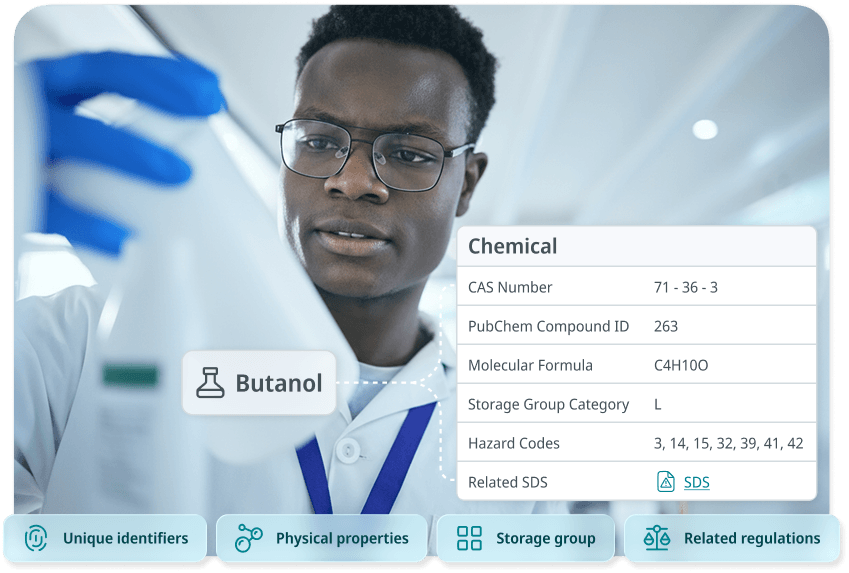
    Connect inventory records to SDSs, CAS numbers, GHS classifications, NFPA categories, storage groups, synonyms, manufacturer data, and ChemTracker hazard and regulatory profiles. This gives researchers, lab managers, EHS, facilities, and emergency responders one route from a barcode or product name to usable hazard information.
  • Reliable intake.
    Use barcode scanning, RFID tags, spreadsheet import, mobile audits, reusable labels, and ChemSnap AI photo capture to make inventory updates fast at receiving, transfer, reconciliation, and disposal. These workflows reduce manual entry, improve container identity, and help central EHS teams keep data current without chasing every lab.
  • Compliance reporting.
    Generate reports for OSHA HazCom support, EPCRA Tier II, Right-to-Know, NFPA categories, fire code review, and maximum allowable quantity by control area where applicable. EHS directors should be able to export quantities, storage conditions, locations, owners, and hazard classes for review, submission, leadership, and fire marshal conversations.
  • Governed operations.
    Configure role-based access for researchers, principal investigators, lab managers, EHS administrators, facilities teams, emergency responders, and auditors. Audit trails should capture container creation, edits, transfers, SDS changes, report exports, disposal, and archive events, while implementation support covers migration, cleanup, permissions, training, and multi-site rollout.

This post was originally published in 2022 and has been updated to reflect current chemical inventory, SDS, regulatory reporting, and enterprise EHS needs.

Chemical inventory management has moved well beyond spreadsheets, paper SDS binders, and annual audit scrambles. Modern research organizations need to know what chemicals they have, where they are stored, who owns them, what hazards they create, whether SDSs are accessible, and whether current quantities affect reporting or fire code obligations.

That visibility matters for day-to-day lab work, but it also matters for enterprise EHS governance. For example:

  • If your organization works with hazardous chemicals, OSHA's Hazard Communication Standard requires employers to maintain labels and safety data sheets for exposed workers and train workers to handle chemicals appropriately.
  • OSHA's 2024 Hazard Communication update updated the standard to align primarily with the seventh revision of the Globally Harmonized System of Classification and Labelling of Chemicals.
  • For facilities covered by EPCRA Sections 311-312, EPA guidance on hazardous chemical inventory reporting requires annual reporting by March 1 for chemicals above applicable thresholds. Tier II reporting can include chemical amounts, storage conditions, and locations, and state or local requirements may go beyond the federal baseline.

The right chemical inventory software should make those responsibilities easier to manage without slowing down science. If you're comparing vendors, here are seven enterprise-ready features to look for.

How to choose the right enterprise chemical inventory software: 7 features to look out for

1. A centralized, multi-site, container-level inventory

The foundation of any chemical inventory system is a reliable, searchable record of every container. For EHS directors and lab operations leaders, that record needs to work across more than one bench, room, or department. It should scale across labs, buildings, floors, control areas, shared facilities, campuses, startup residents, and research programs without creating disconnected local spreadsheets.

A useful system should track each chemical at the container level, not just as a generic line item. That means location, quantity, owner, manufacturer, product number, lot number, container size, unit of measure, SDS status, and lifecycle status. It should also make it clear whether a container is active, empty, expired, transferred, missing, disposed of, or archived.

With container-level tracking, EHS and lab operations teams can quickly answer:

  • What is currently in this room, building, control area, lab group, or site?
  • Which containers are expired, empty, missing, duplicated, overstocked, or ready for disposal?
  • Which high-hazard materials are present, and where?
  • Which labs, groups, or sites own the materials that affect reporting thresholds?
  • Which records need SDS review, reconciliation, or correction?
  • Are chemical quantities changing in a way that could affect fire code, MAQ, or reporting obligations?

Look for software that supports real-time updates, archived records for historical tracking, flexible location hierarchies, and bulk edit workflows so your team can clean up data without editing hundreds of records one by one. SciSure's Chemical Inventory & SDS capabilities, for example, are built around real-time, container-level chemical tracking with bulk edit and reconciliation tools.

For enterprise teams, the important shift is from "Can we list what is in one lab?" to "Can EHS see what is happening across every relevant location, and can local teams keep the data current?"

SciSure chemical inventory and SDS

2. A chemical database with hazard and regulatory context

Chemical inventory data becomes truly useful when each container is connected to a chemical profile that includes identifiers and hazard information such as CAS numbers, synonyms, GHS and NFPA classifications, storage groups, physical properties, and regulatory categories.

This is important because research inventories rarely contain only simple, familiar chemicals. Your team may need to track mixtures, kits, compressed gases, locally created entries, custom formulations, one-off materials, and chemicals with multiple synonyms. A strong system should help users find the correct chemical profile, preserve preferred names where appropriate, and clearly distinguish centrally curated data from local entries.

For EHS directors, hazard and regulatory context turns inventory from a static list into an operational decision-making tool. It helps teams review incompatible storage, identify higher-risk materials, support training decisions, prepare for inspections, and understand whether current quantities may trigger regulatory reporting or fire code review.

SciSure's ChemTracker is powered by a central chemical hazard and regulatory database, and SciSure also supports local entries for chemicals not found in the standard database. Where appropriate, oversight users can add regulatory data and pull properties from sources such as PubChem, helping teams keep unusual or emerging materials visible instead of forcing them into spreadsheet workarounds.

For enterprise use, the database should also support standardization. If the same chemical appears under several names, units, or local abbreviations, EHS loses confidence in reporting. Strong chemical inventory software helps normalize the data while still leaving room for legitimate local exceptions.

3. SDS management that's tied to the inventory

Since OSHA HazCom responsibilities depend on accessible hazard communication, SDSs need to be connected directly to the containers and chemical profiles they describe. EHS teams should not have to maintain one system for inventory, another folder for SDSs, and a separate spreadsheet to track missing documentation.

If you're comparing solutions, consider whether they offer:

  • SDS search by chemical name, CAS number, manufacturer, product number, or synonym
  • Automatic SDS matching where possible
  • Support for locally uploaded SDS documents
  • A way to identify containers with no SDS attached
  • Bulk SDS assignment or download workflows
  • SDS access for researchers, lab operations, EHS, facilities, and emergency response users
  • Visibility into SDS coverage across sites, departments, buildings, or control areas

For an EHS director, the goal is to know which chemicals lack SDS coverage, which records may be tied to the wrong product or manufacturer, which sites have gaps, and whether the right people can access hazard information when it matters. This matters during inspections, onboarding, internal audits, and emergency response. If someone starts with a barcode, room, container, CAS number, or product name, the SDS should be easy to find.

SciSure
Need to find the right SDS when it matters?
With integrated SDS management and auto-match, SciSure helps you connect containers through the ChemTracker database and organization-specific SDS records.
Request a demo

4. Fast intake with barcode, RFID, spreadsheet, and photo-based workflows

If your chemical inventory system still depends on slow manual entry, your team will eventually drift back to spreadsheets. For enterprise EHS programs, the system needs to reduce friction at every point where inventory changes: receiving, lab use, transfers, audits, reconciliation, disposal, and archive. Rather, look out for features like:

  • Barcode scanning
  • RFID support
  • Spreadsheet import and edit tools
  • Reusable labels
  • Mobile workflows
  • Audit workflows that help teams confirm what is physically present

If your chemical inventory system still depends on slow manual entry, teams will eventually drift back to spreadsheets.

Barcodes and RFID tags are especially helpful because they help you identify a container without relying on inconsistent names, handwriting, or memory. They also create a more reliable foundation for multi-site visibility because each container can be scanned, reconciled, moved, and retired consistently.

With SciSure's ChemSnap AI, you can even add chemical inventory by taking a smartphone photo of a container label. ChemSnap can help populate chemical identity, CAS number, container size, manufacturer, lot number, product name, and product number where available. For busy labs, this can help reduce friction that usually causes inventory systems to decay over time.

SciSure's ChemSnapAI helps you add chemical inventory by taking a smartphone photo of a container label.

5. Automated reporting for compliance, fire code, and operational decisions

A solid platform should let EHS and lab operations teams generate reports by chemical, hazard class, regulation, owner, lab, space, building, control area, facility, or site. At minimum, chemical inventory reporting should support:

  • Chemicals and containers by regulation
  • Totals by regulation, with unit conversion where needed
  • Federal and state Tier II or Right-to-Know-style reporting workflows
  • NFPA category reporting
  • Fire code and maximum allowable quantity reporting
  • Reports by site, building, room, control area, department, or owner
  • Exports for review, submission, local analysis, or leadership reporting

Why this matters: under EPA's Tier II forms and instructions, covered facilities may need to report chemical names, maximum and average daily amounts, storage conditions, and locations. EPA also notes that states have flexibility to add chemicals, set lower reporting thresholds, and require additional information beyond federal requirements.

For fire code workflows, organizations often need to understand quantities by control area and hazard category. That means the software should help EHS teams move from container-level data to the summarized views needed for fire marshal conversations, permit review, MAQ analysis, and internal risk planning.

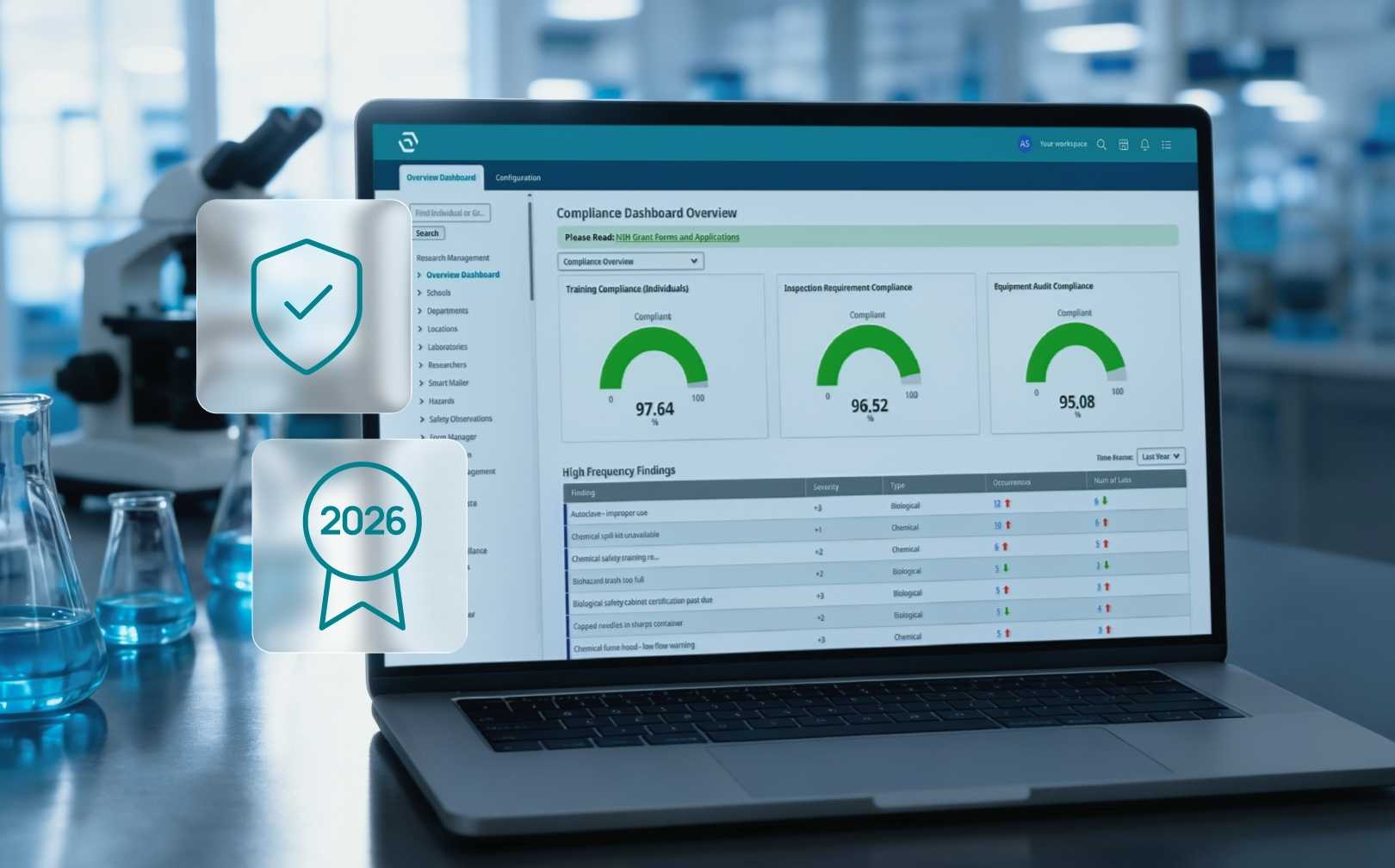
Reporting should also support operational decisions. EHS and lab operations teams may need to identify overstocked materials, aging containers, high-hazard storage patterns, missing SDSs, reconciliation exceptions, or sites that need follow-up before an inspection. The strongest systems make reporting a routine management workflow, not a last-minute scramble before an audit or deadline.

Read MoreThe 5 Best EHS Software Platforms For Labs in 2026

6. Role-based access and audit-ready traceability

The right access model helps organizations give users enough permission to do their work while protecting the integrity of safety-critical records. This is why your software should include configurable role-based access controls across roles, teams, groups, departments, sites, or responsibilities.

This matters because different people use chemical inventory data in different ways: a researcher may need to add, update, or remove containers in their own lab; a lab manager may need to reconcile a space; an EHS administrator may need cross-site visibility, SDS oversight, reporting, and audit logs. Finally, facilities or emergency response users may need fast access to location and hazard data without editing core records.

Audit trails are just as important. Your system should keep traceable records of who added a container, who changed it, who transferred it, when it was archived, what SDS was attached, whether a report was generated from current inventory, and whether a disposal or removal workflow was completed.

For EHS directors, role-based access and audit logs are governance controls. They help reduce unauthorized changes, clarify accountability, support inspection readiness, and give leadership more confidence that inventory reports are based on controlled, traceable data.

7. Scalability across labs, sites, and adjacent workflows

The right software should scale without multiplying administrative work across multiple labs, buildings, research groups, departments, shared facilities, or startup residents. A single, constantly growing spreadsheet will not be manageable past a certain point. Look for a platform that supports:

  • Multi-site and multi-building inventory views
  • Consistent naming, units, labels, and hazard data
  • Location hierarchies such as campus, building, floor, space, storage area, and control area
  • Configurable permissions for different research and operations models
  • Integration with adjacent systems such as LIMS, ELN, hazardous waste, training, inspections, equipment management, biosafety, and broader EHS dashboards
  • Flexible reporting for both local teams and central oversight

This matters even more when chemical inventory data needs to inform more than compliance. At enterprise scale, inventory data can help reduce overordering, identify storage issues, support sustainability goals, guide training, reveal patterns in hazardous material use, and improve emergency preparedness.

Implementation support should also be part of the evaluation. Enterprise chemical inventory software is successful when the rollout is planned well enough for people to adopt it. Ask vendors how they support data migration, cleanup, location setup, barcode and RFID configuration, role-based permissions, report configuration, user training, phased rollouts, and ongoing support after launch.

For EHS directors, the question is not only "Can the software do this?" It is also "Can the vendor help us get this live across our organization in a way people will actually use?"

How SciSure supports chemical inventory & SDS management

SciSure brings chemical inventory, SDS management, and broader lab safety workflows into one Scientific Management Platform. Its chemical inventory capabilities are centered on ChemTracker, formerly part of SciShield and now supported within SciSure's Health & Safety solutions.

For EHS and lab operations teams, that means chemical inventory does not have to sit in a disconnected spreadsheet, standalone SDS tool, or annual reporting file. Inventory, SDS access, hazard context, reporting, audit readiness, and adjacent EHS workflows can work from the same operational foundation.

Here's a non-exhaustive list of SciSure's chemical inventory-specific features and what they can help teams do:

Chemical inventory management with SciSure
Feature How this can help your team
Real-time container-level tracking See every container's quantity, location, owner, and status in real time, without walking the shelves or rebuilding a spreadsheet.
Barcode and RFID support Scan containers for faster logging, retrieval, reconciliation, and removal, with fewer manual errors.
ChemSnap AI label capture Add chemicals by photographing the label on a smartphone, so new entries don't mean filling every field by hand.
ChemTracker hazard and regulatory database Look up a chemical and find its hazard data, regulatory context, and known synonyms in one place, drawn from SciSure's own database.
Local and unlinked chemical support Log in-house or one-off substances that aren't in the database, with oversight tools for EHS to add regulatory data when needed.
Integrated SDS management Search, upload, bulk-assign, and auto-match SDS files, so every container has its documentation attached.
Missing-SDS filters Find any container without an SDS attached in one view, before an auditor does.
Bulk import and edit Import or update chemicals from a spreadsheet, including container counts, instead of entering them one by one.
Automated audit and reconciliation Check recorded inventory against what's physically on the shelf, without manual list-matching.
Flexible inventory reports Report by regulation, container, constituent, or total amount, depending on what you need to show.
Tier II and Right-to-Know reporting Generate the federal Tier II and select state or local RTK reports many sites are legally required to file (depending on configuration).
NFPA and fire code reporting Produce the fire-code figures a fire marshal needs, including MAQ by control area.
Unit conversion Report quantities in pounds, gallons, cubic feet, metric units, or another required format without doing the math yourself.
Custom reports and CSV export Shape reports to your requirements and export the data as CSV for use in other tools.
Role-based access controls Give researchers, lab managers, EHS, and oversight teams the right level of access for their role.
Audit logs and history Keep a record of who changed what and when, including archived records for removed containers.
Integration with EHS workflows Connect chemical data to hazardous waste, inspections, training, equipment, biosafety, and broader EHS dashboards, instead of leaving it in a silo.

In practice, this means a lab can move from "We think this spreadsheet is mostly current" to a system where chemical inventory, SDS access, hazard awareness, and audit readiness are connected.

The Engine Accelerator & SmartLabs: Scaling from one lab model to many

The Engine Accelerator, a Cambridge-based tough-tech accelerator originally launched by MIT, needed to support a fast-growing community of resident companies working across complex lab environments. As The Engine grew, its lab operations team had to coordinate chemical inventory, permitting, and compliance across many resident companies. Before SciSure, the team relied heavily on Excel, paper, and Access databases.

But with ChemTracker implemented, The Engine reported that identifying hazard information for resident companies, locations, and individuals shrank from several hours to less than 5 minutes. The team also gained better visibility into unusual chemicals and mixtures, compressed gas locations, SDS access, and compliance reporting.

This story highlights the startup-incubator side of the problem: many companies, many workflows, shared spaces, and a high need for fast operational visibility.

SmartLabs shows a different perspective: flexible lab infrastructure and operations across many research spaces. SmartLabs implemented SciSure for chemical inventory, SDS, inspections, equipment management, biosafety, and medical surveillance. Their team reported major time savings in inventory search, reconciliation, and reporting. In one example, inventory reconciliation for an entire research center went from an all-day task to as little as 20 minutes, and inventory reporting dropped from around 30 minutes to about one minute.

Together, these examples show why chemical inventory software has to work for more than one persona: scientists need fast, easy access. Lab operations teams need accurate location and ownership data. EHS needs reporting, audit readiness, and hazard visibility. Leadership needs a system that scales as research grows.

Customer Outcomes

Before vs. After SciSure: chemical inventory at scale

Two customer stories show the same operational pattern: less manual reporting, faster hazard visibility, and lab operations that can scale across more people, spaces, and workflows.

The Engine Accelerator
Tough Tech Labs
Several hours to < 5 min
  • Hazard lookups became near-immediate.
  • Scaled from 10 to 50 resident companies.
SmartLabs
Flexible Lab Infrastructure
87%-99% saved
  • Search: 15 min to 1-2 min.
  • Reconciliation: all day to 20 min.
  • Reporting: 30 min to 1 min.

For EHS leaders, the lesson is straightforward: chemical inventory software should make safety-critical information easier to trust at scale. It should reduce manual work while improving the visibility needed for inspections, reporting, emergency response, and operational planning.

Choosing the right chemical inventory software

The best chemical inventory software should make inventory data easier to maintain, SDSs easier to access, hazards easier to understand, and compliance reports easier to generate. For enterprise EHS teams, it should also support governance, scalability, and implementation.

When comparing solutions, go prepared to ask whether the system can:

  • Track every container from receipt through use, transfer, disposal, or archive.
  • Show inventory across sites, buildings, labs, rooms, storage areas, and control areas.
  • Connect inventory records to SDSs, hazard data, manufacturer details, and regulatory context.
  • Support barcode, RFID, spreadsheet, mobile, photo-based, and reconciliation workflows.
  • Generate compliance, fire code, MAQ, and operational reports on demand.
  • Provide role-based access for researchers, lab managers, EHS, facilities, emergency responders, and administrators.
  • Preserve audit trails for container changes, SDS updates, reports, removals, disposal workflows, and archived records.
  • Flag missing SDSs, expired containers, disposal needs, and other data quality gaps.
  • Scale into adjacent EHS workflows such as hazardous waste, inspections, training, equipment, and biosafety.
  • Support implementation with data migration, cleanup, configuration, training, reporting setup, and ongoing optimization.

Chemical inventory management is ultimately about confidence: confidence that the data is current, that hazards are visible, that SDSs are accessible, that reports are defensible, and that safety-critical workflows do not depend on a last-minute scramble.

For modern research organizations, that confidence is what keeps science moving safely.

If this resonates, we'd welcome a conversation. Get in touch with us to discover how SciSure's Health & Safety features can keep your workflows findable, connected, and reproducible at all times.

Ready to see SciSure in action?

Get a personalized demo and see how SciSure fits your lab's workflows.
Request demo

No commitment · Free consultation

Chemical inventory management has moved well beyond spreadsheets, paper SDS binders, and annual audit scrambles. Modern research organizations need to know what chemicals they have, where they are stored, who owns them, what hazards they create, whether SDSs are accessible, and whether current quantities affect reporting or fire code obligations.

That visibility matters for day-to-day lab work, but it also matters for enterprise EHS governance. For example:

  • If your organization works with hazardous chemicals, OSHA's Hazard Communication Standard requires employers to maintain labels and safety data sheets for exposed workers and train workers to handle chemicals appropriately.
  • OSHA's 2024 Hazard Communication update updated the standard to align primarily with the seventh revision of the Globally Harmonized System of Classification and Labelling of Chemicals.
  • For facilities covered by EPCRA Sections 311-312, EPA guidance on hazardous chemical inventory reporting requires annual reporting by March 1 for chemicals above applicable thresholds. Tier II reporting can include chemical amounts, storage conditions, and locations, and state or local requirements may go beyond the federal baseline.

The right chemical inventory software should make those responsibilities easier to manage without slowing down science. If you're comparing vendors, here are seven enterprise-ready features to look for.

How to choose the right enterprise chemical inventory software: 7 features to look out for

1. A centralized, multi-site, container-level inventory

The foundation of any chemical inventory system is a reliable, searchable record of every container. For EHS directors and lab operations leaders, that record needs to work across more than one bench, room, or department. It should scale across labs, buildings, floors, control areas, shared facilities, campuses, startup residents, and research programs without creating disconnected local spreadsheets.

A useful system should track each chemical at the container level, not just as a generic line item. That means location, quantity, owner, manufacturer, product number, lot number, container size, unit of measure, SDS status, and lifecycle status. It should also make it clear whether a container is active, empty, expired, transferred, missing, disposed of, or archived.

With container-level tracking, EHS and lab operations teams can quickly answer:

  • What is currently in this room, building, control area, lab group, or site?
  • Which containers are expired, empty, missing, duplicated, overstocked, or ready for disposal?
  • Which high-hazard materials are present, and where?
  • Which labs, groups, or sites own the materials that affect reporting thresholds?
  • Which records need SDS review, reconciliation, or correction?
  • Are chemical quantities changing in a way that could affect fire code, MAQ, or reporting obligations?

Look for software that supports real-time updates, archived records for historical tracking, flexible location hierarchies, and bulk edit workflows so your team can clean up data without editing hundreds of records one by one. SciSure's Chemical Inventory & SDS capabilities, for example, are built around real-time, container-level chemical tracking with bulk edit and reconciliation tools.

For enterprise teams, the important shift is from "Can we list what is in one lab?" to "Can EHS see what is happening across every relevant location, and can local teams keep the data current?"

SciSure chemical inventory and SDS

2. A chemical database with hazard and regulatory context

Chemical inventory data becomes truly useful when each container is connected to a chemical profile that includes identifiers and hazard information such as CAS numbers, synonyms, GHS and NFPA classifications, storage groups, physical properties, and regulatory categories.

This is important because research inventories rarely contain only simple, familiar chemicals. Your team may need to track mixtures, kits, compressed gases, locally created entries, custom formulations, one-off materials, and chemicals with multiple synonyms. A strong system should help users find the correct chemical profile, preserve preferred names where appropriate, and clearly distinguish centrally curated data from local entries.

For EHS directors, hazard and regulatory context turns inventory from a static list into an operational decision-making tool. It helps teams review incompatible storage, identify higher-risk materials, support training decisions, prepare for inspections, and understand whether current quantities may trigger regulatory reporting or fire code review.

SciSure's ChemTracker is powered by a central chemical hazard and regulatory database, and SciSure also supports local entries for chemicals not found in the standard database. Where appropriate, oversight users can add regulatory data and pull properties from sources such as PubChem, helping teams keep unusual or emerging materials visible instead of forcing them into spreadsheet workarounds.

For enterprise use, the database should also support standardization. If the same chemical appears under several names, units, or local abbreviations, EHS loses confidence in reporting. Strong chemical inventory software helps normalize the data while still leaving room for legitimate local exceptions.

3. SDS management that's tied to the inventory

Since OSHA HazCom responsibilities depend on accessible hazard communication, SDSs need to be connected directly to the containers and chemical profiles they describe. EHS teams should not have to maintain one system for inventory, another folder for SDSs, and a separate spreadsheet to track missing documentation.

If you're comparing solutions, consider whether they offer:

  • SDS search by chemical name, CAS number, manufacturer, product number, or synonym
  • Automatic SDS matching where possible
  • Support for locally uploaded SDS documents
  • A way to identify containers with no SDS attached
  • Bulk SDS assignment or download workflows
  • SDS access for researchers, lab operations, EHS, facilities, and emergency response users
  • Visibility into SDS coverage across sites, departments, buildings, or control areas

For an EHS director, the goal is to know which chemicals lack SDS coverage, which records may be tied to the wrong product or manufacturer, which sites have gaps, and whether the right people can access hazard information when it matters. This matters during inspections, onboarding, internal audits, and emergency response. If someone starts with a barcode, room, container, CAS number, or product name, the SDS should be easy to find.

SciSure
Need to find the right SDS when it matters?
With integrated SDS management and auto-match, SciSure helps you connect containers through the ChemTracker database and organization-specific SDS records.
Request a demo

4. Fast intake with barcode, RFID, spreadsheet, and photo-based workflows

If your chemical inventory system still depends on slow manual entry, your team will eventually drift back to spreadsheets. For enterprise EHS programs, the system needs to reduce friction at every point where inventory changes: receiving, lab use, transfers, audits, reconciliation, disposal, and archive. Rather, look out for features like:

  • Barcode scanning
  • RFID support
  • Spreadsheet import and edit tools
  • Reusable labels
  • Mobile workflows
  • Audit workflows that help teams confirm what is physically present

If your chemical inventory system still depends on slow manual entry, teams will eventually drift back to spreadsheets.

Barcodes and RFID tags are especially helpful because they help you identify a container without relying on inconsistent names, handwriting, or memory. They also create a more reliable foundation for multi-site visibility because each container can be scanned, reconciled, moved, and retired consistently.

With SciSure's ChemSnap AI, you can even add chemical inventory by taking a smartphone photo of a container label. ChemSnap can help populate chemical identity, CAS number, container size, manufacturer, lot number, product name, and product number where available. For busy labs, this can help reduce friction that usually causes inventory systems to decay over time.

SciSure's ChemSnapAI helps you add chemical inventory by taking a smartphone photo of a container label.

5. Automated reporting for compliance, fire code, and operational decisions

A solid platform should let EHS and lab operations teams generate reports by chemical, hazard class, regulation, owner, lab, space, building, control area, facility, or site. At minimum, chemical inventory reporting should support:

  • Chemicals and containers by regulation
  • Totals by regulation, with unit conversion where needed
  • Federal and state Tier II or Right-to-Know-style reporting workflows
  • NFPA category reporting
  • Fire code and maximum allowable quantity reporting
  • Reports by site, building, room, control area, department, or owner
  • Exports for review, submission, local analysis, or leadership reporting

Why this matters: under EPA's Tier II forms and instructions, covered facilities may need to report chemical names, maximum and average daily amounts, storage conditions, and locations. EPA also notes that states have flexibility to add chemicals, set lower reporting thresholds, and require additional information beyond federal requirements.

For fire code workflows, organizations often need to understand quantities by control area and hazard category. That means the software should help EHS teams move from container-level data to the summarized views needed for fire marshal conversations, permit review, MAQ analysis, and internal risk planning.

Reporting should also support operational decisions. EHS and lab operations teams may need to identify overstocked materials, aging containers, high-hazard storage patterns, missing SDSs, reconciliation exceptions, or sites that need follow-up before an inspection. The strongest systems make reporting a routine management workflow, not a last-minute scramble before an audit or deadline.

Read MoreThe 5 Best EHS Software Platforms For Labs in 2026

6. Role-based access and audit-ready traceability

The right access model helps organizations give users enough permission to do their work while protecting the integrity of safety-critical records. This is why your software should include configurable role-based access controls across roles, teams, groups, departments, sites, or responsibilities.

This matters because different people use chemical inventory data in different ways: a researcher may need to add, update, or remove containers in their own lab; a lab manager may need to reconcile a space; an EHS administrator may need cross-site visibility, SDS oversight, reporting, and audit logs. Finally, facilities or emergency response users may need fast access to location and hazard data without editing core records.

Audit trails are just as important. Your system should keep traceable records of who added a container, who changed it, who transferred it, when it was archived, what SDS was attached, whether a report was generated from current inventory, and whether a disposal or removal workflow was completed.

For EHS directors, role-based access and audit logs are governance controls. They help reduce unauthorized changes, clarify accountability, support inspection readiness, and give leadership more confidence that inventory reports are based on controlled, traceable data.

7. Scalability across labs, sites, and adjacent workflows

The right software should scale without multiplying administrative work across multiple labs, buildings, research groups, departments, shared facilities, or startup residents. A single, constantly growing spreadsheet will not be manageable past a certain point. Look for a platform that supports:

  • Multi-site and multi-building inventory views
  • Consistent naming, units, labels, and hazard data
  • Location hierarchies such as campus, building, floor, space, storage area, and control area
  • Configurable permissions for different research and operations models
  • Integration with adjacent systems such as LIMS, ELN, hazardous waste, training, inspections, equipment management, biosafety, and broader EHS dashboards
  • Flexible reporting for both local teams and central oversight

This matters even more when chemical inventory data needs to inform more than compliance. At enterprise scale, inventory data can help reduce overordering, identify storage issues, support sustainability goals, guide training, reveal patterns in hazardous material use, and improve emergency preparedness.

Implementation support should also be part of the evaluation. Enterprise chemical inventory software is successful when the rollout is planned well enough for people to adopt it. Ask vendors how they support data migration, cleanup, location setup, barcode and RFID configuration, role-based permissions, report configuration, user training, phased rollouts, and ongoing support after launch.

For EHS directors, the question is not only "Can the software do this?" It is also "Can the vendor help us get this live across our organization in a way people will actually use?"

How SciSure supports chemical inventory & SDS management

SciSure brings chemical inventory, SDS management, and broader lab safety workflows into one Scientific Management Platform. Its chemical inventory capabilities are centered on ChemTracker, formerly part of SciShield and now supported within SciSure's Health & Safety solutions.

For EHS and lab operations teams, that means chemical inventory does not have to sit in a disconnected spreadsheet, standalone SDS tool, or annual reporting file. Inventory, SDS access, hazard context, reporting, audit readiness, and adjacent EHS workflows can work from the same operational foundation.

Here's a non-exhaustive list of SciSure's chemical inventory-specific features and what they can help teams do:

Chemical inventory management with SciSure
Feature How this can help your team
Real-time container-level tracking See every container's quantity, location, owner, and status in real time, without walking the shelves or rebuilding a spreadsheet.
Barcode and RFID support Scan containers for faster logging, retrieval, reconciliation, and removal, with fewer manual errors.
ChemSnap AI label capture Add chemicals by photographing the label on a smartphone, so new entries don't mean filling every field by hand.
ChemTracker hazard and regulatory database Look up a chemical and find its hazard data, regulatory context, and known synonyms in one place, drawn from SciSure's own database.
Local and unlinked chemical support Log in-house or one-off substances that aren't in the database, with oversight tools for EHS to add regulatory data when needed.
Integrated SDS management Search, upload, bulk-assign, and auto-match SDS files, so every container has its documentation attached.
Missing-SDS filters Find any container without an SDS attached in one view, before an auditor does.
Bulk import and edit Import or update chemicals from a spreadsheet, including container counts, instead of entering them one by one.
Automated audit and reconciliation Check recorded inventory against what's physically on the shelf, without manual list-matching.
Flexible inventory reports Report by regulation, container, constituent, or total amount, depending on what you need to show.
Tier II and Right-to-Know reporting Generate the federal Tier II and select state or local RTK reports many sites are legally required to file (depending on configuration).
NFPA and fire code reporting Produce the fire-code figures a fire marshal needs, including MAQ by control area.
Unit conversion Report quantities in pounds, gallons, cubic feet, metric units, or another required format without doing the math yourself.
Custom reports and CSV export Shape reports to your requirements and export the data as CSV for use in other tools.
Role-based access controls Give researchers, lab managers, EHS, and oversight teams the right level of access for their role.
Audit logs and history Keep a record of who changed what and when, including archived records for removed containers.
Integration with EHS workflows Connect chemical data to hazardous waste, inspections, training, equipment, biosafety, and broader EHS dashboards, instead of leaving it in a silo.

In practice, this means a lab can move from "We think this spreadsheet is mostly current" to a system where chemical inventory, SDS access, hazard awareness, and audit readiness are connected.

The Engine Accelerator & SmartLabs: Scaling from one lab model to many

The Engine Accelerator, a Cambridge-based tough-tech accelerator originally launched by MIT, needed to support a fast-growing community of resident companies working across complex lab environments. As The Engine grew, its lab operations team had to coordinate chemical inventory, permitting, and compliance across many resident companies. Before SciSure, the team relied heavily on Excel, paper, and Access databases.

But with ChemTracker implemented, The Engine reported that identifying hazard information for resident companies, locations, and individuals shrank from several hours to less than 5 minutes. The team also gained better visibility into unusual chemicals and mixtures, compressed gas locations, SDS access, and compliance reporting.

This story highlights the startup-incubator side of the problem: many companies, many workflows, shared spaces, and a high need for fast operational visibility.

SmartLabs shows a different perspective: flexible lab infrastructure and operations across many research spaces. SmartLabs implemented SciSure for chemical inventory, SDS, inspections, equipment management, biosafety, and medical surveillance. Their team reported major time savings in inventory search, reconciliation, and reporting. In one example, inventory reconciliation for an entire research center went from an all-day task to as little as 20 minutes, and inventory reporting dropped from around 30 minutes to about one minute.

Together, these examples show why chemical inventory software has to work for more than one persona: scientists need fast, easy access. Lab operations teams need accurate location and ownership data. EHS needs reporting, audit readiness, and hazard visibility. Leadership needs a system that scales as research grows.

Customer Outcomes

Before vs. After SciSure: chemical inventory at scale

Two customer stories show the same operational pattern: less manual reporting, faster hazard visibility, and lab operations that can scale across more people, spaces, and workflows.

The Engine Accelerator
Tough Tech Labs
Several hours to < 5 min
  • Hazard lookups became near-immediate.
  • Scaled from 10 to 50 resident companies.
SmartLabs
Flexible Lab Infrastructure
87%-99% saved
  • Search: 15 min to 1-2 min.
  • Reconciliation: all day to 20 min.
  • Reporting: 30 min to 1 min.

For EHS leaders, the lesson is straightforward: chemical inventory software should make safety-critical information easier to trust at scale. It should reduce manual work while improving the visibility needed for inspections, reporting, emergency response, and operational planning.

Choosing the right chemical inventory software

The best chemical inventory software should make inventory data easier to maintain, SDSs easier to access, hazards easier to understand, and compliance reports easier to generate. For enterprise EHS teams, it should also support governance, scalability, and implementation.

When comparing solutions, go prepared to ask whether the system can:

  • Track every container from receipt through use, transfer, disposal, or archive.
  • Show inventory across sites, buildings, labs, rooms, storage areas, and control areas.
  • Connect inventory records to SDSs, hazard data, manufacturer details, and regulatory context.
  • Support barcode, RFID, spreadsheet, mobile, photo-based, and reconciliation workflows.
  • Generate compliance, fire code, MAQ, and operational reports on demand.
  • Provide role-based access for researchers, lab managers, EHS, facilities, emergency responders, and administrators.
  • Preserve audit trails for container changes, SDS updates, reports, removals, disposal workflows, and archived records.
  • Flag missing SDSs, expired containers, disposal needs, and other data quality gaps.
  • Scale into adjacent EHS workflows such as hazardous waste, inspections, training, equipment, and biosafety.
  • Support implementation with data migration, cleanup, configuration, training, reporting setup, and ongoing optimization.

Chemical inventory management is ultimately about confidence: confidence that the data is current, that hazards are visible, that SDSs are accessible, that reports are defensible, and that safety-critical workflows do not depend on a last-minute scramble.

For modern research organizations, that confidence is what keeps science moving safely.

If this resonates, we'd welcome a conversation. Get in touch with us to discover how SciSure's Health & Safety features can keep your workflows findable, connected, and reproducible at all times.

About the author:

Sarina Schwartz-Hinds

Sarina Schwartz-Hinds is Principal Product Manager at SciSure, where she leads product strategy for laboratory inventory and safety solutions, including ChemTracker, a leading chemical inventory and regulatory reporting solution. She has spent over a decade building safety and compliance software for research organizations, starting at BioRAFT in 2014 and continuing through its evolution into SciShield and SciSure. Before moving into software, she completed her studies in bioinorganic chemistry at New York University.

See all posts from this author

Inscrivez-vous à notre newsletter

Recevez les derniers conseils, articles et contenus exclusifs sur la gestion moderne des laboratoires dans votre boîte de réception.
Merci ! Votre candidature a été reçue !
Please check your email to verify your submission.
Oups ! Une erreur s'est produite lors de l'envoi du formulaire.