Comment choisir un ELN sécurisé et protéger la propriété intellectuelle de votre entreprise
Voici comment comparer la sécurité, la sauvegarde, l'hébergement cloud et sur site, les contrôles d'accès et la protection de la propriété intellectuelle des ELN d'entreprise avant de choisir un fournisseur.

Download Whitepaper
TL;DR
Un cahier de laboratoire électronique (ELN) sécurisé protège la propriété intellectuelle du laboratoire grâce à un accès au moindre privilège, des pistes d'audit inviolables, des intégrations sécurisées, des sauvegardes résilientes, une récupération testée et une portabilité complète des données.
- Considérez la sécurité de l'ELN comme une gouvernance de la propriété intellectuelle.
Cartographiez les recherches à haute valeur ajoutée, appliquez les fonctions du NIST Cybersecurity Framework 2.0 et imposez le SSO, l'authentification multifacteur (MFA), les autorisations basées sur les rôles, l'accès limité dans le temps pour les collaborateurs, la révocation rapide et les revues d'accès. Préservez la paternité, les signatures, les dates, les méthodes, l'historique des échantillons et les fichiers justificatifs pour les brevets, la conformité réglementaire et les preuves institutionnelles.
- Auditez les activités critiques.
Vous pouvez détecter le vol de propriété intellectuelle et la falsification d'enregistrements en consignant les connexions réussies et échouées, les changements d'autorisations, le partage avec des invités, les exportations en masse, l'activité API, les suppressions, les restaurations, les signatures et les accès privilégiés. Envoyez les événements vers un SIEM, conservez des historiques immuables et vérifiez la traçabilité conforme à la norme FDA Part 11 pour chaque enregistrement de recherche à haute valeur ajoutée.
- Sécurisez les flux de travail connectés.
Limitez chaque API, connecteur d'instrument, pipeline d'analyse, compte de service, module complémentaire de marketplace et fonctionnalité d'IA aux données strictement nécessaires. Documentez les destinations, la mise en cache, la rétention, les sous-traitants, les conditions d'entraînement des modèles, la rotation des identifiants et les journaux. Lors du départ d'un utilisateur, transférez la propriété et révoquez immédiatement les sessions SSO, les jetons, l'accès mobile, la synchronisation et les espaces de travail externes.
- Testez les plans de reprise.
Définissez l'objectif de point de récupération (RPO) et l'objectif de temps de récupération (RTO), puis restaurez des expériences représentatives avec leurs pièces jointes, échantillons, protocoles, autorisations, signatures et historique d'audit. Suivez les recommandations de la CISA avec des sauvegardes isolées, chiffrées et à l'intégrité vérifiée, ainsi qu'une copie de continuité contrôlée par le client. Évaluez l'hébergement cloud, cloud privé et sur site en fonction des responsabilités, de la résilience, de l'emplacement et du personnel.
- Vérifiez chaque fournisseur.
Comparez SciSure, Benchling, Revvity Signals Notebook, Dotmatics ELN et IDBS E-WorkBook en vous appuyant sur des preuves ISO ou SOC spécifiques au périmètre, les résultats de tests d'intrusion, les flux de données, les tests de récupération, les contrôles d'accès au support, les conditions liées à l'IA et les plans de sortie. Dans le cadre d'une preuve de concept, testez l'isolation des projets, l'expiration des collaborateurs, les alertes d'exportation, la révocation des jetons, les restaurations complètes et la lisibilité des exportations clients.
Cet article a été rédigé en 2023 et mis à jour pour refléter le positionnement de SciSure sur le marché des entreprises, les normes réglementaires et de gouvernance les plus récentes, ainsi que le témoignage client de l'Institut Pasteur.
Ready to see SciSure in action?
No commitment · Free consultation
Si vous dirigez un grand laboratoire, votre cahier de laboratoire électronique (ELN) peut contenir des années de preuves expérimentales, de méthodes propriétaires, de conceptions moléculaires, d'approches infructueuses, d'historiques d'échantillons, de données de partenaires et d'enregistrements étayant de futurs brevets. Un compte compromis, une exportation non contrôlée, une attaque par ransomware ou une restauration défaillante peuvent exposer cette valeur et interrompre la recherche en cours.
Cela signifie que pour un ELN sécurisé, un simple badge de sécurité du fournisseur ne suffit pas. Vous devez savoir qui peut accéder à chaque projet, avec quelle rapidité vous pouvez révoquer cet accès, quelles actions sont consignées par le système, comment fonctionne votre processus de sauvegarde et de récupération, où sont stockées vos données, comment le personnel de support accède aux données de production et comment vous pouvez récupérer l'intégralité de vos enregistrements si vous changez de prestataire.
Dans cet article, nous comparerons les fournisseurs d'ELN au regard de ces enjeux d'entreprise et évaluerons le vol de propriété intellectuelle, les contrôles d'identité, la prévention des pertes de données, l'indépendance des sauvegardes, les tests de récupération, les compromis entre cloud et sur site, la diligence raisonnable des fournisseurs et les tests de preuve de concept en entreprise.
Pourquoi devriez-vous considérer la sécurité de votre ELN comme une décision de gouvernance de la propriété intellectuelle ?
La sécurité de votre ELN doit être considérée comme une décision de gouvernance de la propriété intellectuelle, car votre ELN relie les idées scientifiques aux dates, auteurs, méthodes, matériaux, résultats, approbations et fichiers justificatifs. Un accès défaillant ou des enregistrements incomplets peuvent exposer un savoir-faire précieux et fragiliser votre capacité à reconstituer la manière dont votre équipe a élaboré ses travaux.
Commencez par cartographier les recherches qui causeraient le plus grand préjudice si un attaquant ou une personne interne divulguait, modifiait, chiffrait ou supprimait ces travaux. Incluez les travaux de brevet en cours, les méthodes de plateforme, les résultats négatifs, les détails de formulation, les données de séquençage, les paramètres de processus, les études sponsorisées par des clients, les manuscrits non publiés, les enregistrements réglementés ainsi que les données personnelles ou cliniques le cas échéant.
Reliez ensuite chaque menace à un contrôle et à une preuve que vous pouvez tester.
Le NIST Cybersecurity Framework 2.0 vous offre une structure de gouvernance utile : Gouverner, Identifier, Protéger, Détecter, Répondre et Récupérer. Utilisez ces six fonctions dans votre évaluation de l'ELN. Le chiffrement et les contrôles d'accès ne couvrent qu'une partie de la décision.
Quels contrôles un ELN sécurisé doit-il inclure ?
Un ELN sécurisé doit vous offrir des contrôles applicables en matière d'identité, d'autorisation, d'audit, d'exportation, d'intégration, de conservation, de sauvegarde et de récupération, adaptés à vos flux de recherche les plus stratégiques.
Comment prévenir le vol de propriété intellectuelle grâce au contrôle d'accès ?
Vous pouvez prévenir le vol de propriété intellectuelle en limitant l'accès de chaque utilisateur au strict nécessaire pour ses tâches en cours et en révoquant cet accès dès que le besoin disparaît. Voici quelques fonctionnalités pour renforcer vos contrôles d'accès :
- Authentification unique (SSO) via votre fournisseur d'identité d'entreprise ou institutionnel.
- Authentification multifacteur imposée par votre politique de sécurité.
- Autorisations par projet, groupe, site et rôle.
- Droits distincts pour la lecture, la modification, la signature, l'exportation, l'archivage, la restauration et l'administration des enregistrements.
- Accès à durée limitée pour les prestataires, chercheurs invités, CRO, sponsors et autres collaborateurs externes.
- Révocation rapide des sessions, des jetons et des comptes.
- Certification périodique des accès par le responsable du projet ou des données.
- Comptes privilégiés distincts pour l'administration.
Appliquez le principe du moindre privilège comme règle de conception. Les recommandations du NIST sur le moindre privilège préconisent de limiter les accès des utilisateurs et des systèmes, notamment par des contrôles plus stricts pour les comptes privilégiés. Si votre laboratoire travaille avec des dossiers électroniques réglementés par la FDA, les directives de la FDA (Part 11) soulignent également l'importance des limites d'accès et des contrôles d'autorité.
Veillez également à concevoir les permissions en fonction des réalités de la recherche. Un analyste de plateforme technologique peut avoir besoin d'accéder aux demandes et aux résultats sans pour autant consulter l'intégralité du cahier de laboratoire du sponsor. Une CRO peut avoir besoin d'un espace de travail dédié à une étude sans visibilité sur le reste de votre pipeline. Un administrateur de plateforme peut avoir besoin de droits de configuration système sans accès courant au contenu expérimental sensible.
Comment détecter les exportations non autorisées et les modifications d'enregistrements ?
Vous pouvez détecter les activités non autorisées en consignant les actions à haut risque, en examinant ces événements et en configurant des alertes sur les modèles pouvant signaler un vol ou un sabotage. Voici ce que votre périmètre d'audit doit couvrir :
- Connexions réussies et échouées.
- Modifications des autorisations et des rôles.
- Invitations d'invités et partage externe.
- Téléchargements en masse et exportations de carnets de notes.
- Appels API et activité des comptes de service.
- Création, modification, suppression, restauration, signature et archivage d'enregistrements.
- Modifications des paramètres d'audit et de conservation.
- Accès privilégié au support ou accès administrateur.
Assurez-vous que votre équipe de sécurité peut exporter les événements pertinents vers un SIEM ou un autre stockage de journaux surveillé. Demandez au fournisseur quels événements le cahier de laboratoire électronique (ELN) capture, avec quelle rapidité la plateforme rend les événements disponibles, combien de temps elle conserve chaque événement et si un utilisateur privilégié peut modifier ou supprimer l'historique des événements.
Pour les enregistrements réglementés, les directives de la FDA décrivent des pistes d'audit sécurisées, générées par ordinateur et horodatées, qui vous permettent de reconstituer les activités de création, de modification et de suppression. Appliquez ce même test de reconstructibilité à vos recherches à haute valeur ajoutée, même lorsque la partie 11 ne régit pas le flux de travail.
Comment sécuriser les intégrations ELN et les fonctionnalités d'IA ?
Vous devez sécuriser les intégrations et les fonctionnalités d'IA en restreignant l'accès aux données, en séparant les identités de service, en examinant les flux de données et en testant chaque connexion dans le cadre de votre modèle de menace ELN. Pour chaque API, connecteur d'instrument, pipeline d'analyse, module complémentaire de marketplace ou fonctionnalité d'IA, enregistrez :
- Quels projets, enregistrements, fichiers et métadonnées la connexion peut lire.
- Quels champs ou enregistrements la connexion peut créer, modifier ou supprimer.
- Où la connexion envoie ou met en cache les données.
- Combien de temps chaque service connecté conserve les données.
- Si un fournisseur utilise vos prompts, vos résultats ou vos données de recherche pour entraîner ses modèles.
- Quels sous-traitants peuvent recevoir des données.
- Comment renouveler vos identifiants et révoquer les accès.
- Quels journaux vous permettent de retracer chaque action automatisée.
Les recommandations de l'OWASP sur la sécurité des API mettent en évidence les failles d'autorisation au niveau des objets, les problèmes d'authentification et les défauts d'autorisation des propriétés d'objets comme risques majeurs pour les API. Intégrez des tests d'autorisation d'API dans votre preuve de concept plutôt que de considérer les intégrations comme une tâche de configuration post-achat.
Comment protéger la recherche lors du départ d'un collaborateur ?
Vous pouvez protéger vos travaux de recherche lors du départ d'un collaborateur en transférant la propriété, en conservant les archives et en supprimant tous les accès le dernier jour de travail effectif. Créez un guide de procédure de départ unique pour les RH, le responsable de la recherche, l'informatique, la sécurité de l'information, le service juridique et le service qualité, le cas échéant. Ce guide doit indiquer à votre équipe comment :
- Désactiver l'accès SSO et les sessions actives.
- Révoquer les jetons d'API, les sessions mobiles et les accès de synchronisation locale.
- Transférer la propriété des carnets de notes, projets, protocoles, échantillons et intégrations.
- Conserver les enregistrements signés ou terminés sans modifier la paternité ni l'historique.
- Examiner les exportations récentes, les invitations d'invités et les accès inhabituels
- Supprimer l'utilisateur des espaces de travail externes et des projets partagés.
- Conserver la référence d'identité qui permet de garder les pistes d'audit historiques compréhensibles.
- Documenter toute exigence de conservation liée à une procédure judiciaire, un brevet, une subvention, la qualité ou un sponsor.
Un ELN ne peut pas éliminer le vol de propriété intellectuelle sans contrôles complémentaires. Combinez les contrôles de la plateforme avec des clauses contractuelles, la classification des données, la DLP, la sécurité des terminaux, la surveillance de la sécurité, la responsabilité des managers et un processus de départ rapide.
Que doit protéger votre solution de sauvegarde ELN ?
Votre solution de sauvegarde ELN doit protéger l'intégralité des données de recherche et vous offrir un moyen éprouvé de restaurer un contexte exploitable en cas de suppression, de corruption, de ransomware, de défaillance d'infrastructure ou de changement de fournisseur. Un export brut en PDF ou une sauvegarde de pièces jointes peut permettre la lecture, mais ce format peut s'avérer insuffisant pour restaurer un système opérationnel. Définissez les objets de données et les relations nécessaires à votre plan de reprise.
Définissez un objectif de point de récupération (RPO) qui détermine la quantité de travail récent que vous pouvez vous permettre de perdre, ainsi qu'un objectif de temps de récupération (RTO) qui définit la durée pendant laquelle votre établissement peut fonctionner sans ELN. Exigez que le fournisseur inscrive ces deux objectifs dans le contrat ou la description du service. Ensuite, effectuez un test de restauration réaliste plutôt que de vous contenter de la fréquence des sauvegardes comme preuve de récupérabilité.
Le guide sur les rançongiciels de la CISA recommande des sauvegardes hors ligne chiffrées ainsi que des tests réguliers de disponibilité et d'intégrité, car les rançongiciels peuvent chiffrer ou supprimer les sauvegardes accessibles. Pour un ELN basé sur le cloud, demandez au fournisseur comment il isole les identifiants de sauvegarde et les copies de récupération de l'environnement de production. Associez la récupération gérée par le fournisseur à une copie de continuité contrôlée par le client ou à une procédure d'exportation testée lorsque votre évaluation des risques exige une indépendance vis-à-vis du fournisseur.
Votre plan de prévention contre la perte de données doit également couvrir les défaillances courantes: suppression accidentelle, intégration défectueuse, modification en masse erronée, départ d'un responsable de projet, erreur de conservation ou exportation historique illisible. La prévention de la perte de données dans un ELN nécessite le versionnage, des contrôles d'archivage, des sauvegardes, des tests de restauration et des exportations exploitables.
Comment comparer les ELN basés sur le cloud, sur un cloud privé et sur site ?
Choisissez le modèle d'hébergement qui offre le juste équilibre entre opérations de sécurité, localisation des données, contrôle réseau, gestion des mises à jour, validation, résilience et personnel interne. Chacune de ces options crée un modèle opérationnel différent, et vos choix de configuration et de personnel déterminent le risque final. Par exemple :
- Un ELN basé sur le cloud peut réduire la charge de travail liée à l'infrastructure et accélérer les mises à jour de sécurité.
- Un déploiement sur cloud privé peut offrir des ressources dédiées, un choix régional et des restrictions réseau.
- Un ELN sur site peut donner à votre équipe informatique un contrôle direct sur l'infrastructure et le stockage local des données.
Ne considérez pas le lieu d'hébergement comme un indicateur de maturité en matière de sécurité. Demandez qui applique les correctifs à chaque niveau, qui surveille les alertes, qui détient les identifiants de sauvegarde, qui peut accéder aux données de production, qui effectue les exercices de restauration et qui intervient à 2 heures du matin en cas d'incident.
SciSure propose des options d' hébergement sur cloud, cloud privé et sur site, afin que vous puissiez adapter le déploiement à votre politique informatique, à vos exigences régionales, à votre architecture d'identité, à votre processus de mise à jour et à votre capacité opérationnelle interne.
Quels sont les principaux fournisseurs de solutions ELN pour les laboratoires d'entreprise ?
Une liste de présélection pratique pour les entreprises comprend SciSure, Benchling, Revvity Signals Notebook, Dotmatics ELN et IDBS E-WorkBook. Votre liste finale doit tenir compte de vos disciplines scientifiques, de votre périmètre réglementaire, de votre modèle de collaboration, de votre politique de déploiement, de votre architecture d'intégration et de vos exigences en matière de récupération de données. Voici une base pour entamer votre processus de diligence raisonnable, mais assurez-vous de demander à chaque fournisseur de démontrer les contrôles spécifiques à l'édition, au modèle d'hébergement, à la région et au contrat que vous avez choisis.
Les certifications de sécurité vous aident à évaluer le système de gestion d'un fournisseur et son assurance indépendante. Gardez toutefois à l'esprit qu'une certification ne suffit pas à prouver que la configuration, les autorisations, les intégrations, les sauvegardes et les procédures opérationnelles que vous avez sélectionnées protégeront vos recherches. Veillez à vérifier le périmètre de la certification, puis à tester les contrôles du produit.
Quelles preuves devez-vous demander à chaque fournisseur d'ELN ?
Assurez-vous de demander des preuves actuelles et spécifiques au périmètre qui permettront à vos équipes de sécurité de l'information, informatique, protection des données, juridique, qualité et recherche de vérifier chaque affirmation. Demandez :
- Le certificat ISO actuel et son périmètre, le rapport SOC le cas échéant, et un résumé récent des tests d'intrusion sous accord de confidentialité (NDA).
- L'architecture de sécurité et le modèle de responsabilité partagée pour le déploiement choisi.
- Le diagramme de flux de données, les régions d'hébergement, les régions de reprise après sinistre et la liste des sous-traitants.
- L'approche de chiffrement et les responsabilités en matière de gestion des clés.
- Les contrôles SSO, MFA, ainsi que ceux relatifs aux rôles, aux invités, aux administrateurs et aux comptes de service.
- Le catalogue des événements d'audit, la période de conservation, la méthode d'exportation et la voie d'intégration SIEM.
- L'architecture de sauvegarde, le RPO, le RTO, la conservation, l'isolation et la preuve d'un test de restauration récent.
- Le processus de réponse aux incidents, les contrôles d'accès au support et les conditions contractuelles de notification.
- La conservation des données, la suspension légale, la restitution, la suppression, l'archivage et le processus de sortie du fournisseur.
- L'autorisation API, la gestion des secrets, les limites de débit et les contrôles des services connectés.
- L'utilisation des données par les fonctionnalités d'IA, leur conservation, l'entraînement, les options de refus (opt-out), la journalisation et les conditions relatives aux sous-traitants.
- Un plan de migration qui préserve les pièces jointes, les métadonnées, les liens, les identités, les signatures et l'historique d'audit.
Que faut-il tester lors d'une preuve de concept (PoC) de cahier de laboratoire électronique (ELN) en entreprise ?
Testez les failles de sécurité que l'ELN doit contenir, ainsi que les flux de travail scientifiques que vos équipes doivent réaliser. Voici quelques exemples de scénarios que vous pourriez exécuter :
- Donnez à un scientifique l'accès à un projet et vérifiez que la recherche, l'API, l'exportation et les liens directs ne révèlent rien d'un autre projet.
- Invitez un collaborateur externe, définissez une date d'expiration et vérifiez que l'accès prend fin sans intervention manuelle.
- Attribuez un nouveau rôle à un utilisateur et vérifiez que ses anciennes autorisations sont bien supprimées.
- Désactivez un utilisateur dans votre fournisseur d'identité et mesurez le temps de révocation de la session et du jeton.
- Exportez un carnet ou un jeu de données volumineux et vérifiez que l'ELN génère le journal et l'alerte attendus.
- Modifiez et restaurez un enregistrement, puis vérifiez l'historique des versions, la paternité, les horodatages, les signatures et les preuves d'audit.
- Restaurez une expérience représentative avec ses pièces jointes, ses liens vers des échantillons, sa version de protocole, ses autorisations et son historique d'audit.
- Connectez une intégration en environnement de test avec un périmètre limité et vérifiez qu'un jeton révoqué bloque tous les appels.
- Générez une exportation complète des données client et vérifiez qu'un utilisateur indépendant peut trouver et lire les enregistrements attendus.
- Simulez une escalade auprès du fournisseur et vérifiez l'identité du support, l'approbation, la journalisation et les étapes de communication.
Comment SciSure soutient-il la sécurité et la continuité des ELN en entreprise ?
SciSure vous offre un environnement ELN et LIMS connecté avec des contrôles d'accès, une capacité d'audit, un choix de déploiement, une intégration d'identité, des options de rétention et des capacités de sauvegarde que vous pouvez faire correspondre à votre programme de sécurité d'entreprise.
Lorsque vous évaluez SciSure pour votre environnement informatique, testez ces capacités par rapport à votre propre modèle de menaces :
- Contrôle d'accès basé sur les rôles pour les périmètres de recherche et administratifs.
- Pistes d'audit inviolables pour une traçabilité optimale.
- Chiffrement des données de recherche.
- Intégration SSO et gestion des identités.
- Politiques de conservation des données configurables.
- Infrastructure à haute disponibilité.
- Options de déploiement sur le cloud, cloud privé ou sur site.
- API ouvertes et SDK pour des intégrations contrôlées.
Utilisez la plateforme connectée pour réduire les copies non gérées et préserver le contexte de vos recherches. Par exemple, le cahier de laboratoire électronique SciSure centralise la documentation des expériences, les modèles, le contrôle de version, les approbations, les échantillons, l'inventaire, les fichiers et les enregistrements prêts pour l'audit. Cette structure vous aide à maintenir vos recherches sensibles au sein d'un flux de travail gouverné, évitant ainsi la dispersion des informations entre cahiers, feuilles de calcul, e-mails et lecteurs partagés.
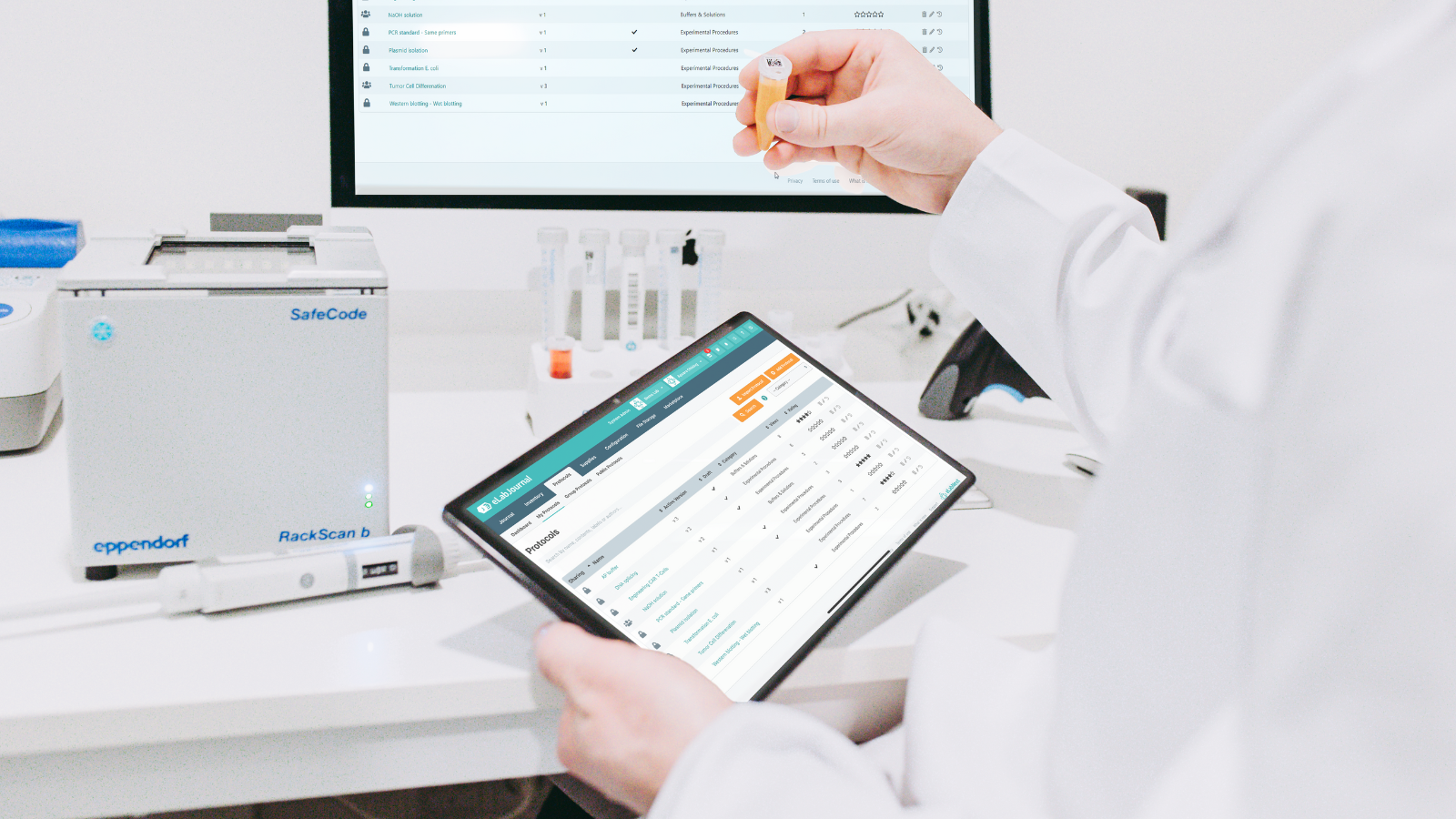
Pour la planification de la continuité, les options d'hébergement de SciSure incluent la haute disponibilité et les sauvegardes pour les déploiements cloud, des ressources dédiées et l'intégration de fournisseurs d'identité pour le cloud privé, ainsi qu'un contrôle local des données pour les déploiements sur site. Assurez-vous de confirmer les engagements exacts en matière de récupération, de conservation, de localisation régionale, d'accès au support et d'exportation pour le déploiement choisi.
Pour la gouvernance de la propriété intellectuelle, configurez les autorisations par projet et par collaborateur, liez les expériences aux échantillons et protocoles, examinez les exportations à haut risque, conservez l'historique d'audit et testez votre archive de sortie.
Comment l'Institut Pasteur a-t-il transformé le choix de son cahier de laboratoire électronique en un déploiement réussi ?
L'Institut Pasteur a transformé une décision complexe concernant le choix d'un cahier de laboratoire électronique à l'échelle de l'institution en un choix partagé, conciliant les exigences juridiques et de sécurité des données avec les besoins quotidiens des chercheurs. Initialement, l'équipe souhaitait un système unique de cahier de laboratoire électronique et de gestion des échantillons capable de soutenir chaque unité de recherche sans imposer un flux de travail rigide à des équipes scientifiques aux besoins variés.
Avant de s'engager, l'Institut Pasteur a évalué plus de 20 solutions de cahiers de laboratoire électroniques et de suivi d'échantillons. Un appel d'offres formel a permis de réduire le nombre de candidats de sept à deux preuves de concept, et des scientifiques issus d'une cinquantaine d'unités ont participé au choix final. Ce niveau de participation a permis aux futurs utilisateurs de la plateforme de faire entendre leur voix tout en plaçant les questions juridiques et de sécurité des données au cœur de l'évaluation.
Le choix de SciSure a marqué le début d'une nouvelle étape. Une équipe informatique dédiée a introduit la plateforme en quatre vagues de déploiement, en s'appuyant sur des présentations, des réunions de suivi, des ateliers et des formations mensuelles pour aider chaque unité à adopter le système à un rythme adapté. Ce déploiement progressif a permis aux scientifiques d'intégrer leurs travaux en cours dans le cahier de laboratoire électronique (ELN), d'apprendre de nouveaux flux de travail et de solliciter de l'aide sans perturber la recherche au sein de l'institut.
À mesure que l'adoption progressait, l'Institut Pasteur a centralisé ses protocoles, expériences, échantillons et documents de référence dans un hub de recherche connecté. Les scientifiques ont gagné en traçabilité dans leur travail quotidien, tandis que les unités de recherche ont bénéficié d'un moyen plus fiable de partager leurs connaissances et de préserver l'accès aux travaux de recherche sur le long terme.
Pour votre établissement, tout commence par la participation. Impliquez les services de sécurité, l'informatique, le service juridique et les scientifiques dans le processus de sélection. Ensuite, soutenez le déploiement par vagues afin que chaque équipe puisse gagner en confiance vis-à-vis du système. Cette approche vous aide à protéger vos recherches sensibles tout en réduisant l'usage de notes papier, de disques personnels, de feuilles de calcul et de transferts de fichiers non suivis, qui créent des failles de sécurité en dehors de votre ELN.
FAQ : Quelles questions poser sur la sécurité d'un ELN ?
Ces questions vous aideront à comprendre comment l'ELN empêche les accès non autorisés, préserve l'intégrité des données, détecte les activités à risque, restaure les données complètes et soutient votre stratégie de sortie.
Qu'est-ce qu'un ELN sécurisé ?
Un ELN sécurisé est une solution qui utilise une gestion robuste des identités, des permissions basées sur le principe du moindre privilège, le chiffrement, des pistes d'audit protégées, des exportations surveillées, des sauvegardes résilientes, des tests de récupération et une gouvernance de la rétention pour protéger vos recherches contre toute divulgation, altération, destruction ou perte non autorisée.
Un ELN basé sur le cloud peut-il protéger la propriété intellectuelle ?
Oui. Un ELN basé sur le cloud peut protéger la propriété intellectuelle dès lors que le fournisseur et votre équipe appliquent une isolation stricte des environnements, des contrôles d'identité, le chiffrement, la surveillance, la sauvegarde, la gestion des incidents et des droits contractuels sur les données. Testez ces contrôles dans l'édition et la région que vous avez choisies.
Comment prévenir la perte de données dans un ELN ?
Vous pouvez prévenir la perte de données en combinant l'historique des versions, la restriction des suppressions, les contrôles d'archivage, des sauvegardes résilientes, des copies de récupération isolées, des exportations complètes, des objectifs RPO et RTO définis, ainsi que des tests de restauration réguliers.
Que doit inclure une solution de sauvegarde pour ELN ?
Une solution de sauvegarde pour ELN doit inclure les expériences, les pièces jointes, les métadonnées, les échantillons, les relations d'inventaire, les versions de protocoles et de modèles, les signatures, les pistes d'audit, les permissions, les références d'identité, les archives, les paramètres de rétention et un processus de restauration testé.
Quels sont les principaux fournisseurs de logiciels ELN ?
Une sélection pratique pour les entreprises comprend SciSure, Benchling, Revvity Signals Notebook, Dotmatics ELN et IDBS E-WorkBook. Comparez l'édition spécifique du produit et son déploiement en fonction de vos exigences en matière de recherche scientifique, de sécurité, de récupération, d'intégration, de conformité et de migration.
Un cahier de laboratoire électronique (ELN) peut-il prévenir le vol de propriété intellectuelle ?
Oui, un ELN peut réduire le risque de vol de propriété intellectuelle grâce au principe du moindre privilège, au cloisonnement des projets, au contrôle des collaborateurs externes, à la journalisation des exportations, aux pistes d'audit, au départ rapide des collaborateurs et à des intégrations sécurisées. Combinez ces fonctionnalités avec la sécurité des identités, la prévention des pertes de données (DLP), le contrôle des terminaux, la surveillance, les contrats, la formation et la gestion des incidents.
Si un ELN sécurisé fait partie des fondations de votre ou vos laboratoires, nous sommes là pour vous aider. Contactez-nous pour une démonstration gratuite et sans engagement afin de découvrir comment SciSure s'adapte à vos flux de travail scientifiques.
En savoir plus:
- Mise en place d'un cahier de laboratoire électronique (ELN) dans un nouveau laboratoire : guide étape par étape
- Comment changer d'ELN : une stratégie de migration pratique pour les laboratoires de recherche
- 6 obstacles à l'adoption d'un cahier de laboratoire électronique (ELN) et comment aider votre équipe de recherche à les surmonter
- Directives réglementaires GxP : conformité aux BPL et BPF pour les cahiers de laboratoire électroniques (ELN)
- Bonnes pratiques pour les cahiers de laboratoire électroniques : que faire après avoir implémenté un ELN
.avif)
Read more of our blogs about modern lab management
Discover the latest in lab operations, from sample management to AI innovations, designed to enhance efficiency and drive scientific breakthroughs.