The Invisible Impact: How What You Aren’t Tracking Is Holding Back Sustainability in the Lab
Learn how connected lab data helps research teams close sustainability visibility gaps, reduce waste, and turn daily operations into measurable impact.
Download Whitepaper
TL;DR
Labs can improve sustainability by connecting operational data across inventory, energy, waste, procurement, equipment, safety, and compliance to turn hidden environmental impact into measurable action.
- Visibility gap
Many academic, biotech, and pharma labs already intend to operate sustainably, but key sustainability data often sits across spreadsheets, manual logs, disconnected platforms, and team-specific workflows. Without connected visibility into inventory, energy demand, waste streams, procurement, and equipment utilization, environmental impact remains difficult to manage.
- Fragmented data
Inconsistent lab data can lead to duplicate purchasing, expired reagents, unused materials, preventable waste, and equipment running longer than needed. These operational inefficiencies increase environmental footprint, safety risk, compliance burden, and financial cost, especially in resource-intensive laboratories that consume far more energy and produce more waste than office spaces.
- Operational sustainability
Sustainable lab performance depends on everyday decisions around purchasing, storage, workflows, equipment use, documentation, and disposal. When these activities are tracked together, teams can identify avoidable waste, improve cold storage and inventory practices, reduce energy demand, and support credible ESG reporting with verifiable, data-backed outcomes.
- Connected platforms
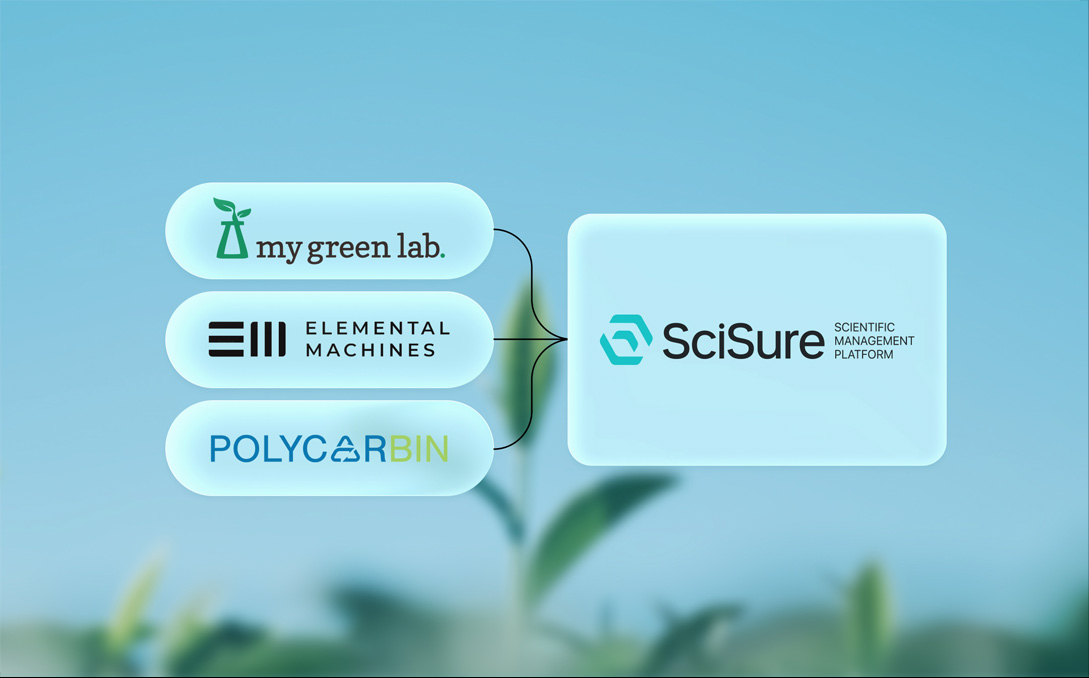
A Scientific Management Platform like SciSure helps close the visibility gap by unifying ELN, LIMS, EHS, inventory, storage, equipment, safety, and compliance workflows. When paired with My Green Lab’s measured sustainability frameworks, operational data can be translated into benchmarks, certifications, third-party verification, and continuous improvement.
- Measurable impact
Photanol’s use of SciSure shows how connected lab data can support sustainability claims with traceable, auditable evidence. By replacing paper lab books and scattered cloud folders, the Amsterdam-based biotech improved sample traceability, reduced administration time, eliminated version-control issues, and strengthened reproducibility for sustainable biomanufacturing.
Ready to see SciSure in action?
No commitment · Free consultation
Labs are under growing pressure to operate more sustainably. Across academia, biotech, and pharma, sustainability is no longer a “nice to have” but an operational expectation tied to cost, compliance, and credibility. In many cases, the biggest barrier is not a lack of commitment, but a lack of visibility.
In this collaborative piece between My Green Lab and SciSure, we’ll cover some ways how connected operational data and measured sustainability frameworks complement each other – to overcome the visibility gap.
Why resource-intensive labs need consistent data tracking
Some of the biggest drivers of lab sustainability - inventory use, energy demand, waste streams, procurement patterns, equipment utilization - are often tracked inconsistently. This could mean data spread across separate systems or simply not tracked in a way that is easy to act on. This data might sit in spreadsheets, manual logs, disconnected platforms, and team-specific processes. The result is a visibility gap that makes it more difficult to understand where impact is coming from and where meaningful improvements are possible.
Laboratories are among the most resource-intensive spaces in any organization. Some consume up to 10 times more energy than offices, producing up to 12 times more waste per square foot, and generating up to 5.5 million metric tons of plastic waste each year. This level of resource intensity means even small inefficiencies can have a significant environmental and financial impact – especially when multiplied across daily operations.
That gap matters. Without clear, connected data, much of that impact remains unmanaged - not because it is invisible, but because it is not actionable.
The cost of fragmented lab data
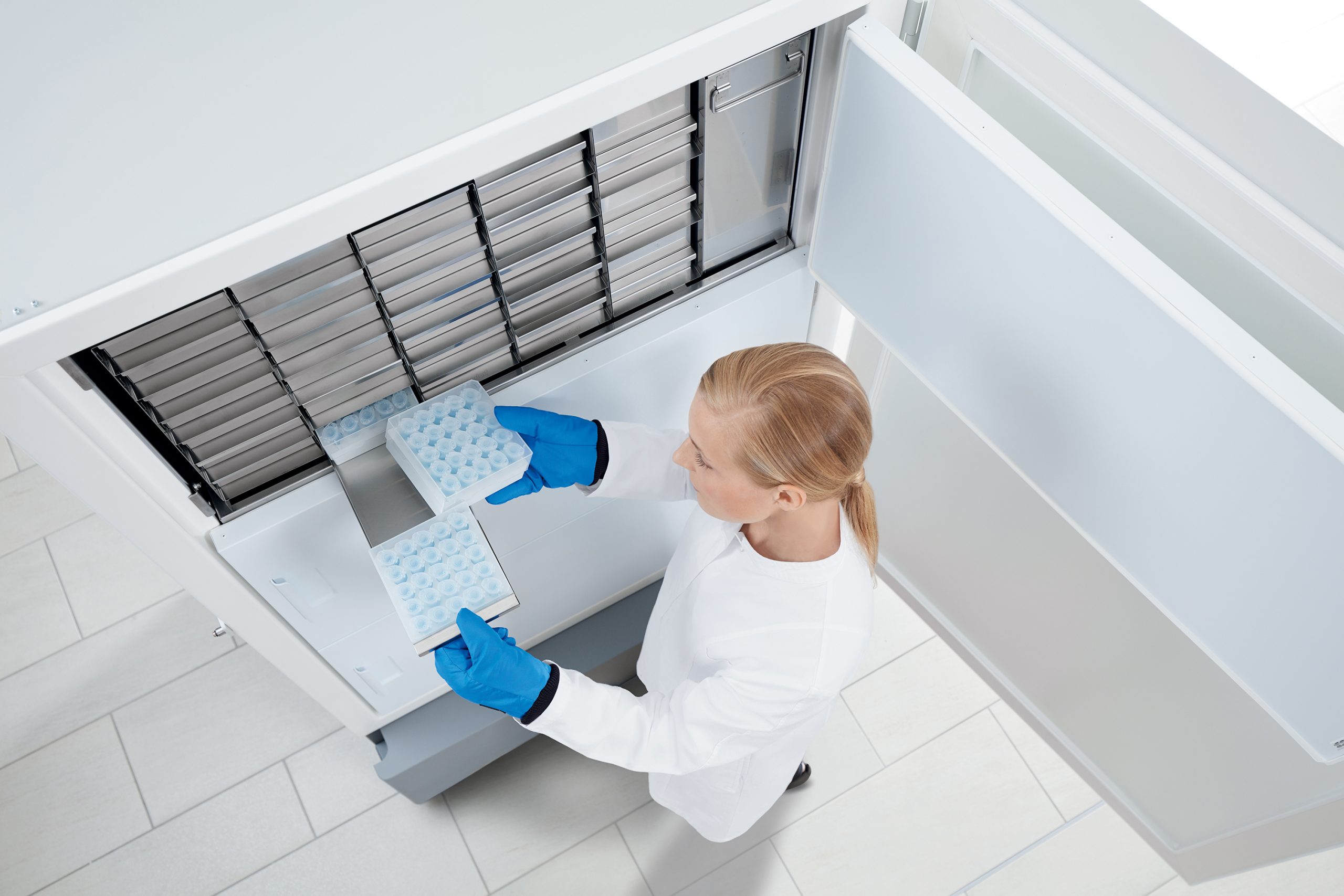
When sustainability-related data is fragmented or incomplete, labs can miss the patterns shaping their day-to-day impact. Materials are ordered but not fully used. Reagents expire before anyone realizes they were still on the shelf. Waste is recorded at the point of disposal but rarely traced back to the workflow decisions that generated it. Equipment continues running around the clock, even when only needed for a few hours.
Without a reliable system for inventory or storage, there is no way to ensure materials are used efficiently. Procurement teams question why consumables like pipette tips are being reordered so frequently, while researchers are repeating experiments due to equipment malfunctions, expired reagents, or simply the unpredictability of biology. Meanwhile, operational inefficiencies, like a thermostat placed directly beside an aging freezer, go unnoticed because no one has the data to connect these dots.
Large autoclaves can consume 84 kWh per day, and variable air volume fume hoods can consume around 110 kWh per day when left open. This means that inefficiencies at the operational level translate directly into increased environmental and financial costs. Teams are left trying to improve sustainability without a complete view of lab operations.
This is often where progress slows down. The challenge is not a lack of effort or intention. Rather, it is simply difficult to improve what is only visible in fragments.
How does a sustainable lab work in practice?
Sustainability in the lab is shaped by everyday operations. It shows up in how materials are purchased, stored, consumed, and discarded. It shows up in how equipment is used, how workflows are followed, and how information is recorded. When those activities are managed separately, the data behind them is separate as well. That makes it harder to move from good intentions to measurable change.
Measurable change is increasingly becoming an expectation. Across the industry, there is a shift away from general sustainability claims toward data-backed, verifiable outcomes that can stand up to internal reporting, external scrutiny, and evolving regulatory frameworks. The current program framework at My Green Lab reflects this shift through third-party verification, impact estimation, and product-level data that can support both ESG goals and compliant purchasing decisions.
Read more: Digital Tools for Safer and More Sustainable Life Science Labs
The role of operational visibility in labs
When labs have a clearer view of inventory, workflows, equipment use, compliance records, and related operational data, it becomes easier to spot inefficiencies that would otherwise stay hidden. Teams can begin asking more practical questions: Where are materials regularly going unused and why? Which processes are creating avoidable waste? Are there patterns in storage, ordering, or equipment use that could be improved? What is being measured well, and what is still missing?
These are not just sustainability questions. They are operational ones - with direct sustainability implications. In fact, many of the most persistent sustainability challenges in labs are also compliance and efficiency challenges. Overstocked chemicals increase both safety risk and waste. Poor inventory visibility drives duplicate purchasing. Inefficient equipment use increases both energy consumption and operating costs.
This is one reason the conversation around lab sustainability is shifting. Broad recommendations still have value, but many teams have already heard the standard advice. What is needed now are better insights into the systems and behaviors that drive impact over time.
Where a Scientific Management Platform closes the visibility gap
By bringing together operational data tied to inventory, storage, equipment, safety, and compliance, a Scientific Management Platform (SMP) like SciSure helps labs move from fragmented information to actionable insights that support a safe, sustainable lab. Plainly defined, an SMP is a unified system that connects digital lab platform tools like ELNs (Electronic Lab Notebooks), LIMS (Laboratory Information Management System), and EHS (Environment, Health, and Safety) workflows all in one place.
This is where connected operational data and measured sustainability frameworks can complement each other. One helps labs build a clearer view of what is happening day to day. The other helps translate that visibility into outcomes that can be assessed, benchmarked, and improved over time. Together, they enable a shift from reactive sustainability efforts to proactive, system-level improvement, eventually becoming embedded as an outcome of better operational decisions.
Here's an example of how it works in practice: Photanol, an Amsterdam-based biotech that uses cyanobacteria to convert CO2 into carbon-based chemicals as a sustainable alternative to fossil-derived feedstocks. Before implementing SciSure in 2021, the team relied on paper lab books and shared cloud folders - a setup that became harder to manage as the company expanded across multiple sites. Now, with SciSure implemented, every sample is traceable end-to-end – i.e., a finished product can be traced back to its initial cloning step in a few clicks.
In doing so, Photanol halved their administration time and eliminated version-control issues for protocols. For an organization whose entire commercial mission depends on validating dozens of biological production routes, this connected operational data enables sustainability claims to be backed by reproducible, auditable evidence. Turning fragmented documentation into something that can stand up for internal review, partner scrutiny, and regulatory frameworks.
A connected data ecosystem addresses the invisible impact head on
With clearer data and visibility into the operational realities shaping their environmental footprint, lab teams are better equipped to make informed decisions, reduce avoidable waste, and embed sustainable practices into research.
The hidden challenges are not always a lack of action; often, they are a lack of connected context. The waste is visible, but the cause - and therefore the solution - is not. The energy use is known, but the pattern behind it is not. The expired inventory is obvious, but the ordering and usage behavior that led to it is harder to see. These are small gaps on their own, but across a lab, they add up.
That is the invisible impact.
This is also why sustainability can feel difficult to improve, even when teams are trying hard to do the right thing. It is also why leading organizations are beginning to approach sustainability as a system-level outcome – driven by better data, better visibility, and better decision-making across the lab ecosystem. That broader systems view is especially important in biotech and pharma, where My Green Lab reports that most emissions come from the supply chain, including about 75% for public companies and 88% for private companies.
The impact you can improve is usually the impact you can see. And what you are not tracking may affect more than you think.

Read more of our blogs about modern lab management
Discover the latest in lab operations, from sample management to AI innovations, designed to enhance efficiency and drive scientific breakthroughs.